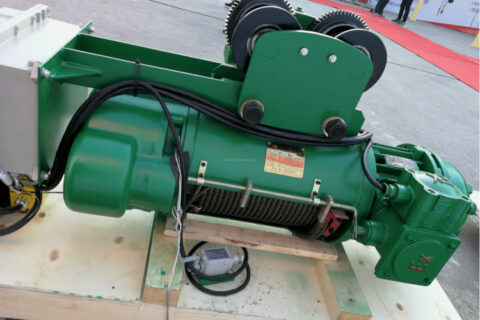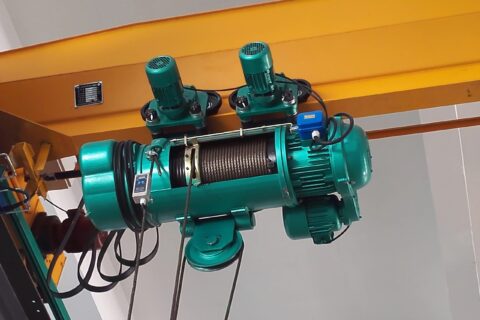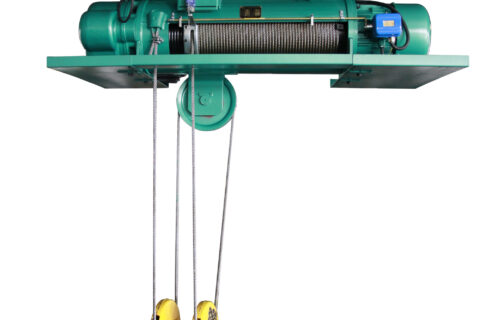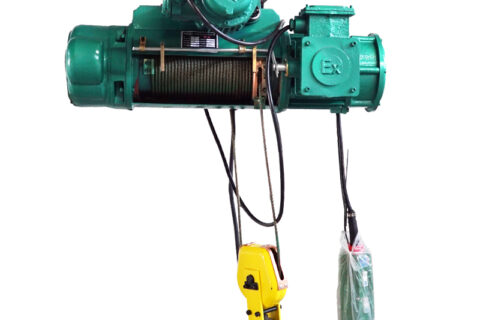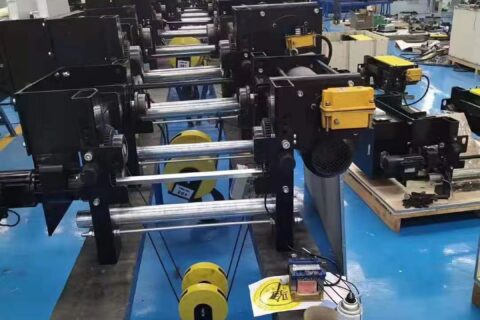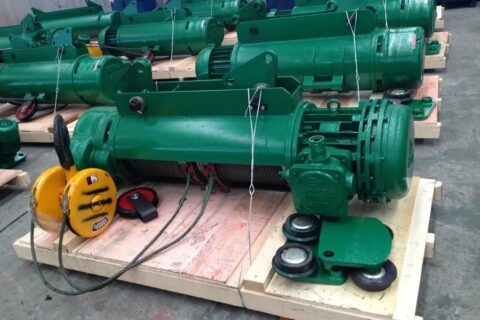

BZ-KBK Cantilever Crane, KBK Cantilever Crane
I. Product Overview
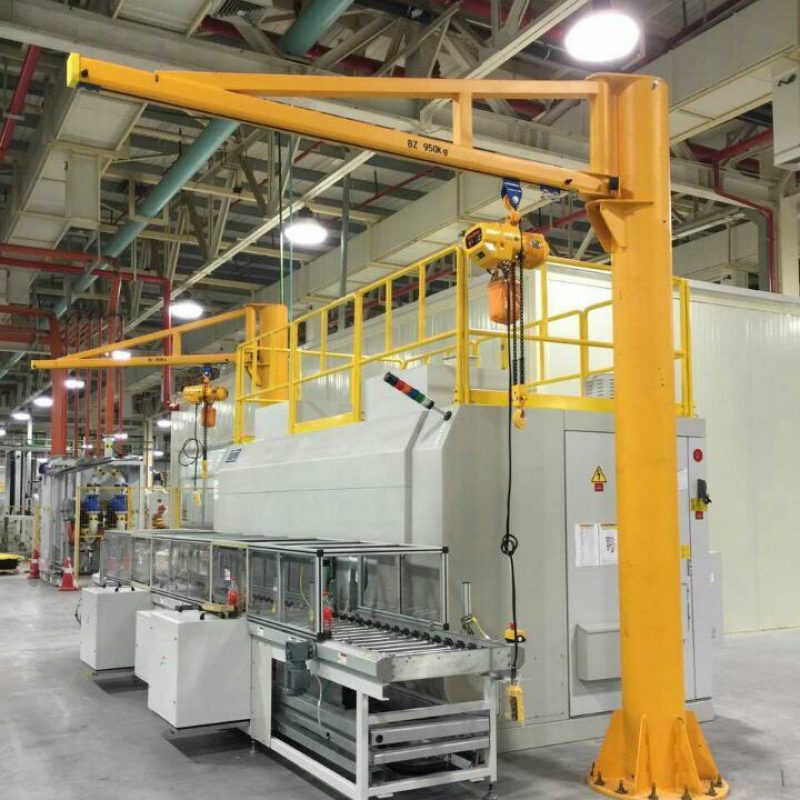
The BZ-KBK cantilever crane (also known as a KBK cantilever crane or column-mounted cantilever crane) is a workstation-level, lightweight lifting device that uses KBK hollow rails as its main girder. It features a light weight and a long reach, and a single person can rotate the cantilever. With a lifting capacity ranging from 125 kg to 2,000 kg, a maximum jib length of 7 meters, and a rotation angle of 270 degrees, it essentially covers the lifting needs of individual workstations in a workshop.
Unlike bridge cranes, KBK jib cranes do not span the entire workshop; instead, they are designed to serve a specific workstation, machine tool, or assembly line. With their small footprint, low investment, and quick installation, they are particularly well-suited for workshops that have one or two pieces of equipment requiring lifting capabilities but lack the space for a large overhead crane.
This article provides a comprehensive overview of KBK cantilever cranes, covering everything from specifications and technical features to application scenarios and selection guidelines.
Product Images
II. Specifications and Models
KBK cantilever cranes are classified into two types based on their structure: column-mounted and wall-mounted. The BZ-KBK series is a column-mounted type, installed independently on a ground foundation. The table below lists the commonly used specifications:
Cantilever Crane Model:KBK-Type / BZ-KBK-Type Column-Mounted Cantilever Cranes
Cantilever Crane Specifications:125 kg, 250 kg, 500 kg, 1,000 kg, 2,000 kg
III. Technical Specifications
The key technical specifications for the KBK jib crane are as follows. It is designed and manufactured in accordance with the JB/T 8906-2014 standard, “Jib Cranes.” The lifting capacity is inversely proportional to the jib length—the longer the jib, the lower the rated lifting capacity. Please ensure a proper balance when selecting a model.
| Parameter Items | Specifications |
|---|---|
| Lifting Capacity | 125 kg / 250 kg / 500 kg / 1,000 kg / 2,000 kg |
| Lifting Height | Up to 10 meters |
| Swing Arm Length | 2–7 m |
| Rotation Angle | 270° |
| Rotation Mode | Manual Rotation |
| Trolley Operation Modes | Manual Operation |
| Hoisting Mechanism | Electric Chain Hoist or Hand Chain Hoist |
| Track Types | KBK Hollow Guide Rails |
| Power Supply | 380V / Can be configured as needed |
| Operating Temperature | -20°C to +40°C |
IV. Product Features
KBK cantilever cranes have several practical design features that set them apart from traditional I-beam column-mounted cantilever cranes:
- Low track friction:KBK hollow rails + dedicated trolleys offer low running resistance; they are very easy to push manually and do not require an electric drive.
- Low-clearance design:The low-headroom version of the column-mounted jib crane offers 290 mm more lifting height than the standard design—making it suitable for installation even in slightly lower-ceilinged facilities.
- Self-lubricating bearings:The swivel mechanism uses self-lubricating bearings and needle roller bearings, making it maintenance-free and preventing it from seizing up if you forget to lubricate it.
- Flat Cable Conductivity:Slider-type flat cables are conductive and durable, and unlike sliding contact lines, they do not accumulate dust or cause circuit breakers to trip.
- Wide coverage area:With a 270° rotation angle and a boom length of up to 7 meters, a single jib crane covers a semicircular work area of approximately 38 square meters.
Structural Diagram
V. Components
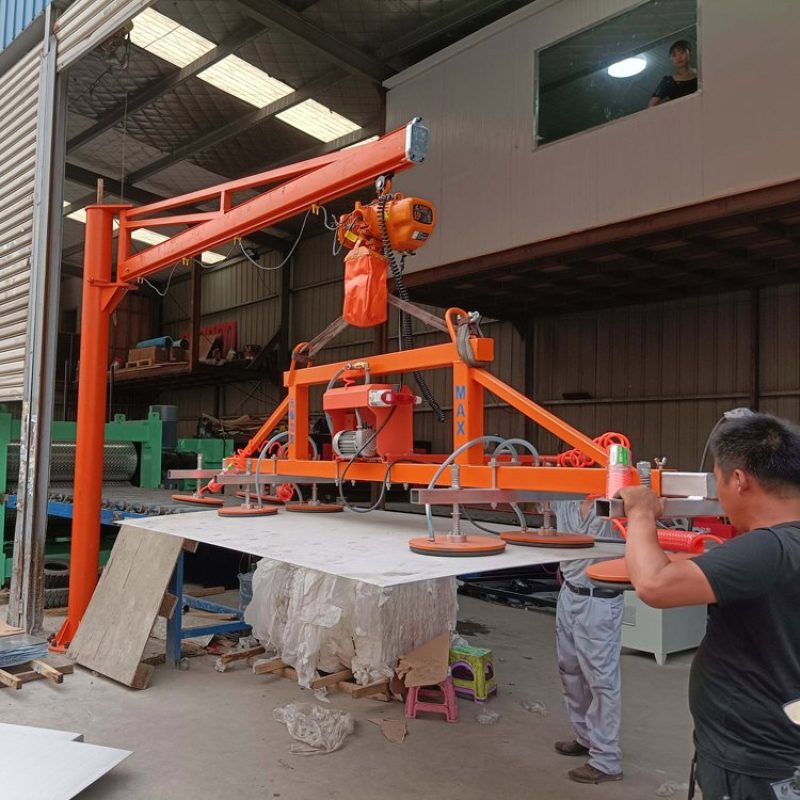
The KBK-type column-mounted cantilever crane consists primarily of the following components, from bottom to top. Each component is manufactured in accordance with GB/T 3811-2008, “Code for Design of Cranes,” and the JB/T 8906 standard:
- Foundation and Pillars:The columns are divided into upper and lower columns and are secured to the workshop foundation with anchor bolts. The columns serve as the core load-bearing members, and their wall thickness is selected based on the lifting capacity.
- Main Beam (KBK-Type Rail):KBK hollow aluminum alloy profiles are used as main beams; they are lightweight and offer good bending resistance. The main beams are connected to the columns via a swivel mechanism.
- Cantilever Tie Rod:Tie rods connect the columns to the main beams, improving the load-bearing capacity at the base of the main beams. Tie rods are standard equipment when the arm length exceeds 3 meters.
- Hoisting Mechanism:Choose between an electric chain hoist or a manual chain hoist based on how often you’ll use it. If you’ll be using it dozens of times a day, go with an electric model; if you’ll only be lifting occasionally, a manual one will suffice.
- Rotary Mechanism:Manual rotation, featuring self-lubricating slewing bearings and thrust bearings, ensures smooth rotation of the cantilever.
- Electrical System:Powered by a flat cable with a slider connector, equipped with a rotary switch. A wireless remote control can be added for remote operation.
VI. Workstation-Level Flexible Lifting and Handling—Applicable Scenarios
The main difference between a KBK cantilever crane and an overhead crane is that it isFixed-position workstation-level equipment...It does not cover the entire workshop. One jib crane serves a single workstation—for example, loading and unloading workpieces on a machine tool, lifting components on an assembly line, or disassembling and reassembling equipment at a maintenance station. The following three scenarios best showcase the advantages of jib cranes:
▎Loading and unloading workpieces from machine tools
Machining centers, lathes, grinding machines—workpieces have to be loaded onto the worktable every day. With a 250–500 kg KBK cantilever crane installed next to the machine tool, a single person can lift workpieces from the pallet onto the fixture. Compared to using I-beam tracks with a hand-operated hoist, the KBK rail system is much lighter to push, making it easy to make 50 round trips a day without getting tired. We installed four 500 kg cantilever cranes at a machining plant in Henan, positioning them next to four gantry milling machines. Previously, each milling machine required a strong worker to handle parts; now, a single operator oversees two machines, using the cantilever cranes to load and unload parts as needed, effectively doubling efficiency.
▎Parts Distribution for the Assembly Line
On the assembly line, transporting parts from the material racks to the assembly stations is the most frequent operation. With the KBK jib crane’s 270° rotation range, workpieces are lifted from the side material racks to the central assembly table, then rotated to the other side to place the finished products. A 1,000-kg cantilever crane equipped with a chain electric hoist can achieve a cycle time of two minutes per cycle. This saves at least half the time compared to using a forklift to make back-and-forth trips.
▎Equipment Maintenance and Mold Replacement
Changing molds on injection molding machines and stamping presses, or disassembling, assembling, and repairing motors and gearboxes on shop floor equipment—these tasks aren’t performed very often throughout the year, but each time they require lifting operations. Installing a KBK jib crane in the maintenance area is much more cost-effective than installing a small overhead crane—the investment is only one-fifth to one-third of that required for an overhead crane, and it does not affect the headroom in other areas of the workshop.
VII. Why Choose Krude Heavy Industry
Although KBK cantilever cranes have a simpler structure than overhead cranes, there are specific considerations when it comes to selecting, configuring, and installing them—it’s not as simple as just finding a steel supplier to weld a frame.
- Tips for Using Gourd Accessories:Which hoist works best with KBK-type tracks for the smoothest operation? How should the cables be routed? Is a rotation limit switch necessary? These details have a greater impact on the day-to-day user experience than the jib crane itself. We’ve been providing lifting solutions for over a decade—including chain hoists, hand chain hoists, wireless remote controls, and variable-frequency speed control systems. We tailor the most suitable configuration to each specific application, rather than simply piling on features indiscriminately.
- No extra charge for custom orders:Need a longer boom? Need greater lifting height? Need a taller mast to clear overhead lines? We don’t charge extra for non-standard modifications within the range of common specifications—we’ll simply adjust them within the standard configuration.
- Direct from the manufacturer; no charges until the proposal is confirmed:Please send us the on-site conditions (load capacity, boom length, lifting height, and ground conditions), and we’ll provide a proposal and a quote. We won’t discuss pricing until you’re satisfied with the proposal; production will be scheduled only after it’s been confirmed.
Common specifications: 1,000 kg × 4 m boom length, approximately 7,000–12,000 yuan (with a chain electric hoist); 125–250 kg manual hoist models, approximately 3,000–6,000 yuan—specific prices depend on configuration and boom length. Once the specifications are confirmed, shipment typically takes 7–12 days. Still unsure which model to choose? Send us your operating conditions, and we’ll help you find the right solution.
VIII. Frequently Asked Questions
Q: What is the difference between a KBK cantilever crane and a column-mounted jib crane?
Answer: The column-mounted jib cranes and fixed-column jib cranes commonly found on the market are essentially the same type of equipment as KBK jib cranes—all are workstation-level lifting devices consisting of a column and a jib. The difference lies in the track: The KBK type uses KBK hollow aluminum alloy profiles for the jib, which are lightweight and offer low trolley running resistance, allowing a single person to push it along; traditional I-beam jib cranes use I-beams or H-beams, which are heavy and have high trolley friction resistance. For light-load applications ranging from 125 to 1,000 kg, the KBK type is easier to operate.
Reference Standards:GB/T 3811—2008 "Code for the Design of Cranes"
Q: What parameters should be considered when selecting a KBK cantilever crane? What is the maximum load capacity?
Answer: The BZ-kbk series typically has a maximum lifting capacity of 2,000 kg and a boom length of 7 m. The selection process primarily depends on three parameters: lifting capacity (how many kilograms need to be lifted), boom length (how large a work area needs to be covered), and lifting height (how high the load needs to be lifted). These three parameters are mutually restrictive—the longer the boom, the lower the maximum lifting capacity and lifting height. For example, a 2,000 kg capacity is limited to a short boom (approximately 3–4 m), while a 7 m long boom is limited to a lifting capacity of around 500 kg. According to the JB/T 8906 standard, the design safety factor for jib cranes must be no less than 1.25; be sure to allow for sufficient margin when selecting a model.
Q: Can I contact the manufacturer directly for a quote? How much does a KBK cantilever crane cost?
A: A 125–250 kg manual hoist costs approximately 3,000–6,000 yuan, electric chain hoists with a capacity of 500–1,000 kg cost approximately 7,000–15,000 yuan, and large-capacity models rated at 2,000 kg cost approximately 15,000–30,000 yuan. The prices above include the KBK main beam, columns, slewing mechanism, hoist, and electrical system; shipping and installation are billed separately. Please contact us directly (Henan Keluode Heavy Industry, Tel: 13903802779) and provide the lifting capacity, boom length, and lifting height; we will provide a proposal and quote within two business days.
Reference Standards:JB/T 8906—2014 "Jib Cranes"