BZ-KBK Pillar Jib Crane for Factory Lifting
1. Product Overview
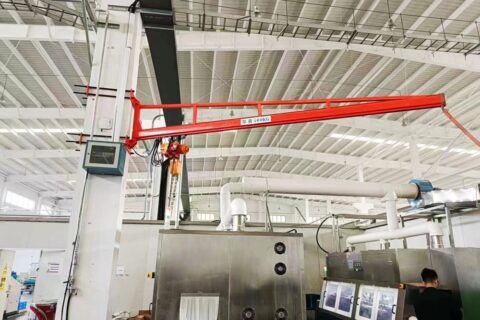
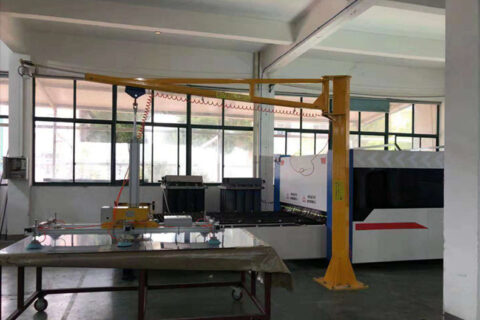
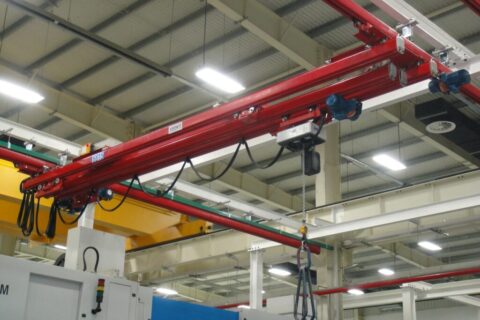
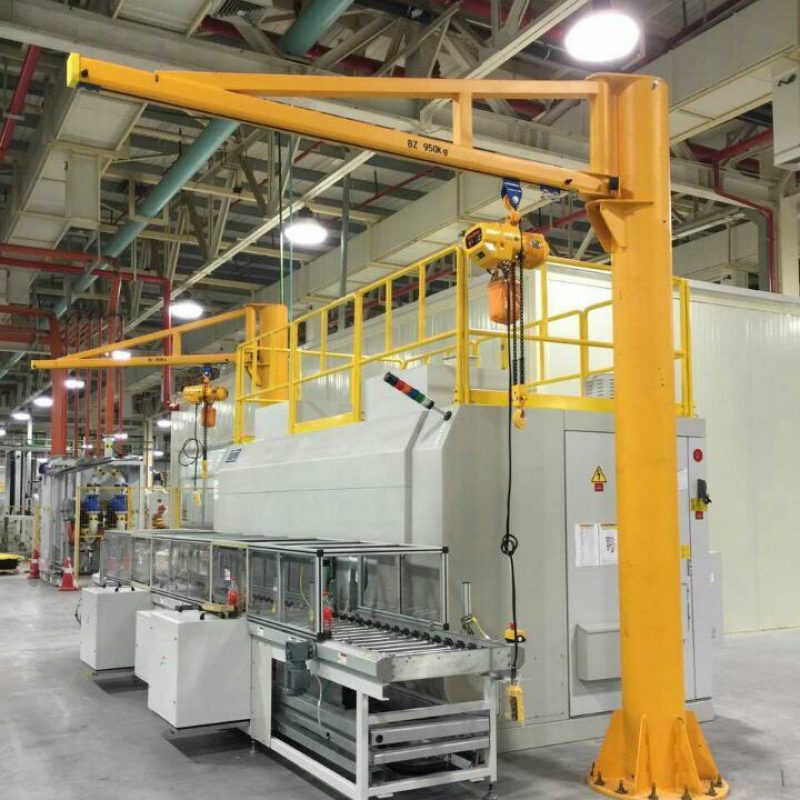
The BZ-kbk pillar jib crane (also known as a KBK jib crane or column-mounted jib crane) is a lightweight workstation-level hoisting solution. It utilizes a KBK hollow-section track as the main girder, offering low dead weight and an extended cantilever reach that one operator can easily rotate by hand. With a rated lifting capacity ranging from 125 kg to 2,000 kg, a maximum cantilever length of 7 meters, and a slewing angle of 270°, it effectively covers the material handling needs of a single workstation within a workshop.
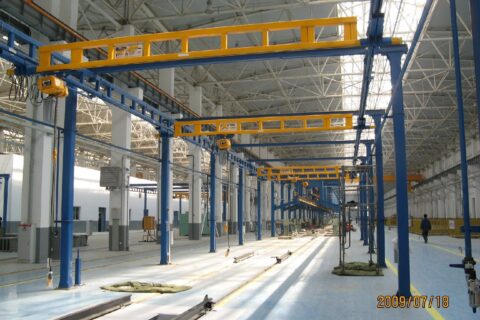
Unlike an overhead crane that spans the entire bay, the KBK jib crane is designed for point-of-use service—dedicated to a specific workstation, machine tool, or assembly line. It requires minimal floor space, involves lower investment, and can be installed quickly, making it an ideal choice for workshops where one or two machines need hoisting support but a full overhead crane system is not feasible.
This article provides a comprehensive overview of the KBK jib crane, covering specifications, technical features, application scenarios, and selection guidance.
Product Image
2. Models & Specifications
KBK jib cranes are available in two structural configurations: column-mounted and wall-mounted. The BZ-kbk series belongs to the column-mounted type, which is independently installed on a floor foundation. Common specifications are listed below:
Jib Crane Model: KBK Type / BZ-kbk Column Cantilever Crane
Jib Crane Specifications: 125 kg, 250 kg, 500 kg, 1000 kg, 2000 kg
3. Technical Parameters
The core technical parameters of the KBK jib crane are detailed below. Designed and manufactured in accordance with the JB/T 8906-2014 "Slewing Cranes" standard, the lifting capacity is inversely proportional to the cantilever length—the longer the cantilever, the lower the rated lifting capacity. Keep this balance in mind during selection.
| Parameter Item | Specification |
|---|---|
| Lifting Capacity | 125kg / 250kg / 500kg / 1000kg / 2000kg |
| Lifting Height | Reach 10m |
| Jib Length | 2~7m |
| Slewing Angle | 270° |
| Slewing Mode Manual | |
| Cross Travel / Trolley Travel Mode Manuall Operation | |
| Hoisting mechanism | Chain Electric Hoist or Hand chain hoist |
| Crane Rail Type KBK Hollow Rail | |
| Power Supply | 380V / Configurable per Requirements |
| Applicable Temperature | -20°C ~ +40°C |
4. Product Features
The KBK jib crane has several practical design advantages over traditional I-beam column-mounted jib cranes:
- Low track friction: The KBK enclosed track profile combined with a purpose-built trolley keeps travel resistance low, so manual push operation is smooth and effortless — no electric drive needed.
- Low-headroom design: The low-headroom version of the pillar jib crane provides 290mm of additional lifting height over the standard design — making it suitable for workshops with limited ceiling clearance.
- Self-lubricating bearings: The slewing mechanism uses self-lubricating bearings and needle roller bearings, eliminating routine maintenance and preventing seizing due to missed lubrication.
- Flat cable power supply: Slider-type flat cable conductors offer superior durability and won't accumulate dust or cause trips like busbar systems can.
- Wide coverage area: A 270° slewing angle combined with a jib length of up to 7m gives a single jib crane a semi-circular working zone of approximately 38㎡.
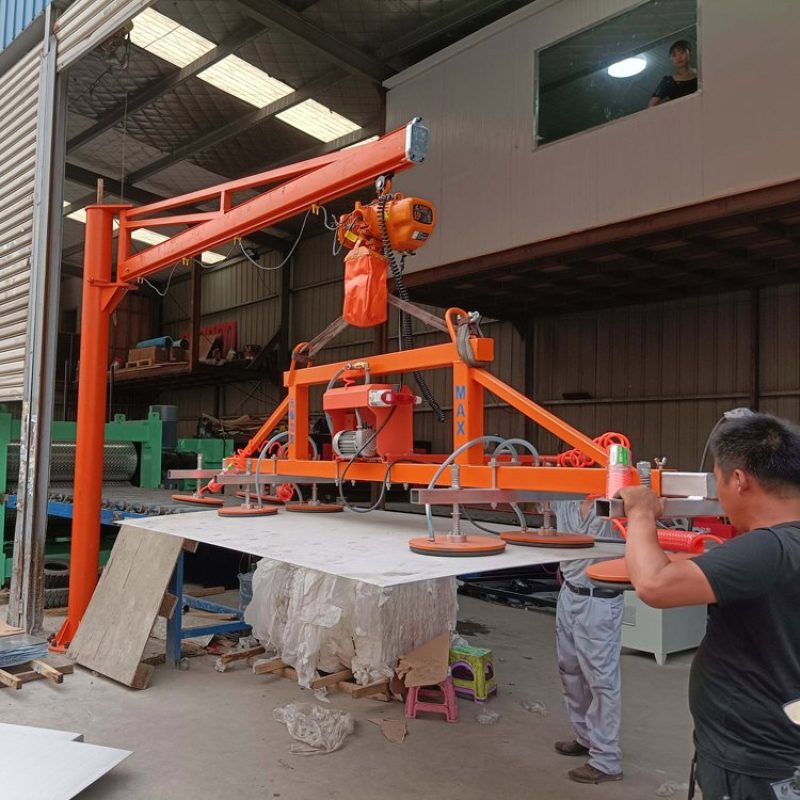
Structural Diagram
5. Main Components
The KBK pillar jib crane consists of the following main components from base to top, all manufactured in accordance with GB/T 3811-2008 Crane Design Standard and the JB/T 8906 specification:
- Foundation and column: The column is split into upper and lower sections, secured to the workshop floor with anchor bolts. As the primary load-bearing member, the column wall thickness is selected based on the lifting capacity.
- Main girder (KBK track profile): The main girder uses hollow KBK aluminum alloy track, offering low dead weight and excellent bending resistance. It connects to the column via the slewing mechanism.
- Jib tie rod: The tie rod connects the column to the main girder, improving the stress distribution at the girder root. It comes as standard equipment when the jib length exceeds 3m.
- Hoisting mechanism: Chain electric hoist or hand chain hoist, selected according to usage frequency. For dozens of lifts per day, go electric; for occasional use, a manual hoist is sufficient.
- Slewing mechanism: Manually operated, incorporating self-lubricating slewing bearings and thrust bearings to ensure smooth jib rotation.
- Electrical system: Slider-type flat cable power supply with a rotary selector switch. A wireless remote control can be added if required.
6. Workstation-Level Flexible Lifting — Ideal Applications
The key difference between a KBK jib crane and an overhead crane is that the jib crane is a fixed workstation-level piece of equipment — it doesn't cover the entire workshop. One jib crane serves one workstation — loading and unloading a machine tool, handling parts on an assembly line, or dismantling equipment at a maintenance bay. The following three scenarios best demonstrate the advantages of a jib crane:
▎Machine tool loading/unloading
Machining centers, lathes, and grinders — every day, workpieces need to be moved onto the worktable. Install a 250~500kg KBK jib crane next to the machine, and one operator can lift workpieces from the pallet onto the fixture single-handedly. Compared to using an I-beam with a hand chain hoist, the KBK track profile is far easier to push — 50 cycles a day without fatigue. We installed four 500kg jib cranes at a machinery processing plant in Henan, one beside each of their four gantry mills. Previously, each mill required a dedicated worker for heavy lifting; now one operator handles two mills, using the jib crane for loading and unloading — productivity has effectively doubled.
▎Assembly line parts delivery
On an assembly line, moving parts from the rack to the assembly station is the most frequent operation. The KBK jib crane's 270° slewing range allows parts to be lifted from the side rack, swung to the central assembly table, and then rotated to the opposite side for finished goods. A 1000kg jib crane with a chain electric hoist can achieve a two-minute cycle time — cutting at least half the time compared to shuttling back and forth with a forklift.
▎Equipment maintenance and mold changes
Mold changes on injection molding machines and stamping presses, or dismantling and servicing motors and gearboxes on workshop equipment — these jobs may only happen a few times a year, but each one requires lifting capability. Installing a KBK jib crane in the maintenance area is far more cost-effective than installing a small overhead crane — at one-fifth to one-third of the cost, and without affecting headroom clearance elsewhere in the workshop.
7. Why Choose Kelude Heavy Industry
Although a KBK jib crane is structurally simpler than an overhead crane, proper selection, integration, and installation require real expertise — this isn't a matter of having a steel fabricator weld up a frame.
- Hoist integration experience: Which hoist pairs most smoothly with KBK track, how to route the cable, whether a slewing limit is needed — these details affect daily operation more than the jib crane itself. With over a decade of lifting equipment integration experience, we match the right combination of chain hoists, hand chain hoists, wireless remote controls, and variable-frequency speed control to your specific duty cycle — not a one-size-fits-all configuration.
- Non-standard customization at no extra cost: Need a longer jib? Higher lifting height? A taller column to clear overhead piping? Non-standard modifications within common specification ranges are made at no additional charge — we simply adjust the standard design.
- Factory-direct, no charge before proposal confirmation: Send us your site conditions (lifting capacity, jib length, lifting height, floor situation), and we'll provide a proposal and quotation. If you're not satisfied with the proposal, there's no discussion of price — we only schedule production once the design is confirmed.
Common specifications — 1000kg × 4m jib length — range from approximately ¥7,000 to ¥12,000 (with chain electric hoist); 125~250kg manual hoist versions range from approximately ¥3,000 to ¥6,000 — depending on configuration and jib length. Once parameters are confirmed, delivery typically takes 7~12 days. Not sure which model to choose? Send us your operating conditions and we'll help you put together the right solution.
FAQ
Q: Per the JB/T 8906-2014 Jib Crane Standard, what is the fundamental structural difference between a KBK jib crane (BZ-kbk model) and a traditional I-beam column-mounted jib crane?
A: Both types are workstation-level lifting devices consisting of a column and jib; the core difference lies in the track profile. The KBK type uses hollow KBK aluminum alloy track for the jib, resulting in low dead weight and extremely low trolley travel resistance — easily pushed by one person. Traditional I-beam jib cranes use I-Beam or H-Beam sections, which are heavier and generate more friction. For light-duty applications in the 125~1000kg range, the KBK type offers significantly easier operation. The Kelude Heavy Industry BZ-kbk series is strictly designed and manufactured in accordance with JB/T 8906-2014.
Q: How should the lifting capacity and jib length of the BZ-kbk series KBK jib crane be matched? What is the maximum capacity per JB/T 8906-2014?
A: The BZ-KBK series covers 125kg to 2000kg, with jib lengths from 2 to 7m. Lifting capacity is inversely proportional to jib length — a 2000kg load requires a short 3~4m jib, while a 7m jib is limited to approximately 500kg. Per JB/T 8906-2014, the safety factor is no less than 1.25, and a 10%~20% margin is recommended for selection. Maximum lifting height is 10m (low-headroom versions add 290mm). Kelude Heavy Industry offers non-standard custom solutions.
Q: Do the self-lubricating bearings and anchor bolts on the KBK jib crane require routine maintenance? What is the inspection interval?
A: The self-lubricating bearings use oil-impregnated sintered material and require no additional grease under normal operation. A quarterly inspection is recommended: check for abnormal noise during slewing and any loosening of bolts. The anchor bolts are critical load-bearing components — check preload decay and corrosion every six months, per the installation and acceptance clauses of JB/T 8906-2014. Kelude Heavy Industry supplies a maintenance manual with each unit, specifying standard torque values for critical bolts.
Q: What parameters should be provided to Kelude Heavy Industry when purchasing a KBK jib crane? What are the reference prices and delivery lead times?
A: Four sets of parameters are required: ① Lifting capacity (kg); ② Jib length (m); ③ Lifting height (m); ④ Factory floor conditions (concrete thickness/strength). A proposal and quotation can be issued once these parameters are provided. Reference pricing: 125~250kg manual hoist models range from ¥3,000 to ¥6,000; 500~1000kg chain electric hoist models range from ¥7,000 to ¥15,000; 2000kg large-capacity models range from ¥15,000 to ¥30,000. Delivery typically takes 7~12 days after order confirmation. Contact Kelude Heavy Industry (Tel: 13903802779, Email: 3915269@qq.com) — a proposal and quotation will be provided within two working days.