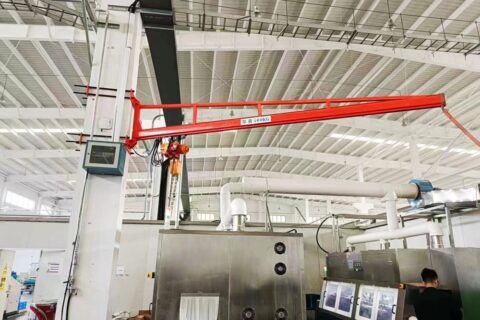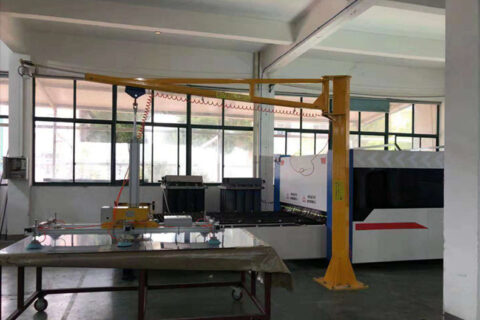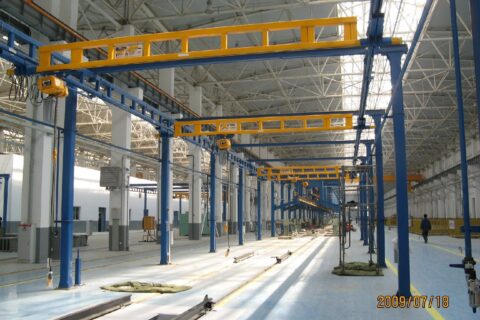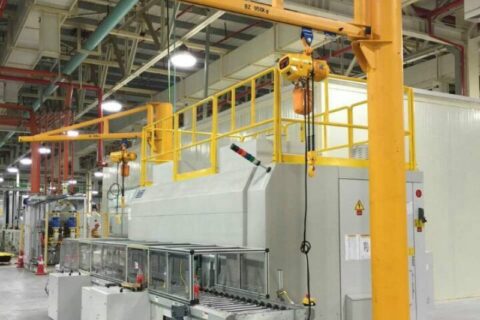

KBK Flexible Combination Suspension Crane
Product Introduction
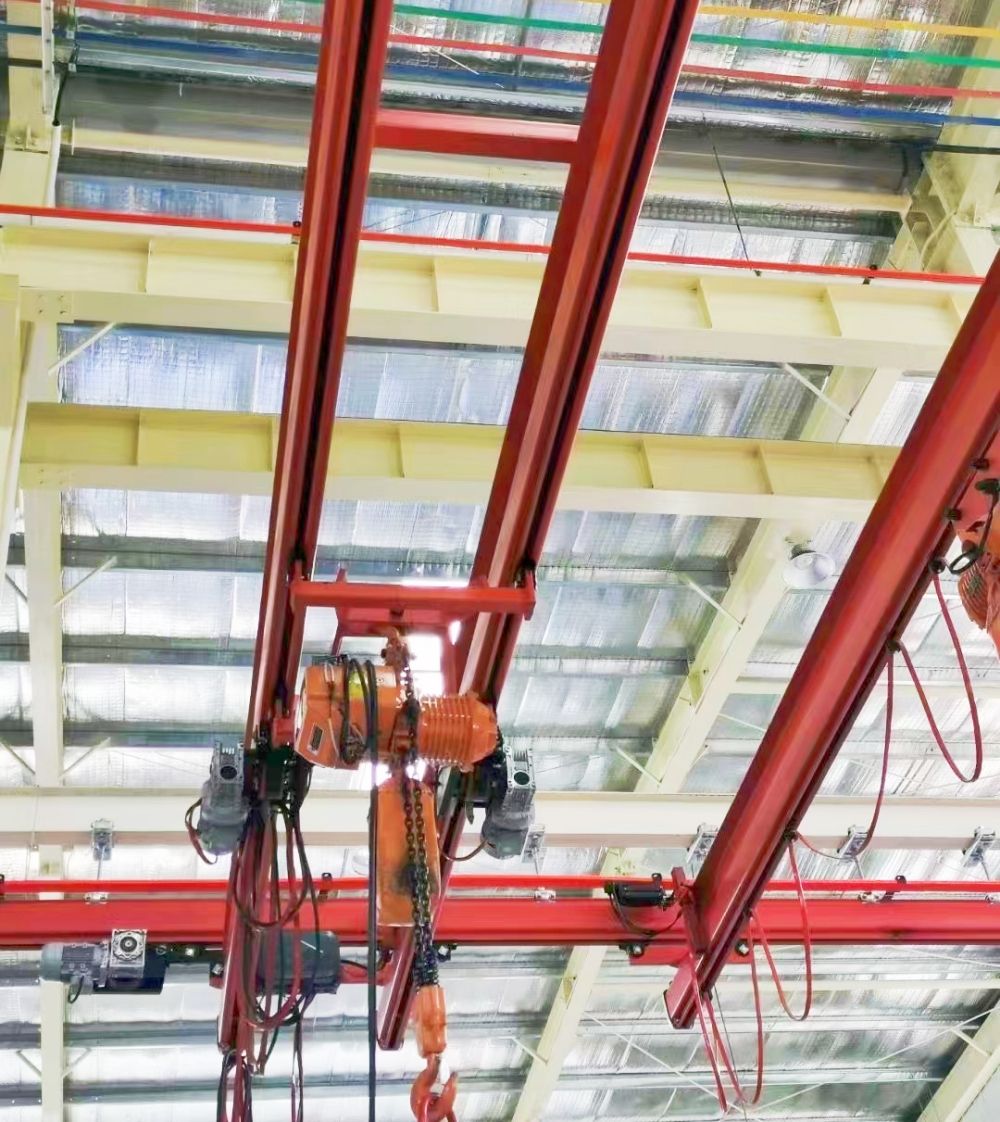
KBK Flexible Combination Suspension Crane (Model KBK-LS) is a light-duty suspension crane system built on standardized KBK rail profiles and a double girder configuration. It consists of a suspended I-Beam, KBK crane rail, dual-rail trolley, Chain Electric Hoist, and an Electrical Control System. With a Lifting Capacity of 0.25 to 3 tons, it can be manually, semi-electric, or fully electric driven, making it ideal for flat material handling in workshops and warehouses.
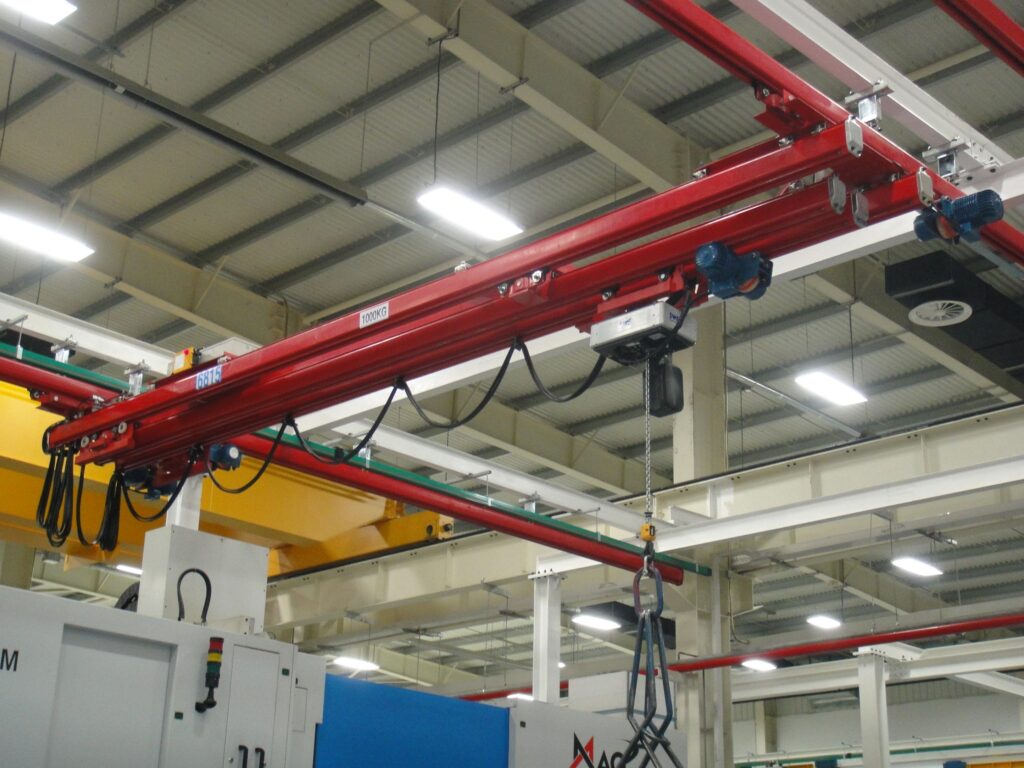
Product Specifications
- Product Name: KBK Flexible Combination Double Girder Suspension Crane
- Model / Specification: KBK-LS
- Lifting Capacity Range: 0.25~3t
- Drive Mode: Manual / Semi-Electric / Fully Electric
- Category: KBK Suspension Rail System
- Place of Origin: Changyuan, Xinxiang, Henan
- Customization: Available
- Production Lead Time: 10~20 days
- Supply Coverage: Nationwide
- After-Sales Service: 1-Year Warranty
Product Features
Lower Factory Building Costs
No building corbels are required, significantly reducing column load requirements during the design phase and cutting civil construction costs.
Modular Design
Modules can be easily added, removed, dismantled, or relocated to suit production needs without affecting the operation of other cranes in the area.
High-Strength Rail
Cold-formed, closed C-type and Ω-type steel rails offer high Strength and resist Deformation, effectively preventing dust ingress and minimizing wheel Wear.
2° Inclined Guide Surface
The 2° inclined inner cavity of the rail ensures the trolley self-centers during travel, minimizing sliding resistance.
Wide Suspension Point Spacing
The special rail structure allows suspension points to be spaced up to 9m apart, reducing the number of Columns and minimizing interference with the workspace.
Energy Efficient & Eco-Friendly
Low Power consumption, minimal energy usage, and extremely quiet operation. The Rail System is maintenance-free, resulting in low overall operating costs.
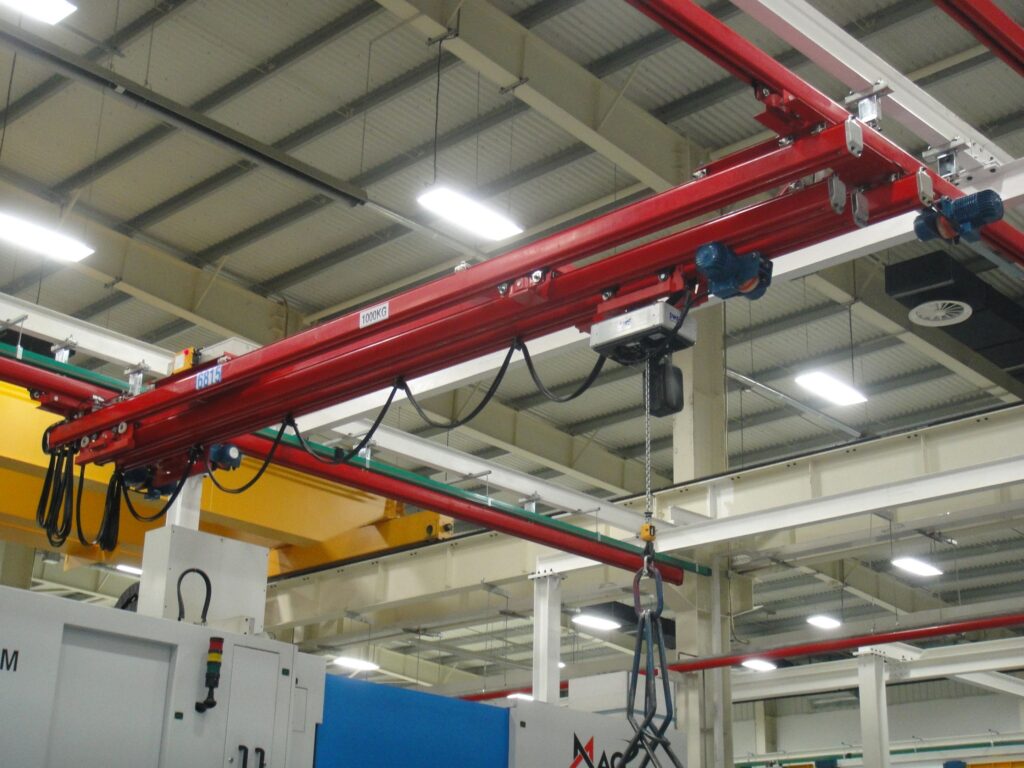
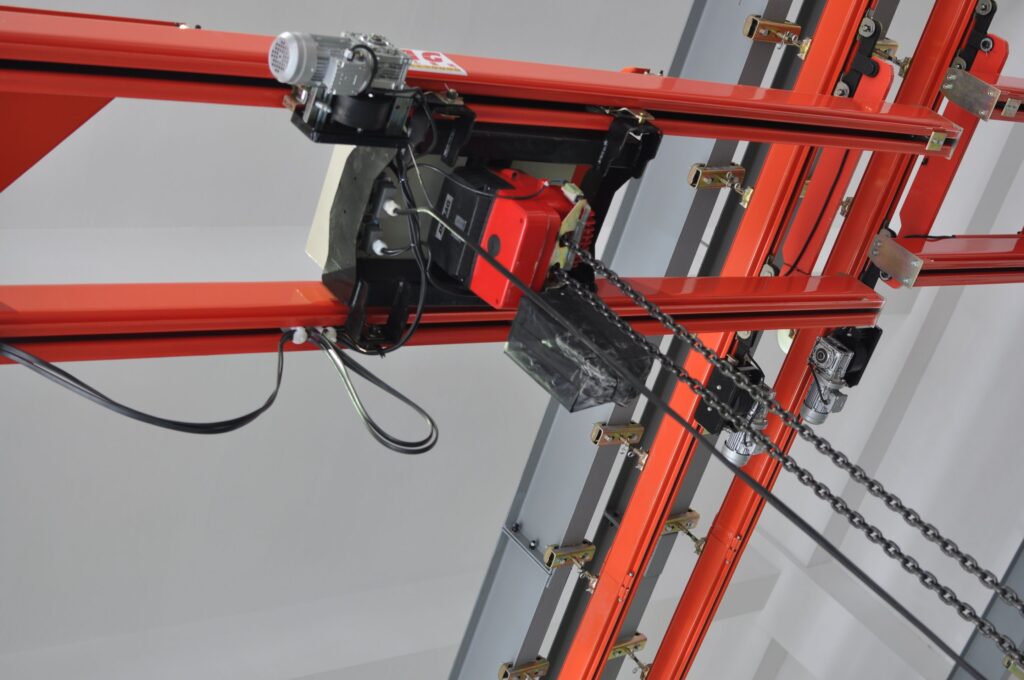
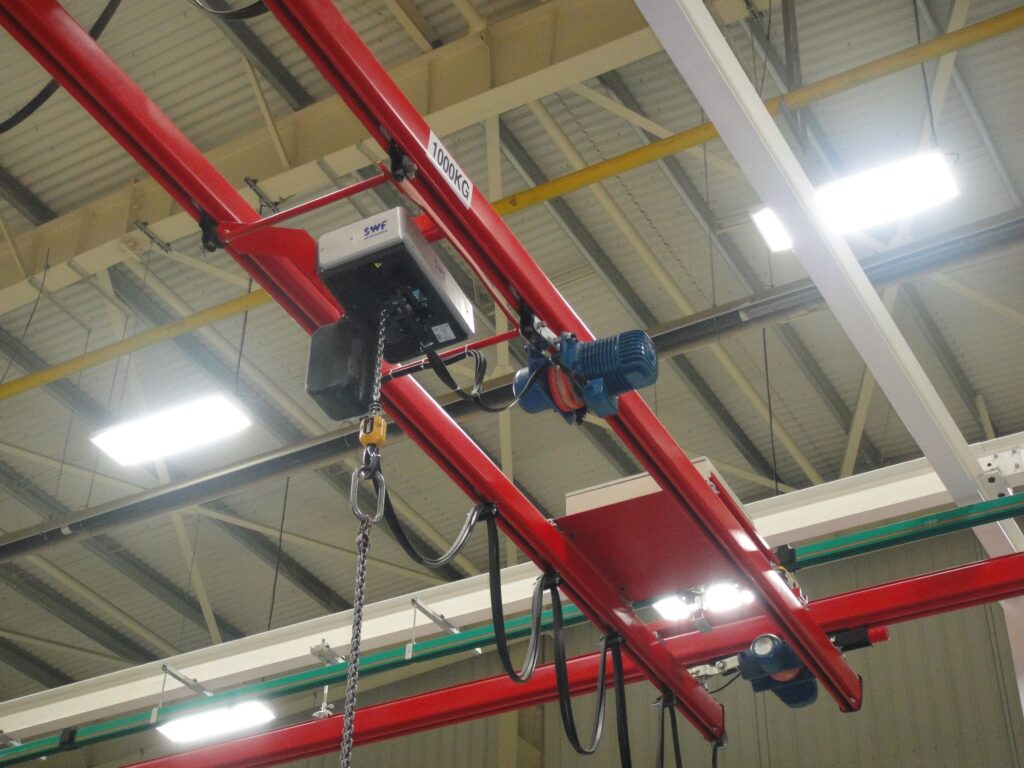
Product Gallery
Technical Parameters
| Parameter | KBK-LS-0.25 | KBK-LS-0.5 | KBK-LS-1 | KBK-LS-2 | KBK-LS-3 |
|---|---|---|---|---|---|
| Rated Lifting Capacity(t) | 0.25 | 0.5 | 1 | 2 | 3 |
| Maximum Span(m) | 10 | 9 | 8 | 7 | 6 |
| Crane Rail Model | KBK 100 | KBK 200 | KBK 300 | KBK 500 | KBK 1000 |
| Hoist Configuration | DHS-0.25 | DHS-0.5 | DHS-1 | DHS-2 | DHS-3 |
| Lifting Speed(m/min) | 10 | 8 | 8 | 6 | 5 |
| Drive Mode | Manual / Semi Electric / Full Electric | ||||
| Work Duty / Classification | A3~A5 | ||||
Applications
The double-girder modular design enhances the main girder's load-bearing capacity, making it ideal for planar lifting and transport across larger spans and heavier loads. It is widely used for material handling on production lines, warehouse loading/unloading, and assembly station transfer — particularly suited for light-duty handling that must cover large rectangular work areas.
Why Choose Kelude Heavy Industry
Specialized KBK System Manufacturer: Kelude Heavy Industry focuses on the KBK light-duty crane segment, offering a complete product line from standard components to fully integrated modular systems.
Custom Engineering Capabilities: Tailored KBK single-girder, double-girder, and modular solutions designed around your specific factory layout and process requirements, covering lifting capacities from 50kg to 3t.
Modular Design, Rapid Delivery: Standard components are kept in stock for immediate dispatch; custom solutions are delivered within 10–20 days with nationwide logistics.
Full Lifecycle Support: From system design and manufacturing through installation and after-sales service — backed by a one-year warranty and prompt phone support.
FAQ
Q: What is the difference between the KBK-LS modular double-girder and a single-girder suspension crane?
A: The KBK-LS features a parallel twin-rail modular girder design, offering higher load capacity for larger spans (up to 10m) and heavier loads (up to 3t). A single-girder suspension crane has a simpler structure and smaller span, making it suitable for light-duty workstations (up to 1t). Selection depends on the required coverage area and maximum lifting capacity.
Q: How do I choose between full-electric and semi-electric drive?
A: Manual operation suits low-frequency, light-load applications; semi-electric (electric hoisting + manual travel) fits medium-frequency duty; full-electric is recommended for high-frequency, continuous operation. Consider your daily operating frequency and operator preferences when deciding.
Q: Can this product be custom-engineered?
A: Yes. We provide custom design & manufacturing based on your site's factory structure, span, lifting height, and workstation layout, with a production lead time of 10–20 days and nationwide supply.