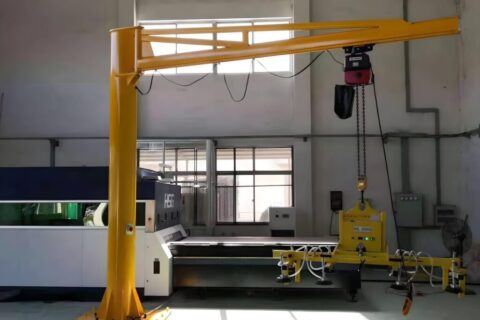

PJ Series Balancer High-Type Jib Crane
Product Introduction
The PJ Series High-Profile Balancer (PJ series balancer), available in models PJ010 to PJ080 with a rated lifting capacity of 100–600 kg, is an ideal material handling solution for small to medium-duty applications. Utilizing the four-bar linkage principle, this high-profile balancer combines simple manual and powered motions into a compound movement to lift and position loads, allowing the load to be held securely and stably at any point within the working envelope—achieving true equilibrium at any position.
Product Specifications
- Product Name : PJ Series High-Profile Balancer
- Also Known As : High-profile balancer / PJ series balancer
- Model: PJ series (PJ010–PJ080)
- Rated Lifting Capacity: 100–600 kg
- Category: Four-bar linkage balancer
- Place of Origin: Changyuan, Xinxiang, Henan
- Power Type: Electric hoisting + manual push/pull
- Supply Coverage: Nationwide
- Delivery Method: Customer pickup or freight arranged
- After-Sales Service: One-year warranty
Product Features
Four-Bar Linkage with Equilibrium at Any Position: Built on the four-bar linkage principle, the load can be held securely at any point within the working envelope, achieving true equilibrium with precise, intuitive positioning.
Compact and Lightweight: Compared to jib cranes and overhead cranes, the balancer is smaller in size, lighter in dead weight, and requires less floor space—with no special foundation requirements.
Push-Button + Manual Combined Operation: Electric push buttons control hoisting and lowering, while manual push/pull handles horizontal movement and slewing—simple and intuitive to operate.
Labor-Saving and Efficient: Frees operators from the physical strain of repetitive loading and unloading, making it ideal for cyclic lifting tasks.
Precise Positioning: Manual push/pull enables positioning accuracy down to the millimeter level—faster and more intuitive than remote-controlled electric hoist positioning.
Versatile: Widely used across machine tool loading/unloading, assembly lines, casting, heat treatment, and many other industries.
Working Principle
The working principle of the PJ Series High-Profile Balancer is based on the four-bar linkage: the column is fixed to the floor, and the four-bar linkage arm system connects the column to the lifting spreader. An electric push button provides inching control of the motor, which drives the vertical hoisting and lowering of the load. The operator manually pushes or pulls the load or the hanging fixture to achieve horizontal movement and slewing around the column. The special design of the four-bar linkage ensures that the load reaches a state of force equilibrium at any position within the working envelope (equilibrium at any position)—once the operator releases the load, it remains stationary without drifting.
Product Structure
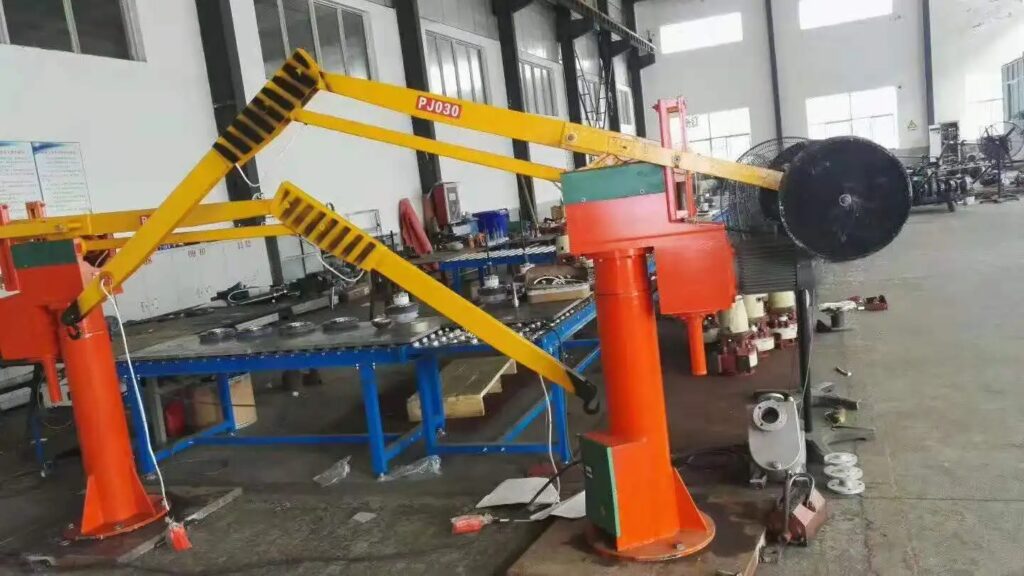
The PJ Series High-Profile Balancer consists of the following core components:
Column: Fixed to the floor, supporting the entire arm system.
Four-Bar Linkage Arm: A parallelogram mechanism made up of four links that delivers equilibrium at any position.
Hoisting Mechanism: Driven by a motor and gearbox, with push-button inching control for lifting and lowering.
Lifting Spreader: Hook or dedicated fixture, manually push/pull operated.
Electrical Control System: Push-button switches control the motor for hoisting and lowering.
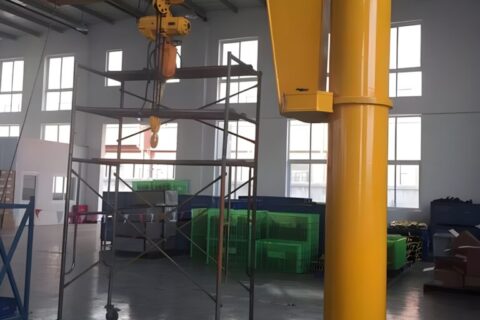
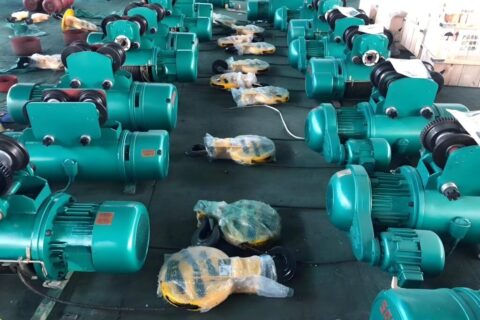
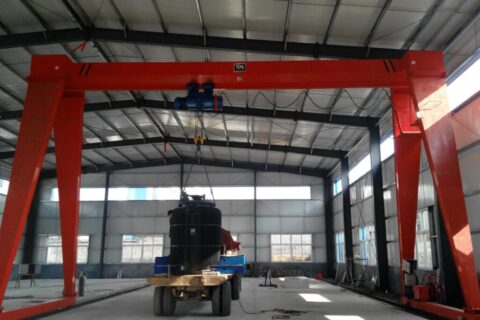
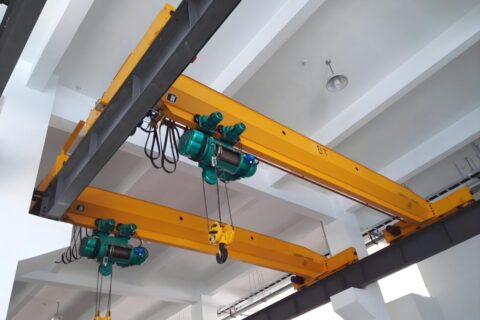
Product Images
Technical Parameters
| Technical Parameters | PJ010 | PJ020 | PJ030 | PJ040 | PJ050 | PJ060 | PJ080 |
|---|---|---|---|---|---|---|---|
| Rated Lifting Capacity(kg) | 100 | 200 | 300 | 400 | 500 | 600 | 800 |
| Maximum Lifting Height(mm) | 2000~2500(Customized on Request) | ||||||
| Maximum Horizontal Travel(mm) | 1600 | 1600 | 1400 | 1400 | 1200 | 1200 | 1000 |
| Slewing Angle(°) | 360 | ||||||
| lifting speed(m/min) | 6.5 | 6.5 | 4.5 | 4.5 | 3.5 | 3.5 | 2.5 |
| motor power(k W) | 0.4 | 0.4 | 0.75 | 0.75 | 1.1 | 1.1 | 1.5 |
| Power Supply Power Supply | Three-Phase 380V 50Hz | ||||||
| Operation Mode | Push Button Inching / Jog Mode Lifting/Lowering + Manual Push-Pull Horizontal/Slewing | ||||||
| Dead Weight (kg) | ~180 | ~220 | ~300 | ~380 | ~450 | ~550 | ~700 |
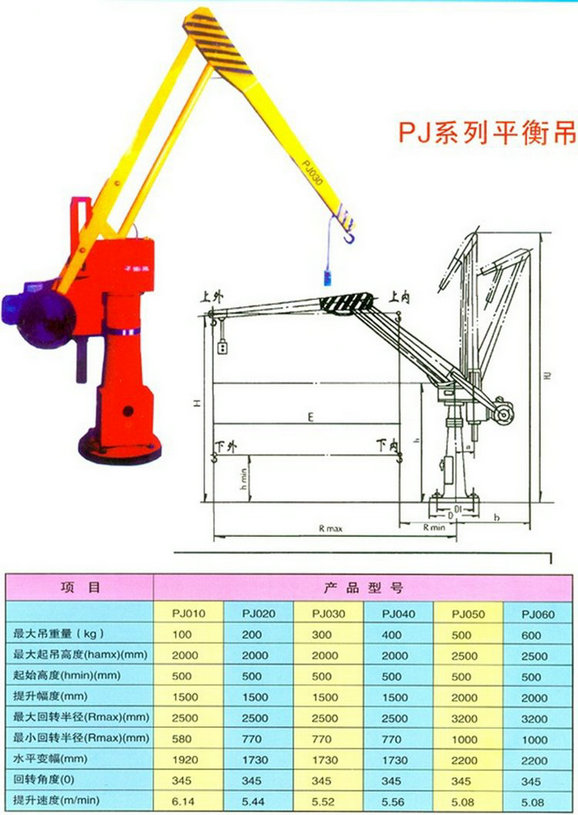
The table above lists the full technical parameters for the PJ series high-profile balancer, models PJ010 through PJ080. Contact our customer service team for high-resolution drawings.
Applications
The PJ series high-profile balancer is designed for a wide range of applications:
Machine Tool Loading/Unloading: Handling heavy workpieces on lathes, milling machines, machining centers, and similar equipment.
Assembly Line: Lifting and positioning medium-sized components during assembly and repair operations.
Production Line Integration: Bridging and transferring workpieces between different stations on a production line.
Foundry Workshop: Handling tasks such as core setting and mold closing.
Heat Treatment Workshop: Loading and unloading furnaces in high-temperature environments.
Automotive / Agricultural Machinery / Diesel Engine: Component assembly and material handling across the machinery manufacturing sector.
Selection Guide
PJ010~PJ020 (100~200kg): Ideal for loading/unloading machine tools and transferring light components between stations. The manual push-pull operation is smooth and effortless. Reference price: ¥3,000–6,000.
PJ030~PJ050 (300~500kg): Suited for assembling and repairing medium-weight workpieces. The four-bar linkage ensures balanced positioning at any point with high accuracy. Reference price: ¥5,000–10,000.
PJ060~PJ080 (600~800kg): Designed for lifting heavier parts. Features a reinforced column for added stability. Reference price: ¥8,000–15,000.
Operating Instructions
Pre-Operation Checks: Verify that all pivot points on the four-bar linkage move freely, the wire rope/chain is in good condition, and the motor and push buttons are functioning properly.
Startup & Operation: Use the push buttons for inching control to raise or lower the load. Move the load horizontally or rotate it by manually pushing or pulling the load or the fixture.
Lifting Operations: The balancer achieves equilibrium at any position—the load stays put when you release it, ensuring safe operation. Do not exceed the rated lifting capacity.
Shutdown & Maintenance: Periodically inspect the pivot pins of the four-bar linkage for wear, check the gearbox/reducer lubrication, and verify the insulation of the electrical wiring.
Why Choose Kelude Heavy Industry
Self-Balancing Four-Bar Linkage: The PJ series balancer uses a four-bar linkage that holds the load securely at any point within the work envelope, achieving millimeter-level positioning accuracy—far more intuitive and faster than remote-controlled electric hoists.
Lightweight, Effortless, Space-Saving: Compared to jib cranes and overhead cranes, the balancer is lighter, more compact, and requires no special foundation. It's the ideal tool to reduce physical strain on workers.
End-to-End Service: From initial design to after-sales support, we provide full lifecycle service with prompt phone response.
Service & Support
Kelude Heavy Industry offers full lifecycle support for the PJ series high-profile balancer. For technical parameters on additional models or to request a quotation, please call 13903802779 or chat with us online. We respond within 24 hours.
FAQ
Q: What's the difference between a balancer and a jib crane? Which one suits which application?
A: A balancer uses a four-bar linkage for precise (mm-level) positioning via manual push-pull, making it ideal for light loads (100–600kg) that require frequent, accurate placement—such as machine tool loading or assembly lines. A jib crane, on the other hand, uses a rotating cantilever with an electric hoist, better suited for heavier loads (0.25t and up) where frequent precision positioning isn't required. In short: choose a balancer for precise, repetitive tasks; choose a jib crane for heavier, larger-scale lifting.
Q: Which manufacturing standards does the PJ series balancer comply with?
A: The design and manufacturing follow the JB/T 7330 industry standard for balancers. The four-bar linkage is designed in accordance with the relevant sections on jib systems in the GB/T 3811 Crane Design Standard. Safety devices meet the requirements of TSG Q7014.
Q: How much does a PJ series balancer cost?
A: Models with a 100–200kg capacity are approximately ¥3,000–6,000; 300–500kg models are ¥5,000–10,000; and 600–800kg models are ¥8,000–15,000. The price includes the balancer unit and its electrical control system.