

Crane Loads Explained: Static vs Dynamic Load
Cranes are subjected to various loads during operation (such as static loads, dynamic loads, alternating loads, impact loads, vibration loads, etc.). Load-bearing and structural components will experience corresponding stress and deformation. If these exceed certain limits, they may lose functionality or even fail, creating dangerous situations.
1. Introduction to Crane Loads
During crane operation, the complexity of loading is not only reflected in the diversity of load types, but also exhibits amplitude variation characteristics depending on different operating conditions. Loads serve as the fundamental basis for force analysis of the crane and its components under normal working conditions, and also as the analytical basis for determining the causes of component scrapping or accidents. The accuracy of load determination will directly affect the safety of calculation results and the correctness of accident determination.
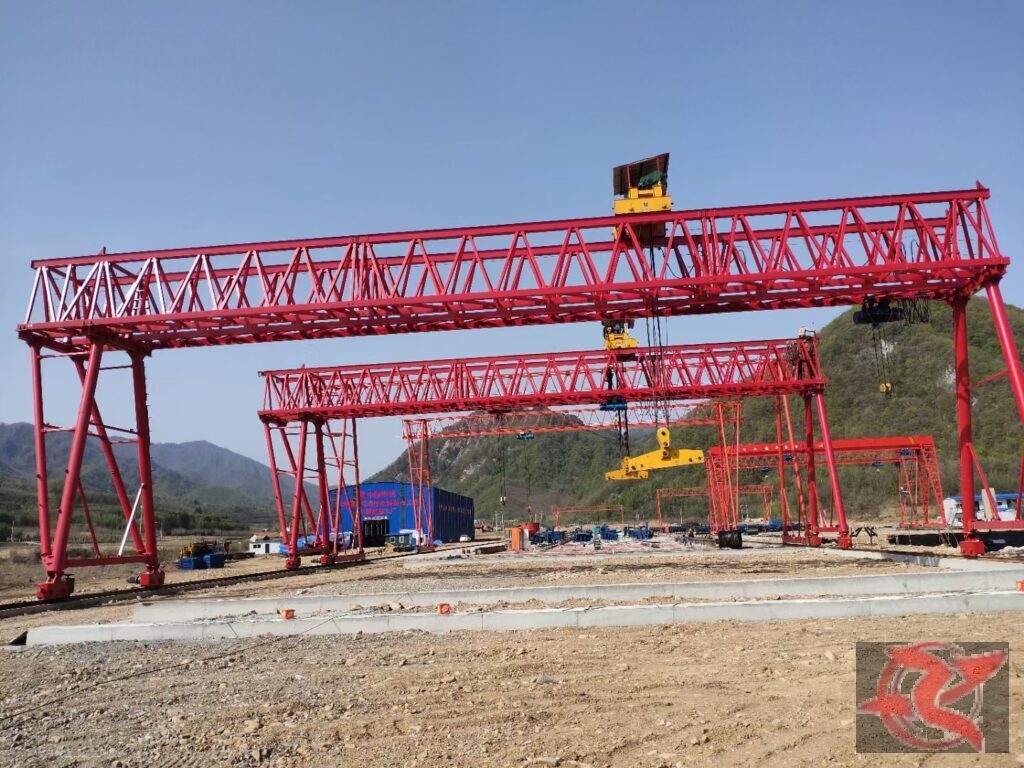
2. Introduction to Crane Static Loads
When the crane is in a stationary or stable operating state, it only bears static loads such as self-weight load and hoisting load.
(1) Self-weight load PG, including the gravity of the crane's metal structure, mechanical equipment, electrical equipment, as well as bins or conveyors attached to the crane and their materials (excluding the gravity of the hoisting load). The load application method can be considered separately; generally, mechanical equipment and electrical equipment loads are considered as concentrated loads.
(2) Hoisting load PQ, referring to the gravity of all hoisted masses, including the gravity of the maximum effective load allowed to be lifted, the gravity of load-handling devices (such as lower pulley blocks, hooks, spreader beams, grabs, containers, lifting electromagnets, etc.), the gravity of suspended winding components, and other preparation masses during lifting. The weight of hoisting ropes for lifting heights less than 50m can be neglected.
3. Introduction to Crane Dynamic Loads
Dynamic loads refer to the dynamic effects generated when the crane's motion state changes. They are an important basis for strength calculations and also affect fatigue calculations.
When the crane is not working or the load is suspended stationary in the air, its self-weight load and hoisting load are in a static state. When the crane is working, the motion state changes, and the dynamic effect increases the original static load value; the increased portion constitutes the dynamic load. Dynamic loads include: inertial loads generated by self-weight and hoisting loads during variable-speed motion of the structure; impact loads generated when wheels pass over uneven track joints or when moving parts contact buffers; and vibration loads generated in the elastic systems of the metal structure and mechanisms due to inertial and impact loads. Dynamic loads are related to motion direction and working speed (acceleration), related to structural factors (such as system mass distribution, system stiffness, and damping), and related to usage conditions (such as the magnitude of external loads and their variation patterns, presence of impacts, etc.). For calculation convenience, dynamic coefficients (the ratio of dynamic load to static load) are typically used. In practice, they are selected by consulting crane design specifications and relevant manuals based on actual conditions.
Frequently Asked Questions
Q: What is the difference between static load and dynamic load on a crane?
A: Static load refers to the load borne by the crane in a stationary state, including self-weight and hoisted load; dynamic load refers to the load borne by the crane under dynamic conditions such as operation, starting/braking, and wind loads, typically calculated by multiplying the static load by a dynamic coefficient (generally 1.1~1.5). Structural design uses dynamic load as the verification basis.
Q: Which standards are used for crane load calculations?
A: Crane load calculations are performed in accordance with GB/T 3811 "Design Rules for Cranes," which specifies in detail the calculation methods for various loads and the principles of load combinations. Wind loads are calculated according to the basic wind pressure specified in GB/T 3811.
Q: What is the rated lifting capacity of a crane?
A: The rated lifting capacity refers to the maximum weight of goods that the crane is allowed to lift under normal operating conditions, excluding the self-weight of hooks, spreaders, and other lifting accessories. It is designated as Gn and is the most critical parameter in crane selection and usage.
