

Crane Rust Causes and Corrosion Hazards
Causes of crane rust and coating anti-corrosion. Outdoor gantry cranes rusting, gantry cranes rusting, chemical plant workshop cranes rusting and corroding, crane corrosion, anti-corrosion for lifting machinery, and inadequate coating or spray painting treatment are the most common situations leading to crane rust. The following details the causes of crane rust and how to prevent crane corrosion and rust.
Outdoor gantry crane rust and corrosion, and gantry crane crane rust, occur because the crane is exposed to the air for a long time with incomplete protective measures, or in chemical industry workshop cranes, due to prolonged exposure to surrounding corrosive gases or liquids, leading to a loss process through chemical reactions. Especially when the air is polluted by various chemically corrosive media, the corrosion becomes more severe. Even if the crane has been painted for protection, after sun and wind exposure, temperature changes, rain, humidity, mold erosion, and mechanical impact, the coating will gradually deteriorate and lose its protective capability. If not taken seriously, accelerated corrosion will inevitably affect the crane's strength and rigidity, shorten its service life, and reduce safety and reliability. Therefore, it is necessary to analyze the hazards, patterns, and causes of crane corrosion to implement effective anti-corrosion measures.
1. Hazards of Crane Rust
The hazards of crane rust not only include uniform thinning of the surface thickness but also the formation of localized larger rust pits, causing stress concentration and promoting early local failure of the steel structure. This is particularly dangerous for structures that directly bear dynamic loads and operate in low-temperature environments. Furthermore, corrosion not only significantly reduces the crane's technical performance and service value but can even lead to failure or scrapping due to reduced load-bearing capacity, causing accidents.
2. Patterns of Crane Corrosion
1. (According to statistics from the National Crane Equipment Testing Center on cranes in service for over 10 years in industrial plants) In industrial atmospheres, when close to the corrosion source, crane corrosion is more severe, especially in industrial workshops with high dust levels. Outdoor cranes, gantry cranes, loading bridges, masts, etc., suffer particularly severe rust due to harsh working environments, wind, sun exposure, and foreign object impact. Localized corrosion depth on the steel structure surface can reach 2-3mm.
2. Components such as the crane track, end carriages, walkways, platforms, ladders of manual and electric double-girder bridge cranes, and the main girder, end carriages, and electric hoist housing of electric single-girder cranes are prone to corrosion due to dust and moisture erosion.
3. The crane trolley frame, reducer housing, etc., are prone to corrosion due to their positions being difficult to clean, accumulating dust and moisture.
4. In workshops with corrosive media environments, if the crane has not undergone targeted anti-corrosion treatment, the degree of corrosion is severe.
5. In coastal areas with high air humidity and high salt spray concentration, the corrosion rate of crane steel structures significantly accelerates.
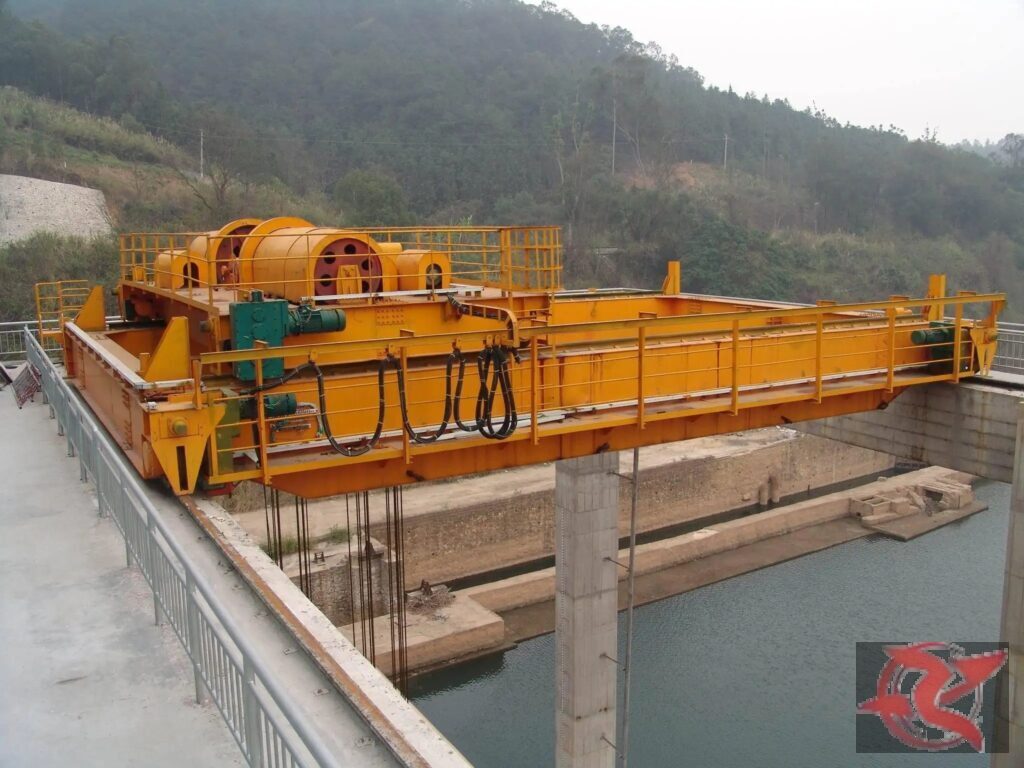
3. Causes of Crane Rust and Corrosion
There are many reasons for crane rust, peeling of applied anti-corrosion paint, steel structure rust, and coating damage or detachment. The specific analysis is as follows:
- 1. Inadequate surface pretreatment of steel before crane coating: The quality of steel surface treatment significantly impacts coating life. Data shows that surface treatment quality affects coating life by approximately 50%. Therefore, strict surface pretreatment of steel, such as rust removal, degreasing, and phosphating, must be performed before crane coating; otherwise, the coating is prone to peeling and rusting.
- 2. Insufficient number of coating layers for the crane: Crane steel structure coating generally requires a complete system of primer + intermediate coat + topcoat. If only one coat of primer or only topcoat is applied, the coating is too thin, resulting in poor protection and susceptibility to rust.
- 3. Insufficient coating thickness for the crane: Coating thickness is a key factor affecting coating life. If the coating is too thin, moisture and corrosive media can easily penetrate to the steel surface, causing corrosion. Generally, the total coating thickness should not be less than 150μm.
- 4. Untreated defects on the crane steel structure surface: Defects such as unground welds, uncleaned spatter, and unchamfered edges can cause coating damage at these points, becoming entry points for corrosion.
- 5. Coating environment not meeting requirements: Temperature, humidity, and dust during coating directly affect coating quality. Coating should not be performed when the ambient temperature is below 5°C or relative humidity exceeds 85%; otherwise, coating adhesion is poor and prone to peeling.
- 6. Improper interval between coating applications: After applying the primer, the topcoat should be applied within a specified time. If the interval is too long, the primer surface becomes contaminated or aged, affecting interlayer adhesion and leading to coating peeling.
- 7. Unqualified paint quality: Using expired, deteriorated, or improperly diluted paint reduces coating performance and protective effectiveness.
- 8. Untimely repair of mechanical damage during crane use: During transportation, installation, and use, the coating is inevitably subject to mechanical damage. If not repaired promptly, the damaged areas will quickly rust and spread outward.
- 9. Applying only topcoat without primer: Primer is applied directly to the steel surface, containing more fillers and less binder, resulting in a rough paint film with strong adhesion to the steel structure surface, providing excellent rust prevention. Topcoat is applied over the primer, containing less filler and more binder, producing a glossy film after curing, primarily protecting the underlying primer. Therefore, when coating the entire crane steel structure, applying only topcoat without primer cannot achieve effective rust prevention and will inevitably reduce the crane's service life.
- 10. Improper selection of paint types: Different paints have different types, properties, and application methods. Improper matching of primer and topcoat during use can cause lifting or wrinkling of the primer film. For example, perchlorovinyl paint cannot be used with oil-based primers because it contains strong solvents that can lift the primer film, causing the crane to rust.
FAQ
Q: At what level of corrosion does a crane need to be scrapped?
A: According to GB/T 3811 and GB 6067, when the corrosion depth of main load-bearing components (main girder, end carriages, outriggers, etc.) reaches 10% of the original wall thickness, the crane must be downgraded for use; when it reaches 20%, it must be scrapped. If rust is found during daily inspections, rust removal and anti-corrosion treatment should be carried out promptly.
Q: How to prevent crane corrosion?
A: Preventive measures include: regular anti-corrosion coating (every 2-3 years for outdoor cranes, every 3-5 years for indoor cranes), keeping the structure ventilated and dry, promptly repairing paint damage, drilling drainage holes in areas prone to water accumulation, and selecting weather-resistant coating systems.
Q: Which standards are followed for crane corrosion treatment?
A: Rust removal and anti-corrosion are carried out according to GB/T 8923 "Preparation of steel substrates before application of paints and related products," and coating quality is accepted according to JB/T 5000.12 "Heavy machinery general technical conditions - Painting."
