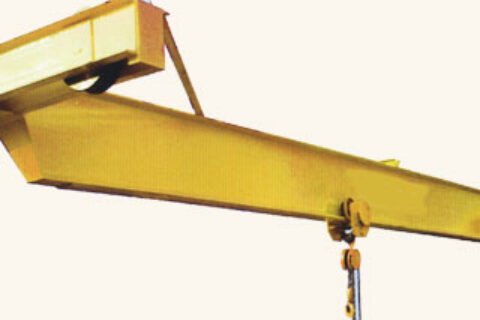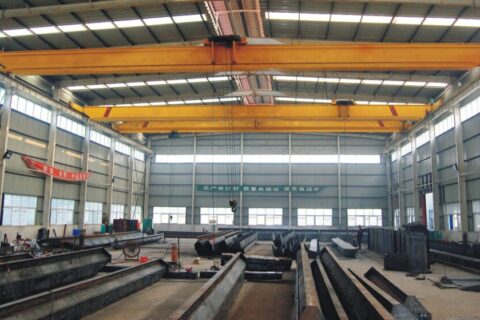

LDA Type Electric Single-Girder Overhead Crane
1. Product Overview
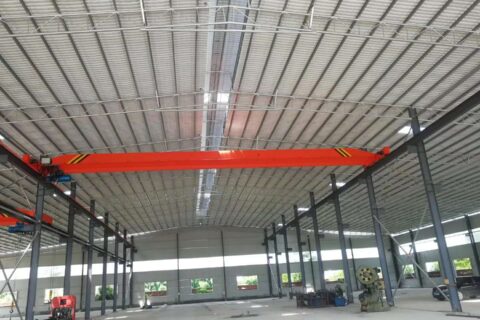
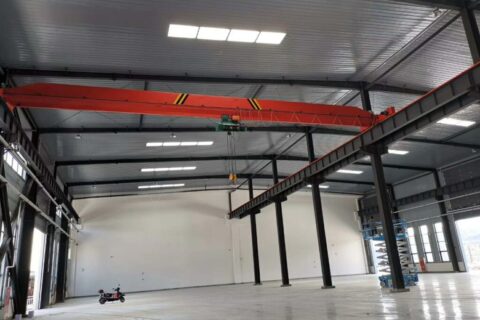
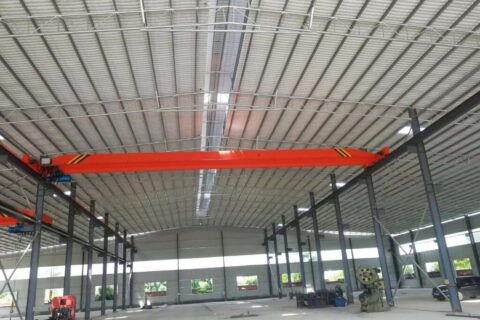
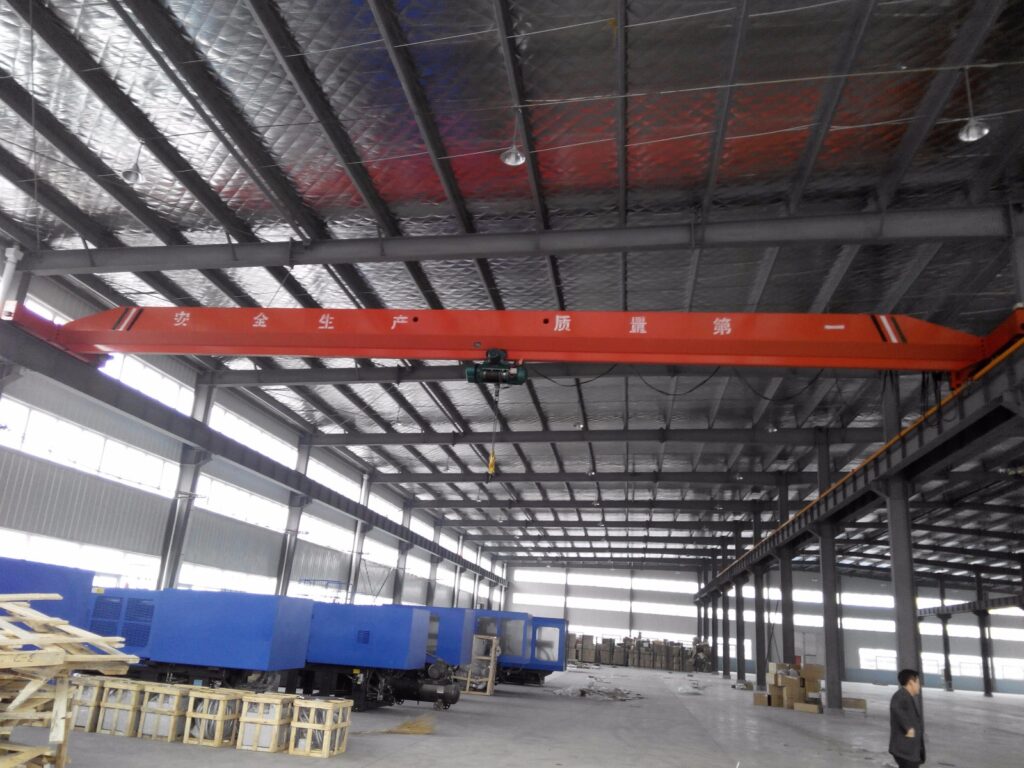
The LDA Type Electric Single-Girder Crane — commonly referred to in the market as a traveling crane, overhead crane, or workshop crane — is essentially the same piece of equipment. Paired with a CD1/MD1 electric hoist, it offers a lifting capacity of 1 to 20 tons and a span of 7 to 40 meters, making it a light-duty single-girder lifting solution. Whether you found this page searching for a traveling crane, overhead crane, or workshop crane, this is the machine you're looking at. This article walks you through the specifications, parameters, and key purchasing considerations so you'll know exactly what to buy by the end.
Product Images
2. Models & Specifications
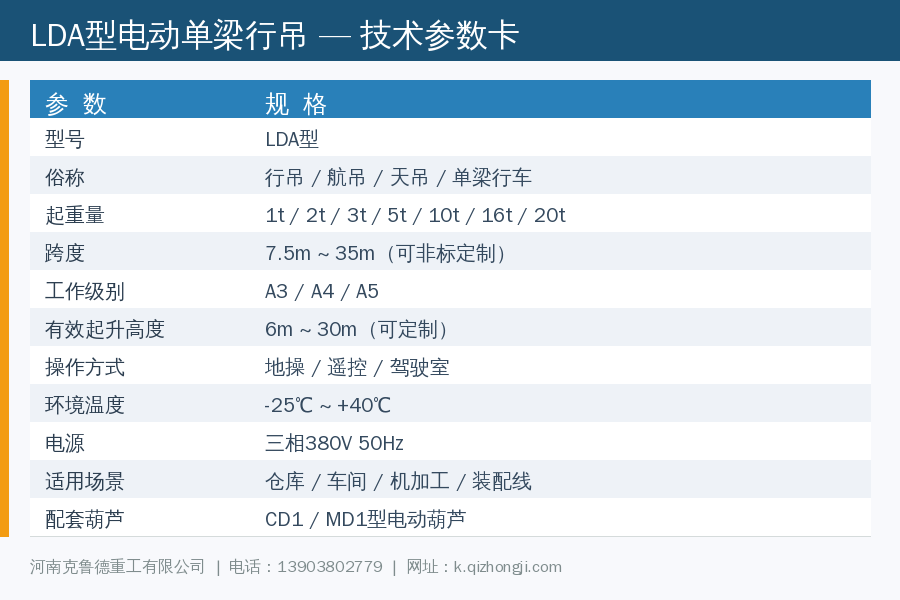
- Model: LDA Type
- Specifications: 1t, 2t, 3t, 5t, 10t, 16t, 20t — custom non-standard manufacturing available
3. Technical Parameters
- Span: 19.5m, 20.5m, 21.5m, 22.5m, 25.5m, 30.5m; custom spans from 7m to 40m available.
- Lifting Height: 6m, 9m, 12m, 18m, 24m, 30m; custom heights available.
- Work Duty / Classification: A3/M3
- Lifting Speed: 8m/min (slow speed 0.8m/min), 7m/min (slow speed 0.7m/min), 13.5m/min (slow speed 0.35m/min) — optional configurations
- Cross Travel Speed: 20m/min; high-speed option up to 30m/min
- Long Travel Speed: 20m/min; high-speed option up to 30m/min
- Power Supply: 3-phase AC 380V 50HZ (customizable to destination country voltage)
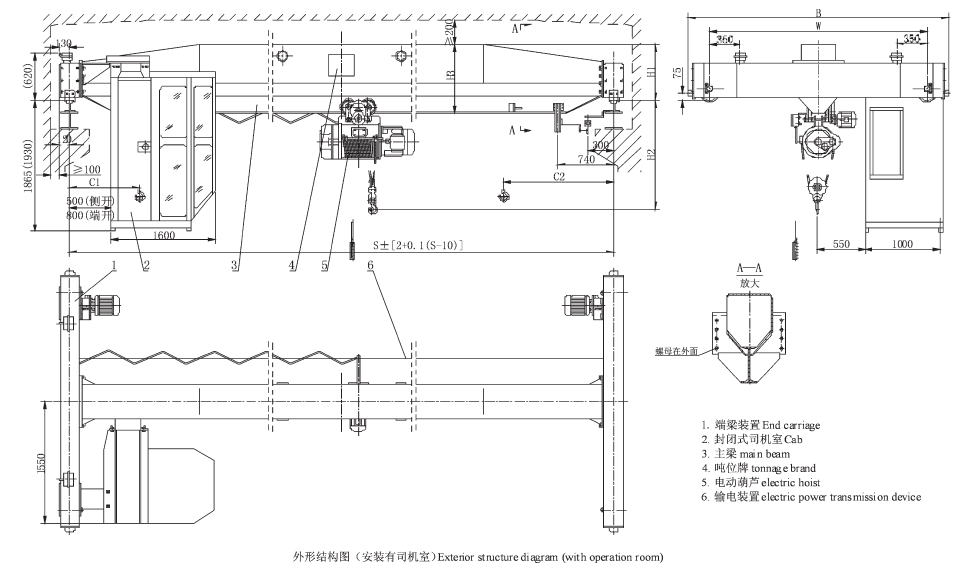
Structural Diagram
4. Main Components
The LDA Type Electric Single-Girder Crane consists of three main parts: the bridge frame (metal structure), the electric hoist, and the electrical system.
▎Bridge Frame
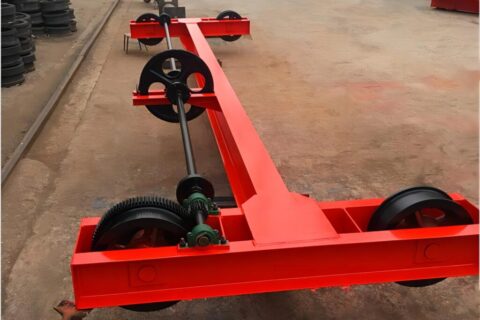
The main girder is a box-section structure welded from I-beam and steel plate, while the end carriages are formed from rolled sections or bent steel plate. The main girder and end carriages are connected with high-strength bolts. The bridge frame is the backbone of the entire crane, bearing the full load. The LDA Type bridge frame features a simple structure and low dead weight, making it ideal for standard workshops with spans from 7.5m to 35m.
▎Electric Hoist
Compatible with the CD1 or MD1 wire rope hoist, offering a lifting speed of 8/0.8m/min (two-speed) and a travel speed of 20/30m/min. The hoist runs along the lower flange of the I-beam on the main girder. The CD1 is single-speed (standard speed), while the MD1 is two-speed (standard + creep speed) — the MD1 is recommended for handling precision equipment.
▎Electrical System
Powered by a 380V three-phase supply with a 36V safe control voltage. Operation modes include floor operation (pendant control) and remote control. Floor operation is cost-effective, while remote control offers greater flexibility and convenience. The control panel is equipped with master stop and start buttons for one-touch power cutoff in a crash back.
5. Purchasing Information
When ordering a single-girder crane, please provide the following details so we can quickly confirm your requirements:
- Lifting capacity
- Span (distance between rail centers)
- Lifting height (from hook center to floor)
- Do you need the runway rails and cable? (Please provide the crane travel length)
- Feel free to share any additional details — we'll provide a competitive quotation for your single-girder crane
6. After-Sales Service
The LDA Type Electric Single-Girder Crane is covered by a one-year warranty against quality-related defects under normal operating conditions from the date of delivery. For products beyond the warranty period (excluding those that are beyond repair), our company provides maintenance services at a nominal cost covering spare parts.
Price Reference (for your budgeting): The price of an LDA Type Electric Single-Girder Crane is determined by lifting capacity and span. A 5-ton, 12-meter span model is approximately ¥20,000–35,000; comparable models from other manufacturers typically range from ¥25,000–40,000. Kelude Heavy Industry offers factory-direct pricing — even single units are sold at wholesale prices. Optional features are priced separately with transparent pricing.
Availability & Delivery Time: Common specifications (1–10 tons, 7–22.5m span) are kept in stock; delivery takes 7–10 days after order confirmation. Custom non-standard manufacturing ships within 15–20 days. Every crane undergoes individual load testing before leaving the factory and comes with a Certificate of Conformity and inspection report.
Specification Summary Table
7. Why Choose Kelude Heavy Industry
▎Factory-Direct Pricing, No Middlemen
Henan Kelude Heavy Industry is located in the Changyuan Crane Industrial Park in Henan. As the manufacturer of LDA Type single-girder cranes, we sell directly to you with no middleman markup. Wholesale pricing applies even for a single unit, and every order includes design, manufacturing, shipping, installation, inspection, and operator training — a true Turnkey Project that saves you time and money.
▎Custom Non-Standard Manufacturing Available
Spans from 7.5m to 35m and Lifting Capacity from 1t to 20t can all be tailored to your needs. Special working conditions (Explosion-proof, metallurgical, Anti-corrosion, insulated) can be upgraded to the corresponding special-duty models. Send us three figures before ordering — Span, Lifting Capacity, and Lifting Height — and we'll get you a preliminary Quotation within 10 minutes.
▎Quality You Can Rely On
All products are manufactured to the JB/T1306 Standard. Each unit undergoes load and operational Testing before leaving the factory, and any quality issues within the first year are covered by free Maintenance. Beyond the Warranty period, you only pay for replacement parts.
Single Girder Crane Buying Guide — How to Set the 5 Key Parameters
Buying an overhead crane isn't like buying a water pump — once the parameters are wrong, they can't be changed later. Think through these 5 parameters before you place your order:
1⃣ Lifting Capacity — Go Bigger, Not Smaller
Don't size your crane based on "the heaviest load I'll lift." Instead, use "your heaviest load plus a 20% margin." For example, if your heaviest workpiece weighs 4 tons, choose the 5-ton model — not the 3-ton. The reason is simple: run a crane overloaded long enough and the Main Girder will develop Deflection and Deformation. Replacing the main girder later will cost you more than double what you saved upfront. LDA Type cranes come in seven standard ratings — 1t, 2t, 3t, 5t, 10t, 16t, and 20t — and the maximum Lifting Capacity decreases as the Span increases.
2⃣ Span — Go Shorter, Not Longer
The Span is the distance between the centerlines of the two Runway Rails — not the width of your Factory building. A common mistake customers make is "my building is 30m wide, so I'll buy a 30m span" — that's wrong. The crane Span should be 2–3m shorter than the building width, because you need clearance on both sides for rail installation and safety. Also, the longer the Span, the heavier the Bridge beam and the more effective Lifting Height gets compressed. For heavy-duty models above 16t with a Span over 25m, we recommend consulting our engineers for a structural verification.
3⃣ Lifting Height — Leave Some Headroom
Lifting Height is the distance from the floor to the highest point the Hook can reach. Nothing is more awkward than a load that's lifted but only a meter off the ground — you can't load it onto a truck. LDA Type cranes are available in standard heights of 6m, 9m, 12m, 18m, 24m, and 30m. If your rail height is 8m, choose the 9m option to leave the minimum clearance needed for the Hook and Hoist (about 1.5m).
4⃣ Electric Hoist — Single-Speed or Two-Speed
The CD1 type is Single-Speed (8m/min), while the MD1 type is Two-Speed (8m/min fast + 0.8m/min slow). For everyday Hoisting, the CD1 is sufficient. But if you need precise positioning — like mold assembly or equipment installation — it's worth the small upgrade to the MD1 Two-Speed. The slow speed lets you ease the load into place without damaging anything.
5⃣ Crane Rail and Power Supply
A crane isn't plug-and-play — you'll also need the Runway Rail (I-Beam) and a power supply system (Conductor Rail or Cable Reel). LDA Type cranes typically use I20a to I45c I-Beams, depending on the Lifting Capacity. For power, Conductor Rail costs more but lasts longer and suits frequent use; Cable Reels are cheaper and fine for occasional operation. Ask about both accessories when ordering, so you're not stuck with a crane that can't be installed when it arrives.
There's no one-size-fits-all answer when choosing a crane — it all comes down to your actual working conditions. If you're not sure, send us your Factory building dimensions and Hoisting requirements, and we'll help you figure it out. We can't promise how much you'll save, but we can at least help you avoid costly mistakes.
FAQ
Q: Are "Traveling crane" and "Overhead traveling crane" the same thing? Why so many names?A: They're the same equipment. Traveling crane, Overhead traveling crane, Harbor crane, Traveling crane, and overhead crane all refer to the Electric Single-Girder Crane — just different regional terms. Factories in the north tend to say "overhead crane," construction sites in the south say "Traveling crane," and "Harbor crane" is the term used around Ports. Whatever you call it, the technical standards are the same: GB/T 3811 and JB/T 2603. Whether you search "Traveling crane" or "Overhead traveling crane," you'll find the same type of equipment.
Q: What's the difference between the LDA Type and the older LD Type? Are the parts interchangeable?
A: The LDA is an Upgrade of the older LD model, mainly in the End Carriage structure and drive unit — it runs smoother and quieter. Most parts (Electric Hoist, travel wheel, cable pulley block, Remote Control) are interchangeable, but the Main Girder and End Carriage are not. If you're just replacing the Hoist, an old LD Type can take a new hoist; if you're replacing the whole crane, we recommend upgrading directly to the LDA Type.
Q: What information do I need to provide to get an accurate Quotation?
A: Three numbers are enough — Lifting Capacity (tons), Span (meters), and Lifting Height (meters). For more detail: your site's Power Supply Voltage, whether you already have a Crane Rail (if not, you'll need a rail Quotation), and the Operation Mode (Remote Control or Floor operation). Send us those three or four figures and we'll get you a preliminary Quotation within 10 minutes. No drawings needed.