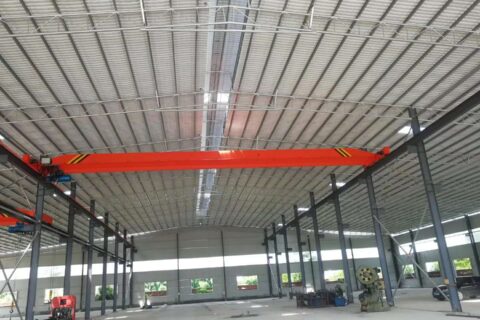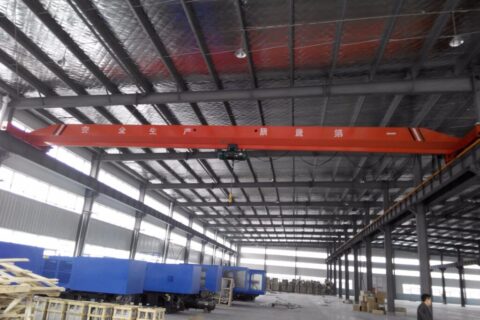

LDS Type Manual Single-Girder Crane
Manual Single-Girder Crane Overview
The SDQ/LDS series manual single-girder crane is a fully hand-operated lifting solution built around a box-type main girder, a manual trolley, and a hand chain hoist. All motions — crane travel and hoisting — are driven by hand chain, requiring no electrical power whatsoever. Available in lifting capacities from 1 to 10 tons with spans ranging from 5 to 17 meters.
While not the mainstream choice, manual overhead cranes outperform electric models in three specific scenarios: workshops without power supply, explosive or flammable environments, and occasional maintenance duties where the crane sits idle for months at a time. Zero electricity costs, zero electrical failures — the only upkeep is an occasional drop of oil on the chain.
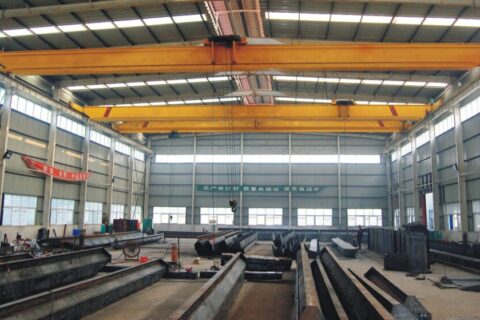
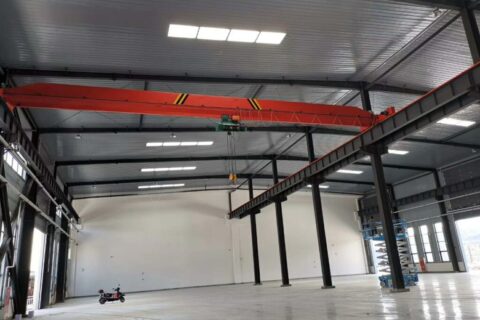
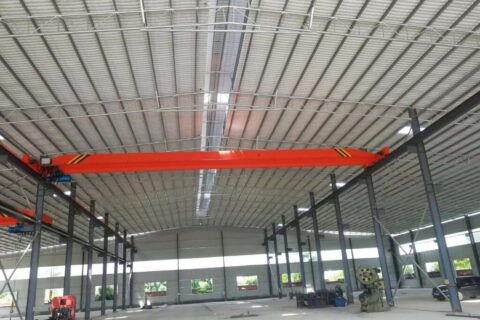
Product Gallery
Model & Specification Options
- Model: LDS / SDQ (identical product, two naming conventions)
- Lifting Capacity: 1 t, 2 t, 3 t, 5 t, 10 t — custom capacities available on request
- Drive Type: Fully manual — hand chain for crane travel, hand chain hoist for lifting
- Design Standard: JB/T 1306-2008
- Customization: Span and lifting height can be tailored to your site dimensions
- Delivery Coverage: Nationwide — shipping arranged or direct delivery to your door
Technical Parameters & Specifications
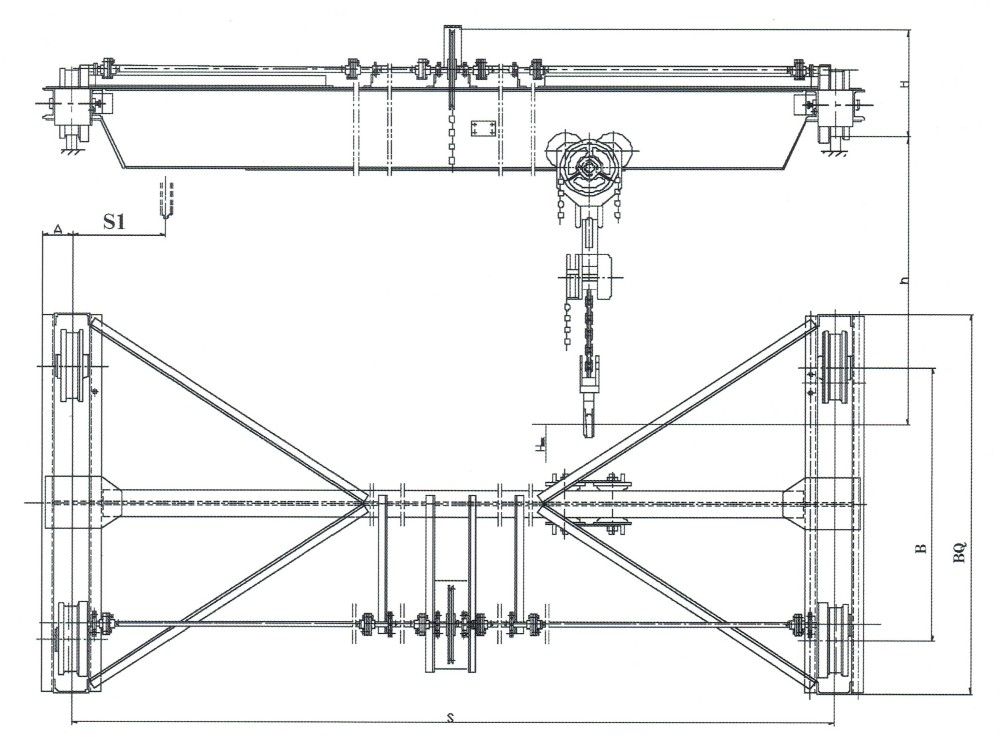
Below is the technical parameter comparison table for the SDQ/LDS manual single-girder crane:
| Lifting Capacity(t) | 1t | 2t | 3t | 5t | 10t | |
| Lifting Height(m) | 3~10 | |||||
| Work Duty / Classification | A1-A3 | |||||
| Travel Speed (m/min) | Crane Bridge / Long Travel | 5.2 | 5.2 | 5.2 | 4.3 | 4.3 |
| Trolley / Cross Travel | 5.3 | 5.9 | 4.7 | 4.7 | 4.2 | |
| Crane Railface width | 37~51 | |||||
| Lifting Capacity (t) | Span (m) | traction force(kg) | basic dimensions(mm) | Weight (t) | Crane Bridge / Long Travel Wheel load | ||||||||
| Crane Bridge / Long Travel | Trolley / Cross Travel | Hoisting / Lifting | B | BQ | H | HMax | A | h | S1 | ||||
| 1t | 5 | 9.4 | 6 | 21 | 1200 | 1800 | 520 | 10000 | 145 | 550 | 360 | 0.65 | 6.5 |
| 6 | 0.69 | 6.7 | |||||||||||
| 7 | 580 | 380 | 0.76 | 7.0 | |||||||||
| 8 | 0.87 | 7.2 | |||||||||||
| 9 | 0.85 | 7.3 | |||||||||||
| 10 | 610 | 395 | 0.84 | 7.6 | |||||||||
| 11 | 1600 | 2200 | 1.04 | 9 | |||||||||
| 12 | 1.09 | 8.1 | |||||||||||
| 13 | 650 | 420 | 1.25 | 8.5 | |||||||||
| 14 | |||||||||||||
| 1.31 | 8.6 | ||||||||||||
| 2t | 5 | 13.4 | 12 | 32.5 | 1200 | 1800 | 520 | 145 | 720 | 400 | 0.70 | 11 | |
| 6 | 0.74 | 11.3 | |||||||||||
| 7 | 750 | 415 | 0.82 | 11.7 | |||||||||
| 8 | 0.87 | 11.9 | |||||||||||
| 790 | 440 | 1.00 | 12.3 | ||||||||||
| 9 | |||||||||||||
| 10 | 1.06 | 12.6 | |||||||||||
| 11 | 1600 | 2200 | 1.16 | 12.9 | |||||||||
| 12 | 830 | 465 | 1.32 | 13.3 | |||||||||
| 13 | 870 | 490 | 1.48 | 13.8 | |||||||||
| 14 | 1.55 | 14 | |||||||||||
| 3t | 5 | 19.5 | 14 | 34.5 | 1200 | 1800 | 520 | 145 | 900 | 460 | 0.81 | 16.1 | |
| 6 | 0.87 | 16.4 | |||||||||||
| 7 | 940 | 485 | 0.98 | 17 | |||||||||
| 8 | 1.05 | 17.2 | |||||||||||
| 9 | 1.13 | 17.6 | |||||||||||
| 10 | 1.20 | 17.9 | |||||||||||
| 11 | 1600 | 2200 | 980 | 510 | 1.39 | 18.4 | |||||||
| 12 | 1.46 | 18.7 | |||||||||||
| 13 | 1030 | 540 | 1.72 | 19.4 | |||||||||
| 14 | |||||||||||||
| 1.80 | 19.7 | ||||||||||||
| 5t | 5 | 20 | 20 | 37.5 | 1200 | 1800 | 600 | 150 | 1210 | 520 | 0.96 | 25 | |
| 6 | 1.03 | 25.7 | |||||||||||
| 7 | 1250 | 560 | 1.19 | 26.5 | |||||||||
| 8 | 1.28 | 27 | |||||||||||
| 9 | 1.36 | 27.5 | |||||||||||
| 10 | 1300 | 585 | 1.60 | 28.1 | |||||||||
| 11 | 1600 | 2200 | 1.73 | 28.6 | |||||||||
| 12 | 1360 | 625 | 1.98 | 29.5 | |||||||||
| 13 | 2.09 | 29.8 | |||||||||||
| 14 | 2.21 | 30 | |||||||||||
| 10t | 5 | 20 | 25 | 40 | 1800 | 2600 | 720 | 160 | 1390 | 555 | 1.42 | 49 | |
| 6 | 1.49 | 50 | |||||||||||
| 7 | 1440 | 585 | 1.58 | 51.4 | |||||||||
| 8 | 1.77 | 52 | |||||||||||
| 1.87 | 52.9 | ||||||||||||
| 9 | |||||||||||||
| 10 | 1490 | 615 | 2.9 | 53.8 | |||||||||
| 11 | 2.25 | 54.9 | |||||||||||
| 12 | 1550 | 650 | 2.38 | 55 | |||||||||
| 2.57 | 56 | ||||||||||||
| 13 | |||||||||||||
| 2.83 | 56.5 | ||||||||||||
Structural Diagram
Key Components
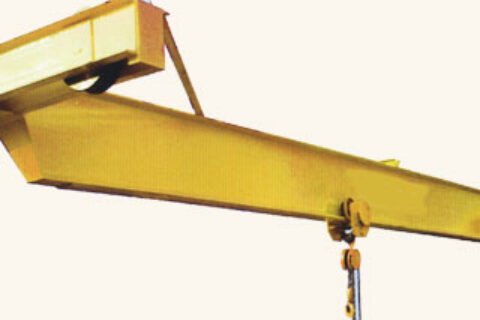
▎Box-Type Main Girder
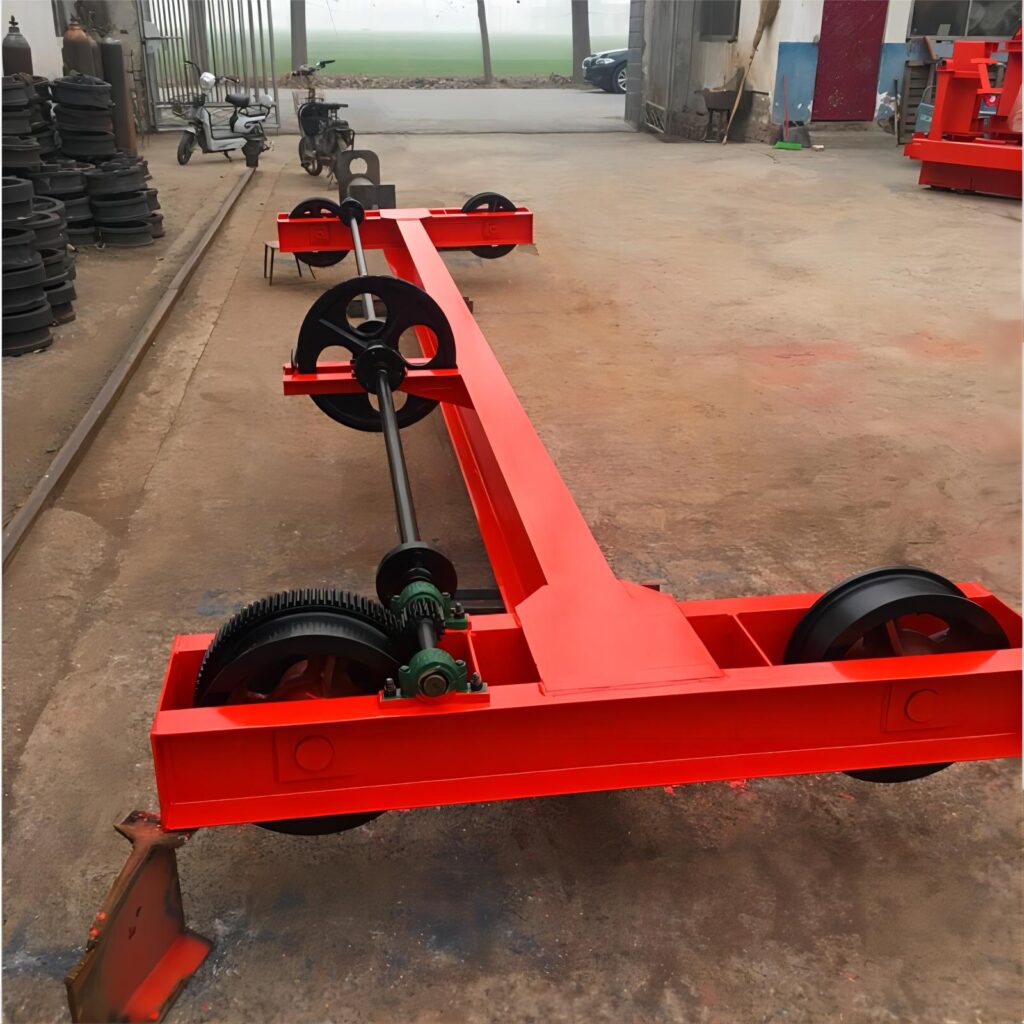
The main girder is a box-section structure welded from I-beam and steel plate, carrying the full rated load plus its own dead weight. Manual single-girder cranes typically have a span of no more than 17 m, with a smaller girder cross-section than electric overhead cranes — lighter dead weight and lower demands on the building structure.
▎Manual Trolley
The manual trolley rides on the bottom flange of the I-beam main girder and is driven along the beam by a hand chain. The trolley has a compact design with an optimized wheel base, so it tracks straight without skewing or binding when the chain is pulled.
▎Hand Chain Hoist
The hoisting mechanism uses a hand chain hoist: pulling the hand chain rotates the load sheave to raise or lower the load. The hoist has an integral brake that locks automatically when the chain is released, preventing load slipping.
▎Crane Travel Mechanism
Each end of the crane bridge has its own hand chain drive unit. The operator pulls the chain from floor level, and the crane travels longitudinally along the I-beam rails. Long travel speed is approximately 5.2 m/min; trolley travel is about 5 m/min — not fast, but adequate and safe.
▎End Carriages and Crane Rail
The end carriages are fabricated from structural steel or pressed steel plate, with wheels at each end running on I-beam rails. The I-beam rail section is selected based on span, ranging from I20a to I45c.
Applications
LDS/SDQ type manual single-girder cranes are widely used in workshops without power supply, warehouse maintenance bays, small fabrication shops, and explosion-hazard areas. Working environment temperature: -25°C to +40°C.
Application Scenarios:
- No-Power Locations: Remote job sites, temporary shelters, and field warehouses where three-phase power is unavailable.
- Explosion-Hazard Areas: Chemical warehouses, paint shops, dusty environments — the manual crane has zero electrical components, making it inherently explosion-proof.
- Low-Frequency Maintenance: Equipment repair bays and standby lifting points where a crane is needed only a few times a year but must be dependable when called upon.
- Budget-Conscious Projects: A manual crane costs roughly one-third to one-half of an equivalent-capacity electric crane — and there are zero electricity costs.
Real-World Applications and Customer Stories
▎Chemical Plant Warehouse — Zero Electrical Risk, Inherently Explosion-Proof
The biggest concern in a chemical warehouse is electrical sparking. A manual crane is all-mechanical — no motor, no conductor rail, no remote control — making it the safest choice for Class A storage areas. A pesticide plant in Shandong previously moved 200 kg drums by hand — slow, labor-intensive, and a safety hazard. They installed an SDQ 2 t manual single-girder crane with an 8 m span. Workers now operate the chain from floor level, never standing beneath the load. The customer reports that a job that used to take a full 8-hour shift now gets done in two and a half hours.
▎Rural Machinery Shop — Workshop Without Three-Phase Power
A small machine shop in Zhoukou, Henan, operates out of a converted building with only 220 V lighting circuits. Running a three-phase line would have cost tens of thousands of yuan. They chose an LDS 3 t manual single-girder crane with a 10 m span for daily lifting of castings and molds — more than adequate. The owner's math: the manual crane came in at under ¥20,000, while a three-phase upgrade plus an electric crane would have run at least ¥50,000 — the savings paid for a new milling machine.
▎Equipment Maintenance Bay — Occasional Use, Must Be Reliable
Most factory maintenance bays don't need daily lifting, but when equipment goes down for repair, a crane is indispensable. A manual crane makes more sense here than an electric one — no motor to worry about degrading from moisture during long idle periods, no conductor rail oxidation causing intermittent contact. The machine repair shop at a cement plant in Luoyang installed an SDQ 5 t manual single-girder crane, used fewer than 20 times a year — but every single lift has been dependable. After 8 years of service, the only replacement part has been the hand chain hoist chain.
Why Choose Kelude
Manual cranes are simple in construction, but rail selection, span matching, and hoist compatibility still require an experienced manufacturer. Kelude has been building manual cranes for years, and three things set us apart:
- Hoist and Main Girder Pre-Matched: The hand chain hoist mounting dimensions must align with the I-beam flange width of the main girder. We supply standard-compliant hand chain hoists with adequate chain strength and responsive braking. The top flange rail width of the main girder is sized to the hoist model — no guesswork or field measuring for the customer.
- Rail Selection Done Right: Even though manual cranes handle lighter loads, the I-beam rail section can't be chosen arbitrarily — with longer spans, insufficient beam stiffness causes trolley binding and rough travel. We calculate the correct I-beam section (I20a to I45c) based on span and lifting capacity to ensure smooth trolley operation.
- Non-Standard Spans at No Extra Cost: Manual crane spans are frequently non-standard (e.g., 6.5 m, 11.3 m), unlike electric cranes with standardized spans. Our standard non-standard spans carry no surcharge — quoted at the regular rate.
If you're evaluating a manual crane, send us your building dimensions and lifting requirements, and we'll confirm the right model and provide a quotation. No charge for the selection phase. Phone: 13903802779
After-Sales Service
LDS/SDQ type manual single-girder cranes carry a one-year warranty covering quality-related defects under normal use from the date of delivery. Beyond the warranty period, we provide repair service at parts cost only.
Price Reference: Manual crane pricing is based on lifting capacity and span. Approximate ranges: 1 t / 6 m span — ¥8,000–12,000; 3 t / 8 m span — ¥15,000–20,000; 5 t / 10 m span — ¥20,000–30,000; 10 t / 12 m span — ¥35,000–50,000. Comparable electric cranes (LDA type) run ¥30,000–100,000 — a manual crane saves more than half the cost, plus zero electricity.
Availability and Delivery: Common specifications (1–10 t, span ≤ 12 m) are kept in stock. Shipment within 7–10 days after parameter confirmation. Non-standard custom orders ship in 15–20 days.
Buying Advice: Buying the wrong type of crane costs more than paying a bit extra for the right one. If your workshop needs dozens of lifts per day, pulling a hand chain gets tiring fast — go with an electric crane instead. A manual crane is the right fit for applications with a few dozen lifts per year or fewer; beyond that, electric operation saves real labor.
Request a Quotation: Send us three numbers — lifting capacity, span, and lifting height — and we'll get back to you with a proposal and pricing within 10 minutes. Phone: 13903802779
Technical Specifications Overview
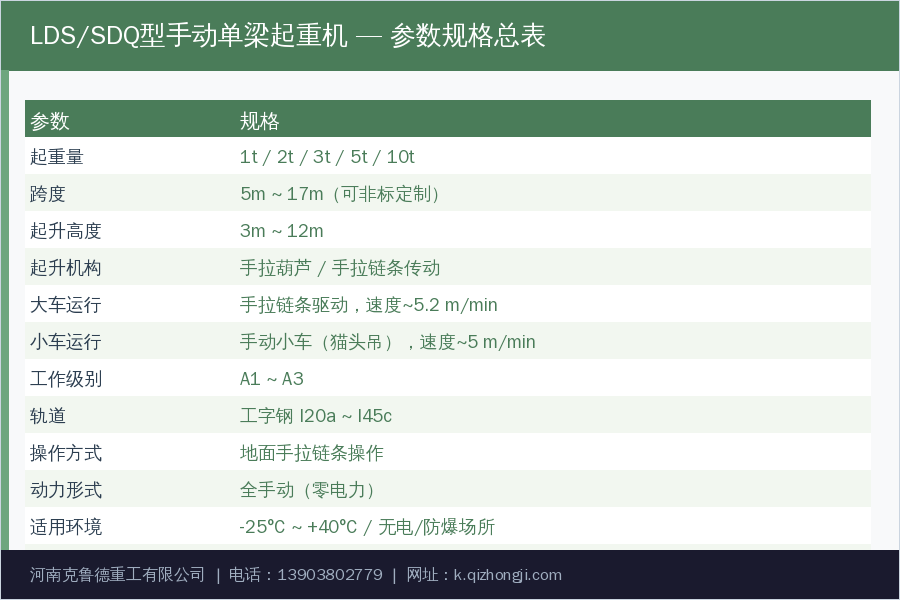
Frequently Asked Questions
Q: Between a manual crane and an electric crane, which is more cost-effective per JB/T 1306 and in real-world use?
A: It depends on how often you use it. For a workshop running daily, an electric overhead crane saves labor—pulling a hand chain dozens of times a day is slow and tiring. For occasional use, say a few times a month, a manual crane is more cost-effective: it costs roughly one-third to one-half the price of an electric model, requires no electricity, and is nearly maintenance-free. If your workshop only has 220V lighting power and no three-phase supply, a manual crane eliminates the need for cable installation, and the money saved on electrical upgrades can cover the cost of the crane itself. Kelude Heavy Industry's LDS/SDQ series are manufactured in strict compliance with the JB/T 1306 standard and are available in both manual and electric configurations.
Q: How do I match the lifting capacity and span of an SDQ/LDS manual single-girder crane? What's the maximum capacity available?
A: Standard SDQ/LDS manual single-girder cranes offer lifting capacities from 1 to 10 tons with spans from 5 to 17 meters. The crane runway rail size is selected based on the lifting capacity. Above 10 tons, pulling the hand chain becomes physically demanding. If you genuinely need a higher capacity, consider a combination of a manual long travel with an electric chain hoist. For lifts exceeding 10 tons, we recommend going straight to an electric single-girder crane. When selecting a model, confirm four parameters together: lifting capacity, span, lifting height, and rail size.
Q: Do the chain drive and rails on a manual overhead crane require regular maintenance? What's the inspection schedule and scope?
A: Yes, they do. Inspect the chain drive every six months for sprocket wear and chain elongation—replace the chain if elongation exceeds 5%. Check the travel wheels and rails monthly for uneven wear or deformation, and tighten the rail connection bolts quarterly. The hand chain hoist must undergo a load test annually in accordance with the JB/T 1306 standard. Although a manual crane has no motor or electrical components, regular inspection of mechanical parts is just as critical—chain fracture and rail derailment are the most common safety hazards. Kelude Heavy Industry supplies a Maintenance Manual with each unit, listing inspection checklists and intervals for all components.
Q: Can a manual overhead crane be used in explosion-proof areas? What parameters do I need to provide to Kelude Heavy Industry?
A: Yes—and it's intrinsically explosion-proof. With no motor or electrical components, a manual crane cannot generate electrical sparks. In hazardous areas such as chemical warehouses, paint shops, and dusty environments, a manual crane fitted with nylon wheels and a copper alloy hook is the most cost-effective explosion-proof lifting solution. When requesting a quotation, provide the following: ① Lifting capacity (tons); ② Span (meters); ③ Lifting height (meters); ④ Rail size; ⑤ Whether explosion-proof configuration is required. Reference pricing: SDQ/LDS models in the 1–3 ton range are approximately $600–$1,200, and 5–10 ton models run about $1,200–$3,000. Once confirmed, production typically takes 10–15 days before shipment. Contact Kelude Heavy Industry (Tel: 13903802779, Email: 3915269@qq.com) and you'll receive a proposal and quotation within two business days.