

Interpretation of the FEM 9.851 Standard, “Design Code for Crane Gears”
📌FEM 9.851 "Design Code for Crane Gears"This is an important technical standard in the crane industry. Developed by the European Crane Manufacturers Association, it is a specialized standard for the design of gear drives in cranes. Based on the gear strength calculation methods specified in ISO 6336, the standard specifies requirements for gear material selection, heat treatment processes, and the verification of tooth-face contact and root bending strength.
This standard provides a unified technical basis for designers, inspection agencies, and users. Krude Heavy Industry strictly adheres to the technical requirements of this standard throughout the product development and manufacturing processes.
Scope and Purpose of the Standard
FEM 9.851, "Design Code for Crane Gears," primarily specifies the technical requirements and safety criteria related to crane gears. It applies to all types of lifting machinery with a rated lifting capacity of 0.5 metric tons or more. This standard not only covers the design and manufacture of new equipment but also provides clear technical guidance for the inspection, maintenance, and retrofitting of in-service equipment.
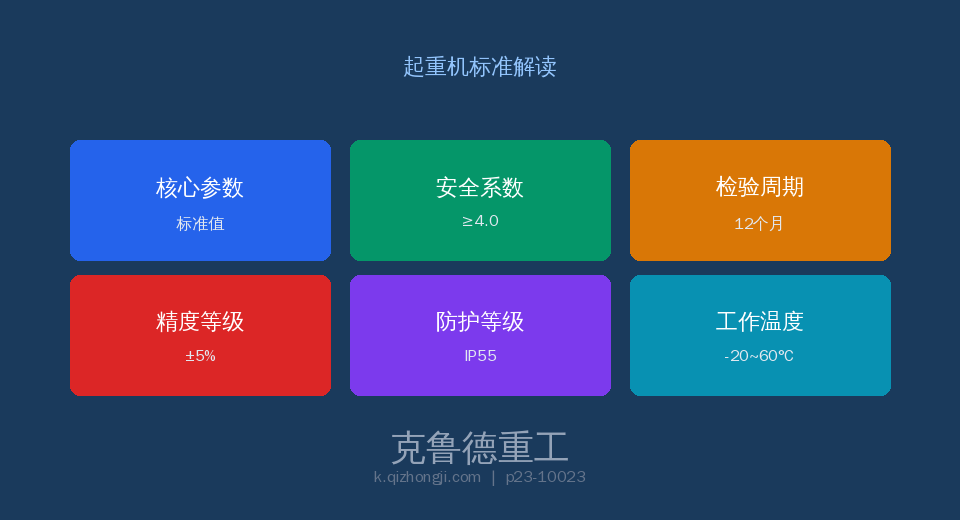
Core Technical Specifications
According to the technical specifications of FEM 9.851, the design and manufacture of crane gear systems must meet a series of strict technical requirements. These requirements are based on extensive experimental data and safety engineering theory, covering the entire process from material selection to structural design. The following parameter sheets outline the core technical specifications of this standard:
Comparative Analysis of Key Technical Parameters
The following comparison table systematically contrasts the key parameters specified in FEM 9.851 with general engineering practice. The data in the table are values derived from mandatory or recommended provisions of the standard; it is recommended that these be strictly followed during design selection and factory inspection.
| Project | Technical Requirements | Note |
|---|---|---|
| Contact SH | ≥1.25 (ISO 6336) | Contains Kv, KA, KHβ, and KHα |
| Bend SF | ≥1.50, carburized to HRC 58–63 | Core: HRC 35–45 |
| Materials | 20CrMnTi/17CrNiMo6 | Carburizing Process for Alloy Steel |
| Carburization Depth | 0.15–1.0 mm (depending on the module) | For high-speed, small-modulus applications, use the lower value. |
| Gear Accuracy | ISO Class 7 (high speed)/Class 8 (low speed) | Gear Grinding, ISO Grades 5–6 |
| Cultivating Karma and Refining Form | Tooth Crown Profiling / Tooth Face Profiling | Reduce Impact and Off-Center Loading on the Reducer |
Inspection Requirements and Frequency
FEM 9.851 sets forth clear requirements for factory inspections, type testing, and periodic inspections of crane gear designs. Factory inspections shall be conducted unit by unit by the quality inspection department at the manufacturer’s facility; equipment that passes inspection shall be accompanied by a detailed inspection report and a certificate of conformity. The periodic inspection interval for in-service equipment is determined based on the duty class and operating environment, and generally shall not exceed 12 months.
| Project | Technical Requirements | Note |
|---|---|---|
| Contact spots on the tooth surface | Length ≥ 60%; Tooth width/height ≥ 45% | Six-Month Open-Cover Inspection |
| Tooth Surface Wear | Pitting / Adhesion / Plastic Deformation | Area Ratio Record for Over Half a Year |
| Root Cracks | Magnetic Particle Inspection | Annual + Key Inspection of R Corner |
| Bearing Clearance | Radial/Axial Clearance | Annual + According to SKF Standards |
Safety Operation and Management Requirements
Safety operations and daily management play a crucial role in the implementation of FEM 9.851. The standard places particular emphasis on the importance of operator qualifications and training, requiring that all operators undergo specialized training and obtain the appropriate qualifications before being allowed to work. Units using the equipment should establish a comprehensive equipment record management system to keep detailed records of the entire process of installation, use, maintenance, and inspection.
Frequently Asked Questions
Q: What are the requirements for the gear safety factor in FEM 9.851?
Answer: Tooth-face contact factor SH ≥ 1.25; tooth-root bending factor SF ≥ 1.50. Calculations are performed in accordance with ISO 6336, taking into account the dynamic load factor Kv, service factor KA, distribution factor KHβ, and allocation factor KHα.
Q: How do you select the gear accuracy grade?
Answer: 37 grades for the high-speed stage (tooth grinding) and 8 grades for the low-speed stage (tooth cutting). Precision affects the smoothness of power transmission and noise levels.
Q: What is the control range for the depth of the carburized layer?
Answer: 0.15–0.4 mm when m ≤ 3 mm; 0.4–0.8 mm when m = 4–6 mm; and 0.8–1.0 mm when m ≥ 8 mm.
Q: What is the purpose of gear edge and profile finishing?
Answer: The tooth-top relief reducer mitigates impact, while the tooth-direction profiling compensates for elastic deformation and off-center loading. The relief amount is 0.02–0.04 mm, and the tooth-direction crown amount is 0.01–0.03 mm.
🔧 Krude Heavy Industry — Specializing in crane design and manufacturing, our products strictly comply with the FEM 9.851 standard system. We provide full lifecycle services ranging from conceptual design, manufacturing, and installation to after-sales maintenance. If you would like to learn more about the specific application of this standard in our products, please contact our technical team to obtain detailed technical documentation.
