

Interpretation of the ISO 23775:2020 Standard “Technical Requirements for Electric Wire Rope Hoists”
📌ISO 23775:2020, “Technical Requirements for Wire Rope Electric Hoists,” is a product standard for wire rope electric hoists. The standard specifies the classification of wire rope electric hoists (8 specifications with lifting capacities ranging from 0.5 to 32 t) and technical requirements (hoisting speed determined by lifting capacity: 4–8 m/min for 0.5–5 t, and 1–4 m/min for 10–32 t; the self-braking torque of the motor’s conical rotor must be ≥1.5 times the rated load; the wire rope must be 6×19/37 cross-laid with a tensile strength of 1770 N/mm²; the drum’s D/d ratio must be ≥20; protection rating IP54/55), test methods (5 minutes no-load + 3 rated braking cycles ≤ 100 mm + 1.25 times rated load for 10 minutes), and inspection rules ensure the product’s safety and reliability.
Technical Requirements
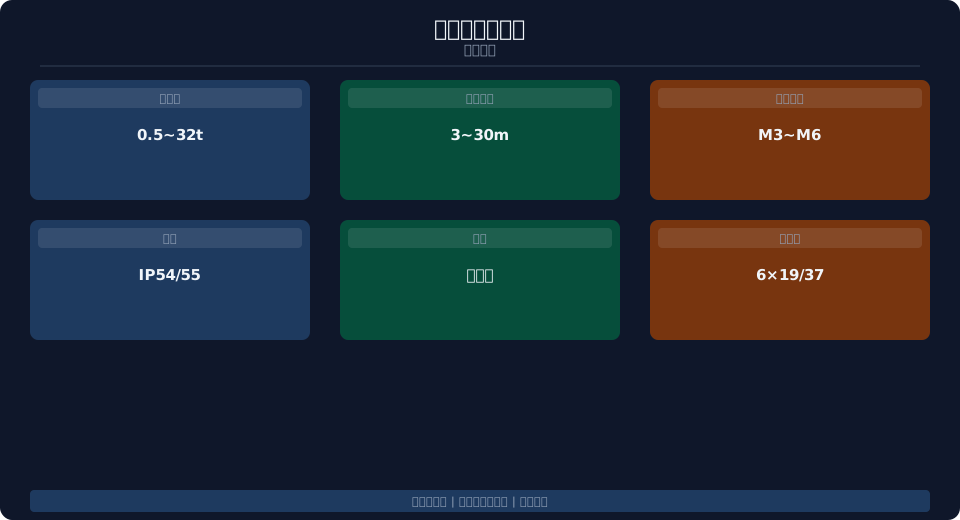
Lifting capacity: 0.5–32 t. Hoisting speed: 4–8 m/min for capacities of 0.5–5 t; 1–4 m/min for capacities of 10–32 t. The motor features a tapered rotor with an automatic braking capacity of ≥1.5 times the rated load. The wire rope is 6×19/37 cross-laid with a tensile strength of 1,770 N/mm², and the drum has a diameter ratio (D/d) of ≥20. Protection rating: IP54/55. Manufactured by Krude Heavy Industry in accordance with industry standards.
Testing and Inspection
Factory test: 5 minutes no-load + 3 rated braking cycles ≤ 100 mm + 1.25 times rated load for 10 minutes. Type test: 1.25 times static load, 1.1 times dynamic load, noise ≤ 85 dB for 150 hours. Each unit from Krude Heavy Industry comes with a certificate of conformity.
| Key | 值 |
|---|---|
| Lifting capacity: 0.5–32 metric tons | Height: 3–30 m |
| Conical Motor Rotor | ≥1.5 times |
| 6×19/37 Steel Wire Rope | 1770 N/mm² |
| D/d ≥ 20 | IP54/55 |
| Project | Note |
|---|---|
| Standards | ISO |
| Inspection | Factory + Model |
Wire rope electric hoists are among the most widely used lifting devices in the industrial sector, and their standardized production is crucial to ensuring safe operation. The standard specifies a load capacity range of 0.5 to 32 metric tons, covering the vast majority of industrial applications. Lifting speed is determined based on load capacity and duty class; high-capacity hoists employ a low-speed design to ensure smooth starting and stopping. The conical-rotor motor is the core component of the electric hoist; its braking performance is directly related to safety, with a braking torque of ≥1.5 times the rated torque. The wire rope is selected with an interlaced 6×19 or 6×37 structure and a nominal tensile strength of 1,770 N/mm². The drum’s D/d ratio is ≥20 to ensure the wire rope’s bending fatigue life. The protection rating is IP54 for indoor use and IP55 for outdoor use, with Class F insulation. Krude Heavy Industry manufactures wire rope electric hoists in accordance with ISO 23775. Each unit undergoes no-load rated load and 1.25 times static load tests before leaving the factory and is accompanied by a certificate of conformity.
Frequently Asked Questions
Q: What are the load capacity range and lifting speed of a wire rope electric hoist?
Answer: There are 8 models with lifting capacities ranging from 0.5 to 32 metric tons. Lifting speeds are determined by lifting capacity: 4–8 m/min for 0.5–5 metric tons, and 1–4 m/min for 10–32 metric tons. Lifting heights range from 3 to 30 meters, with a maximum of 60 meters available for special applications. Duty classes range from M3 to M6. Protection ratings are IP54 for indoor use and IP55 for outdoor use, with Class F insulation.
Q: What are the braking principles and parameters of a conical-rotor motor?
Answer: The inner bore of the stator and the outer circumference of the rotor have a 1:10 taper. When energized, the magnetic force causes the rotor to displace axially, disengaging it from the brake cone surface, allowing the motor to rotate. When de-energized, a spring pushes the rotor to press against the brake cone surface, applying the brake. Braking torque is ≥1.5 times the rated torque. Class F insulation, 380 V, 50 Hz, duty cycle S3–S4.
Q: What are the factory test items for electric hoists?
Answer: No abnormalities during no-load operation for ≥5 minutes; braking slip ≤100 mm after 3 lifting and lowering cycles at rated load; no permanent deformation after maintaining 1.25 times the static load for 10 minutes. Type testing is conducted every 2 years and includes 1.25 times the static load, 1.1 times the dynamic load, noise ≤ 85 dB(A), and 150 hours of endurance testing. Krude Heavy Industry provides a test certificate of compliance with each unit.
Q: What are the manufacturing standards for Krude Heavy Industry’s wire rope electric hoists?
Answer: Krude Heavy Industry manufactures wire rope electric hoists in accordance with the ISO 23775:2020 standard, with lifting capacities ranging from 0.5 to 32 metric tons and lifting heights from 3 to 30 meters. The hoists feature a motor with a tapered rotor and self-braking mechanism, using 6×19/37 cross-laid wire rope with a tensile strength of 1,770 N/mm². Each unit undergoes three tests before leaving the factory and is accompanied by a certificate of test compliance.
