
FEM 9.882 Crane Buffer Design Standard: Key Requirements Explained
FEM 9.882 — Buffer Design Specification is a key technical standard in the crane industry. Developed by the European Committee for Materials Handling (FEM), it serves as the dedicated design specification for crane buffers.
The standard provides a unified technical basis for design personnel, inspection bodies, and end users. Kelude strictly follows its technical requirements throughout product development and manufacturing.
Scope and Application of the Standard
FEM 9.882 defines the technical requirements and safety indicators for the design of crane buffers. It applies to all types of lifting appliances with a rated lifting capacity above 0.5 t.

Core Technical Parameter Framework
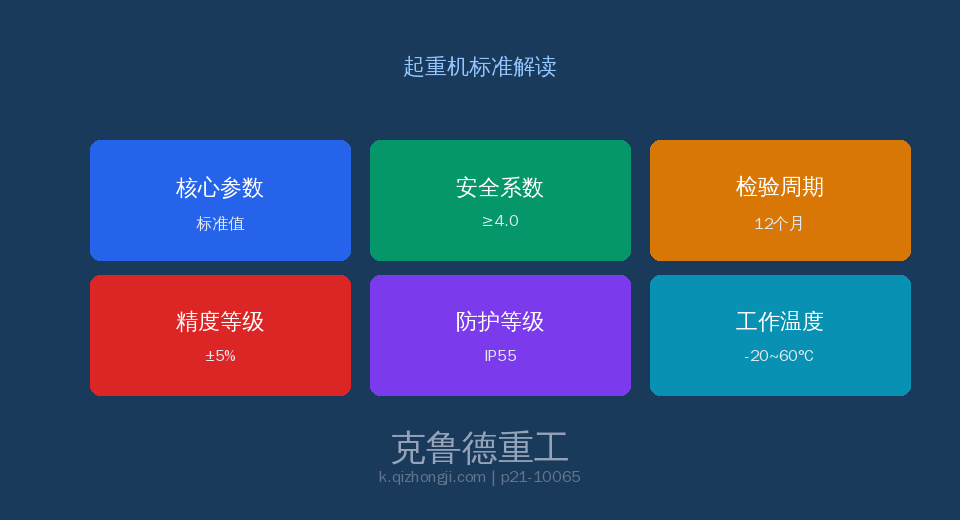
Under FEM 9.882, the design and manufacturing of crane buffers must satisfy a stringent set of technical parameters. These parameters are established on the basis of extensive test data and safety engineering principles, covering the entire process from material selection to structural design. The safety factors specified in the standard account for fatigue life and limit load conditions under severe operating environments. In engineering practice, design personnel must translate the standard's requirements into concrete design parameters, ensuring that the load capacity of every component meets the required safety requirements. The parameter cards below summarize the core technical indicators of the standard:
Comparative Analysis of Key Technical Parameters
| Item | technical requirements | Description |
|---|---|---|
| energy absorption | E=0.5mv²+v×t×F | Kinetic Energy+Drive Force Supplement |
| stroke Calculation | ≥Required Absorbed Energy | conversion efficiency Polyurethane0.5/Hydraulic0.8 |
| Polyurethane | Oil-Resistant Aging-20~80℃ | Recovery≤30s |
| Hydraulic | Check Oil Level Sealing Pressure | Recovery≤5s |
| Spring | Nonepermanent deformation/Pitch Uniform | For Small Applicationsstroke |
| Installation | Axial≤2°/Misalignment≤5mm | Ensure Impact Centershaft alignment |
Inspection Requirements and Intervals
FEM 9.882 sets out clear inspection requirements for buffers, covering Factory Acceptance Test, Type Test, and periodic inspection. The Factory Acceptance Test must be carried out on each unit at the manufacturer's facility by the quality control department, and each approved unit must be accompanied by a detailed inspection report and a Certificate of Conformity. Type Tests are required when a new product enters initial production, when manufacturing is transferred to another facility, or when significant structural changes are introduced. For cranes already in service, the periodic inspection interval is determined by the work duty and operating environment, generally not exceeding 12 months. For heavy-duty cranes operating continuously at A7 to A8 duty levels, the inspection interval should be shortened to 6 months.
| Item | technical requirements | Description |
|---|---|---|
| Appearance | Crack/Deformation/Oil Leakage | Quarterly+Replace Upon Detection |
| Resilience | Impact Testing | Quarterly+Polyurethane≤30s |
| Hydraulic Oil Check Oil Level | Observe Oil Level Line | Quarterly+Refill If Low |
| installation deviation | Impact Surfaceshaft alignment | Annually+Axial≤2° |
Safe Operation and Management Requirements
Safe operation and routine management play a critical role in the implementation of FEM 9.882. The standard places strong emphasis on operator qualification and training, requiring that all operators complete specialized training and obtain the necessary certifications before operating equipment. User units must establish a comprehensive equipment file management system that documents the full lifecycle of the equipment, including installation, operation, maintenance, and inspection. Any safety hazards identified must be addressed through the rectification procedure specified in the standard to ensure the equipment remains in a safe and controllable condition at all times. Additionally, the standard imposes restrictive requirements for equipment use under extreme operating conditions—for example, lifting operations are prohibited when wind speed exceeds the specified limit.
FEM 9.882 FAQ: Buffers, Installation & Inspection
Q: How does FEM 9.882 calculate buffer energy absorption?
A: Energy absorption includes kinetic energy E=0.5mv² plus the contribution from the drive force. The constant acceleration value is 50% of gravitational acceleration. The stroke must be sufficient to fully absorb the calculated energy.
Q: How do I select the right buffer type?
A: Polyurethane buffers are ideal for small cranes (low cost), while hydraulic buffers are preferred for large cranes (high energy absorption). Spring-type buffers suit applications with short stroke requirements.
Q: What are the installation deviation limits?
A: Axial deviation must not exceed 2°, and offset must be within 5mm. Excessive deviation causes eccentric loading that accelerates component wear and damage.
Q: What are the inspection intervals and condition criteria?
A: Inspections are required quarterly. Polyurethane buffers must recover within 30 seconds; hydraulic buffers within 5 seconds. Replace immediately if cracks, permanent deformation, or oil leakage are detected.
Kelude Heavy Industry — Specialized in crane design and manufacturing, with products fully compliant with the FEM 9.882 standard system.