
Mobile Balance Crane PJhs for Industrial Lifting
Product Introduction
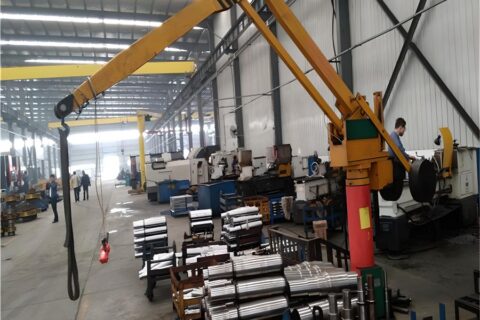
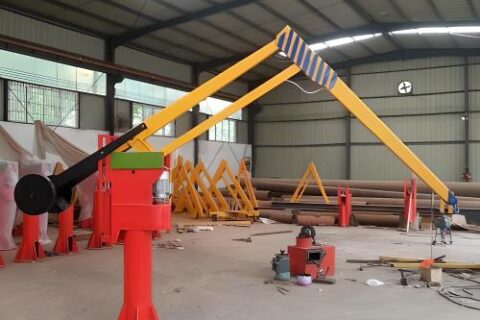
The PJhs Mobile Balance Crane is a light-duty crane that mounts a balancer onto a mobile base (trolley), offering flexible material handling in non-fixed locations such as workshops or warehouses. The mobile base (trolley) allows the balancer to be easily moved between workstations without the need for permanent installation. Lifting Capacity: 100–1000 kg; maximum slewing radius: Rmax=2500–3200 mm; lifting height: 2000–2600 mm; 345° rotation.
The Mobile Balance Crane features air-loss and misoperation protection. When the main air supply is interrupted, the self-locking mechanism engages to prevent the crane from suddenly dropping. The load remains suspended in a three-dimensional floating state within the rated travel range, allowing effortless manual positioning in all directions. It is widely used in workstations requiring frequent material handling and assembly, helping reduce labor intensity and improve efficiency.
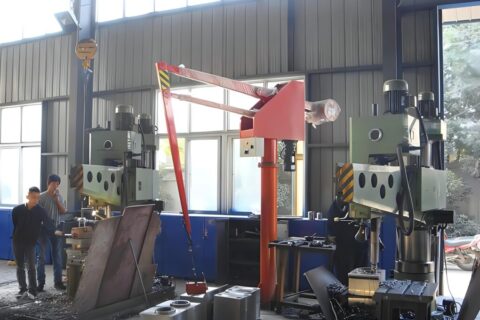
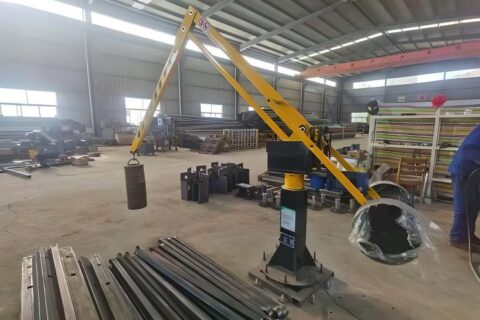
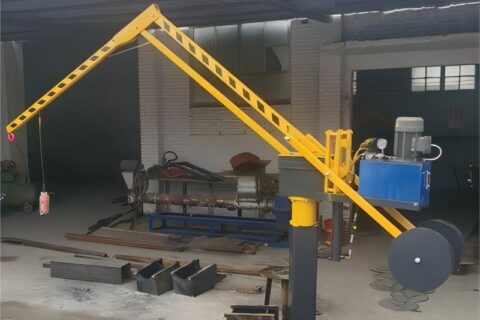
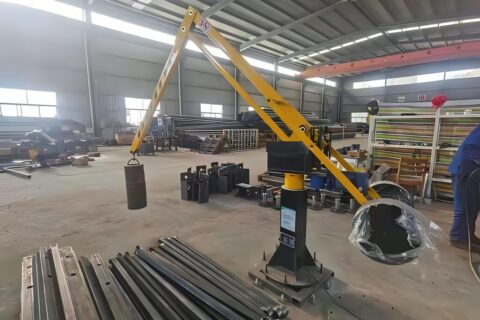
Product Photos
Product Features
Mobile and Flexible, No Fixed Installation Required: Equipped with a mobile base (trolley), it can be freely moved between workstations without embedded anchor bolts. Ideal for shared, non-fixed material handling across multiple stations.
Air-Loss Self-Locking for Safety and Reliability: Features air-loss and misoperation protection. When the main air supply fails, the self-locking mechanism engages instantly, preventing the balancer from dropping suddenly and ensuring operational safety.
Three-Dimensional Floating for Precise Positioning: The load remains suspended in a three-dimensional floating state within the rated travel range, allowing effortless manual positioning in all directions. Assembly positioning is accurate, and operation is labor-saving and efficient.
Simple Structure with Strong Versatility: The compact, well-designed structure offers a small footprint, low dead weight, easy installation, and simple maintenance — well suited for short-distance, high-frequency, intensive lifting operations.
Working Principle
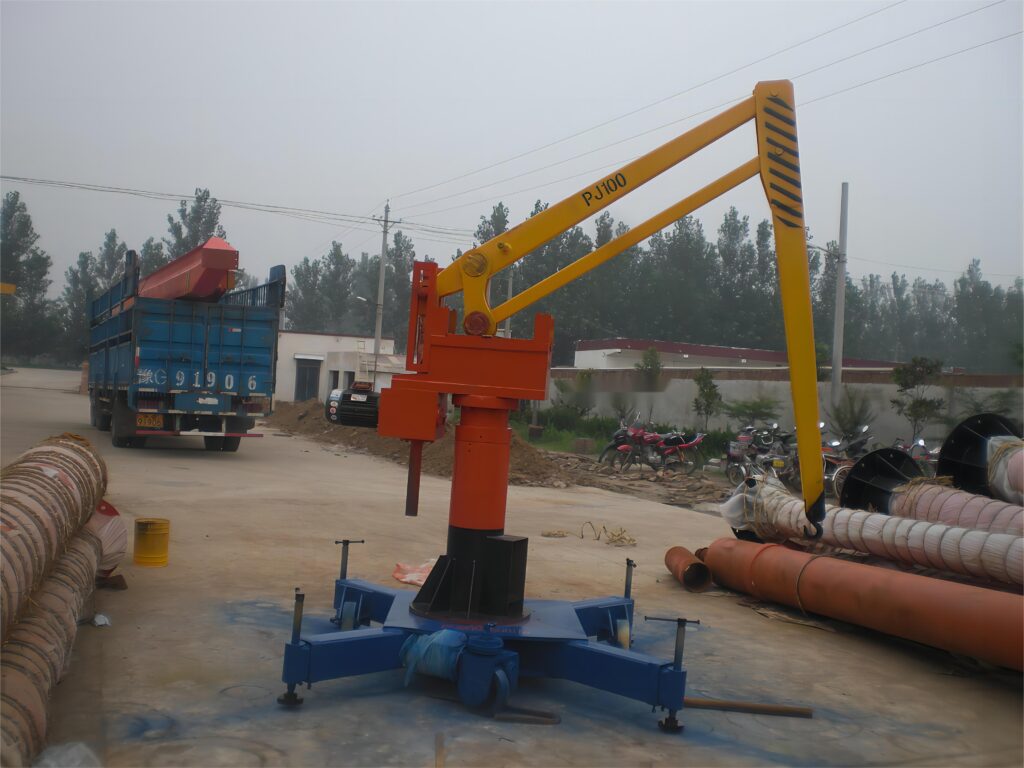
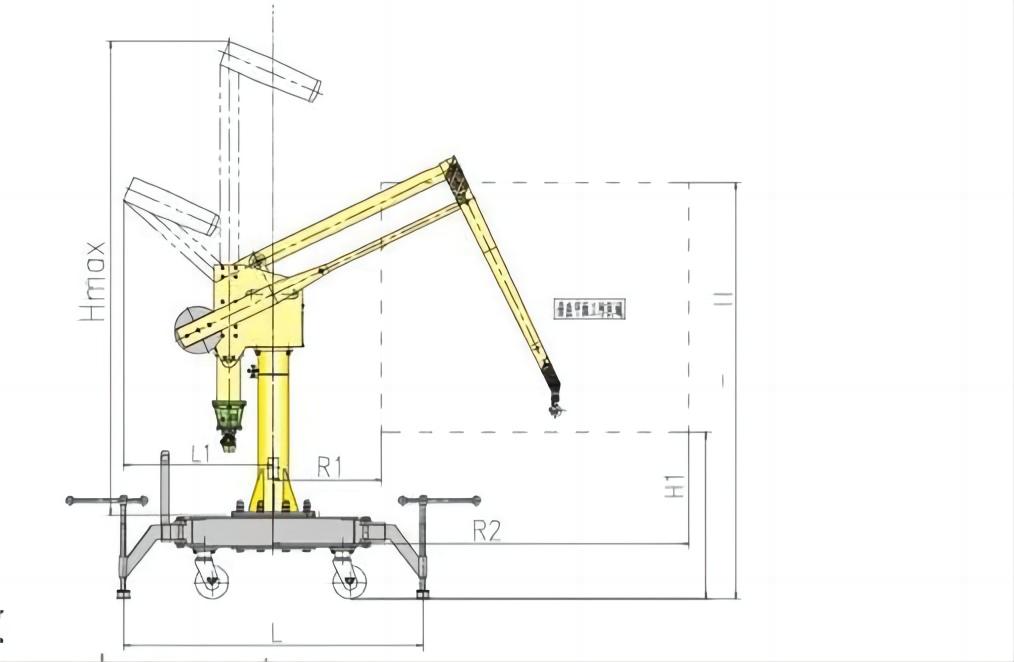
The PJhs Mobile Balance Crane mounts the four-bar linkage/parallelogram arm and screw lifting mechanism of the PJ Balancer onto a movable steel trolley base. The trolley is fitted with swivel casters for easy movement across the workshop floor. Once positioned, the telescoping outriggers are extended to support the ground and remove wheel load before lifting operations begin.
The core working principle is identical to the stationary PJ Balancer: the parallelogram arm expands and contracts for horizontal movement, the column rotates 345° to cover the working area, and the screw lifter's motor drives the lead screw for vertical lifting. The mobile trolley enables the balancer to switch flexibly between multiple workstations, with a single unit covering several stations.
Structural Composition
Comprising the following core components:
Mobile Trolley Base: Steel chassis with swivel casters and telescoping support legs for flexible movement and stable positioning. Available in CS2/CS4/CS6 trolley models for different load capacity ranges.
Column and Slewing Mechanism: Steel pipe column fixed to the trolley, with a top slewing bearing supporting 345° arm rotation.
Parallelogram Arm: Four-bar deformable quadrilateral structure with level luffing of 1730–2200 mm and Rmax=2500–3200 mm.
Screw Lifter: Motor-driven lead screw and nut transmission with a lifting speed of 2.54–6.14 m/min and excellent self-locking performance.
Electrical Control System: Pendant push-button inching control for lifting/lowering, 380V three-phase power supply, motor power 0.75–3 kW.
Technical Parameters
| Parameter | PJhs010 | PJhs020 | PJhs030 | PJhs040 | PJhs050 | PJhs060 | PJhs080 | PJhs110 |
|---|---|---|---|---|---|---|---|---|
| Rated Lifting Capacity (kg) | 100 | 200 | 300 | 400 | 500 | 600 | 800 | 1000 |
| Maximum Lifting Height hmax (mm) | 2000 | 2000 | 2000 | 2000 | 2500 | 2500 | 2500 | 2600 |
| Starting Height hmin (mm) | 0 | 0 | 0 | 0 | 100 | 100 | 100 | 200 |
| Lifting Range (mm) | 2000 | 2000 | 2000 | 2000 | 2400 | 2400 | 2400 | 2400 |
| Maximum Slewing Radius Rmax (mm) | 2500 | 2500 | 2500 | 2500 | 3200 | 3200 | 3200 | 3200 |
| minimum Slewing Radius Rmin (mm) | 580 | 770 | 770 | 770 | 1000 | 1000 | 1000 | 1000 |
| Level luffing (mm) | 1920 | 1730 | 1730 | 1730 | 2200 | 2200 | 2200 | 2200 |
| Slewing Angle (°) | 345 | 345 | 345 | 345 | 345 | 345 | 345 | 345 |
| lifting speed (m/min) | 6.14 | 5.44 | 5.52 | 5.52 | 5.08 | 5.08 | 2.54 | 5.08 |
| Electric Motor Model | Y80-2-4 | Y90L-4 | Y100L-4 | Y100L-4 | Y100L2-4 | Y100L-2 | Y100L-4 | Y100L-4 |
| Electric Motor Power (k W) | 0.75 | 1.5 | 2.2 | 2.2 | 3 | 3 | 3 | 3 |
| Electric Motor Rated Rotational speed (r/min) | 1390 | 1400 | 1420 | 1420 | 1440 | 1440 | 1440 | 1440 |
| Electric Motor Mounting Configuration | B5 | B5 | B5 | B5 | B5 | B5 | B5 | B5 |
| h (mm) | 1250 | 1250 | 1250 | 1250 | 1700 | 1700 | 1700 | 1700 |
| H (mm) | 2785 | 2825 | 2825 | 2825 | 3940 | 3940 | 3940 | 3940 |
| D (mm) | 450 | 500 | 500 | 500 | 700 | 700 | 700 | 700 |
| a (mm) | 200 | 250 | 250 | 250 | 300 | 300 | 300 | 300 |
| b (mm) | 920 | 1000 | 1000 | 1000 | 1040 | 1040 | 1040 | 1040 |
| Slewing Radius b1 (mm) | 910 | 1000 | 1000 | 1000 | 1310 | 1310 | 1440 | 1440 |
| Anchor Bolt Diameter×Length | M20×400 | M24×450 | M24×450 | M24×450 | M24×450 | M24×450 | M24×700 | M24×700 |
| Anchor Bolt Quantity | 4 | 4 | 4 | 4 | 6 | 6 | 6 | 8 |
| Anchor Bolt Center Circle (mm) | 350 | 420 | 420 | 420 | 600 | 600 | 600 | 600 |
| Complete Unit Weight (kg) | 305 | 485 | 495 | 510 | 850 | 850 | 900 | 960 |
Note: The original table models P1hs040/P1hs050/P1hs060 have been corrected to PJhs040/PJhs050/PJhs060; Pjhs 11.0 has been corrected to PJhs110 (rated 1000kg). OCR typos in motor models and terms such as "Slewing", "Anchor Bolt", and "Anchor Bolt" have also been fixed.
Transfer Cart Parameters
| Parameter | CS2 | CS4(CD4) | CS6(CD6) |
|---|---|---|---|
| Complete Unit Weight (kg) | 165 | 300 | 500 |
| minimum Turning Radius (mm) | 1600 | 1600 | 2000 |
| travel speed | 25 | 25 | 25 |
Refer to the table below for matching CS/CD series mobile carriages with PJhs Balancer models.
Carriage Selection Guide
| Drive Mode | Electric Trolley Model | Compatibility Balancer Model |
|---|---|---|
| Manual | CS2 | PJ(PJSZ)100, PJ(PJSZ)200 |
| CS4 | PJ(PJSZ)300, PJ(PJSZ)400 | |
| CS6 | PJ(PJSZ)500, PJ(PJSZ)600 | |
| Electric | CD2 | PJ(PJSZ)300, PJ(PJSZ)400 |
| CD2 | PJ(PJSZ)500, PJ(PJSZ)600 |
Some model designations in the original table contained OCR errors (e.g., JPJSZ should be PJ(PJSZ)) and have been corrected to the standard format.
Product Structure Diagram
Typical Applications
Frequent Hoisting Across Multiple Workstations: When multiple workstations in a workshop require alternating hoisting operations, the Mobile Balance Crane can be easily moved to wherever it is needed — one machine serving multiple stations and reducing equipment investment.
Non-Fixed Warehouse Locations: For cargo loading, unloading, and handling across different warehouse zones, the Mobile Balance Crane offers flexibility without the need for fixed hoisting equipment in every area.
Assembly Lines: For material transfer between stations on an assembly line, the Mobile Balance Crane can be moved between workstations to provide hoisting support for different assembly processes.
Maintenance Sites: For temporary hoisting needs at equipment maintenance sites, the Mobile Balance Crane is not restricted by fixed installation positions — simply move it to the faulty equipment and start lifting.
Selection Guide
By Load Capacity and Travel Type: For 100–200 kg, choose the PJhs010/020 with a manual CS2 trolley; for 300–400 kg, choose the PJhs030/040 with a CS4 manual or CD4 electric trolley; for 500–800 kg, choose the PJhs050/060/080 with a CS6 manual or CD6 electric trolley; for 1000 kg, choose the PJhs110 with a CS6 trolley.
Manual vs. Electric Trolley: Manual trolleys (CS series) are ideal for short-distance pushing and offer lower cost; electric trolleys (CD series) are suited for long-distance, frequent repositioning — powered travel saves effort and improves efficiency.
Working Environment: 380V three-phase power supply, altitude not exceeding 2000m, and the environment must be free of flammable, explosive, or corrosive gases (except for pneumatic explosion-proof models). Hoisting of molten metal, toxic substances, and flammable/explosive materials is not permitted.
Manufacturer Services
Henan Kelude Heavy Industry Co., Ltd. provides full-suite sales and after-sales services for the PJhs series Mobile Balance Crane.
Quality Testing: Each unit undergoes a 1.25× rated load test before shipment, and the mobile trolley is tested for travel and support stability.
After-Sales Warranty: Full machine warranty for 12 months; screw lift mechanism and motor covered for 24 months. After-sales requests are responded to within 48 hours.
Request a Quotation
Need a quotation for the PJhs Mobile Balance Crane?
Provide your load capacity requirement, number of workstations, and whether an electric trolley is needed — we will tailor a solution for you within 2 hours.
Consultation Hotline: 13903802779
FAQ
Q: How do I choose between a mobile balance crane and a fixed balance crane?
A: The mobile model (PJhs) is ideal for multi-station shared use or non-fixed work areas, as its mobile trolley allows easy repositioning. Fixed models (PJ/PDJ/PAJ) are better suited for long-term single-station use, offering superior stability and load capacity. If the work area covers ≤3 stations, a mobile unit is worth considering; otherwise, a fixed model delivers better value.
Q: The mobile trolley comes in manual and electric versions — how do I choose?
A: Manual trolleys (CS series) are pushed by hand — simple in construction and low in cost, ideal for short-distance travel (≤30m). Electric trolleys (CD series) are motor-driven, suited for longer distances (>30m) or frequent relocation. For heavy-duty models above PJhs080, an electric trolley is recommended to reduce pushing effort.
Q: How does the air-loss self-locking protection on the mobile balance crane work?
A: When the main air supply is unexpectedly cut off, the spring inside the self-locking mechanism automatically resets, locking the drive shaft of the screw lifter and preventing the balance crane from suddenly dropping. Once air supply is restored, a manual reset is required before operation can resume. This feature ensures equipment and personnel safety under air-loss conditions.
Q: How do I install the anchor bolts on the balance crane's mobile trolley?
A: Once the mobile trolley is in position, first extend the four telescoping outrigger legs and adjust the threaded rods so the legs make firm contact with the ground and slightly lift the unit, removing wheel load. Then thread the anchor bolts into the bolt holes on the outrigger bases — depending on the floor condition, you can either drill and fix them in place or simply use counterweights to hold them down.
Q: Can the PJhs balance crane be used outdoors? What should I watch out for?
A: The PJhs mobile balance crane is primarily designed for indoor use. If outdoor use is required, note the following: ① The ground must be level and firm, with the outrigger legs securely fixed; ② The motor and electrical control box must be protected from rain; ③ Operation is only permitted when wind force is ≤5; ④ The trolley wheels must be locked to prevent movement; ⑤ For prolonged outdoor storage, cover the unit with a weatherproof tarp.