
MHhs Overhead Gantry Crane with Top Box Girder and Bottom Truss
Product Introduction
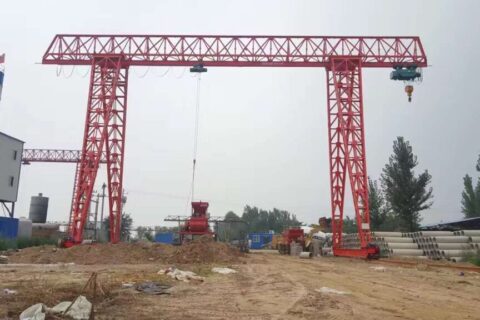
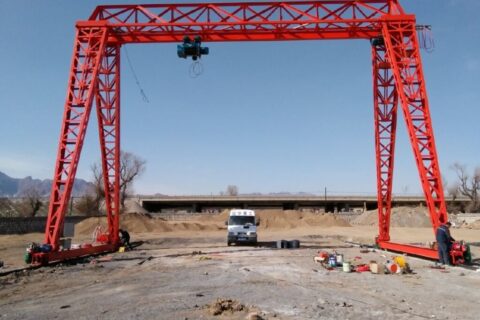
The MHhs Gantry Crane with Box Girder and Lattice Legs (also known as MH Type Box-Girder/Lattice-Leg Gantry Crane) is an economical hybrid-structure gantry crane. The main girder uses a welded box-section design (box girder), while the outriggers adopt a lattice truss structure (lattice legs)—hence the name "box top, lattice bottom." This design combines the rigidity of a box girder with the lightweight advantage of lattice legs, offering excellent value for money.
An alternative "lattice top, box bottom" configuration (lattice girder + box legs) is also available for different load-bearing requirements. The MHhs Gantry Crane offers a lifting capacity of 1 to 20 tons and spans from 19.5 to 36.5 meters. It is widely used in subway construction, building sites, logistics operations, warehouses and storage yards, precast concrete plants, hydropower stations, and other indoor or outdoor working environments.
Product Specifications
- Product Name: MHhs Gantry Crane with Box Girder and Lattice Legs (box-section main girder on top + lattice outriggers below)
- Model / Specification: MHhs / MH Type, lifting capacity 1–20 tons (custom non-standard manufacturing available)
- Place of Origin: Xinxiang, Henan (Kelude Heavy Industry)
- Custom Non-Standard Manufacturing: Span, lifting height, cantilever length, and variable cross-section configurations can all be customized.
- Structural Configuration: Box girder top + lattice legs bottom / optional lattice girder top + box legs bottom
- Applicable Span: 19.5–36.5 meters (custom non-standard options available)
Product Photos
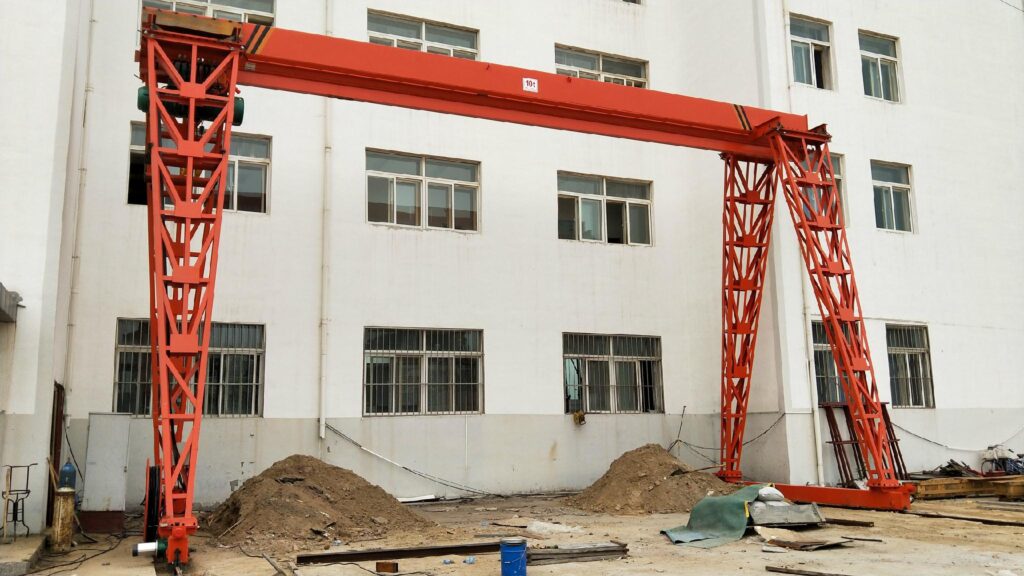
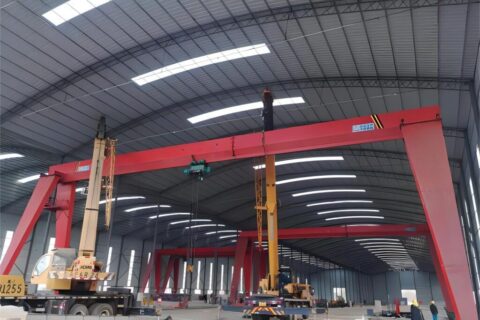
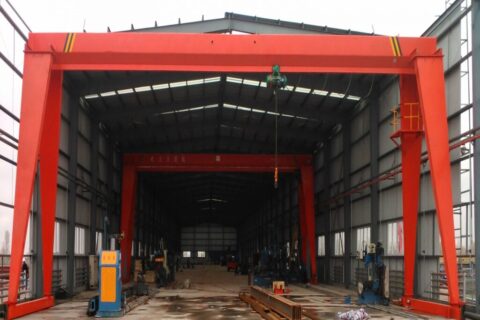
Shown above are actual photos of the MHhs Gantry Crane with Box Girder and Lattice Legs. The hybrid structure of box-section main girder and lattice outriggers delivers both rigidity and cost efficiency.
Product Features
- Efficient Hybrid Structure: The box girder provides excellent overall rigidity and load-carrying capacity, while the lattice legs reduce dead weight and lower costs—saving 10%–15% in steel compared to a fully box-section design.
- Box-Top/Lattice-Bottom vs. Lattice-Top/Box-Bottom: The box-top/lattice-bottom configuration (box girder + lattice legs) offers superior main girder rigidity, making it ideal for heavy loads; the lattice-top/box-bottom configuration (lattice girder + box legs) provides better outrigger rigidity, suiting large-span applications. The choice can be tailored to specific operating conditions.
- High Adaptability: Compatible with multiple gantry crane models including MH, MHE, and MHZ in the box-top/lattice-bottom variant, allowing the same structural form to accommodate different hoisting configurations.
- Adjustable Lifting Speed: Main hook lifting speed selectable from 3 to 8 m/min, with two-speed options available on request to meet varying hoisting speed requirements.
- Adjustable Travel Speed: Crane travel speed selectable from 10 to 40 m/min to suit different site sizes and operational efficiency needs.
- Cost-Effective and Durable: By optimizing the cross-section proportions of the box girder and lattice legs while maintaining structural safety, manufacturing costs are reduced, and maintenance costs fall between those of fully box-section and fully lattice designs.
Working Principle
In the MHhs Gantry Crane with Box Girder and Lattice Legs, the upper box-section main girder carries the electric hoist and trolley loads, while the lower lattice outriggers transmit these loads to the ground rail foundation. The box girder provides main girder rigidity and bending resistance, while the lattice outriggers—based on triangular truss principles—deliver sufficient support strength with minimal steel usage.
Hoisting Mechanism: The CD1 electric hoist uses a conical rotor motor and a three-stage helical gear reducer to wind the wire rope around the drum for hook lifting and lowering. Lifting speed is selectable from 3 to 8 m/min, with two-speed adjustment available.
Travel Mechanism: Crane travel speed is adjustable from 10 to 40 m/min, with a trolley travel speed of 20 m/min. The electrical control system coordinates all mechanism movements for efficient material handling across large spans.
Product Structure
The MHhs Gantry Crane with Box Girder and Lattice Legs consists of the following core components:
Box-Section Main Girder (Box Top): Fabricated from Q355B steel plates welded into a box section using submerged arc automatic welding. The camber of the main girder is controlled in accordance with GB/T 3811 Crane Design Standard (mid-span camber of 1/1000), with optional external cantilevers at both ends.
Lattice Outriggers (Lattice Bottom): Welded truss structures made from angle steel or steel tubing, in Q235B (≈S235JR) or Q355B (≈S355JR) material. The lattice legs offer low wind resistance and light dead weight, with bottom ground beams welded in place and fixed to the concrete foundation.
Bridge Travel Mechanism: Motor + gearbox + driven/driven wheel blocks, with speed adjustable from 10 to 40 m/min. Individually driven for outdoor rail operation.
Electric Hoist: CD1/MD1 wire rope hoist that travels along the lower flange of the I-beam on the main girder. Includes conical rotor motor, three-stage gearbox, drum, wire rope, and hook block.
Electrical Control System: Main circuit breaker, contactors, thermal overload relays, limit switches, and overload limiter (optional). Control voltage is AC 36V safety voltage.
Technical Parameters
General Technical Parameters for MHhs Gantry Crane with Box Girder and Lattice Legs
| Parameter Item | MHhs type Parameter |
| Lifting Capacity | 1~20 t(Available Custom Non-Standard Manufacturing) |
| Span | 19.5~36.5 m(Multiple Speed Options Commonly Used Specification) |
| Lifting Height | 6~30 m(6/9/12/18/24/30mMultiple Speed Options Commonly Used) |
| Work Duty / Classification | A3 / M3 |
| Main Hook Lifting Speed | 3~8 m/min(Customizable Two-Speed) |
| Cross Travel Speed | 20 m/min(Available Custom Non-Standard Manufacturing) |
| Long Travel Speed | 10~40 m/min(Multiple Speed Options Available) |
| Power Supply | Three-Phase AC 380V 50Hz(Customizable) |
| Operation Mode | Wireless remote control / Wired Pendant / Operator |
| Structural Configuration | Top-Enclosed Bottom-Lattice(box girder+Lattice Leg)/ Optional Top-Lattice Bottom-Enclosed |
| Structural Advantages | Box Girder with High Rigidity+Lattice Leg Dead Weight Light, Saves More Than Full Box Girder Steel 10~15% |
Product Drawings
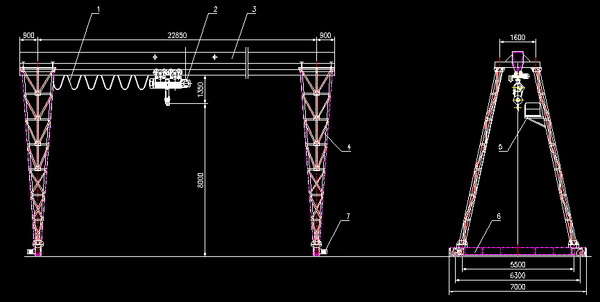
The above is a reference structural drawing of the MHhs Type gantry crane with box girder and lattice outriggers. Actual dimensions are determined by the design based on lifting capacity, span, and lifting height.
Typical Applications
- Metro & Construction Sites: Hoisting of tunnel segments, rebar, and formwork. The box girder + lattice leg configuration delivers both strength and lightweight performance.
- Warehouses & Storage Yards: Loading, unloading, and stacking of packaged goods. Lattice legs help reduce foundation investment.
- Cement Product Plants: Handling and yard storage of pipe piles and cover slabs. The long span covers large areas efficiently.
- Hydropower Stations: Equipment installation and maintenance. The box girder provides adequate hoisting stiffness.
- Railway Freight Terminals: Container and bulk cargo handling. The cost-effective structure lowers operating expenses.
Selection Guide
Light-Duty Applications: 1–5t, span 19.5–26m, ideal for small to medium storage yards. Reference price: RMB 30,000–80,000.
Medium-Duty General Applications: 5–10t, span 26–31m, suitable for metro construction and freight terminals. The box girder + lattice leg economy configuration is the recommended choice. Reference price: RMB 80,000–180,000.
Heavy-Duty Applications: 10–20t, span 31–36.5m, designed for hydropower stations and large storage yards. Requires a reinforced box girder section. Reference price: RMB 180,000–350,000.
Selection Note: Please confirm your preferred structural configuration (box girder with lattice legs, or lattice girder with box legs). The Kelude Heavy Industry engineering team will calculate the optimal section proportions for your application.
Operating Instructions
Pre-Operation Checks: Verify that the box girder and lattice leg weld seams are intact, the wire rope shows no broken strands, brake clearance is within specification, and limit switches are responsive.
Operation: Perform a trial lift of 200mm before hoisting to confirm braking performance. Pay attention to routine inspection of the lattice legs — periodically check members and node weld seams. Stop operation in strong wind conditions (above Beaufort scale 6).
Shutdown Procedure: Raise the hook to the upper limit, park the crane bridge in the designated anchoring zone, and disconnect the main power supply. For outdoor parking, engage the rail clamps.
Maintenance: Inspect lattice leg weld seams monthly; check the box girder and brakes quarterly; perform a full node inspection every six months; and conduct a comprehensive annual safety inspection.
Why Choose Kelude Heavy Industry
Optimized Hybrid Structure Design: The section proportions of the box girder and lattice legs are optimized through finite element analysis, minimizing dead weight and cost while ensuring strength and stiffness.
Flexible Structural Configurations: Both box girder + lattice legs and lattice girder + box legs configurations are recommended based on operating conditions — no one-size-fits-all approach.
Full Lifecycle Service: Free site survey, structural design, manufacturing, installation & commissioning, operator training, and after-sales support with immediate phone response.
Service & Support
Kelude Heavy Industry provides full lifecycle support for the MHhs Type gantry crane. Call 13903802779 or contact us online — we respond within 24 hours.
Need a selection proposal or quotation for the MHhs Type gantry crane?
Feel free to contact the Kelude Heavy Industry sales & engineering team.
FAQ
Q: What is the difference between the box girder + lattice leg and the lattice girder + box leg configurations? How do I choose?
A: Box girder + lattice leg means a box girder main beam with lattice outriggers — the main girder offers better rigidity, making it suitable for heavy-duty applications. Lattice girder + box leg means a lattice main girder with box outriggers — the outriggers provide better rigidity, making it suitable for extra-wide span applications. In general, box girder + lattice leg is the recommended default (since main girder load requirements typically exceed outrigger requirements). If the span is extremely large (>30m) and the lifting capacity is relatively light, consider the lattice girder + box leg configuration.
Q: Which national standards does the box girder + lattice leg gantry crane comply with?
A: The box girder main beam is designed to GB/T 3811 Crane Design Standard, and the lattice outrigger truss structure references GB/T 14406-2011 General-Purpose Gantry Crane. The complete crane is designed to JB/T 5663-2008, the hoisting mechanism complies with JB/T 9008.1, and installation supervision inspection is carried out per TSG Q7014.
Q: How much cheaper is the box girder + lattice leg gantry crane compared to a full box girder gantry crane?
A: Lattice legs save approximately 15%–20% in steel weight compared to box legs, which translates to a 10%–15% lower overall cost for the box girder + lattice leg configuration versus a full box-girder design. Additionally, the lighter lattice legs impose lower foundation and crane rail requirements, further reducing foundation engineering costs. The box girder + lattice leg configuration sits between the full box girder and full lattice designs, offering the best cost-performance balance.
Q: What are the advantages of Kelude Heavy Industry's MHhs-type gantry crane with box girder and lattice outrigger design?
A: Kelude Heavy Industry optimizes the cross-section ratio of the box girder and lattice outriggers through finite element analysis, and can recommend either the box-girder-top/lattice-leg-bottom or lattice-girder-top/box-leg-bottom configuration based on your specific working conditions. Free structural optimization design services are provided.