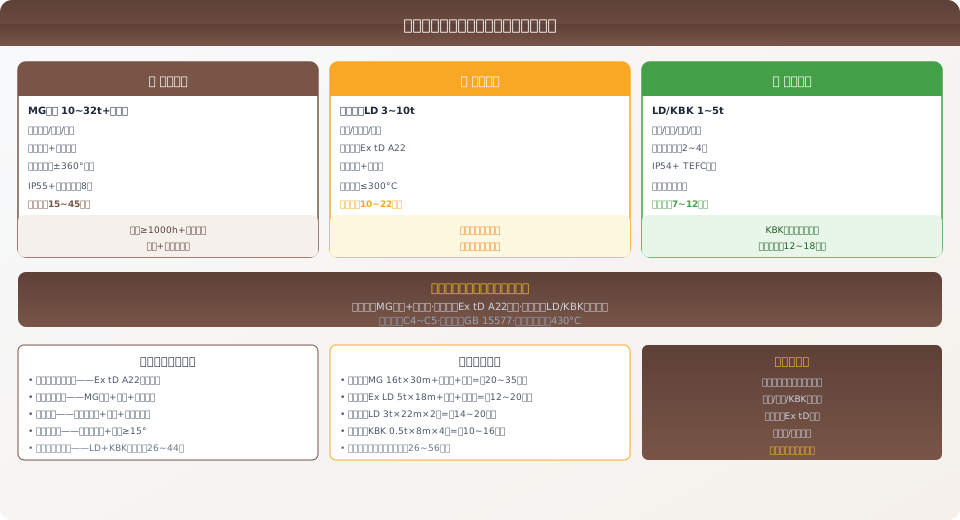

Crane Configuration for Wood Processing & Furniture Industry
Crane configurations for the woodworking and furniture industry must be tailored to each stage of the process—for log yards, an MG gantry crane rated 10–32t with a hydraulic log grapple is recommended; for sawmill operations, a dust-explosion-proof crane (Ex tD A21) is the right fit; and for panel furniture assembly, a KBK flexible suspension system with vacuum lifters delivers the precision required. Kelude offers dust-explosion-proof crane solutions purpose-built for the wood processing sector.
The wood processing and furniture manufacturing industry relies on cranes for material handling at every stage—from log yards to sawmill workshops and on to furniture assembly lines. What sets this sector apart from others is the critical challenge of wood dust explosion prevention: fine wood dust particles (≤5500 μm) generated during sawing, sanding, and polishing can become suspended in the air and, once they reach a certain concentration, pose an explosion hazard (with a lower explosive limit of approximately 40 g/m³). This article outlines crane configuration solutions along the three primary stages—log yard, sawmill workshop, and furniture assembly.
Wood Processing Crane Configurations at a Glance
| Comparison Parameter | Log Yard | Sawn Timber Workshop | Furniture Assembly Workshop |
|---|---|---|---|
| recommended model | MG/MH Type Gantry Crane | dust-proof type LDoverhead type | KBKflexible suspension+Vacuum Lifter |
| lifting capacity range | 10~32t | 3~16t | 0.05~0.5t |
| Working Environment | Outdoor Open-Air | Indoor Dusty(Ex t D A21) | Indoor Clean |
| Lifting spreader Solution | Hydraulic Grapple/C-Hook | Lifting Sling/Lifting magnet | Nitrile Rubber Vacuum Lifter |
| Anti-corrosion/guards | C4~C5Grade Anti-corrosion | IP54Dustproof+Explosion-proof | Nonespecial requirements |
| reference price | 15~4510K CNY | 5~2010K CNY | 1~510K CNY/Workstation |
Gantry Crane Solutions for the Wood Processing Industry
Log Yard Cranes — Outdoor Gantry Cranes with Wind Protection
Log yards are typically open-air or semi-enclosed facilities where cranes handle unloading, stacking, and feeding of logs ranging from 2–12m in length, 10–80cm in diameter, and 0.2–5t per piece. The recommended solution is an MG-type gantry crane fitted with a hydraulic log grapple:
- Recommended Model: MG-type double-girder gantry crane (10–32t), span 25–40m, cantilever 6–10m
- Lifting Spreader: Hydraulic log grapple (adjustable clamping force to accommodate varying log diameters) with slewing mechanism (±360°); optional lifting magnet for panel storage yards
- Outdoor Protection: Epoxy zinc-rich + epoxy micaceous iron oxide + polyurethane topcoat (salt spray resistance ≥1,000h), IP55-rated electrical control cabinet with rain cover, wind rail clamps plus anchoring (wind resistance ≥8 levels)
- Control Mode: Radio remote control (operator follows the load on the ground for optimal visibility) with backup operator cab
Sawmill Workshop Cranes — Wood Dust Explosion-Proof Design
Band saws, multi-blade ripsaws, planers, and sanders in sawmill workshops generate large volumes of fine wood dust. Wood dust is a combustible dust (St 1 class, Kst value approximately 50–100 bar·m/s); when the suspended concentration exceeds 40g/m³ and meets an ignition source such as an open flame or electrical spark, a dust explosion can occur. Sawmill workshops must be designed for explosion protection in accordance with GB 50016-2014 Code for Fire Protection Design of Buildings and GB 15577-2018 Safety Regulations for Dust Explosion Prevention and Protection:
- Explosion Protection Class: Sawing and sanding areas are classified as Zone 22 dust explosion hazard zones. Cranes must carry Ex tD A22 IP6X explosion-proof certification — explosion-proof motor (Ex tD A22), explosion-proof electrical box (Ex tD A22), and intrinsic safety (Ex ia) remote control
- Surface Temperature Rise Control: The maximum temperature on all exposed crane surfaces must stay below the ignition temperature of wood dust (approximately 430°C; a safety margin limiting surface temperature to ≤300°C is recommended). Motor cooling fin surface temperature rise must be reduced accordingly
- Dust-Shedding Structure: Main girders use a streamlined cross-section (no horizontal recesses); horizontal surfaces are angled at ≥15° inclination to prevent dust accumulation
- Easy Cleaning: Smooth, crevice-free surfaces that support compressed air blow-down or vacuum cleaning; dedicated wood dust access channels are provided along the crane rail area
- Recommended Model: Dust explosion-proof LD-type single-girder bridge crane (3–10t), work duty A4~A5, span 15–24m
Furniture Assembly Workshop Cranes — Light-Duty Multi-Crane Layout
Furniture assembly workshops focus on panel cutting, edge banding, drilling, assembly, and packaging. Loads are light (10–200kg per piece) but handled at high frequency across dense workstations. A light-duty multi-crane configuration is recommended:
- Primary Solution: LD-type single-girder bridge crane (1–5t), span 18–28m, each crane covering 2–4 production lines, with 2–4 cranes installed on the same bay
- Workstation Solution: KBK flexible combination underslung crane (0.25–1t) with aluminum alloy rail and manual/electric trolley, covering loading and unloading at individual edge banding machines and drilling centers
- Dust Protection Standard: IP54 enclosure protection with totally enclosed fan-cooled (TEFC) motors to prevent wood dust from being drawn into motor fans
- Control Mode: Radio remote control for direct ground-level operation
- Reference Price: LD-type 3t/20m: approximately $10,400–$14,800; KBK-type 1t×12m: approximately $4,400–$8,900
Kelude Service Advantages for the Wood Industry
- Wood Dust Explosion-Proof Certification: Kelude Heavy Industry supplies fully certified Ex tD A22 IP6X dust explosion-proof crane packages, including explosion-proof motors (Ex tD A22), explosion-proof electrical control boxes, and intrinsic safety remote controls — meeting all dust explosion safety audit requirements for wood processing facilities.
- Custom Grapples and Lifting Spreaders: Kelude Heavy Industry custom-builds hydraulic log grapples (clamping force 5–50kN, adaptable to different log diameters), vacuum lifters (for panel handling), and C-hooks (for bundled panel loading/unloading), tailored to the customer's actual timber specifications.
- Proven Outdoor Anti-Corrosion Expertise: Kelude Heavy Industry's log yard gantry cranes have operated long-term in coastal and inland yards of multiple wood processing companies, with mature solutions for outdoor anti-corrosion coating systems and wind-resistant anti-skid protection.
FAQ
Q: For a log yard, which is more economical—a gantry crane or a truck crane?
A: For log yards, a gantry crane (MG or MH type) is the more economical choice. Initial investment: a 10t × 25m gantry crane costs roughly $22,000–$37,000, while a truck crane with similar capacity runs about $67,000–$89,000 (and cannot be dedicated to fixed long-term use). Operating costs: the gantry crane is electrically powered at about $3/hour, versus $12–$18/hour for a diesel-powered truck crane (including fuel and maintenance). Efficiency: the gantry crane travels along its rail to cover the entire yard in a straight-line working pattern, while a truck crane requires frequent outrigger setup and repositioning. That said, a gantry crane in a log yard requires a dedicated rail foundation (approximately $12,000–$18,000 per 100 m). For short-term site leases (under 3 years), renting a truck crane is the recommended route. Kelude offers purpose-built gantry cranes for log yards equipped with hydraulic log grapples.
Q: What should I look for when selecting a crane for a sawmill with wood dust in the air?
A: Sawmills—especially sanding operations—generate high concentrations of combustible wood dust (the lower explosion limit for wood flour is approximately 40 g/m³). Key selection points for the crane: the motor and electrical system must be explosion-proof or protected against dust ignition (Ex tD A21 or IP6X per the GB 12476 dust-explosion standard); the motor should be TEFC (totally enclosed, fan-cooled) to prevent wood dust from entering and causing overheating, with regular cleaning of the motor surface and cooling fins; the rail and wheel blocks should be fitted with dust covers to prevent dust buildup in the rail channel; and the conductor rail should be an enclosed type rated IP54 or higher (wood dust has poor conductivity but can cause tracking when damp). For sawmill applications, we recommend an aluminum alloy rail KBK system. Kelude provides dust-explosion-proof crane solutions for the wood processing industry.
Q: What lifting equipment is suitable for a panel furniture assembly workshop?
A: Lifting needs in a panel furniture assembly shop (cabinets, wardrobes, office furniture) center on panel handling and finished-product packing. Recommended equipment: a vacuum suction lifter with a capacity of 50–200 kg, fitted with nitrile rubber suction cups that won't damage panel surfaces—ideal for MDF, particleboard, and plywood; a KBK flexible suspension system with rails arranged over the preparation and assembly zones, providing a working radius that covers every station (single rail runs of 20–50 m) with manual push operation and zero power consumption; and assisted manipulators for offloading and stacking finished packages, handling 100–300 kg with easy pneumatic assistance. Overhead bridge cranes are not recommended for panel furniture workshops. Kelude offers complete vacuum lifter and KBK system solutions for the furniture industry.
Q: What special routine maintenance does a crane in the wood processing industry require?
A: Maintenance priorities for cranes in wood processing: dust removal comes first—clean the motor cooling vents weekly, inspect and clean the electrical control cabinet monthly (accumulated wood dust inside the cabinet is a fire hazard), and clear wood dust and resin buildup from the rail channel and wheel blocks quarterly. Wood resin adheres to wire ropes and chains, so these need periodic cleaning with diesel fuel or a dedicated solvent to remove resin, followed by reapplication of wire rope grease after drying. Humidity swings in wood processing shops (especially between raw and kiln-dried material) are significant, so pay attention to anti-rust treatment of metal parts—check connection bolts quarterly. Kelude offers annual maintenance contracts tailored to the wood processing industry, with deep service visits every quarter.