
Offshore Crane ISO 12483:2016 Requirements

ISO 12483:2016, "Technical Requirements for Offshore Platform Cranes," is the dedicated standard governing the design, manufacture and inspection of offshore platform cranes. It specifies corrosion protection levels, wind resistance, surge compensation, safety factors, and material selection requirements tailored to the unique conditions of the marine environment.


Marine Environment Adaptability Requirements

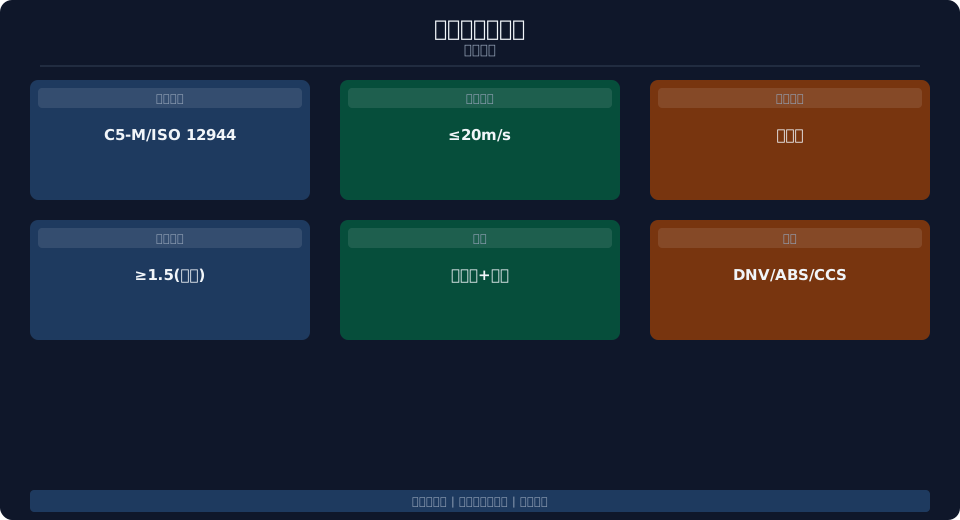
Offshore platform cranes must meet corrosion protection level C5-M (high-corrosion marine environment) in accordance with ISO 12944. The coating system requires a zinc-rich primer of ≥80 μm, an epoxy micaceous iron oxide intermediate coat of ≥120 μm, and a polyurethane topcoat of ≥80 μm, for a total dry film thickness of ≥280 μm. Fasteners and pins are made of 316L stainless steel. The electrical control cabinet has a Protection Rating (IP) of at least IP56, motors are IP56-rated, and junction boxes are IP66-rated. Welded joints use weathering steel electrodes; after welding, weld seams are shot-blasted and finished with the specified coating system. Structural wall thickness accounts for corrosion safety margin—at a marine corrosion rate of 0.1–0.3 mm/year and a 20-year design life, wall thickness is increased by 2–6 mm. Kelude Heavy Industry offers design, manufacturing and certification services for offshore platform cranes to ISO 12483.


Offshore crane


Safety and Operational Requirements

The working wind speed limit is ≤20 m/s; when this limit is exceeded, the crane must be shut down, with the boom lowered to its Minimum radius and anchored. The active heave compensation system uses hydraulic cylinders or winches to compensate for vessel heave, with a compensation accuracy of ±10% and a compensation range of ±3 m. The active compensation system employs motion sensors to detect heave signals in real time and drives the actuating elements in reverse motion to keep the load stable. The structural safety factor is ≥1.5, with hook and wire rope safety factors of ≥5. Material selection uses weathering steel Q355NH or 304L stainless steel. The crane must obtain product design approval and Factory Acceptance Test certificates from DNV, ABS, or CCS classification societies, with a comprehensive inspection every 5 years. Kelude Heavy Industry meets C5-M corrosion protection, classification society certification, and heave compensation requirements.

Corrosion Protection
C5-M
≥280μm
Protection Rating
Cabinet IP56
Motor IP56
Wind Speed Limit
≤20m/s
Shutdown Above
Heave Compensation
±3m
Accuracy ±10%
Safety Factor
Structure ≥1.5
Wire Rope ≥5
Classification Society
DNV/ABS/CCS
5-Year Inspection
technical requirements Indicator Standard
Anti-corrosion coatingTotal Film Thickness≥280μmISO 12944 C5-M
Protection Rating (IP)Control Cabinet IP56/Motor IP56IEC 60529
Working Wind Speed≤20m/sISO 12483
surge Compensation±3m/Accuracy±10%ISO 12483
Safety factorStructure≥1.5/Rope≥5ISO 12483

Maintenance & Inspection

Offshore platform cranes require a coating condition check every 3 years, with prompt touch-up repairs at the first sign of corrosion. A comprehensive inspection is carried out every 5 years by a classification society surveyor, covering structural non-destructive testing, load tests, and calibration of safety devices. Routine maintenance includes checking the integrity of the anti-corrosion coating, seal condition, and lubrication on a per-shift basis.

inspection item Period Requirement
Coating / painting InspectionPer3YearCorrosion Timely Repair
Comprehensive InspectionPer5YearNon-destructive+Load+Calibration
routine maintenancePer ShiftAnti-corrosion/Sealing/Lubrication

FAQ

Q: What are the anti-corrosion requirements for offshore platform cranes?

A: C5-M grade primer with zinc-rich epoxy at ≥80 μm, intermediate coat of micaceous iron oxide epoxy at ≥120 μm, and polyurethane topcoat at ≥80 μm, for a total dry film thickness of ≥280 μm. Fasteners are 316L stainless steel. Control cabinets and motors are IP56 rated. Structural wall thickness includes a corrosion allowance of 2–6 mm. Coating condition is inspected every 3 years.

Q: What are the wind speed and surge compensation requirements?

A: Operating wind speed is limited to ≤20 m/s; the crane must be shut down and anchored beyond this limit. Active heave compensation is provided via hydraulic cylinders or winches, compensating for vessel heave of ±3 m with an accuracy of ±10%. The structural safety factor is ≥1.5, and the wire rope safety factor is ≥5. Materials are Q355NH weathering steel or 304L stainless steel.

Q: What certification requirements apply?

A: Product design approval and factory acceptance test certificates from DNV, ABS, or CCS classification societies are required. A full survey is conducted every 5 years. Materials are Q355NH weathering steel or 304L stainless steel.

Q: What are Kelude's qualifications?

A: Kelude Heavy Industry provides design, manufacturing, and certification services for offshore platform cranes in accordance with ISO 12483:2016, meeting C5-M anti-corrosion, classification society certification, and surge compensation requirements.

Related News

contact

contact us

phone:
+86 13903802779

mail:3915269@qq.com

Working hours: Monday to Friday

Wechat
Wechat
SHARE
TOP