
Crane Performance Test Method ISO 12487:2012 Standard Interpretation

ISO 12487:2012 "Cranes — Test Methods for Performance" is the governing standard for whole-machine crane performance testing. It specifies test methods, loading procedures, and acceptance criteria for static load tests, dynamic load tests, safety device inspections, and overall machine performance evaluation. The standard applies to overhead traveling cranes, gantry cranes, tower cranes, and mobile cranes.


Static Load Test Procedure

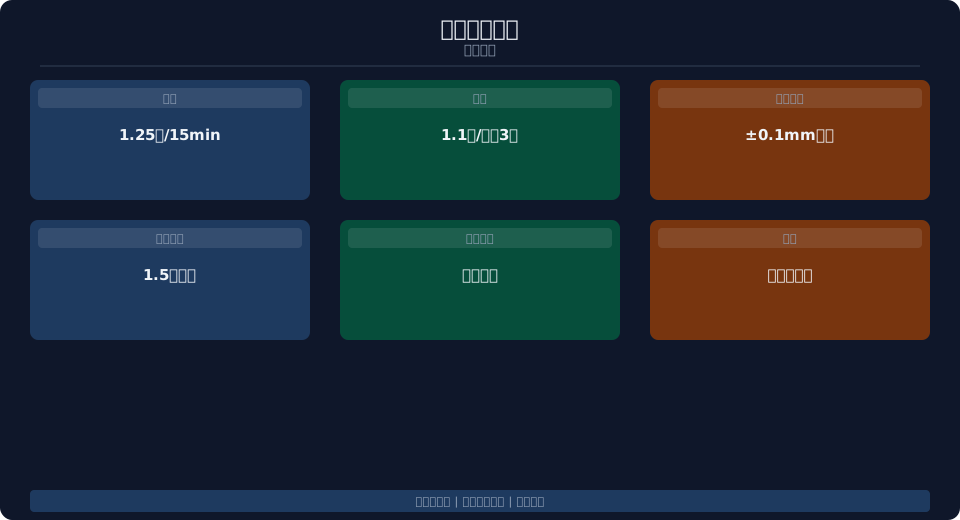
Before testing, conduct a comprehensive inspection of the crane to confirm that all mechanisms and safety devices function properly and that test weights are within their calibration validity period with a deviation of ≤±1%. Load the crane to 100% of rated load with the fully loaded trolley positioned at mid-span of the main girder. Hold the load for at least 10 minutes and measure mid-span deflection δmax using a precision level instrument with an accuracy of ±0.1 mm. Under rated load, main girder deflection must not exceed L/400 to L/500. After unloading, measure residual deformation δr, which must not exceed 20% of δmax. For the overload test, load to 1.25 times the rated load and hold for at least 15 minutes. After unloading, inspect all weld seams for cracks, check bolts for loosening, and verify that no permanent deformation has occurred in the structure. For gantry cranes, also check outrigger elastic deformation — horizontal displacement must not exceed H/500. The static load test primarily verifies the strength and safety margin of the main girder structure and connections, ensuring that the structure remains within its elastic working range under 1.25 times the rated load. Every crane shipped from the Kelude factory undergoes a 1.25× static load test.


Performance Test


Dynamic Load Test & Safety Device Inspection

The dynamic load test is conducted at 1.1 times the rated load with combined mechanism operations — hoisting and lowering through the full range at least 3 times each, with a minimum lifting height of 1 m per cycle and a brake slip distance of no more than 100 mm. The trolley travels across its full stroke at least 3 times to verify operating stability on the crane rail. The crane bridge also travels its full stroke at least 3 times, with motor current fluctuation kept within ±10%. For the emergency stop test, press the Emergency Stop Button while the crane is running at full speed — the control system must respond within 0.5 s and the suspended load must not swing more than 15°. Safety device inspection — the load moment limiter (LML) provides an early warning at 90% of rated load and automatically stops hoisting and luffing at 100%. The height limit switch activates an early warning 0.5 m before the hook reaches its highest position and stops the hoist at 0.3 m. The travel limit switch stops the crane 1 m before the end of the crane rail at both ends. The brake holds the load with a slip of no more than 100 mm at 1.1 times the rated load. Reducer temperature rise must not exceed 40°C, motor temperature rise must not exceed 60°C, and brake surfaces must show no signs of overheating or discoloration. Every crane shipped from Kelude undergoes a 1.1× dynamic load test.

Static Load
1.25×
15 min
Dynamic Load
1.1×
3 Full Cycles
Deflection Accuracy
±0.1 mm
Brake Slip
≤100 mm
Emergency Stop
≤0.5 s
Temp. Rise
≤40°C
Test ItemLoading RequirementsAcceptance Standard
static load1.25Times Mid-span15minResidual deformation≤20%
overload1.25Times Mid-span HoldingNone Crack/permanent deformation
dynamic load1.1Times Hoisting / Lifting+Each Operation3CycleBraking Lowering Drift≤100mm
Emergency Stop1.1Times Full Speedemergency stopResponse≤0.5sSway≤15°
safety deviceEach Operationoperating conditions All MotionsTorque/limit switch/Braking Normal

Load Test Report & Documentation

Each crane shipped from Kelude's factory undergoes a full-load test prior to delivery. The test report records the test date, applied load values, deflection measurements, safety device inspection results, and the final acceptance verdict. Both the inspecting engineer and the crane operator must sign the report to confirm its accuracy. Every crane is subjected to a 1.25× static load test and a 1.1× dynamic load test, with the complete load test report issued before the crane leaves the factory.

Report ContentLoading Requirements
Test DateYYYY-MM-DD
Load ValueRated/overload Actual Value
Deflection MeasurementMid-span Measured Valuemm
safety deviceTorque/limit switch/Braking Conclusion
SignatureDetection Engineer+Operator

Load Test FAQ: Procedures, Requirements & Reports

Q: What is the static load test procedure?

A: Hold at 100% rated load for 10 minutes, then release. Re-apply at 125% rated load and hold for 15 minutes. Deflection at rated load must not exceed L/400 to L/500, with residual deformation limited to 20% of that value. No cracks, permanent deformation, or loose bolts are permitted.

Q: What are the dynamic load test requirements?

A: Hoist and lower the load at 1.1 times the rated load for three cycles each. Brake slip must not exceed 100 mm. The trolley and crane bridge each undergo three travel cycles. Emergency stop response must occur within 0.5 seconds, with load swing limited to 15°. Gearbox temperature rise must stay within 40°C.

Q: What is inspected on the safety devices?

A: The load moment limiter (LML) must trigger an early warning at 90% of rated capacity and stop operation at 100%. The height limit switch activates a warning at 0.5 m and stops hoisting at 0.3 m. The travel limit switch halts the crane 1 m before the end of its stroke. The brake must hold the load with no more than 100 mm of slip at 1.1 times rated load.

Q: What must the load test report include?

A: The report must document the test date, applied loads, deflection measurements, and the inspection findings for all safety devices. It requires signatures from both the inspecting engineer and the crane operator. Kelude supplies the load test report with every crane at the time of factory delivery.

Related News

contact

contact us

phone:
+86 13903802779

mail:3915269@qq.com

Working hours: Monday to Friday

Wechat
Wechat
SHARE
TOP