

Interpretation of the ISO 9927-11:2016 Standard “Inspection Procedures for Bridge Cranes”
📌ISO 9927-11:2016, “Inspection Procedures for Bridge Cranes,” specifies the methods and criteria for daily inspections, periodic inspections, comprehensive inspections, and special inspections.
Inspection Categories
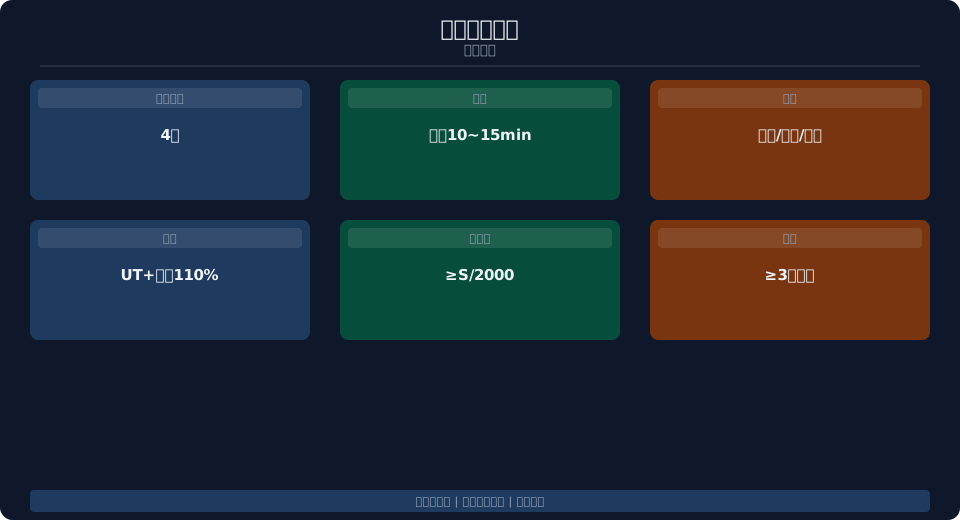
Level 4—Daily, 10–15 minutes before each shift (main beam, wire rope, hook, brake, limit switch). Monthly inspection: approximately half a day (main girder MPI + upper camber ≥ S/2000 / rail ≤ 2 mm / flange ≤ 40% / brake shoes ≤ 50% / wire rope ≤ 7%). Annual inspection: 1–2 days (UT + MPI / load 110% / re-measurement of upper camber; annual deflection ≤ S/3000). Special inspections (after installation, major repairs, overload, or modifications). Operations are prohibited if the daily inspection fails. If the initial camber is approximately 1/1000 or less than 1/2000, a comprehensive assessment is required. Krude Heavy Industry provides annual bridge crane inspection services.
Monthly and Annual Inspections
Monthly Inspection—Main girder MPI (mid-span/end T-welds), upper camber ≥ S/2000, track alignment ≤ 2 mm, flange wear ≤ 40%, brake shoes ≤ 50%, steel wire ropes ≤ 7%. Annual Inspection — Full coverage with UT + MPI; load 110% (deflection ≤ L/400–L/500); re-measurement of upper camber (annual downward deflection ≤ S/3000); moment ±5%. Records: ≥3 months / 3 years / scrapped + 3 years.
| Location | Monthly Inspection | Annual Inspection |
|---|---|---|
| Main Beam | MPI+Arch | UT+MPI+Deflection |
| Track | ≤2 mm | Entire Line |
| Steel Wire Rope | ≤7% | EMT |
| Brake | ≤50% | Comprehensive |
| Hook | MPI | MPI |
| Record | Save |
|---|---|
| Daily Life | ≥3 months |
| Monthly Inspection | ≥3 years |
| Annual Inspection | Scrapped + 3 years |
The inspection system for bridge cranes forms the foundation of safety management throughout the equipment’s entire lifecycle. Routine inspections are conducted by operators before each shift and take approximately 10–15 minutes. Key inspection points include checking the main girder’s exterior for obvious deformation and abnormal paint cracks; checking the trolley and main girder track surfaces for foreign objects and grease buildup; and performing a visual inspection of the wire rope covering its entire length from the fixed end of the drum to the hook connection end, with particular attention to the area in contact with the sheave groove and near the fixed end on the drum. The spring in the hook’s anti-disengagement device should have sufficient tension, and the locking plate should open and close smoothly. The brake should be tested via a spot-start operation to confirm that it operates sensitively and reliably. The limit switch should be manually triggered to verify that the limit switch contacts operate normally.
Regular inspections are conducted monthly by full-time maintenance personnel and take approximately half a day. Key inspection items include magnetic particle testing of the main girder welds. A portable magnetic particle tester is used to inspect T-joint welds in the mid-span area and at the end connections, as well as the end welds of the stiffeners. Prior to testing, paint must be removed from the weld surfaces until the metal is exposed. The The spacing between yoke sections shall not exceed 100 mm. The upward camber of the main girder is measured using a precision level or the steel wire method at the midspan position and compared with the initial camber value. The annual deflection shall not exceed S/3000. When the residual camber falls below S/ 2000, the main girder should be evaluated to determine whether reinforcement is necessary. Measure the wear on the trolley rails using calipers; wear at the rail crown should not exceed 2 mm. Rail sections with excessive wear should be replaced or repaired promptly. Krude Heavy Industry provides annual inspection services for bridge cranes in accordance with the ISO 9927-11 standard, utilizing certified inspectors and professional testing equipment to issue nationally recognized inspection reports.
Frequently Asked Questions
Q: What is the grading system for examinations?
Answer: Routine inspections (10–15 minutes per shift), monthly inspections (half a day), annual inspections (1–2 days), and special inspections. Operations may not proceed if the daily inspection fails.
Q: What are the key points of the monthly inspection?
Answer: Main girder MPI, upper camber ≥ S/2000, track ≤ 2 mm, flange ≤ 40%, brake shoes ≤ 50%, rope ≤ 7%.
Q: What does the annual inspection cover?
Answer: Full coverage of UT+MPI; load 110% (deflection ≤ L/400–500); re-measurement of arch deflection (annual deflection ≤ S/3000); moment ±5%.
Q: Record-keeping?
Answer: Routine inspections every 3 months or more; annual inspections every 3 years or more until the equipment is scrapped, plus 3 years. Krude Heavy Industry provides annual inspection services for bridge cranes.
