
ASME B30.9 Crane Sling Safety Standard Explained

ASME B30.9 — Crane Sling Safety Standard is a key technical specification in the crane industry. As part of the ASME B30 series, it focuses specifically on the safe use of lifting slings, providing systematic requirements for the design and manufacturing of wire rope slings, synthetic web slings, and chain slings, as well as rated load calibration, angular adjustment factors, inspection and maintenance, and discard criteria.

The standard gives design personnel, inspection bodies, and end users a unified technical basis. Kelude strictly implements the technical requirements of this standard throughout its product development and manufacturing process to ensure compliance and reliability.


Scope and Positioning of the Standard

ASME B30.9 — Crane Sling Safety Standard defines the technical requirements and safety indicators for crane slings, covering all types of lifting appliances with a rated lifting capacity above 0.5 t. It applies not only to the design and manufacturing of new equipment but also provides clear technical guidance for the inspection, maintenance, and modification of slings already in service. As a key component of the crane standard system, ASME B30.9 aligns with the EN 13001 Crane Safety Standard series and ISO 4309 Wire Rope Inspection Standard, forming a complete framework of technical specifications. The specific technical parameters and safety factor requirements set out in the standard give design personnel a clear design basis, while also providing third-party inspection bodies with quantifiable acceptance criteria for type tests and factory acceptance tests.


Crane sling safety standard diagram


Core Technical Parameters

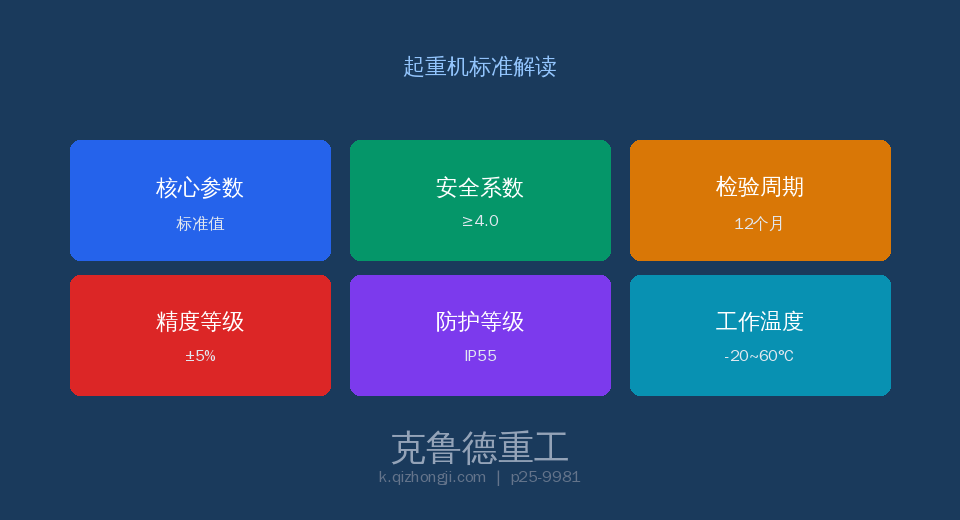
Under ASME B30.9, the design and manufacturing of crane slings must meet a strict set of technical parameters. These values are established from extensive test data and safety engineering principles, covering everything from material selection to structural design. The safety factor ranges specified in the standard take into account the fatigue life and limit load conditions that lifting appliances face in severe operating conditions. In practical engineering applications, design personnel must select the appropriate parameter combination based on the equipment's work duty, load spectrum, and operating environment. The parameter cards below summarize the core technical indicators of the standard:

Safety Factor
Wire Rope ≥5 / Sling ≥5 / Chain ≥4
Angle Adjustment
Effect of 60°–0° sling angle
Sling Color Code
Purple · Green · Yellow · Red · Brown · Blue
Chain Wear Limit
Diameter reduction < 10%
Inspection Interval
Monthly / Annual inspection
Discard Tag
Cut off if not repairable

Comparative Analysis of Key Parameters

The comparison table below systematically contrasts the core parameters required by ASME B30.9 with common engineering practice. All values shown are either mandatory or recommended provisions of the standard and should be strictly implemented during design and selection as well as factory acceptance testing.

Itemtechnical requirementsDescription
Safety factorWire Rope Sling≥5/Chain Sling≥4Synthetic Web Sling / Flat Webbing Sling≥5(Perbreaking)
Sling Angle Correction CoefficientVertical(0°)1.0/60°1.15/45°1.41/30°2.0Smaller sling angle increases load on individual leg
Combined Lifting Sling Color CodePurple1t/Green2t/Yellow3t/Red5t/Brown6t/Blue8tInternational Standard Color Codingrated load
chain Wear Limit ValueChain size Reduction<10%Original DiameterSingle Leg Elongation>5%Or Crack Discard / Retirement
Initial InspectionPrior to use by qualified personnel Inspectionmanufacturing Issued by supplier Inspection Certificate of Conformity
periodic inspectionMonthly(Routine)/Annual(All)Do not use once tagged out of service

Inspection Requirements and Intervals

ASME B30.9 sets forth explicit requirements for the Factory Acceptance Test, Type Test, and periodic inspection of crane slings. The Factory Acceptance Test must be performed on each unit at the manufacturer's facility by the quality inspection department, and equipment that passes inspection must be accompanied by a detailed inspection report and a certificate of conformity. The periodic inspection interval for equipment in service is determined by the work duty/classification and the operating environment, generally not exceeding 12 months.

Itemtechnical requirementsDescription
Visual inspectionWear/Cut / Nick/Corrosion/Kink / KnotBefore each use+Daily
Monthly InspectionDetailed Visual+Measurement WearRecord sling ID and usage count
Annual InspectionFull Inspection+Load Verification(Sampling Inspection)By certified Inspection Personnel
DisposalCut off/Destructive Disposal/Clearly MarkedPrevent re-entry into secondary market

Safe Operation and Management Requirements

Under ASME B30.9, safe operation and routine management play a critical role in ensuring lifting safety. The standard places strong emphasis on operator qualification and training, requiring that all operators complete specialized training and hold the appropriate certifications before operating equipment. User units must establish a comprehensive equipment file management system that documents the full lifecycle of the equipment—from installation and use to maintenance and inspection. Any safety hazards identified must be addressed through the rectification procedure specified in the standard to keep equipment in a safe and controllable condition at all times. Additionally, the standard imposes restrictive requirements on equipment use under extreme operating conditions.

Frequently Asked Questions

Q: What safety factors does ASME B30.9 require for lifting slings?

A: The standard specifies different safety factors depending on the sling material: wire rope slings require a safety factor of ≥5 (breaking load ÷ rated load), synthetic web slings ≥5, and chain slings ≥4. For example, a wire rope sling with a rated load of 1 t must have a minimum breaking load of no less than 5 t. These variations in safety factor reflect the differing sensitivity of each material to wear, impact, and environmental conditions. The rated load plate must be permanently attached to the sling and must not become detached. All Kelude lifting slings are marked with their rated load and come with a Certificate of Conformity.

Q: How is the sling angle correction coefficient applied in practice?

A: The standard states that the rated load marked on a sling is based on vertical lifting conditions (0° sling angle). When a sling is used with multiple legs, the actual rated load must be derated according to the sling angle. At a 60° angle, the load on each leg is 1.15 times the vertical load; at 45°, it is 1.41 times; and at 30°, it is 2.0 times. For instance, a two-leg sling with a rated load of 2 t has an actual rated load of 2 × 1.15 = 2.3 t at a 60° angle. The standard prohibits lifting at sling angles below 30°, as the load per leg becomes excessive. Operator training emphasizes the importance of controlling sling angles during lifting operations.

Q: What are the color coding and discard criteria for synthetic web slings?

A: The internationally recognized color code system for synthetic web slings is: purple for 1 t, green for 2 t, yellow for 3 t, red for 5 t, brown for 6 t, and blue for 8 t. Discard criteria for slings include: cuts or wear that expose the core yarns of the webbing; broken stitching or separated seams; chemical corrosion causing the webbing to harden or discolor; heat damage resulting in melting or charring; illegible labels that prevent identification of the rated load; and exceeding the manufacturer's recommended service life (typically 5 years). A sling must be immediately discarded if any of these conditions are present. Discarded slings should be cut to prevent further use.

Q: What are the inspection intervals and record-keeping requirements for slings?

A: The standard defines a three-tier inspection system: a visual inspection by the operator before each use, with any anomaly requiring immediate removal from service; a detailed inspection of all slings by maintenance personnel on a monthly basis, with records kept; and a comprehensive annual inspection by a certified inspector. Each sling must have a unique identification number and an inspection file documenting the sling specification, manufacturer, date of manufacture, inspection dates and results, and the date of discard. Inspection tags and management ledger templates are provided to users.


— Dedicated to crane design and manufacturing, with products strictly compliant with the ASME B30.9 standard system. We provide lifecycle service covering solution design, manufacturing and installation, and after-sales maintenance. For details on how this standard is applied in our products, contact our technical team for comprehensive technical documentation.

Related News

contact

contact us

phone:
+86 13903802779

mail:3915269@qq.com

Working hours: Monday to Friday

Wechat
Wechat
SHARE
TOP