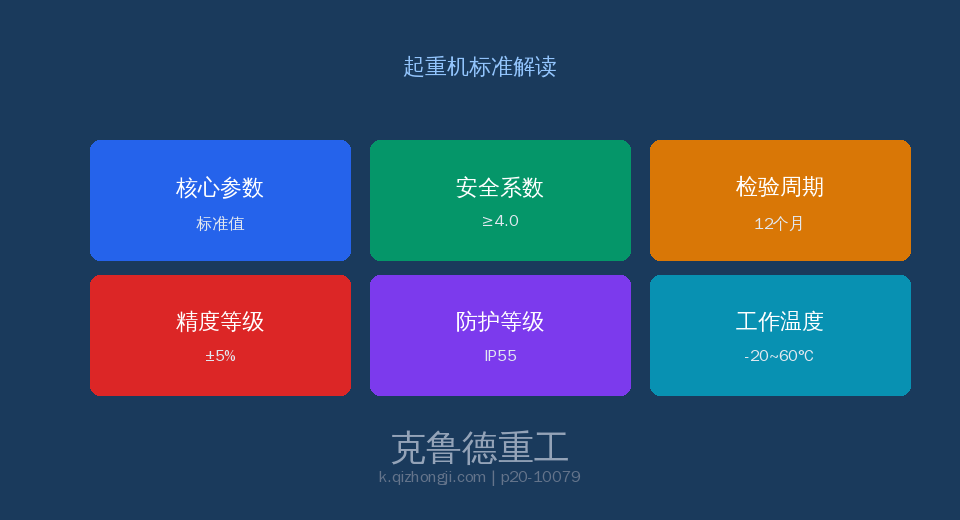

ISO 21858:2020 Crane Intelligent Safety Systems Standard Explained

ISO 21858:2020 — Crane Intelligent Safety Systems is a key technical specification in the crane industry. Developed by the International Organization for Standardization, it defines a comprehensive framework for intelligent safety systems on cranes.

The standard provides a unified technical basis for design personnel, inspection bodies, and end users. Kelude strictly follows its technical requirements throughout product development and manufacturing.


Scope and Application of the Standard

ISO 21858:2020 specifies technical requirements and safety indicators for intelligent safety systems on lifting appliances with a Rated Lifting Capacity above 0.5t. It covers not only the design and manufacturing of new equipment but also provides clear technical guidance for the inspection, maintenance, and modification of cranes already in service. As a key component of the crane standard system, it aligns with the EN 13001 Crane Safety Standard series and ISO 4309 Wire Rope Inspection Standard to form a complete set of technical specifications. The defined technical parameters and Safety factor requirements give design personnel a clear design basis, while also providing third-party inspection bodies with quantifiable acceptance criteria for Type Test and Factory Acceptance Test procedures.


Schematic diagram of a crane intelligent safety system


Core Technical Parameters

Under ISO 21858:2020, the design and manufacturing of crane intelligent safety systems must meet a stringent set of technical requirements. These parameters are established through extensive test data and safety engineering theory, covering everything from material selection to structural design. The Safety factor ranges specified in the standard account for fatigue life and limit load conditions under severe operating conditions. In engineering practice, design personnel must translate these requirements into concrete design parameters to ensure the load capacity of every component meets the required safety standards.

SIL
SIL2 (safety-related)
PFH
1×10^(-6)~10^(-7)
Hardware Fault Tolerance
HFT≥1 (dual channel)
Diagnosis
DC≥90%
Safety Circuit
Hard Wiring Safety Relay
Software
V-model development + full testing

Comparative Analysis of Key Technical Parameters

Itemtechnical requirementsDescription
Safety Integrity Level (SIL)SIL2(crane Safety-Related Functions)PFH:1×10⁻⁷~1×10⁻⁶
Hardware ArchitectureHFT=1(dual channel1-out-of-2 (1oo2))single channel Required DC≥99%
DiagnosiscoverageDC≥90%(SIL2Recommended)Self-Test+Comparator Implementation
Safety CircuitHard Wiring Safety RelayPure (Software-Only) Not Permitted PLCsafety function
Software DevelopmentVModel+Comprehensive Testingsafety function And Standard Functional Separation
Common Failure PreventionCCF≥65DivisionPhysical Isolation+Diversity+Protection

Inspection Requirements and Intervals

ISO 21858:2020 sets out clear requirements for Factory Acceptance Tests, Type Tests, and periodic inspections of intelligent crane safety systems. Factory Acceptance Tests must be performed on every unit at the manufacturer's facility by the quality control department, and each approved unit must be accompanied by a detailed inspection report and a certificate of conformity. Type Tests are required when a new product enters production, when manufacturing is transferred to a different facility, or when significant structural changes are introduced. For cranes already in service, the periodic inspection interval is determined by the work duty and operating environment, with a general maximum of 12 months. For heavy-duty cranes operating continuously at A7 to A8 duty levels, the inspection interval should be shortened to 6 months.

Itemtechnical requirementsDescription
safety function Testingoverload/Overspeed/limit switch/emergency stopMonthly+Allsafety function
SILVerificationPFHCalculation+Hardware AuditAnnual+Change Re-Assessment
Diagnosis TestingFault Injection Verification Detection RateAnnual+DC≥90%
CCFInspection65Item-by-Item Review of Allocation BreakdownAnnual+≥65Division

Safe Operation and Management Requirements

Under ISO 21858:2020, safe operation and routine management play a critical role in crane safety. The standard places strong emphasis on operator qualification and training, requiring that all operators complete specialized training and obtain the necessary certifications before operating equipment. User units must establish a comprehensive equipment file management system that documents the full lifecycle of the equipment, including installation, operation, maintenance, and inspection. Any safety hazards identified must be addressed through the rectification procedure specified in the standard, ensuring that equipment remains safe and controllable at all times. Additionally, the standard imposes restrictive requirements on equipment usage under extreme operating conditions.

FAQ

Q: What safety level does ISO 21858 require?

A: Safety-related control functions for cranes must achieve SIL2, with PFH ≤ 1×10⁻⁶/h. A dual-channel, 1-out-of-2 (1oo2) architecture is required.

Q: What are the hardware architecture and diagnostic requirements?

A: HFT = 1. Single-channel systems require DC ≥ 99%, while dual-channel systems require DC ≥ 90%. Safety circuits must be hard-wired.

Q: How often should safety functions be tested?

A: All safety functions must be tested monthly. Annual verification includes SIL assessment, diagnostic coverage testing, and common cause failure (CCF) review.

Q: What components make up an intelligent safety system?

A: Multi-sensor fusion detection, safety PLC logic, actuators, and a cloud platform. The system supports remote monitoring and predictive maintenance.


Kelude Heavy Industry — Specialized in crane design and manufacturing, fully compliant with the ISO 21858:2020 standard system.

Related News

contact

contact us

phone:
+86 13903802779

mail:3915269@qq.com

Working hours: Monday to Friday

Wechat
Wechat
SHARE
TOP