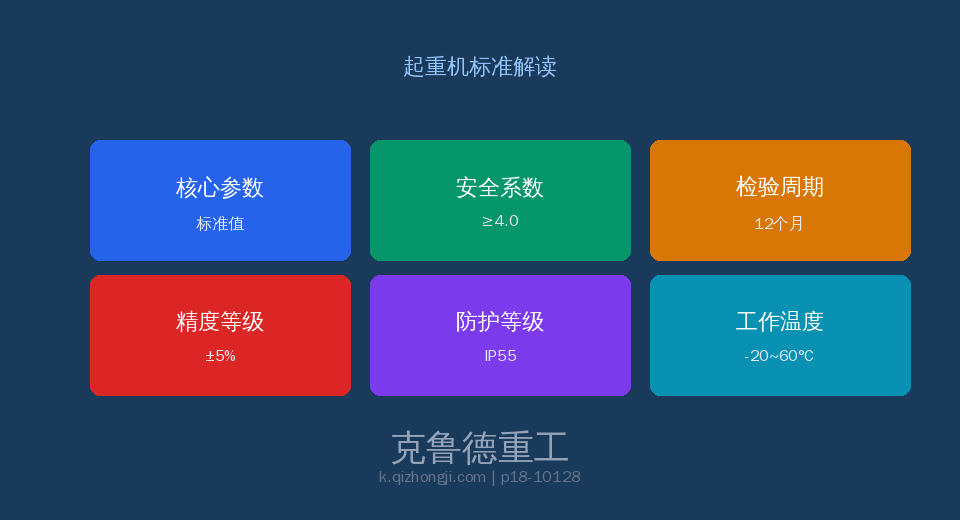

AS 1418.1 Crane General Design Standard Explained

AS 1418.1 Crane Safety Standard is a key technical specification in the crane industry. Developed by Standards Australia, this general-purpose crane design standard is the most authoritative crane design code in the Australian region.

The standard provides a unified technical basis for design personnel, inspection bodies, and end users. Kelude strictly follows the technical requirements set forth in this standard throughout its product development and manufacturing processes.


Application Scope and Positioning of AS 1418.1

AS 1418.1 specifies the technical requirements and safety indicators for the general design of cranes, covering all types of lifting appliances with a Rated Lifting Capacity above 0.5 t. The standard applies not only to the design and manufacturing of new equipment but also provides clear technical guidance for the inspection, maintenance, and modification of cranes already in service. As a critical component of the crane standard system, AS 1418.1 aligns with the EN 13001 series and ISO 4309, together forming a comprehensive technical specification framework. The clearly defined technical parameters and Safety factor requirements give design personnel a solid design basis, while also providing quantifiable acceptance criteria for third-party inspection bodies conducting Type Tests and Factory Acceptance Tests.


General crane design schematic


Core Technical Parameters and Design Requirements

Under AS 1418.1, the design and manufacturing of cranes must satisfy a stringent set of technical parameters. These parameters are established based on extensive test data and safety engineering principles, covering everything from material selection to structural design. The Safety factor ranges specified in the standard take full account of fatigue life and limit load conditions under severe operating conditions. In engineering practice, design personnel must translate standard requirements into concrete design parameters, ensuring that the load capacity of every Component meets the required safety requirements.

Design Method
Allowable Stress Method
Safety Factor
1.5~2.0
Deflection
Full load ≤ L/800
Fatigue
A6 or higher required
Welding
Grade B, 100% UT under dynamic load
Test
Static 1.25× for 10 min

Comparative Analysis of Key Technical Parameters

Itemtechnical requirementsDescription
design methodallowable stress method(Main)/limit state method(Reference)crane steel structure General Method
Safety factor1.5(Main Girder)/1.67(End Carriage)/2.0(hook block)Classification by Importance
DeflectionFull load≤L/800, No-load Camber≥L/1500Side bow / lateral bow≤L/2000
TierA6Mandatory for Class and AboveWelding Detail FAT80~100
Welding QualityBClassification by Importancedynamic load Weld Seam100%UT, Fillet Weld20%MTWeld Size≥Plate Thickness×0.7
Test LoadStatic1.25Times10min+Dynamic1.1Times×3Factory+Annual

Inspection Requirements & Intervals

AS 1418.1 sets out clear requirements for Factory Acceptance Tests, Type Tests, and periodic inspections of general crane designs. Factory Acceptance Tests must be carried out on each individual unit by the quality inspection department at the manufacturer's facility, and every approved unit must be accompanied by a detailed inspection report and a Certificate of Conformity. Type Tests are required when a new product enters initial production, when manufacturing is transferred to a different facility, or when significant structural changes are introduced. For cranes already in service, the periodic inspection interval is determined by the work duty and operating environment, with a general maximum of 12 months. For heavy-duty cranes operating continuously at A7 to A8 duty levels, the inspection interval should be shortened to 6 months.

Itemtechnical requirementsDescription
Main Girder DeflectionLevel Instrument MeasurementAnnual+≤L/800
Weld InspectionUTMain Weld Seam100%Annual+A6First Half and Above
Load test1.25Timesstatic load+1.1Timesdynamic loadFactory+Annual+Major Repair
coating corrosion protectionDamage>5%RepairAnnual+Coating Thickness Measurement

Safe Operation and Management Requirements

Under AS 1418.1, safe operation and day-to-day management are critical to compliance. The standard places strong emphasis on operator qualification and training, requiring that all operators complete specialized training and hold the appropriate certifications before operating equipment. User units must establish a robust equipment file management system that documents the full lifecycle of the equipment—installation, operation, maintenance, and inspection. Any safety hazard identified must be addressed through the rectification procedure specified in the standard, ensuring the equipment remains safe and controllable at all times. The standard also imposes restrictions on equipment use under extreme operating conditions.

Frequently Asked Questions

Q: What safety factors does AS 1418.1 require?

A: Safety factors are applied in tiers: 1.5 for the main girder, 1.67 for end carriages, and 2.0 for the hook block. Dynamic load factors range from 1.1 to 1.4.

Q: What are the deflection limits?

A: Under full load, deflection must not exceed L/800; at no-load, camber must be at least L/1500; side bow is limited to L/2000.

Q: What are the weld inspection requirements?

A: Dynamic-load fillet welds rated Class B require 100% ultrasonic testing (UT), while fillet welds require 20% magnetic particle testing (MT). Weld size must be at least 0.7 times the plate thickness.

Q: What load testing is required?

A: Static load testing at 1.25 times rated capacity for 10 minutes, and dynamic load testing at 1.1 times rated capacity for 3 cycles. Testing is required at factory commissioning, annually, and after major modifications.


Kelude Heavy Industry — Specialized in crane design and manufacturing, with products fully compliant with the AS 1418.1 standard system.

Related News

contact

contact us

phone:
+86 13903802779

mail:3915269@qq.com

Working hours: Monday to Friday

Wechat
Wechat
SHARE
TOP