
LD Type Electric Single-Girder Bridge Crane: Parameters & Selection
Single-Girder Bridge Crane (LD Type Electric Single-Girder Bridge Crane) features a well-engineered structure and high overall rigidity. Designed to work with an electric hoist, it is a light-duty traveling crane for rail-mounted operation. Rated lifting capacity ranges from 1 to 10 tons (expandable to 16 tons), with spans from 7.5 to 31 meters and duty class A3–A5. Suitable for ambient temperatures between -25°C and +40°C, this crane is widely used for material handling in factories, warehouses, and storage yards. Manufactured in accordance with JB/T1306-1994. Lifting speed is 8 m/min (with CD1 electric hoist), long-travel speed is 20 m/min, and cross-travel speed is 20 m/min. Dead weight varies from approximately 2 to 15 tons depending on capacity and span.
Single-Girder Bridge Crane Design & Construction
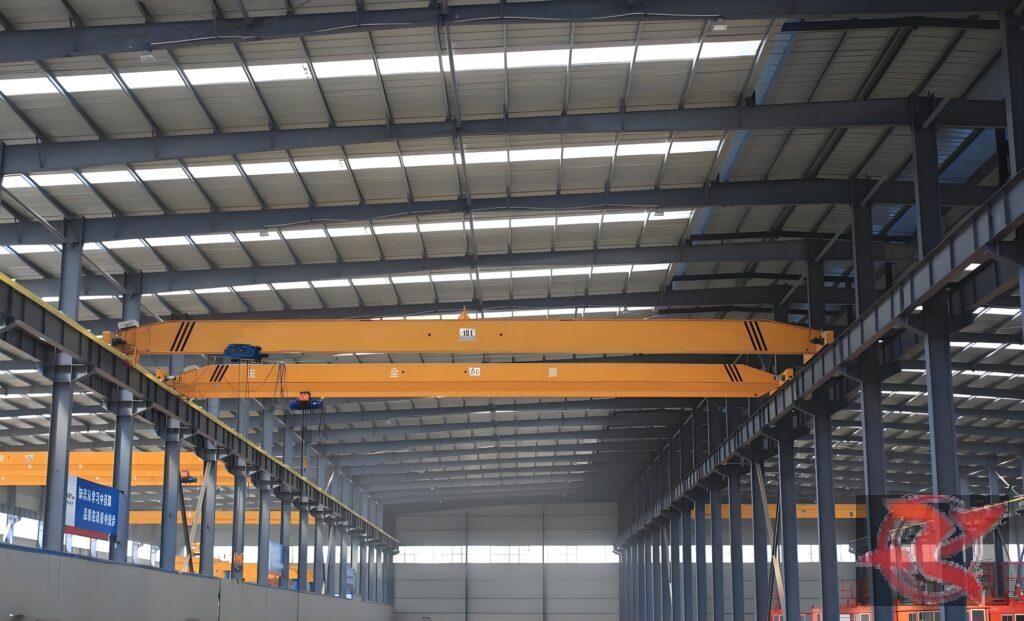
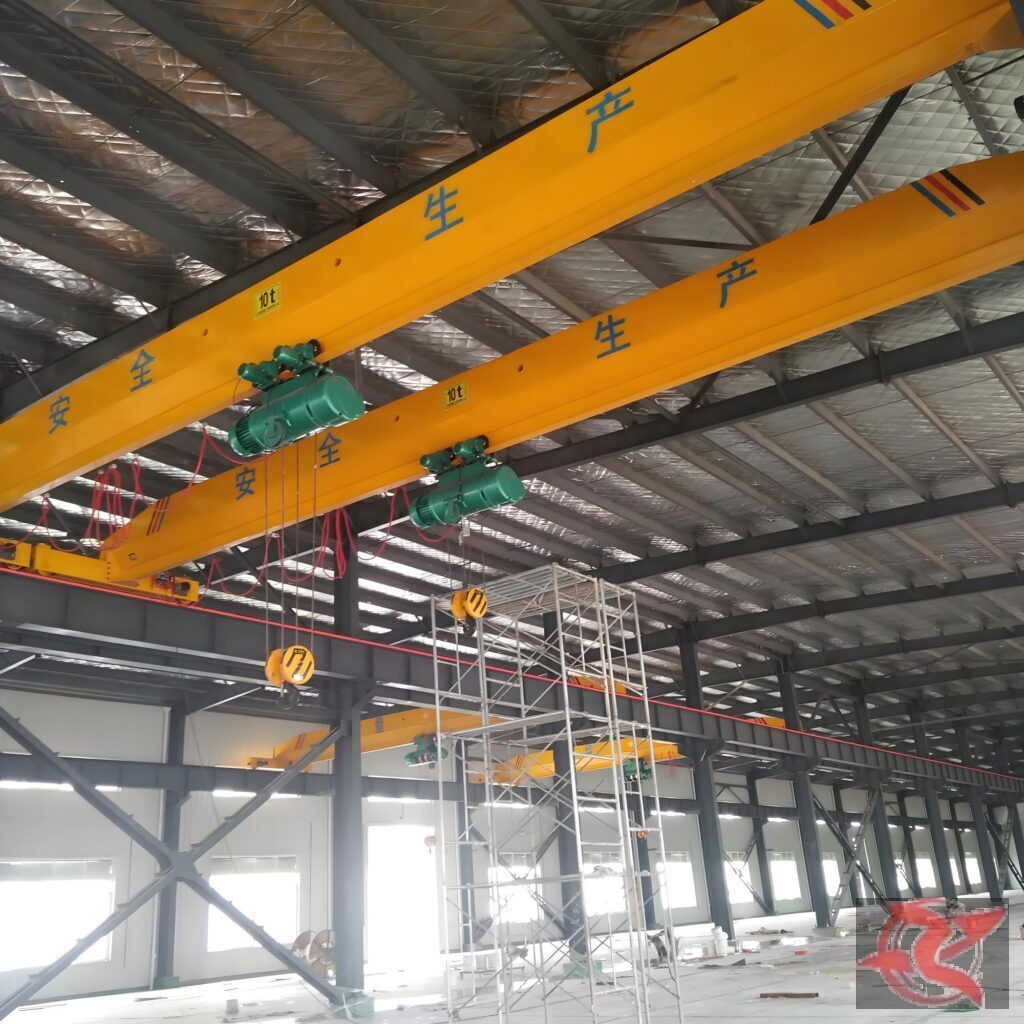
The single-girder bridge crane operates with an electric hoist as a compact, rail-mounted lifting system. The main girder features a box-type welded structure with an integrated I-beam rail, delivering strength, stiffness, and stability while maintaining a compact, low-profile design. The main girder and end carriages are connected with split bolted joints, simplifying transport and speeding up on-site assembly. Available in rated capacities of 1t, 2t, 3t, 5t, and 10t, with spans from 7.5m to 31m. When fitted with an optional motorized grab bucket, the crane can also handle bulk material loading and transfer. The crane is designed for a 10-year service life with a cumulative duty cycle of 100,000 operations. Main girder deflection is controlled to L/700 (per GB/T 5905), and static load testing is performed at 125% of rated load.
Key Features of Our Overhead Crane
Technical Parameters & Specifications
| Parameter Name | Unit | Specification |
|---|---|---|
| Rated Lifting Capacity Gn | T | 1, 2, 3, 5, 10, 16, 20 |
| Span S | m | 7.5~30 |
| Lifting Height H | m | 6~30 |
| Work Duty / Classification | A3~A5 | |
| Power Supply | 380V 50Hz | |
| Crane Bridge / Long Travel Wheel Diameter | mm | 300 |
| Recommended rail | kg/m | 18~38 |
Note: Gn = Rated Lifting Capacity, S = Span (distance from center of left rail to center of right rail), H = Lifting Height (distance from floor to highest point of hook).
Control & Operation Options
Single-girder bridge cranes are available with either floor-mounted or cab-operated controls. Floor operation uses a pendant station or remote control, offering flexibility and lower cost — ideal for applications up to 10t with moderate duty cycles. The operator cab comes in open (KS) or enclosed (BS) configurations and can be mounted on either side as required. Cab entry is available from the side or the end, giving you full flexibility to match your facility layout.
Design & Construction
This electric single-girder bridge crane is designed and manufactured to JB/T1306-1994, using a wire rope hoist as the lifting mechanism and traveling on two crane rails. The main girder features a box-type welded structure with an integrated I-beam, delivering the strength, stiffness, and stability you need while keeping the overall profile compact and visually clean. The main girder and end carriages use a split-type connection, which simplifies both transport and on-site assembly.
Pricing & Quotation
Reference pricing for the LD-type single-girder bridge crane is grouped by lifting capacity and span: small units (1–3t, 7.5–16m span) run approximately $3,000–$6,000; mid-range units (5t, 10–22.5m span) are roughly $6,000–$12,000; and large units (10t, 16–31m span) are about $12,000–$22,000. These prices cover standard configurations including the CD1 electric hoist and floor pendant control — they do not include rail installation, electrical hookup, or freight. Custom-engineered options (special spans, corrosion-resistant coating, remote control, operator cab, etc.) are quoted separately. Kelude Heavy Industry offers free design consultation and selection assistance — contact us for a quote.
Typical Applications
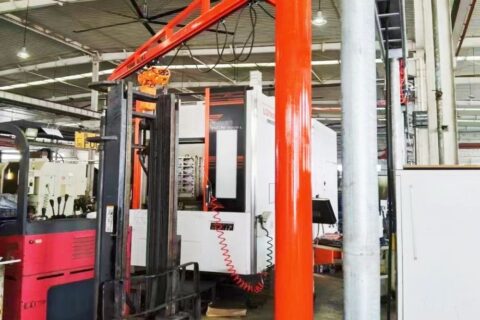
This crane is widely used in machine shops, assembly workshops, warehouses, and material yards where heavy loads need to be moved regularly. It is best suited for light-to-medium duty applications with relatively low lifting frequency. This crane is not designed for hazardous environments containing flammable or explosive atmospheres, nor for areas with high humidity or corrosive gases. It is also not suitable for handling molten metal, toxic substances, or flammable/explosive materials.
Frequently Asked Questions
Q1: What is the main difference between a single-girder and a double-girder bridge crane?
A single-girder bridge crane uses an electric hoist as the lifting mechanism, with the hoist running along the lower flange of the main girder. This design is lighter, simpler, and more cost-effective — well suited for capacities up to 10t in light-to-medium duty applications. A double-girder bridge crane uses a trolley hoist mechanism that travels on rails atop the main girders, making it the preferred choice for heavier loads (above 10t) and heavy-duty classifications (A6–A8). Kelude Heavy Industry offers both configurations so you can select the right solution for your specific needs.
Q2: What standards does the LD-type single-girder crane comply with?
The LD-type electric single-girder bridge crane is designed and manufactured to JB/T1306-1994 (Electric Single-Girder Crane standard). The CD1 wire rope hoist used as the lifting mechanism complies with JB/T 9008.1, and the complete crane is tested and inspected in accordance with GB/T 5905 (Crane Test Specification and Procedures).
Q3: What are the requirements for retrofitting a single-girder crane into an existing factory building?
You will need to install crane runway beams on the building columns, with rail installation accuracy requiring a span deviation of ≤±5mm. The workshop height must provide sufficient clearance for the lifting height plus a minimum safety distance of 200mm above the hook's upper limit. A 380V/50Hz three-phase power supply is required. The steel structure's load-bearing capacity must be verified by a structural engineer to ensure compliance with GB/T 3811 (Crane Design Standard).
Q4: What is the lifting speed of a single-girder bridge crane?
The standard lifting speed for the CD1 wire rope hoist is 8m/min (7m/min for 10t and above). If two-speed operation is needed, the MD1 hoist is available with a dual-speed option of 8/0.8m/min. The long-travel speed is 20m/min and the cross-travel speed is 20m/min. These parameters can be customized to suit your specific operating requirements.