

Annual Inspection Process and Schedule for Electric Hoists: A Complete Guide from Submitting the Inspection Request to Receiving the Certificate
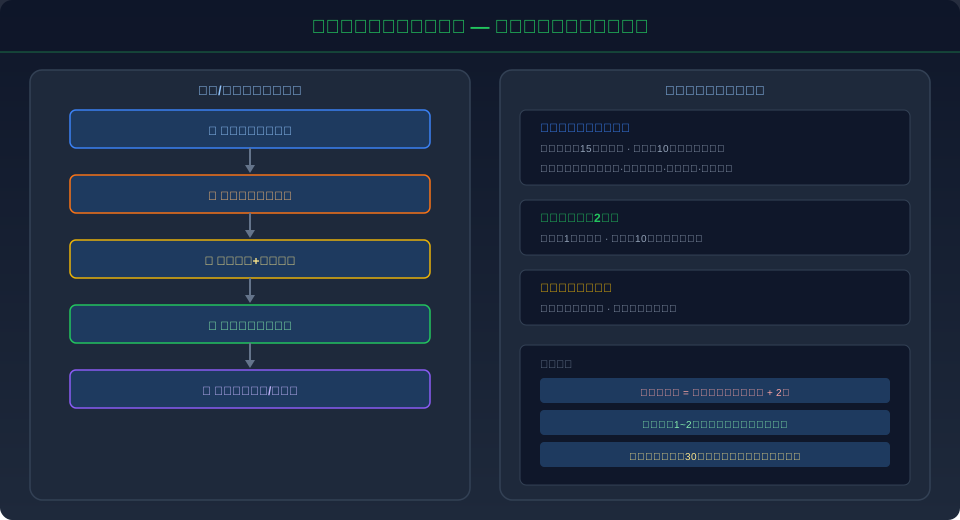
📌 Annual Inspection Process for Electric Hoists Cranes classified as special equipment must comply with TSG Q7015-2016: Supervision and inspection for new installations (apply within 15 days; report issued within 10 working days) → Periodic inspection every 2 years (application must be submitted 1 month before the due date) → Annual inspection (organized by the operating entity). If the inspection fails, the operator has 30 days to make corrections. Failure to undergo inspection on time constitutes illegal use and may result in a fine of 30,000 to 300,000 yuan. It is recommended to submit the application 1 to 2 months in advance to avoid the year-end peak period.
Annual inspections and periodic inspections of electric hoists mounted on cranes are critical to ensuring the safe operation of the equipment. Many operating units are unclear about when to conduct annual inspections, who to contact, what the inspections entail, and how to carry them out. Based on TSG Q7015-2016 "Rules for Periodic Inspection of Lifting Machinery" and TSG Q7016-2016 "Rules for Supervised Inspection of Installation, Modification, and Major Repairs of Lifting Machinery," this article provides a comprehensive operational guide for the entire annual inspection process of electric hoists, covering four key aspects: inspection types, application procedures, on-site inspection items, and inspection cycle management.
1. Three Types of Tests
Inspection and Supervision of New Installations:After an electric hoist is installed on a crane with a lifting capacity of ≥3 metric tons, an application for supervisory inspection must be submitted to the local special equipment inspection agency within 15 days. The inspection includes an examination of the equipment itself, verification of safety devices, an inspection of the electrical system, and load tests consisting of a static load test (125%) and a dynamic load test (110%). Upon passing the inspection, a ”Supervisory Inspection Report for Hoisting Machinery Installation” will be issued, and only then may the equipment be put into service. The supervisory inspection serves as the equipment’s “birth certificate”; without this report, the equipment is considered to be in illegal use.
Periodic Inspection (Every 2 Years):Cranes in service must undergo a periodic inspection every two years. The due date for the inspection is two years from the date the previous inspection report was issued. The inspection includes a visual inspection, functional testing of safety devices, measurement of wear on major components, insulation resistance testing, and a 100% rated load test. Periodic inspections are conducted on-site by an approved inspection agency, which issues the “Periodic Inspection Report for Lifting Equipment.”
Annual Inspection (Every Year):Routine annual inspections organized by the user entity cannot substitute for periodic inspections. Annual inspections are conducted by the user entity’s safety management personnel or by a maintenance and repair contractor commissioned by the user entity. The inspection items, as outlined in Appendix A of TSG Q7015-2016, include metal structures, hoisting mechanisms, travel mechanisms, safety devices, electrical systems, and protective devices. Inspection records must be archived for future reference and will be verified during routine inspections by market regulation authorities.
2. Application Process
Step 1, verify the issuance date of the previous inspection report, and calculate the expiration date (issuance date + 2 years).
Step 2, Contact your local special equipment inspection agency (the Provincial Special Equipment Inspection and Research Institute or the Municipal Special Equipment Inspection Institute) 1 to 2 months before the expiration date to schedule an appointment for filing your application by phone or through their official website. It is recommended to avoid the year-end peak period from November to December, as wait times may double during this time.
Step 3, Submit the following documents: the previous inspection report, equipment maintenance records, self-inspection records, and the certificate of use registration. Incomplete documentation will result in the application not being accepted.
Step 4, pay the inspection fee (500–3,000 yuan per unit), and wait for the inspection agency to schedule the inspection.
Step 5, the inspection agency will conduct an on-site inspection and issue an inspection report within 10 business days after the inspection.
3. On-site Inspection Items
① Review of Technical Documents—Verify that the previous inspection reports, maintenance records, and usage records are complete.
② Inspection of Metal Structures— Camber of the main girder (L/1000–L/800), diagonal difference in the end girders, weld appearance, and non-destructive testing reports.
③ Hoisting Mechanism Inspection— Brake clearance (0.5–1.5 mm), brake slip (S ≤ v/100), and wire rope wear and broken wires.
④ Inspection of the Drive Mechanism—Wheel wear, misaligned rail joints, and gauge deviation.
⑤ Safety Device Inspection— Limit switch function test, overload limiter calibration, emergency stop button function, and collision prevention device.
⑥ Electrical System Inspection— Insulation resistance (≥1 MΩ), ground resistance (≤4 Ω), and cable appearance.
⑦ Load Test—Operate the 100% at its rated load over its full stroke to verify the smooth operation of all mechanisms and the reliability of the brakes.
4. Inspection Cycle Management Comparison Table
| Inspection Type | Cycle | Implementing Party | Major Projects | Report Release Date |
|---|---|---|---|---|
| Supervision and Inspection | First Time (New Installation) | Inspection Agency | 125% Static Load + 110% Dynamic Load | 10 business days |
| Periodic Inspection | Every 2 years | Inspection Agency | 100% Load + Safety Device + Structure | 10 business days |
| Annual Inspection | Every year | Operating Entity/Maintenance Provider | Appearance + Functionality Testing + Documentation | None (Filed for reference) |
5. Annual Inspection Process Data Card
2 years Periodic Inspection Interval The deadline is two years from the date the test report was issued; the application process begins one month before the deadline. |
10 days Report Submission Deadline A formal inspection report will be issued within 10 business days after the inspection is completed; if this deadline is exceeded, you may file a complaint. |
30 days Deadline for Rectification If the inspection fails, corrective actions must be taken within 30 days; use may only resume after a re-inspection is passed. |
Frequently Asked Questions (FAQ)
Q: How often do electric hoists undergo annual inspections?
Answer: An electric hoist is not classified as special equipment and does not require annual inspection. However, once an electric hoist is installed on a bridge or gantry crane with a lifting capacity of 3 metric tons or more, the entire crane must undergo periodic inspections every two years in accordance with TSG Q7015-2016, as well as an annual inspection (organized by the user). The due date for the periodic inspection is two years from the date the previous inspection report was issued; it is recommended to submit the application 1 to 2 months before the due date.
Q: Where can I get an annual inspection for an electric hoist?
Answer: Contact the provincial Special Equipment Inspection and Research Institute or the municipal Special Equipment Inspection Institute to file your application. Each city typically has one or two qualified inspection agencies; you can make an appointment through their official websites or by phone. Be sure to avoid the year-end peak period from November to December, as wait times may double. You will need to provide the previous inspection report, maintenance records, self-inspection records, and the Special Equipment Use Registration Certificate.
Q: What documents are required for the annual inspection of an electric hoist?
Answer: To apply for a periodic inspection, you must submit: ① the report from the last periodic inspection; ② equipment maintenance records (for the past 2 years); ③ self-inspection records (annual inspection records); ④ Special Equipment Use Registration Certificate. Incomplete documentation may affect the acceptance of your application; we recommend preparing all required materials in advance. Krude Heavy Industry provides a complete set of factory documentation and inspection records with every piece of equipment upon delivery to assist users in completing the inspection application process.
Q: How much does the annual inspection of an electric hoist cost?
Answer: Periodic inspection fees are set at the provincial level: approximately 500–1,000 yuan per unit for 1–5-metric-ton cranes, approximately 1,000–2,000 yuan for 10–20-metric-ton cranes, and approximately 2,000–3,000 yuan for 32-metric-ton and larger cranes. Costs for rectifying issues after a failed inspection are billed separately (typically ranging from several thousand to tens of thousands of yuan). It is recommended that operating units perform routine maintenance to reduce the risk of failing inspections.
Upon delivery of the equipment, Krude Heavy Industries provides a complete factory inspection report and installation documentation to assist customers in filing for supervisory inspection. See related articles.Which electric hoists require inspection?Understand the criteria for defining equipment.
