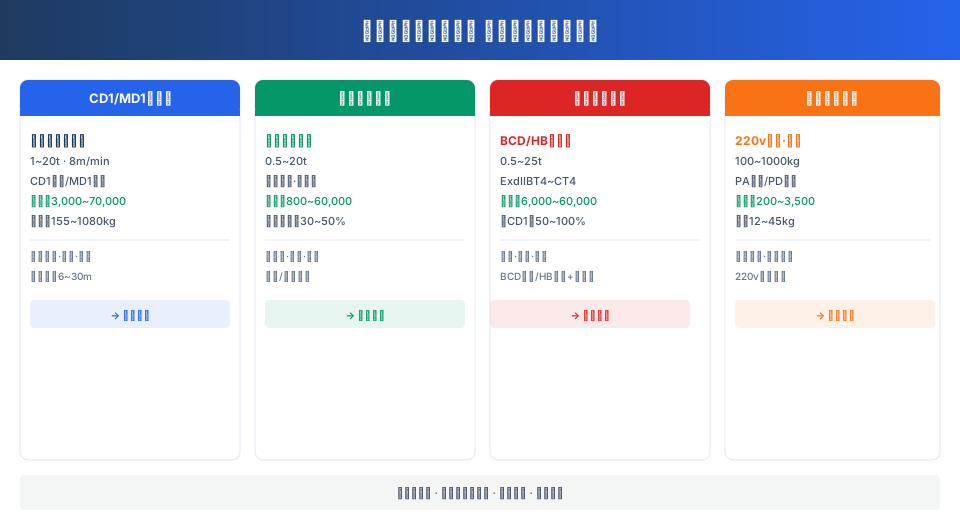

Electric Hoist Full Range: Models, Parameters & Pricing Guide

Key Takeaways Kelude Heavy Industry's electric hoist product line covers four main series: CD1/MD1 wire rope electric hoists (1–20t, general-purpose, $450–$10,400), chain electric hoists (0.5–20t, lightweight and economical, $120–$8,900), explosion-proof electric hoists BCD/HB type (0.5–25t, for chemical and mining applications, $900–$8,900), and 220V micro electric hoists (100–1,000 kg, for home use, $30–$520). This article provides a full-series parameter and price comparison to help you select the right electric hoist for your operating conditions.

Electric hoists are among the most common pieces of light and small lifting equipment in modern industrial production. With such a wide variety available—from 220V micro hoists for home use to explosion-proof hoists for chemical plants, and from lightweight chain hoists to general-purpose CD1/MD1 wire rope hoists—each type differs significantly in specifications, pricing, and application scenarios. This page serves as the central hub for Kelude Heavy Industry's electric hoist product line, bringing together parameter and price comparisons across all four series along with selection recommendations to help you quickly identify the right model for your needs.

Electric Hoistfull rangeModelParameterPrice & Selection

CD1/MD1 Wire Rope Electric Hoists: General-Purpose Workhorses

The CD1 single-speed and MD1 two-speed wire rope electric hoists are the most widely used general-purpose hoists on the market. They are driven by a conical-rotor brake motor with a three-stage helical gear reduction system. Lifting capacity ranges from 1 to 20 tons, with a standard lifting speed of 8 m/min (7 m/min for models above 10 tons). The MD1 two-speed version offers 8/0.8 m/min for precise positioning. Pricing: CD1-1t approximately $450–$900, 5t approximately $1,200–$2,200, 10t approximately $2,200–$4,500, and 16t approximately $3,700–$7,400. These hoists are suitable for general lifting and transport tasks in factory workshops, warehouses, freight yards, power plants, and docks. View full specifications and pricing

Chain Electric Hoists: Lightweight and Cost-Effective

Chain electric hoists use a welded round link chain made of alloy steel as the load-bearing element. They are 30–50% lighter than wire rope hoists of the same capacity, operate with lower noise levels, and cost 30–50% less. Lifting capacity ranges from 0.5 to 20 tons, with lifting heights of 3 to 12 meters. Pricing: 0.5t approximately $120–$300, 1t approximately $220–$600, 5t approximately $1,200–$2,200, and 20t approximately $4,500–$8,900. Electric models feature remote control operation, while manual models are hand-chain driven and require no power supply. Ideal for assembly lines, small warehouses, home garages, and other light-load applications. View full specifications and pricing

Explosion-Proof Electric Hoists: Safe for Hazardous Environments

Explosion-proof electric hoists are manufactured to ISO 12480 standards, featuring a flameproof enclosure design with exposed components made from non-sparking copper alloy materials. The BCD type is suitable for surface applications in chemical plants (ExdⅡBT4~CT4, 0.5–20t), while the HB type is designed for underground coal mining (ExdⅠ~ExdⅡCT4, 0.5–25t, with coal safety certification). These hoists cost 50–100% more than CD1 models of equivalent capacity: BCD-1t approximately $900–$1,800, BCD-5t approximately $2,200–$4,500, and BCD-10t approximately $4,500–$8,900. HB type models are an additional 20–50% more expensive than BCD type. View full specifications and pricing

220V Micro Electric Hoists: Compact Power for Home Use

Micro electric hoists operate on standard 220V single-phase household power—simply plug in and use. The PA type handles 100–400 kg (dead weight 12–25 kg, priced $30–$150), while the PD type handles 500–1,000 kg (dead weight 30–45 kg, priced $90–$520). Wire rope diameters range from 4 to 8 mm, with lifting speeds of 6 to 12 m/min. These units are not classified as special equipment and require no inspection registration. Perfect for home garage hoisting, small workshop material lifting, renovation material transport, and similar applications. View full specifications and pricing

Side-by-Side Comparison of All Four Series

Series Capacity Range Power Supply Price Range Typical Applications
CD1/MD1 Wire Rope Hoist 1–20t Three-phase $450–$7,400 Workshops, warehouses, docks, power plants
Chain Electric Hoist 0.5–20t Electric or manual $120–$8,900 Assembly lines, small warehouses, garages
Explosion-Proof Hoist (BCD/HB) 0.5–25t Three-phase $900–$8,900 Chemical plants, coal mines, hazardous areas
Micro Electric Hoist (220V) 100–1,000 kg 220V single-phase $30–$520 Home garages, small workshops, renovation

How to Choose the Right Electric Hoist

Selecting the right electric hoist comes down to three key factors: the operating environment, the required lifting capacity, and your budget. For general-purpose lifting in factories or warehouses, the CD1/MD1 wire rope hoist offers the best combination of reliability and value. If you're working in a light-load setting with limited headroom, a chain hoist provides a more compact and economical solution. For chemical plants, coal mines, or any area with flammable gases or dust, an explosion-proof hoist is not optional—it's a safety requirement. And for occasional home or small workshop use, a 220V micro hoist delivers surprising capability at a fraction of the cost. Consider your typical load weights, duty cycle, and power availability before making a decision.

Comparison ItemCD1/MD1Wire RopeChain Electric HoistExplosion-proof electric hoistMiniature220vHousehold
Lifting Capacity1~20t0.5~20t0.5~25t100~1000kg
Price Range3,000~70,000800~60,0006,000~60,000200~3,500
Power SupplyThree-phase380V380V/ManualThree-phase380V220VSingle-phase
Lifting Speed8m/min0.1~0.3m/s8m/min6~12m/min
Noise LevelMediumLowMediumMedium
Special CertificationType TestType TestExplosion Proof Certificate/MA CertificationCCC
Application ScenariosFactory/Warehouse/DockAssembly Line/Garage/WarehouseChemical Industry/Coal Mine/Military IndustryHousehold/Workshop/Decoration

6. Selection Guide: How to Choose the Right Electric Hoist

By Lifting Capacity: For light loads from 100 to 1,000 kg, a 220V Micro Electric Hoist is the most economical choice. For medium loads between 0.5 and 20 t, opt for a Chain Electric Hoist (quiet and lightweight) or a CD1/MD1 wire rope hoist (versatile and dependable). In explosive atmospheres, an Explosion-proof electric hoist is mandatory. For large tonnage applications above 20 t, consider an HC-type box-type electric hoist.

By Budget: From $30 to $520, a 220V micro hoist for home use fits the bill. For $120 to $8,900, a Chain Electric Hoist is a solid option. A CD1/MD1 wire rope hoist ranges from $450 to $10,400, while an Explosion-proof electric hoist typically costs between $890 and $8,900.

By Power Supply: If only a 220V single-phase supply is available, choose a Micro Electric Hoist or a manual chain hoist. With a three-phase 380V supply, the full range of hoists is available. In the absence of any power source, a manual chain hoist (Hand chain hoist) is the way to go.

By Operating Environment: For explosive environments like chemical plants, oil refineries, and coal mines, an Explosion-proof electric hoist (BCD or HB type) is essential. Standard factory workshops can use CD1/MD1 wire rope hoists. For noise-sensitive areas such as food processing facilities or hospitals, a Chain Electric Hoist is recommended.

Frequently Asked Questions (FAQ)

Q: How much does an electric hoist cost?

A: The price of an electric hoist varies significantly based on type and capacity: a 220V micro hoist for home use costs between $30 and $520, a Chain Electric Hoist ranges from $120 to $8,900, a CD1/MD1 wire rope hoist is priced between $450 and $10,400, and an Explosion-proof electric hoist costs between $890 and $8,900. Kelude offers a full range of customizable hoists and provides free technical consultation and quotations.

Q: How do I select the right electric hoist?

A: Follow this four-step selection process: ① Determine the maximum load weight (add a 20% safety margin); ② Confirm the available power supply (220V / 380V / no power); ③ Assess the operating environment (standard / explosion-proof / noise-sensitive); ④ Establish your budget. For home use with loads of 100 to 1,000 kg, choose a 220V micro hoist. For medium loads from 0.5 to 20 t, a CD1 or Chain Hoist is suitable. In explosive environments, select a BCD or HB type. The Kelude technical team is available to assist with your selection.

Q: Does an electric hoist require special equipment inspection?

A: An electric hoist sold or used as a standalone unit is not classified as special equipment and does not require inspection. However, when installed on an overhead type or gantry type crane with a Lifting Capacity of 3 t or more, the complete crane must comply with TSG Q7016-2016 and TSG Q7015-2016 regulations: a supervision inspection is required for new installations, a periodic inspection every 2 years, and an annual inspection. Kelude provides a complete set of Factory Acceptance Test documentation.

Q: Which brand of electric hoist is the best?

A: When choosing an electric hoist, focus on three key factors: ① Copper-wound motor (2 to 3 times longer lifespan than aluminum-wound motors); ② Manufacturer credentials and inspection reports; ③ Comprehensive after-sales warranty. All Kelude electric hoists feature pure copper motors, have passed the Type Test conducted by the National Lifting Appliances Quality Supervision and Inspection Center, and come with a 12-month warranty and lifetime technical support for complete peace of mind.

Kelude offers technical consultation, non-standard customization, and after-sales technical support across its full range of electric hoists. Contact our technical team for free selection recommendations and a quotation. CD1/MD1 Wire Rope Electric Hoist · Chain Electric Hoist · Explosion-proof Electric Hoist · Micro Electric Hoist for Home Use

Related News

contact

contact us

phone:
+86 13903802779

mail:3915269@qq.com

Working hours: Monday to Friday

Wechat
Wechat
SHARE
TOP