

Crane Configuration Solutions for the Precast Components and Modular Construction Industries—Three Key Areas: PC Components, Pipe Piles, and Molds
💡 Precast components (PC components, prestressed pipe piles, and molds) are the core materials of prefabricated construction. Their manufacturing is characterized by heavy product weights (5–15 metric tons per PC component, 3–10 metric tons per pipe pile, and 2–8 metric tons per mold set), large dimensions, and high lifting frequency. For PC component workshops, we recommend the QD-type double-girder overhead crane with a capacity of 10–32 metric tons (equipped with specialized lifting attachments—crossbeam-type multi-point lifting attachments or clamp-type lifting attachments); for the pipe pile workshop, the LD-type bridge crane with a capacity of 10–20 metric tons (used in conjunction with C-hooks or slings); and for the mold workshop, the LD-type bridge crane with a capacity of 5–10 metric tons. Krude Heavy Industry provides comprehensive crane solutions for the prefabricated construction industry, covering everything from PC components to pipe piles to molds.
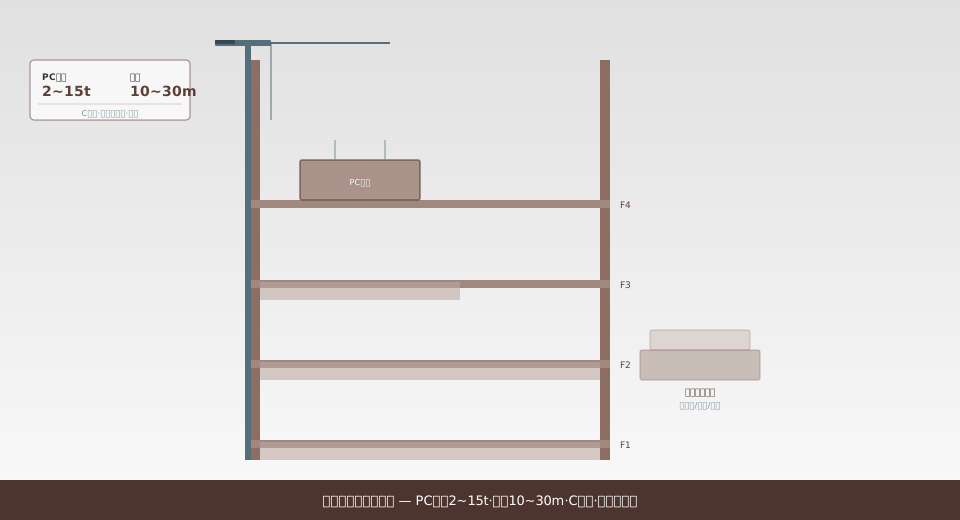
I. Cranes for Manufacturing Precast Concrete Components—Specialized Lifting Equipment for Large-Size Concrete Components
PC components (precast concrete components) include composite slabs, precast wall panels, precast stairs, precast beams, and precast columns. Individual components weigh between 2 and 15 metric tons, with maximum dimensions of up to 8 m × 4 m. The characteristics of handling PC components are as follows: ① Since concrete is a brittle material, the components must not be subjected to impact during handling; ② The surface of the components forms part of the building’s exterior facade (including the finish layer, insulation layer, and window recesses), so steel wire ropes must not come into direct contact with the surface. Therefore, cranes used to lift PC components must be equipped with **specialized lifting attachments**.
Recommended Models:QD-type double-girder bridge crane: 10–32 t / span 18–30 m / lifting height 8–12 m. The key lies in the **lifting device system**: ① Beam-type multi-lifting-point lifting device (4–8 lifting points connected to the hoist hook via a balancing beam; suitable for composite slabs/wall panels); ② Clamp-type lifting device (hydraulic or mechanical clamps grip the member from the side; suitable for beams, columns, and staircases). A **rotating ring** is installed between the lifting device and the crane (allowing the member to rotate 90° or 180° in the air, facilitating formwork removal and transfer).
Price Guide:QD double-girder bridge-type 16-metric-ton/24-meter + cross-beam-type 4-lifting-point lifting devices cost approximately 220,000–400,000 yuan per unit; clamp-type lifting devices cost approximately 30,000–80,000 yuan per set. Krud Heavy Industry’s specialized lifting devices for precast concrete (PC) components can be customized with lifting point spacing based on the customer’s product dimensions, enabling the universal lifting and transport of a wide variety of components.
II. Pile Manufacturing Cranes—Special Lifting Requirements for Slender Members
Prestressed concrete pipe piles (PHC pipe piles) range in length from 10 to 30 meters, with diameters of 300 to 600 millimeters and a weight of 3 to 10 metric tons per pile. A key characteristic of these pipe piles is their extremely high slenderness ratio (length-to-diameter ratio up to 50:1), which places high demands on balance during handling—both ends must be lifted and lowered simultaneously; otherwise, the pipe pile is prone to fracture due to concentrated stress at a single point. The handling of pipe piles is an integral part of the entire production process: centrifugal casting → steam curing → prestressing release → cutting → stacking → shipment.
Recommended Models:LD-type overhead crane: 10–20 t, span 20–30 m, lifting height 8–10 m. The lifting system must be equipped with **C-hooks** or **multi-point sling lifting devices**— —C-hooks are inserted into the ends of the pipe piles and lift them as a single unit, making them suitable for lifting a single pile; sling-type multi-point lifting devices (with 3–4 slings distributed along the length of the pipe piles) are suitable for lifting multiple piles simultaneously. The recommended hoisting speed in low gear is 1–2 m/min (to prevent excessive swaying of the pipe piles).
Price Guide:LD bridge cranes (16 t/26 m) cost approximately 100,000–180,000 yuan per unit; C-hooks cost approximately 20,000–50,000 yuan per set. The cranes in Krude Heavy Industry’s pipe pile workshop come standard with variable-frequency hoisting and electronic anti-sway systems, effectively reducing the risks associated with lifting slender members.
III. Mold Manufacturing Cranes—Precision Mold Machining and Assembly
The production of precast concrete (PC) components and pipe piles both rely on molds—PC component molds (steel or aluminum) are used for concrete casting and shaping, while pipe pile molds (cylinder molds and end plates) are used for centrifugal forming of pipe piles. The characteristics of these molds are: ① Moderate weight (2–8 metric tons per set); ② High machining precision requirements (clearance between mold mating surfaces ≤ 0.5 mm); ③ Complex structure (including various positioning mechanisms for embedded parts, quick-release mechanisms, and heating pipes).
Recommended Models:LD-type overhead cranes with a capacity of 5–10 metric tons and a span of 12–18 meters. The cranes in the mold shop are primarily used for handling mold steel plates (plate dimensions: 1.5 m × 3 m to 2 m × 6 m, thickness: 10–30 mm), closing molds at welding stations, and transporting finished molds. We recommend configuring **electromagnetic lifting pads** (for lifting mold steel plates, eliminating the time required to tie down wire ropes) + **BZD jib cranes** (for loading and unloading workpieces at machining centers).
Price Guide:An LD bridge crane (5 t/15 m) costs approximately 40,000–80,000 yuan per unit; an electromagnetic lifting magnet (1–3 t) costs approximately 10,000–30,000 yuan per unit. The total investment for the Krude Heavy Industry Mold Shop solution (1 LD + 2–3 BZD units) is approximately 70,000–150,000 yuan.
Crane Configuration Comparison Table for the Prefabricated Construction Industry
| Workshop Type | Recommended Models | Tonnage/Span | Specialized Lifting Equipment | Suggested Price |
|---|---|---|---|---|
| PC Components | QD Double-Girder Bridge Crane | 10–32 metric tons / 18–30 meters | Multiple Lifting Points/Clamps for Crossbeams | 220,000–400,000 |
| Pipe Piles | LD Bridge | 10–20 metric tons / 20–30 meters | C-Hook/Sling | 100,000–180,000 |
| Mold | LD Bridge + BZD | 5–10 metric tons+ cantilever | Electromagnetic Chuck | 70,000–150,000 |
Key Parameters for Cranes in the Precast Concrete Industry
Krude's Competitive Advantages in the Precast Components and Modular Construction Industries
① Custom Lifting Device Solution:Krude Heavy Industry offers a full range of specialized lifting equipment for precast concrete components, including beam-type multi-lifting-point slings, clamp-type slings, and C-hooks for pipe piles. We customize the spacing between lifting points and the clamping mechanisms according to the dimensions of our customers’ products to enable the universal lifting and transport of various components.
② Full-category coverage:From precast concrete components to pipe piles to molds, Krude Heavy Industry offers a comprehensive solution featuring LD/QD bridge cranes, BZD jib cranes, and specialized lifting attachments, along with a unified electrical control system that reduces spare parts inventory and maintenance and training costs.
③ Renovation Plan for the Old Factory Building:For prefabricated building companies facing insufficient factory ceiling heights, Krude Heavy Industry offers a solution combining low-headroom cranes with pit-mounted formwork removal systems. This solution meets lifting height requirements without the need for factory renovations, significantly reducing renovation costs.
Frequently Asked Questions (FAQ)
Q: Why can't PC components be lifted using ordinary steel wire ropes?
Answer: Since the exterior finish (tiles/stone/paint) and the embedded door and window frames of precast concrete components are already in place when they leave the factory, direct contact between the steel wire rope and the component surface can result in: ① Damage to the finish—the hard contact of the steel wire rope can scratch or crush tile or stone finishes; ② Chipping of component edges and corners—The edges and corners of concrete components are areas of stress concentration; localized stress from the steel wire rope can easily cause chipping at these points; ③ Crushing of concrete at lifting points—Lifting points on precast concrete components are typically embedded lifting eyes or threaded sleeves; direct contact with the steel wire rope may exceed the local compressive strength of the concrete at these points. Krude Heavy Industry’s specialized lifting equipment for PC components utilizes flexible slings combined with a beam-style multi-lifting-point distribution. Rubber protective pads are installed at the contact points between the slings and the components, completely eliminating the above issues.
Q: Why are C-hooks used for lifting pipe piles?
Answer: The C-hook is the standard lifting device in the pipe pile industry—the C-hook is inserted into the end of the pipe pile, and the hook body extends along the length of the pipe pile to a position near its center of gravity; during lifting, the pipe pile naturally aligns and balances within the C-hook. Compared to wire rope lashing methods, the advantages of C-hooks are: ① No manual lashing required—inserting and removing a C-hook takes only a few seconds, saving 20–30 seconds in handling time per pipe pile; ② Even force distribution—The contact surface between the C-hook and the pipe pile is distributed along its length, preventing localized indentations on the pipe pile’s surface caused by steel wire ropes; ③ High safety—The C-hook features a self-locking mechanism (which automatically locks during hoisting to prevent the pipe pile from slipping out). Krude Heavy Industry can customize C-hook specifications based on pipe pile diameter (300–600 mm) and length (10–30 m).
Q: What is the scale of investment in cranes for the prefabricated construction industry?
Answer: Taking a factory with an annual production capacity of 100,000 m³ of precast concrete (PC) components as an example: ① The PC component workshop is equipped with 2 QD 16t/24m cranes (approximately 400,000–600,000 yuan) + 4 sets of specialized lifting attachments (approximately 100,000–200,000 yuan); ② The pipe pile workshop is equipped with 1 LD 16t/26m crane (approximately 100,000–180,000 yuan) + 2 sets of C-hooks (approximately 40,000–80,000 yuan); ③ The mold workshop is equipped with 1 LD 5t/15m crane (approximately 40,000–80,000 yuan) + 3 BZD (approx. 30,000–50,000 yuan). The total investment in cranes for the entire plant is approximately 600,000–1,200,000 yuan. Krude Heavy Industry can provide comprehensive crane solution designs for prefabricated building companies, matching the most cost-effective configuration based on production capacity and product types.
Q: What are the height requirements for cranes in a precast concrete component workshop?
Answer: The lifting height of cranes in precast concrete component workshops is typically 8–12 m. When adding the crane’s own height (approximately 1.5–2 m) and the lifting tackle’s height (approximately 0.5–1 m), it is recommended that the eave height of the factory building be ≥12 m and the lower chord height of the roof truss be ≥10 m. If the existing height of the facility is insufficient, the following options may be considered: ① Low-headroom cranes (with the hoist offset to reduce the crane’s own height by approximately 300–500 mm); ② Pit-mounted solution—the floor in the component demolding area is lowered by 300–500 mm, thereby increasing the effective lifting height. Krude Heavy Industry offers free factory site surveys to customize the most suitable crane solution based on existing factory conditions.
