
Crane Selection for Fine Chemical Plants: Reactor to Packaging

In short: Kelude Heavy Industry provides crane configuration solutions for fine chemical plants covering four key production stages—reaction, separation, drying, and packaging—with lifting capacities from 1 to 20 tons and spans from 8 to 28 meters. A complete plant lifting equipment investment typically ranges from approximately $22,000 to $222,000. The reaction area is equipped with explosion-proof overhead cranes (5–10 t), the separation area uses stainless steel corrosion-resistant cranes (3–10 t), the drying area is fitted with high-temperature-resistant electric hoists (2–5 t), and the packaging area utilizes cleanroom-type KBK flexible systems (0.5–2 t)—all tailored to the small-batch, multi-product, high-cleanliness nature of fine chemical production, along with explosion-proof and anti-corrosion safety requirements.

Fine Chemical Crane Selection Guide

Reaction | Separation/Purification | Drying/Packaging | Raw Material/Finished Goods Warehouse

Fine chemical manufacturing—covering pharmaceutical intermediates, dyes, additives, and electronic chemicals—involves frequent batch changes and a wide product mix, placing high demands on stainless steel material quality.

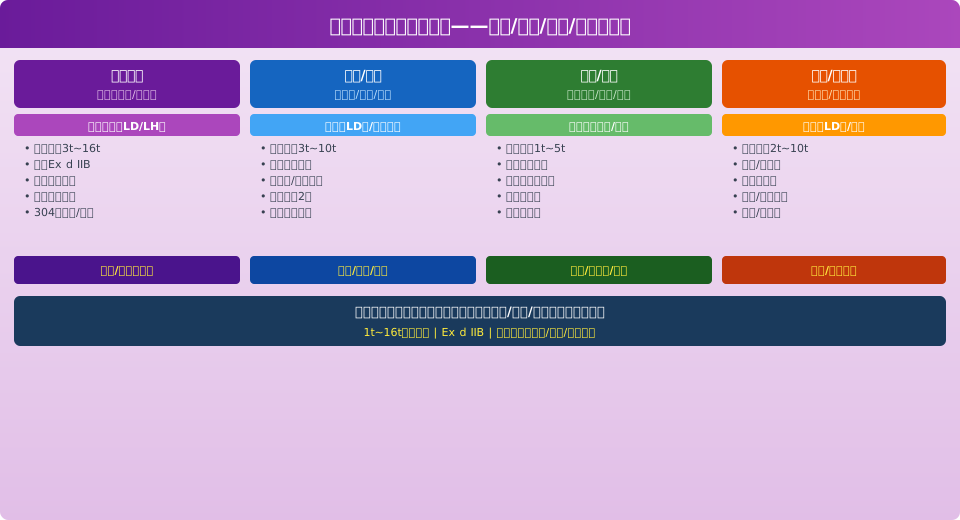
Fine Chemicalcrane selectionSolution——Reaction/Separation/Drying/Four-Stage Packaging Section

Scenario 1: Reaction Section

• Lifting capacity 3–16 t, explosion-proof LD/LH type

• Explosion-proof Ex d IIB

• Organic solvent explosion protection

• Reactor top charging

• 304 stainless steel / anti-corrosion

• Kelude supplies stainless steel explosion-proof units

Explosion-proof Ex d | Stainless Steel | Reactor Top Charging

Scenario 2: Separation/Purification

• Lifting capacity 3–10 t, LD type / hoist

• Cleanroom, dustproof design

• Centrifuge / filter press maintenance

• Explosion-proof Zone 2

• Variable frequency inching control

• Kelude supplies cleanroom explosion-proof units

Cleanroom | VFD Inching | Centrifuge Maintenance

Scenario 3: Drying/Packaging

• Lifting capacity 1–5 t, jib crane / hoist

• Compact multi-story factory building

• Dryer top cover handling

• Packaging line maintenance

• Stainless steel material

• Kelude supplies stainless steel jib cranes

Compact | Stainless Steel | Dryer Maintenance

Scenario 4: Raw Material / Finished Goods Warehouse

• Lifting capacity 2–10 t, LD type / hoist

• Explosion-proof / hazardous chemical handling

• Drum handling

• Pallet / bulk bag transfer

• Anti-corrosion / leak-proof

• Kelude supplies explosion-proof bulk bags

Explosion-proof | Bulk bag lifting | Drum handling

Selection Parameters Compared Across Four Zones

Parameter ItemReaction SectionSeparation/PurificationDrying/PackagingWarehouse
recommended modelExplosion-proof LD/LH TypeLD Type/Electric Hoistjib crane/HoistLD Type/Electric Hoist
Lifting Capacity3t~16t3t~10t1t~5t2t~10t
Explosion Protection ClassEx d IIBEx d IIBNoneEx d IIB
Material304Stainless SteelDustproof Coating / painting304Stainless Steelanti-corrosion coating
Kelude SchemeStainless Steel Explosion-proofClean Explosion-proofstainless steel cantilever HoistingExplosion-proofbulk bag
$22,200–$222,500
Complete plant lifting equipment investment
1–20 t
Applicable lifting capacity range
8–28 m
Applicable crane span
Ex d IIB T3
Explosion protection class
C4–C5
Corrosion protection level (ISO 12944)
500–5,000 t/yr
Typical fine chemical production capacity

Reactor Section Crane Selection

Reactor vessels with top-mounted charging require an LD-type explosion-proof overhead crane; 304 stainless steel construction resists organic solvent corrosion.

Crane selection for the reactor section of a fine chemical plant depends on reactor layout and maintenance frequency. For vessel-type reactors with lid lifting, the rated capacity should be 1.25 times the heaviest single component (reactor lid + agitator assembly), typically 5–10 t. Tower-type reactors require a lifting height of 12–18 m and a specialized spreader. Kelude Heavy Industry recommends an LD-type explosion-proof single-girder electric overhead crane with variable frequency micro-speed control (0.6 m/min) for precise reactor lid installation. For cleanroom environments, the hoisting mechanism can be upgraded to stainless steel with a dustproof electric hoist. Mark limit switch positions along the crane rail at the reactor lifting lug to improve operating efficiency.

Separation, Drying & Packaging

Centrifuge maintenance requires 3–10 t capacity; dryer lids use a 1–5 t jib crane.

In the separation section, centrifuge and filter maintenance typically needs a 3–5 t explosion-proof electric hoist for removing rotating drums and filter plates. In the drying section, spray drying towers (8–20 m tall) require cranes with 10–16 m lifting height and a dedicated maintenance basket. The packaging section uses a KBK flexible suspension crane (0.5–2 t) integrated with an automatic weighing and filling system, providing full-process lifting coverage from reactor discharge to finished product packaging. KBK rails should be laid out in a curve along the filling line so operators can easily reach multiple filling ports.

Kelude Heavy Industry – Fine Chemical Crane Solutions

Kelude Heavy Industry has years of experience in crane systems for the fine chemical sector, delivering custom lifting solutions for pharmaceutical intermediates, food additives, electronic chemicals, and other specialty segments. Our product range covers the full spectrum of explosion-proof, corrosion-resistant, and cleanroom-type cranes, backed by extensive expertise in hazardous area zoning and cleanroom classification for fine chemical plants.

Precise Explosion-Proof Zoning
A: Fine chemical reactor workshops are classified into Zone 0, Zone 1, and Zone 2 hazardous areas per GB 50058. Kelude Heavy Industry configures the appropriate crane class for each workshop's specific zoning diagram — Ex nA type for Zone 2, Ex d type for Zone 1 — ensuring safety compliance without over-specifying and inflating costs. Free explosion-proof zone matching and crane selection service available.
Cleanroom KBK Flexible Solutions
A: Drying and packaging workshops in fine chemical plants typically require ISO Class 8 or better cleanliness. Kelude Heavy Industry offers stainless steel KBK flexible suspension systems with cleanroom-type chain electric hoists. All moving parts feature sealed dustproof designs, rails are galvanized, and food-grade grease is used throughout to eliminate rust and lubricant contamination. Flexible installation height frees up valuable floor space.
Fast Changeover for Multi-Product Lines
A: Fine chemical plants frequently switch between product batches, requiring rapid tooling and spreader changes. Kelude Heavy Industry designs quick-release lifting spreaders and hoist configurations that minimize downtime between product runs, allowing operators to switch from one process line to another in minutes rather than hours.
A: Fine chemical production involves frequent batch changes and product switchovers. Kelude's KBK system is designed for rapid workstation reconfiguration — the crane rail is modular for quick assembly, and lifting points glide smoothly along the track. Combined with the electric hoist's radio remote control operation, operators can relocate the system from one workstation to another in under 10 minutes, delivering the flexible hoisting performance required for multi-product mixed-line production.

Frequently Asked Questions (FAQ)

Q: How do you determine the selection parameters for a reactor maintenance crane?
A: Lifting capacity is calculated as the weight of the heaviest removable reactor component × 1.25 (typically 3–10t), span is set by the reactor row spacing (6–12m), and lifting height is determined by reactor height + spreader height + safety margin (8–14m). The key parameter is lifting speed—precise positioning during maintenance requires a creep speed of 0.6–0.8m/min. Kelude recommends a two-speed electric hoist (8/0.8m/min) or a variable-frequency drive (VFD) solution. For cleanroom applications, opt for a stainless steel electric hoist with a dust cover.
Q: How do hazardous area classifications in a fine chemical workshop map to crane selection?
A: Per GB 50058-2014: Zone 1 (where explosive gas atmospheres may occur during normal operation) calls for Ex d Flameproof equipment, while Zone 2 (where such atmospheres may occur only under abnormal conditions) calls for Ex nA non-sparking equipment. The 1 m radius around reactor charging ports is classified as Zone 1 (Ex d IIB T3), with the remaining areas designated as Zone 2 (Ex nA IIB T3). Kelude Heavy Industry matches equipment precisely to the zone classification plan, avoiding over-specification that drives up costs. Explosion-proof cranes undergo explosion-proof performance testing every 12 months.
Q: What are the configuration essentials for an overhead crane used in centrifuge maintenance?
A: Centrifuge maintenance (e.g., SGZ1200, complete unit 4–6 t) requires removing the drum (0.8–1.5 t) and scraper assembly (0.3–0.8 t). A 3–5 t explosion-proof electric hoist underslung crane is recommended, with rail height determined by the clearance between the centrifuge top and the roof truss. For multiple centrifuges arranged in parallel, a KBK flexible rail system with electric hoists is the preferred configuration, cutting investment by 30%–50% compared to individual standalone units. Kelude offers specialized lifting spreaders for drum removal.
Q: What are the installation parameters for a KBK system in the packaging area?
A: The bottom surface of the KBK crane rail should be at least 2.8–3.2 m above the floor to allow forklift truck clearance. Rail length is determined by the filling line layout (typically a 15–30 m single-loop circuit). Lifting capacity ranges from 0.5 to 2 t; a Stainless Steel KBK rail (50 mm × 70 mm × 3 mm) paired with a Stainless Steel Chain Electric Hoist is recommended. Suspension point spacing should not exceed 3 m, with Deflection limited to ≤1/400. Before installation, verify the load-bearing capacity of the roof support beams (single-point Load ≤2.5 kN).

Related News

contact

contact us

phone:
+86 13903802779

mail:3915269@qq.com

Working hours: Monday to Friday

Wechat
Wechat
SHARE
TOP