
Explosion-Proof Crane Configuration for Chlor-Alkali Plants

In a nutshell: Kelude Heavy Industry provides crane configuration solutions for chlor-alkali and salt chemical plants, covering all four production stages—electrolysis, chlorine & hydrogen handling, hydrochloric acid synthesis, and flake/caustic soda production. The systems accommodate lifting capacities from 2 to 32 tons and spans from 10 to 30 meters, with a complete plant investment ranging from approximately $30,000 to $267,000. The electrolysis area is equipped with corrosion-resistant overhead cranes (5–16 t) featuring titanium alloy spreaders and PVC anti-corrosion coatings; the chlorine & hydrogen handling area uses explosion-proof cranes (Ex d IIB T4); the hydrochloric acid synthesis area is fitted with acid-resistant stainless steel cranes (10–20 t); and the flake soda packaging area employs stainless steel dustproof electric hoists (2–5 t). These configurations address the extreme operating conditions of chlor-alkali chemical processing, including severe corrosion, explosion hazards, and high temperatures.

Crane Configuration Solutions for Chlor-Alkali & Salt Chemical Plants

Electrolysis Stage | Chlorine & Hydrogen Handling | Hydrochloric Acid Stage | Flake/Caustic Soda

Chlor-alkali chemical processing presents one of the harshest environments in the chemical industry, combining severe corrosion (chlorine gas, hydrochloric acid, caustic solutions) with explosion hazards (hydrogen gas).

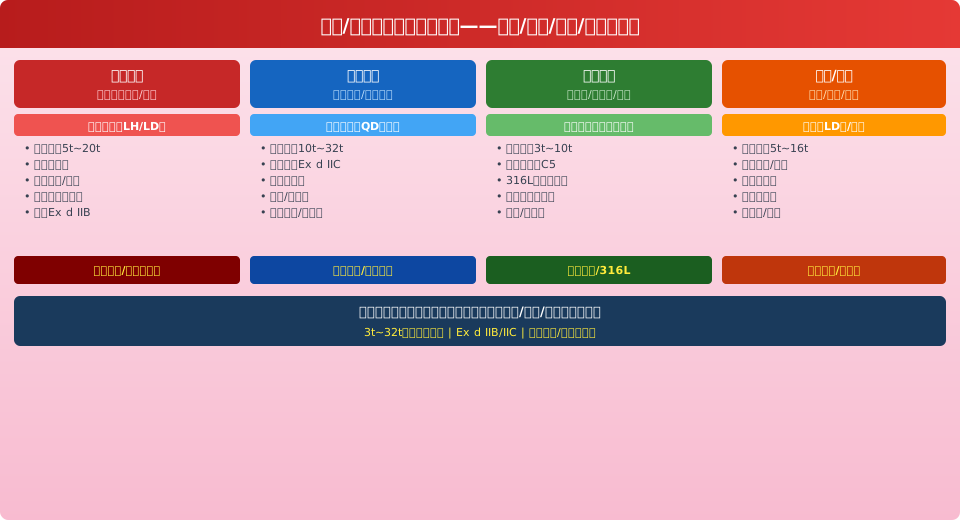
Chlor-Alkali/Salt Chemical Industrycraneconfiguration solution——Electrolysis/Chlorine-Hydrogen/Hydrochloric Acid/Caustic Soda Flakes Section IV

Scenario 1: Electrolysis Stage

• Lifting capacity 5t–20t, explosion-proof LH/LD type

• Chlorine corrosion-resistant / brine-resistant coating

• Electrolytic cell maintenance

• Explosion-proof Ex d IIB

• Stainless steel / corrosion-resistant

• Kelude supplies chlorine-resistant coating

Chlorine Corrosion Protection | Electrolytic Cell Maintenance | Brine Environment

Scenario 2: Chlorine & Hydrogen Handling

• Lifting capacity 10t–32t, explosion-proof QD type overhead crane

• Hydrogen explosion-proof Ex d IIC

• Severe chlorine gas corrosion

• Titanium / stainless steel construction

• Variable frequency inching / anti-sway control

• Kelude supplies titanium corrosion protection

Hydrogen IIC | Chlorine Corrosion Protection | Titanium & Stainless Steel

Scenario 3: Hydrochloric Acid Stage

• Lifting capacity 3t–10t, corrosion-resistant hoist

• Severe hydrochloric acid corrosion C5

• 316L stainless steel lifting spreader

• Synthesis furnace maintenance

• Sealed leak-proof design

• Kelude supplies 316L hoists

Hydrochloric Acid C5 | 316L | Synthesis Furnace Maintenance

Scenario 4: Flake/Caustic Soda Production

• Lifting capacity 5t–16t, LD type / hoist

• High-temperature caustic / corrosion-resistant

• Evaporator maintenance

• Caustic soda packaging line

• Stainless Steel / alkali-resistant

• Kelude supplies alkali-resistant Stainless Steel

Alkali-Resistant High-Temp | Evaporator Maintenance | Stainless Steel

Selection Parameters: Four-Zone Comparison

Parameter ItemElectrolysis SectionChlorine & Hydrogen TreatmentHydrochloric Acid SectionFlake Caustic Soda/Solid Caustic Soda
recommended modelExplosion-proof LH/LD TypeExplosion-proof QD type overhead craneAnti-corrosion Electric HoistLD Type/Electric Hoist
Lifting Capacity5t~20t10t~32t3t~10t5t~16t
Explosion Protection ClassEx d IIBEx d IICGeneral/Anti-corrosionGeneral/Alkali-Resistant
Corrosion MediumBrine/Chlorine GasChlorine Gas/Hydrogen GasHydrochloric Acid C5High-Temperature Caustic Liquor
Kelude SolutionChlorine Gas Anti-corrosion+Explosion-proofHydrogen Gas Explosion-proof+Titanium Material316LStainless SteelStainless Steel Alkali-Resistant
$30,000–$267,000
Complete plant lifting equipment investment
2–32 t
Applicable lifting capacity range
10–30 m
Applicable crane span range
Ex d IIB T4
Explosion protection class
C5-M
Corrosion protection level (ISO 12944)
100,000–600,000 t/yr
Typical caustic soda production capacity

Electrolysis & Chlorine-Hydrogen Handling

The electrolysis section faces dual hazards: brine corrosion from saltwater electrolytes and hydrogen explosion risks, while the chlorine-hydrogen handling area contends with severe chlorine gas corrosion and IIC-rated hydrogen explosion hazards. Kelude holds both Ex d IIC explosion-proof and C5 anti-corrosion certifications.

For crane configurations in the electrolysis section, Kelude Heavy Industry addresses the combined risks of chlorine gas and hydrogen generated during brine electrolysis with titanium alloy composite lifting spreaders and Ex d IIC T3 flameproof electric hoists. The electrical control box uses a pressurized enclosure explosion-proof design (Ex px IIC T3), with nitrogen maintained at a slight positive pressure inside. Crane rails in the chlorine-hydrogen handling area are protected with FRP (fiberglass-reinforced plastic) cladding to prevent chlorine corrosion of the steel rail. The complete crane system carries national explosion-proof certification and C5-M anti-corrosion certification, ensuring stable long-term operation in corrosive environments with chlorine concentrations up to 50 ppm and temperatures up to 60°C. Kelude recommends annual explosion-proof electrical system inspections and anti-corrosion coating thickness measurements for electrolysis workshops.

Hydrochloric Acid & Caustic Soda Flakes

Hydrochloric acid service requires 316L lifting spreaders with C5 anti-corrosion protection. Caustic soda liquor at high temperatures of 80–100°C demands protection against caustic embrittlement corrosion.

Cranes in the hydrochloric acid synthesis area must withstand dual corrosion from both hydrochloric acid and hydrogen chloride gas. Kelude Heavy Industry employs SUS316L stainless steel main structures with PTFE lining as the protection solution. In the caustic soda concentration and evaporation section, where temperatures reach 80–100°C and caustic concentrations range from 32% to 50%, caustic embrittlement corrosion is a real risk. Kelude addresses this with 304 stainless steel main structures combined with a caustic-embrittlement stress relief heat treatment process. The electric hoists use alkali-resistant wire rope, and the brakes are made of corrosion-resistant stainless steel. Both sections are equipped with dual operation modes—radio remote control plus operator cabin—to meet the needs of both routine operations and precision work during major overhauls.

Kelude Heavy Industry: Chlor-Alkali Crane Solutions & Service Advantages

Kelude Heavy Industry has specialized in lifting solutions for the chlor-alkali and salt chemical sectors for many years, supplying corrosion-resistant, explosion-proof crane solutions to numerous chlor-alkali chemical parks and salt chemical production bases across China. Our product coverage spans the full production chain—electrolysis workshops, chlorine-hydrogen handling, hydrochloric acid synthesis, and caustic soda flake packaging—with complete manufacturing capabilities for C5-M grade anti-corrosion design and Ex explosion-proof certification.

Anti-Corrosion Solutions for Highly Corrosive Environments
A: Chlor-alkali workshops contain multiple corrosive media including chlorine gas, hydrochloric acid, and caustic soda. Kelude Heavy Industry applies a triple-layer protection approach: SUS304 stainless steel main structures, PTFE-coated lifting spreaders, and hot-dip galvanized crane rails. The electrical cabinet features IP66 sealing with an internal epoxy anti-corrosion coating, and all fasteners are 316L stainless steel. The complete crane achieves an anti-corrosion service life of 10–15 years.
Explosion-Proof Safety Design for Electrolysis Areas
A: The electrolysis section carries hydrogen leakage risks (explosive limit 4%–75%). Kelude Heavy Industry supplies Ex d IIB T4 flameproof electric hoists with flameproof designs applied to the motor, electrical control box, and operating pushbuttons. A hydrogen concentration monitoring interlock system is integrated: an automatic alarm triggers at 1% LEL, and the crane power supply automatically shuts down at 2% LEL.
Unified Maintenance Services Across All Sections
A: Kelude Heavy Industry provides unified maintenance and overhaul services covering all production sections—from electrolysis to packaging. Our service team conducts regular inspections of explosion-proof electrical systems, corrosion protection integrity, and crane rail wear, ensuring continuous, safe, and reliable operation of your complete lifting equipment fleet.
A: Kelude provides unified crane maintenance services for chlor-alkali plants, covering the full production line from electrolysis to flake caustic packaging. Services include annual anti-corrosion coating inspections, explosion-proof electrical system annual checks, scheduled wire rope replacement, and rail wear detection. Our spare parts inventory is consistently stocked with corrosion-resistant electric hoist assemblies and explosion-proof electrical control boxes, ensuring emergency replacements are handled without disrupting production.

Frequently Asked Questions

Q: How should the corrosion protection grade be selected for workshop cranes in a chlor-alkali plant?
A: Corrosion protection levels for chlor-alkali workshops are designed to ISO 12944 C5-M (high corrosivity). The electrolytic cell area and hydrochloric acid synthesis area require C5-M grade, the chlorine-hydrogen treatment area requires C4, and the caustic flake area requires C4–C5. Kelude Heavy Industry develops zone-specific coating schemes based on the concentration and temperature of corrosive media (chlorine gas, hydrochloric acid, caustic soda, hydrogen chloride) in each process section — the electrolysis area uses titanium alloy lifting spreaders with PTFE-coated wire rope, the hydrochloric acid area uses 316L stainless steel with Hastelloy build-up welding, and the caustic flake area uses 304 stainless steel with alkali-embrittlement-relief heat treatment. The overall anti-corrosion service life is designed for 10–15 years.
Q: What are the specific requirements for hydrogen explosion protection in the electrolytic cell area?
A: Due to the risk of hydrogen leakage in the electrolytic cell area (hydrogen explosion limit: 4%–75%), the crane must meet the Flameproof Ex d IIC T3 rating. Specific requirements include: Flameproof motor (Ex d IIC T3), flameproof electrical control box with positive-pressure ventilation (Ex d px IIC T3), and an intrinsically safe pendant station (Ex ia IIC T3). The system is equipped with hydrogen concentration monitoring and interlock — an audible and visual alarm triggers at 1% LEL, and automatic shutdown of power supply and braking occurs at 2% LEL. Kelude's Explosion-Proof Crane undergoes an annual inspection of its explosion-proof electrical system in coordination with these requirements.
Q: What is the service life of a 316L stainless steel crane in a hydrochloric acid synthesis area?
A: In a hydrochloric acid synthesis area (HCl concentration 31%–37%, temperature 30–80°C), the SUS316L stainless steel main structure has a design life of 25 years, the Hastelloy C276 build-up welding lifting spreader lasts 5–8 years, and the PTFE-coated wire rope has a service life of 1.5–2 years. Key note: 316L's corrosion resistance decreases in hydrochloric acid above 60°C; in such conditions, upgrading to 904L super austenitic stainless steel or 2205 duplex stainless steel is recommended. A passivation film detection on the stainless steel surface should be performed every six months.
Q: How do you protect against caustic stress corrosion cracking in a caustic soda production area?
A: Caustic soda (NaOH) at 80–100°C and concentrations of 32%–50% causes caustic stress corrosion cracking in carbon steel. Kelude's protection measures include: SUS304 stainless steel main girder and end carriage, full-machine stress-relief annealing (held at 600–650°C for 2 hours), PT detection of all weld seams plus stress-relief treatment, and a 304 stainless steel hook. We recommend a structural stress inspection of the crane every 3 years.

Related News

contact

contact us

phone:
+86 13903802779

mail:3915269@qq.com

Working hours: Monday to Friday

Wechat
Wechat
SHARE
TOP