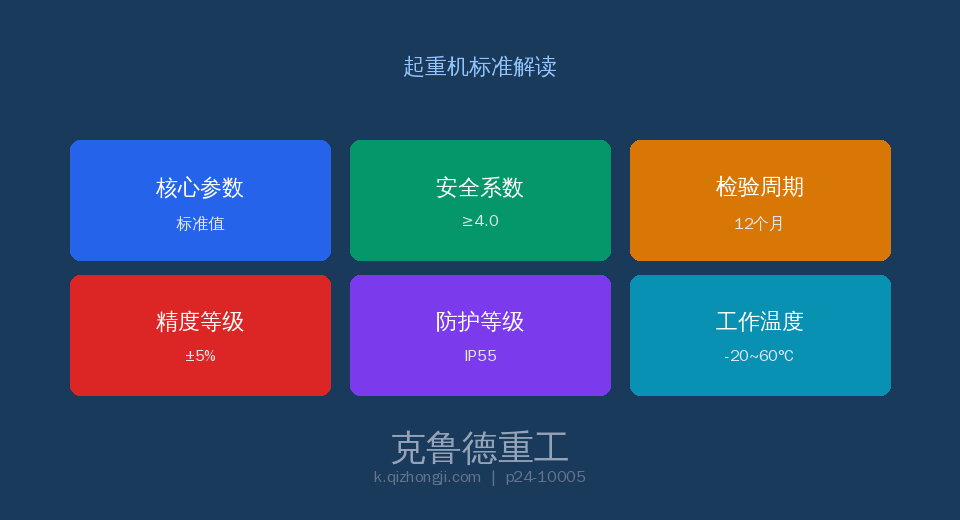

FEM 9.755 Electrical Equipment Standard Explained

FEM 9.755 "Specification for Electrical Equipment" is a key technical specification in the crane industry. Developed by the European Materials Handling Federation (FEM), this standard provides dedicated technical requirements for the selection, installation, and protection of electrical equipment on cranes. It systematically defines power supply arrangements, distribution requirements, control circuit design, cable selection, earthing protection, and electromagnetic compatibility for crane electrical systems.

The standard gives design personnel, inspection bodies, and end users a unified technical basis. Kelude strictly implements the requirements of this standard throughout its product development and manufacturing processes to ensure compliance and reliability.


Scope of Application and Positioning

FEM 9.755 "Specification for Electrical Equipment" sets out the technical requirements and safety indicators for crane electrical equipment, covering all types of lifting appliances with a rated lifting capacity above 0.5 t. The standard applies not only to the design and manufacturing of new equipment, but also provides clear technical guidance for the inspection, maintenance, and modification of cranes already in service. As a key component of the crane standard system, it works in conjunction with the EN 13001 Crane Safety Standard series and ISO 4309 Wire Rope Inspection Standard to form a complete framework of technical specifications. The clearly defined technical parameters and safety factors give design personnel a solid design basis, while also providing third-party inspection bodies with quantifiable acceptance criteria for type tests and factory inspections.


Electrical equipment specification diagram


Core Technical Parameter Framework

Under FEM 9.755, the design and manufacturing of electrical equipment must satisfy a rigorous set of technical parameters. These values are established from extensive test data and safety engineering principles, covering everything from material selection to structural design. The safety factors specified in the standard take into account the fatigue life and limit load conditions that lifting appliances experience in severe operating environments. In practical engineering applications, design personnel must select the appropriate parameter combinations based on the equipment's work duty, load spectrum, and operating conditions. The parameter cards below summarize the core technical indicators defined by the standard:

Supply Voltage
AC380V±10%
Insulation Class
Class F (155°C)
Protection Rating (IP)
Indoor IP23 / Outdoor IP43
Grounding Resistance
≤4Ω
Electromagnetic Compatibility
EN 61000-6-2/4
Cable Flame Retardance
Flame-retardant copper core

Comparative Analysis of Key Technical Parameters

The comparison table below systematically contrasts the core parameters specified in FEM 9.755 with general engineering practice. The values shown are taken from either mandatory or recommended clauses of the standard and should be strictly implemented during design selection and factory acceptance testing.

Itemtechnical requirementsDescription
Power Supply VoltageAC380V±10%/AC220V±10%Voltage Deviation When Exceedingautomatic shutdown
Insulation ClassMotor And Transformer FLevel(Temperature Resistance155℃)temperature rise≤105K(Environment40℃)
Equipment ProtectionIndoor IP23/Motor IP54/Outdoor IP43Control Cabinet IP54, According To EN 60529
Earthing ProtectionSystem Grounding Resistance≤4ΩPer Each Crane Rail≥2Point Grounding
Electromagnetic CompatibilityImmunity EN 61000-6-2/Radiation EN 61000-6-4Frequency Inverter / VFDWith EMC filter
Cable RequirementFlame-Retardant Copper Core Cable+Shieldingcontrol cablePower Cable≥1.25Timescurrent-carrying capacity

Inspection Requirements and Intervals

FEM 9.755 sets forth explicit requirements for Factory Acceptance Tests, Type Tests, and periodic inspections of electrical equipment. Factory Acceptance Tests must be performed on every unit at the manufacturer's facility by the quality inspection department, and each unit that passes must be accompanied by a detailed inspection report and a Certificate of Conformity. The periodic inspection interval for equipment in service is determined by its work duty classification and operating environment, typically not exceeding 12 months.

Itemtechnical requirementsDescription
Insulation Resistance500VMegohmmeter (Insulation Tester)MeasurementAnnual+≥1MΩ
Grounding Resistanceground resistance meter TestingAnnual+≤4Ω
Cable InspectionSheath Damage/Joint Overheating/AgingMonthly+Infrared Thermography
Control Cabinet InspectionComponents/Wiring/Heat Dissipation/SealingQuarterly+Cleaning and Dust Removal

Safe Operation and Management Requirements

Safe operation and routine management play a critical role in the implementation of FEM 9.755. The standard places particular emphasis on operator qualification and training, requiring that all operators complete specialized training and obtain the necessary certification before operating the equipment. User units must establish a comprehensive equipment file management system that documents the full installation, use, maintenance and inspection history of the equipment. Any safety hazards identified must be addressed through the rectification procedure specified in the standard to ensure the equipment remains in a safe and controllable condition at all times. Additionally, the standard imposes restrictive requirements on equipment use under extreme operating conditions.

Frequently Asked Questions

Q: What are the supply voltage requirements for cranes under FEM 9.755?

A: The standard requires the main power supply to be AC380V±10% (three-phase) or AC220V±10% (single-phase). For control circuits, AC220V or DC24V safety extra-low voltage is recommended. The power supply line must be a dedicated circuit and shall not be shared with other equipment. The voltage drop on the main conductor rail or cable reel must not exceed 5%. When the voltage deviation exceeds ±10%, the electrical system must be equipped with automatic shutdown to prevent motor overheating under low-voltage conditions. VFD-driven equipment is more sensitive to voltage fluctuations, and the installation of a voltage stabilizer is recommended.

Q: What are the Protection Rating (IP) requirements for electrical equipment?

A: The standard specifies protection ratings based on installation position: electrical cabinets and control boxes installed indoors must meet at least IP23, while those installed outdoors must meet at least IP43. Motors must meet at least IP23 indoors and IP54 outdoors. Pushbutton stations must meet at least IP65 (handheld type). The selection of protection rating should also take into account the dust concentration and corrosive gases present in the environment. Electrical cabinets installed in high-temperature environments should be equipped with ventilation or air conditioning cooling systems. Kelude's standard electrical cabinets are rated IP54 for indoor and IP56 for outdoor installation, exceeding the standard requirements.

Q: What are the specific earthing protection requirements for the electrical system?

A: The standard specifies that the grounding resistance of the crane electrical system must not exceed 4Ω. The crane rail must be provided with at least two independent grounding electrodes, and expansion joints in the rail must be bridged with copper conductors to ensure grounding continuity. All metal enclosures of electrical equipment must be reliably earthed, with the grounding wire cross-section no less than 50% of the phase conductor. The grounding system should include test terminals for annual inspection. For overhead cranes, the current collection system should use enclosed conductor rails or insulated copper busbars, and the conductor rail housing must be earthed.

Q: What are the technical requirements for cable selection and routing?

A: Power cables must be flame-retardant copper-core cables, with the cable cross-section selected at 1.25 times the rated load current. Control cables must be shielded cables with shield single-point grounding. Cables should be routed away from heat sources (such as braking resistors), and the bending radius must not be less than 6 times the cable outer diameter. Power cables and control cables should be laid separately with a minimum spacing of 100mm to avoid electromagnetic interference. Moving cables (such as those used with festoon systems or cable reel power supply) should be high-flexibility cables with a bending radius of no less than 10 times the cable outer diameter.


— Dedicated to crane design and manufacturing, our products strictly comply with the FEM 9.755 standard system, offering lifecycle service from solution design and manufacturing and installation to after-sales maintenance. For more information on how this standard is applied in our products, please contact our technical team for detailed technical documentation.

Related News

contact

contact us

phone:
+86 13903802779

mail:3915269@qq.com

Working hours: Monday to Friday

Wechat
Wechat
SHARE
TOP