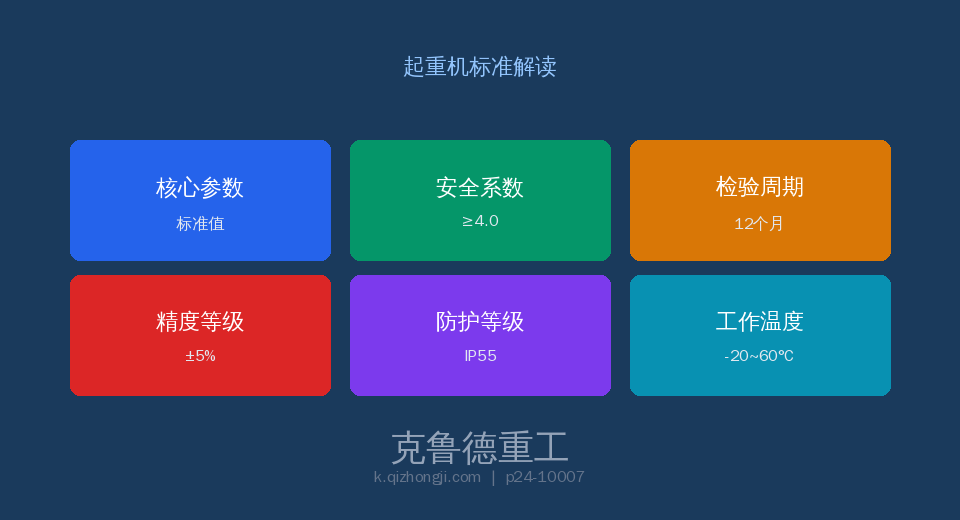
FEM 9.850 Reducer Specification Standard Interpretation

FEM 9.850 Gearbox Specification is a key technical standard in the crane industry. Developed by the European Federation of Materials Handling (FEM), it serves as a dedicated technical specification for the design and calculation of crane gearboxes. Based on the ISO 6336 gear load capacity calculation standard, it defines requirements for gear strength, bearing life, housing stiffness, and thermal power verification.

The standard provides a unified technical basis for design personnel, inspection bodies, and end users. Kelude Heavy Industry strictly implements its technical requirements throughout product development and manufacturing to ensure compliance and reliability.


Scope and Application of the Standard

FEM 9.850 defines the technical requirements and safety indicators for crane gearboxes, covering all types of lifting appliances with a rated lifting capacity above 0.5 t. The standard applies not only to the design and manufacturing of new equipment but also provides clear technical guidance for the inspection, maintenance, and modification of units already in service. As a key component of the crane standard system, it aligns with the EN 13001 Crane Safety Standard and ISO 4309 Wire Rope Inspection Standard to form a comprehensive technical framework. The clearly defined technical parameters and safety factors give design personnel a solid design basis, while also providing quantifiable acceptance criteria for third-party inspection bodies conducting type tests and factory acceptance tests.


Gearbox specification diagram


Core Technical Parameter Framework

Under FEM 9.850, the design and manufacturing of gearboxes must satisfy a rigorous set of technical parameters. These values are established from extensive test data and safety engineering principles, covering everything from material selection to structural design. The safety factor ranges specified in the standard account for fatigue life and limit load conditions typical of heavy-duty crane operation. In practical engineering applications, designers select appropriate parameter combinations based on the equipment's work duty classification, load spectrum, and operating environment. The parameter cards below summarize the standard's core technical indicators:

Contact Safety SH
≥1.25
Bending Safety SF
≥1.50
Bearing Life
L10≥5000h
Transmission Efficiency
≥92% (3-stage)
Noise Limit
≤80dB(A)
Housing Sealing
IP55

Comparative Analysis of Key Technical Parameters

The comparison table below systematically contrasts the core parameters specified in FEM 9.850 with common engineering practice. All values shown are either mandatory or recommended clauses from the standard and should be strictly implemented during design and selection as well as factory acceptance testing.

Itemtechnical requirementsDescription
Tooth Surface Contact SH≥1.25(ISO Class 6 (cleanroom)336 Gear load capacity calculation standard)Including Kv·KA·KHβ Comprehensive Coefficient
Tooth Root Bending SF≥1.50Carburizing and Quenching HRC58~63, Case Depth0.3~1.0mm
bearing lifeL10h≥5000h(Rated)According to ISO 281 Rolling bearings — Dynamic load ratings and rating life Calculation,90%reliability
transmission efficiency≥92%(Grade 3)/≥88%(Grade 4)Including Oil Churning Loss, Oil Temperature80℃Measurement
Noise≤80dB(A)/Distance1m5Arithmetic Mean of Measuring Points
Gearbox HousingIP55Dustproof Water Jet Proof SealingOutput Shaft Double Oil seal, Static Surface Sealant Application

Inspection Requirements and Intervals

FEM 9.850 sets out clear requirements for Factory Acceptance Tests, Type Tests, and periodic inspections of reducers and gearboxes. Factory Acceptance Tests must be performed on every unit by the manufacturer's quality control department at the factory, and equipment that passes inspection must be accompanied by a detailed inspection report and a certificate of conformity. For equipment in service, the periodic inspection interval is determined by the work duty classification and operating environment, and must not exceed 12 months.

Itemtechnical requirementsDescription
Lubricating OilOil Level/Oil Condition/Oil TemperatureWeekly Inspection, Per500hOil Change
Gear MeshingContact pattern≥60%Face WidthSemi-annual Cover-off Inspection
Bearing Conditionvibration/Temperature/NoiseQuarterly Vibration Measurement, Addspeed≥10m/s²Replacement
Sealing PropertyOutput Shaft/Joint Surface LeakageMonthly Inspection, Immediate Replacement upon Leakage Oil seal

Safe Operation and Management Requirements

Under FEM 9.850, safe operation and routine management play a critical role in day-to-day crane operations. The standard places strong emphasis on operator qualification and training, requiring that all operators complete specialized training and obtain the necessary certifications before being allowed to operate the equipment. User units are required to establish a comprehensive equipment file management system that documents the full installation, use, maintenance and inspection history of each unit. Any safety hazard identified must be addressed through the rectification procedure specified in the standard, ensuring the equipment remains in a safe and controllable condition at all times. The standard also imposes restrictive requirements on equipment usage under extreme operating conditions.

Frequently Asked Questions

Q: What safety factor requirements does FEM 9.850 impose on gears?

A: The standard requires a contact safety factor of SH ≥ 1.25 on tooth flanks and a bending safety factor of SF ≥ 1.50 at the tooth root. Gear materials must be carburized and quenched alloy steel (20CrMnTi or 17CrNiMo6), with tooth surface hardness of HRC 58–63, core hardness of HRC 35–45, and an effective case depth of 0.15–1.0 mm depending on module. All Kelude Heavy Industry reducer gears are processed on a fully automatic carburizing and quenching line, achieving contact and bending safety factors that exceed the standard's requirements.

Q: What are the bearing selection and service life calculation requirements for reducers?

A: The standard specifies a rated bearing life L10h of no less than 5,000 hours under rated load with 90% reliability. Tapered roller bearings or angular contact ball bearings are recommended for the input shaft, while deep groove ball bearings or cylindrical roller bearings are used for the intermediate and output shafts. Bearing clearance class C3 is specified. The high-speed shaft bearing must have a limiting speed of at least 1.2 times the maximum input speed. Bearings from SKF or FAG are specified, and the calculation must account for the effects of cold starts at −20 °C.

Q: What are the lubrication and sealing requirements for reducers?

A: Splash lubrication is used, with an oil immersion depth of 2–3 times the gear module. The recommended lubricant is synthetic gear oil ISO VG 220 or 320, with an operating temperature range of −20 °C to +80 °C. Oil level and condition must be checked weekly, with oil changes every 500 hours. The output shaft is fitted with dual oil seals, and sealant is applied to all static sealing surfaces of the gearbox housing. The breather has a dustproof rating of IP55.

Q: What tests are included in the factory type test for reducers?

A: The type test includes no-load running (1 hour in each direction to measure noise and temperature rise), efficiency testing (≥ 92%), temperature rise testing (2 hours at full load with oil temperature ≤ 80 °C), seal integrity testing (0.3 bar positive pressure for 30 minutes with no leakage), and noise measurement (≤ 80 dB(A)). Every unit undergoes no-load running and seal integrity checks before leaving the factory.


— Dedicated to crane design and manufacturing, our products strictly comply with the FEM 9.850 standard system, offering lifecycle service from solution design and manufacturing and installation to after-sales maintenance. To learn more about how this standard is applied in our products, contact our technical team for detailed technical documentation.

Related News

contact

contact us

phone:
+86 13903802779

mail:3915269@qq.com

Working hours: Monday to Friday

Wechat
Wechat
SHARE
TOP