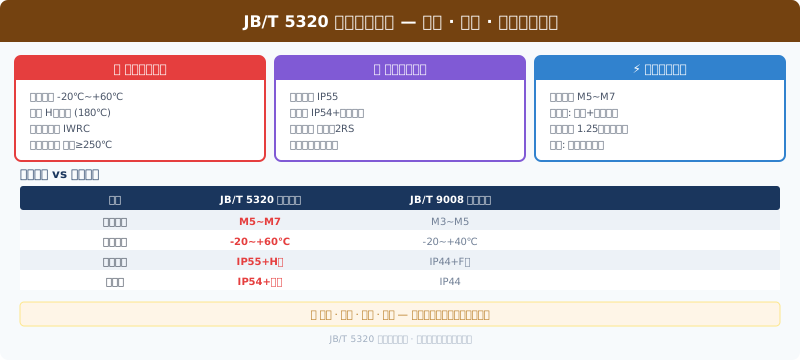

JB/T 5320 Metallurgical Electric Hoist Standard Guide

JB/T 5320-2015 "Metallurgical Electric Hoists" is a mechanical industry standard that defines the technical specifications for electric hoists used under the special working conditions of the metallurgical industry. It specifies the types, basic parameters, technical requirements, test methods, and inspection rules for metallurgical electric hoists. The standard applies to wire rope electric hoists used in steel mills and foundries where high temperatures, molten metal splash, and heavy dust contamination are prevalent, serving as the fundamental basis for product design, manufacturing, and selection.

A metallurgical electric hoist is a piece of lifting equipment specifically engineered for the steel and metalworking industry, where the working environment differs dramatically from that of a standard industrial factory building. Ambient temperatures can exceed 60°C, there is a constant risk of molten steel or iron splash, airborne dust concentrations are high and contain metallic particles, and some areas also expose equipment to corrosive gases. JB/T 5320-2015 sets out comprehensive protection requirements for these special working conditions, ensuring safe and reliable operation of electric hoists in harsh metallurgical environments.

JB/T 5320 Metallurgical Electric Hoist High-Temperature Dust Heavy-Duty Overview

Typical characteristics of the metallurgical environment include: ambient temperatures in steelmaking workshops ranging from 40°C to 65°C year-round, with radiant heat in localized areas (such as ladle transfer zones) pushing equipment surface temperatures above 80°C; continuous casting platforms subject to cooling water spray and mill scale dust; and electric arc furnace shops filled with highly conductive dust. Under these conditions, a standard electric hoist is highly susceptible to motor overheating and burnout, insulation breakdown in the electrical control system, and grease loss from wire rope lubrication. Kelude Heavy Industry designs its metallurgical electric hoists in accordance with JB/T 5320, addressing the demands of the metallurgical sector across multiple dimensions including motor insulation, protection rating, and wire rope heat resistance.


Heat-Resistant Design for High-Temperature Environments

The most critical technical requirement for a metallurgical electric hoist is high-temperature-resistant design. The standard mandates that the insulation class of the motor be no lower than Class F (rated for 155°C), with Class H (rated for 180°C) recommended for motors directly exposed to radiant heat. Windings must use polyester-imide or polyamide-imide magnet wire, with slot and phase insulation made of Nomex aramid paper, all treated through vacuum pressure impregnation (VPI) to ensure insulation performance does not degrade under high-temperature, high-humidity conditions.

For thermal protection, the standard requires heat shield measures on critical hoist components. The electrical control box must feature a double-layer construction with ceramic fiber insulation between the layers to block radiant heat. The hoisting motor housing should be fitted with a heat shield made of stainless steel or galvanized steel plate, with an air gap between the shield and motor casing providing a thermal buffer. For hoists operating above molten steel ladles, a splash guard must also be added to the motor base to prevent molten metal splash from damaging the motor and brake.

Wire rope lubrication and protection under high-temperature conditions is another key focus. The standard requires the use of high-temperature-resistant grease (dropping point ≥250°C, such as complex lithium grease or bentonite grease), and the wire rope core must be an independent wire rope core (IWRC) rather than a fiber core, to prevent rope core carbonization at elevated temperatures that would lead to wire rope diameter reduction and reduced load capacity. The safety factor of the wire rope under high-temperature operating conditions should be increased by 10%–15% over standard conditions.


Dustproof Rating and Sealing Protection

Metallurgical workshop air is laden with metallic dust, mill scale powder, and mineral dust. When these contaminants enter the drive mechanism, they cause severe problems such as accelerated gear wear and bearing seizure. JB/T 5320 requires that the hoisting reducer and travel reducer housings of metallurgical electric hoists have a protection rating of no less than IP54, and the motor protection rating must be no less than IP55. All mating surfaces must be fitted with gaskets or O-ring seals, and input/output shafts must use a dual-sealing arrangement combining a skeleton oil seal (radial shaft seal) with a dust wiper.

For electric arc furnace shops with severe conductive dust, the protection rating of electrical control equipment should be upgraded to IP65. Junction boxes must use waterproof and dustproof cable glands, and push-button pendants should be equipped with rubber sealing boots. Critical electrical components such as contactors must be enclosed in separate dustproof compartments to prevent short circuits and poor contact caused by dust accumulation. The standard also recommends installing replaceable filter media at the air intake of the electrical control box to facilitate routine maintenance.


Protection Item Standard Hoist Requirement metallurgical hoist Requirement Protection Objective
Motor Insulation Class FClass(155℃) HClass(180℃) Resist High Temperature without Burnout
Motor Protection Rating (IP) IP44 IP55 Dustproof Waterproof Splash
control box Protection IP43 IP54~IP65 Prevent Entry of Conductive Dust
Wire Roperope core Fibrous or Metallic Fibrous or Metallicrope core(IWRC) Prevent High-Temperature Carbonization
Surface Coating Standard Paint High Temperature Resistant Coating(≥200℃) Corrosion Resistantand Thermal Insulation
brake friction lining Asbestos Resin Powder Metallurgy(Copper-Based) High Temperature Resistant Non-Fading

Braking System & Safety Devices for Metallurgical Hoists

Metallurgical electric hoists are subject to stringent braking requirements. In addition to the standard conical rotor motor brake, regulations mandate the installation of a secondary mechanical brake as a safety redundancy. This second brake must act directly on the drum or high-speed shaft, providing independent emergency braking capability should the primary braking system fail. Brake friction linings must be made of copper-based powder metallurgy material rather than standard resin linings to ensure consistent braking torque under high-temperature conditions.

On the safety device front, metallurgical hoists must be equipped with a load limiter (accuracy ±5%), a hoisting height limit switch with dual protection at both upper and lower limits, an overspeed protection device, and a phase sequence relay. For metallurgical hoists used to handle molten metal, the standard further requires two independently controlled braking systems, an anti-derailment device for the rope groove, and an automatic work duty derating function—when the temperature sensor on the hoisting mechanism detects ambient temperatures exceeding the preset threshold, the rated lifting capacity is automatically reduced to 80%.


Max. Ambient Temperature
60°C (65°C short-term)
Motor Insulation Class
Class H (180°C)
Motor Protection Rating
IP55
Wire Rope Safety Factor
≥5.0 (high-temp lifting)
Secondary Brake
Mechanical (mandatory)
Control Box Heat Resistance
≥200°C coating

selection parameters Light-Duty Metallurgical(M4) Medium-Duty Metallurgical(M5) Heavy-Duty Metallurgical(M6)
Applicable Area Finished Goods Warehouse/Scrap Yard Continuous Casting Platform Steelmaking Furnace Front/Ladle Area
Ambient Temperature ≤45℃ ≤55℃ ≤65℃
Motorinsulation FClass FClass HClass
Protection Rating (IP) IP54 IP55 IP65
Brake Quantity 1+1(Dual Brake) 1+1(Dual Brake) 1+1+Emergency Braking
heat shield Optional Standard Standard+Anti-Splash Guard

FAQ

Q: What operating environments does the JB/T 5320-2015 standard specify for metallurgical electric hoists?

A: JB/T 5320-2015 applies to wire rope electric hoists used in metallurgical plants where they are exposed to high temperatures, molten metal splash, and heavy dust. The standard requires that the ambient temperature not exceed 60°C (65°C permitted for short periods) and that airborne dust and metal particle concentrations remain within the design limits of the protection rating. The standard does not cover chemical corrosion or explosive gas atmospheres—those conditions call for corrosion-resistant and explosion-proof electric hoists respectively, per their own standards.

Q: How do metallurgical and standard electric hoists differ in motor and insulation design?

A: The key differences are: the motor insulation class is upgraded from Class F (155°C) on standard hoists to Class H (180°C) on metallurgical hoists, with polyester-imide magnet wire and Nomex paper slot insulation in the windings; the motor protection rating is raised from IP44 to IP55; the electrical control box features a double-layer heat shield with ceramic fiber filling; and the brake friction lining uses copper-based powder metallurgy instead of asbestos-resin compounds to prevent brake fade at high temperatures. In addition, metallurgical hoists must be fitted with a secondary brake as safety redundancy—a feature not found on standard hoists.

Q: What special daily inspection and maintenance requirements apply to metallurgical electric hoists?

A: Beyond the standard inspection items for electric hoists, metallurgical hoists require additional attention: motor winding insulation resistance should be tested monthly (hot-state ≥0.5MΩ); wire rope lubrication should be checked weekly, with high-temperature grease reapplied immediately if the lubricant appears dry or darkened; the heat shield and anti-splash guard should be inspected monthly for deformation or loosening; the filter media in the control box should be cleaned or replaced every two weeks; and brake friction lining thickness should be measured quarterly—replace when wear exceeds 30% of the original thickness. Inspection intervals should be shortened during hot weather.

Q: How is safe operation ensured when metallurgical hoists handle ladle lifting?

A: Ladle lifting is an extremely high-risk operation. In addition to selecting a heavy-duty metallurgical hoist rated M6, the following are mandatory: two independently controlled braking systems, each capable of holding the rated load on its own; a lifting capacity limiter with redundant sensors; a wire rope safety factor of no less than 5.0 for the hoisting mechanism; and an anti-splash guard mounted beneath the hoist body. Kelude offers a dedicated metallurgical hoist for ladle service rated M6, equipped as standard with dual brakes plus a temperature sensor that triggers load reduction—multiple layers of safety redundancy to ensure reliability under extreme operating conditions.

Standard basis: JB/T 5320-2015 Metallurgical Electric Hoists | Technical Department

Related News

contact

contact us

phone:
+86 13903802779

mail:3915269@qq.com

Working hours: Monday to Friday

Wechat
Wechat
SHARE
TOP