

QLD Series Screw Jacks for Industrial Lifting
Hydraulic Jacks: An Overview
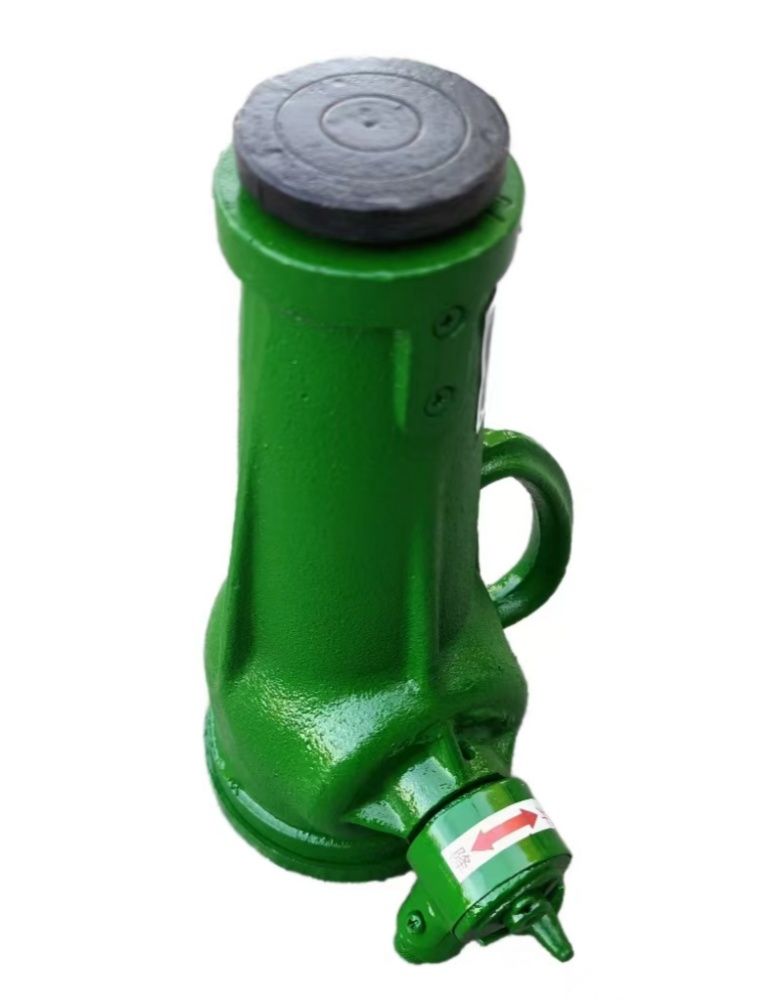
The QL series screw jack offers lifting capacities ranging from 3.2 to 380 tons (t) and is designed to be used alongside the QYL series hydraulic jack. This equipment is applicable to railway vehicle maintenance, mining operations, construction support, and general hoisting and lowering of heavy loads. Thanks to its portability, low-maintenance design, and safe and reliable operation, it is widely used in mobile lifting applications. Typical uses include changing railcar wheel sets, installing and supporting steel beam structures, assembling heavy machinery on ship hulls, automotive tire and repair work, and raising or lowering any heavy object with complete operational safety.
Product Specifications
- Product Name: Screw jack
- Model and Specification: QL/QLD/QLG series
- Category: Lifting tools
- Place of Origin: Henan / Hebei / Zhejiang, China
- Brand: Hongqi
- Customization: Available
- Power Type: Manual
- Stock Availability: Partial stock
- Production Lead Time: 10–20 days
- Packaging: Carton / Wooden case
- Supply Scope: Nationwide
- Delivery Method: Pickup or freight forwarding
- Installation: Not required
- Shipping From: Changyuan, Henan
Jack Gallery
Technical Parameters
Screw Jack Mechanism Diagram and Main Technical Parameters
| QL3.2t~50t structure Schematic Diagram |
100t structure Schematic Diagram |
Model | Lifting Capacity (Tons) |
Lifting Height ≯(mm) |
Minimum Height (mm) |
pendant Length (mm) |
pendantoperating force ≯N |
Net Weight (kg) |
|---|---|---|---|---|---|---|---|---|
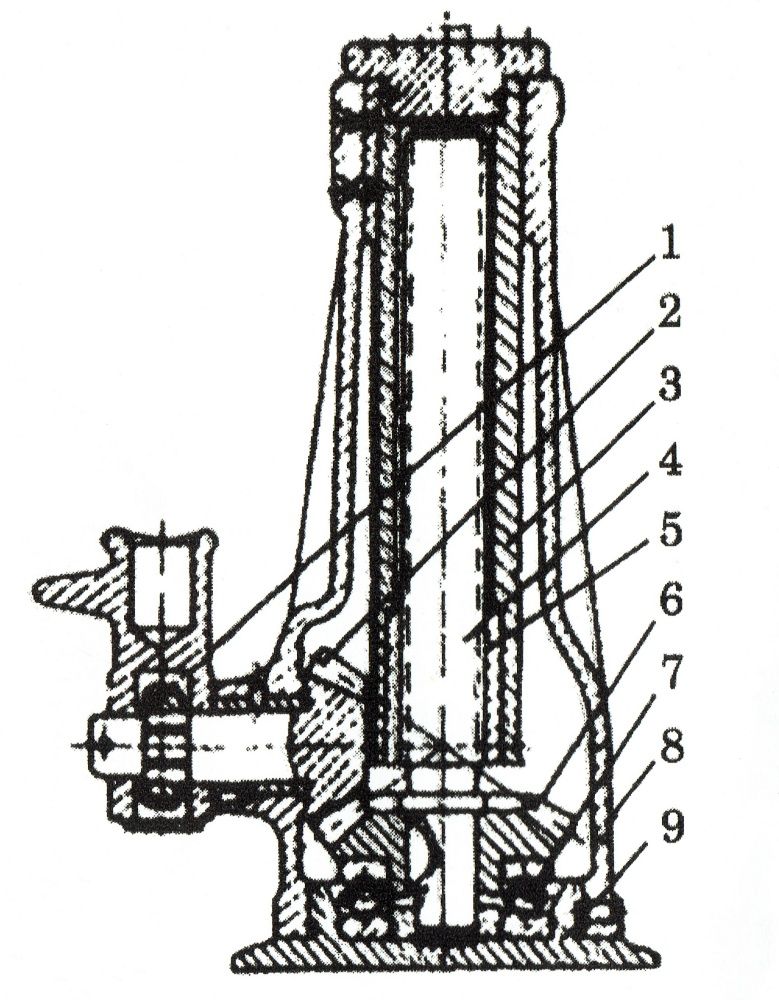 1, ratchet Set2, Small Cone Gear3, lifting sleeve4, Screw Shaft5, Copper Nut6, Large Cone Gear7, Single-Direction Thrust Bearing8, housing9, Base 1, ratchet Set2, Small Cone Gear3, lifting sleeve4, Screw Shaft5, Copper Nut6, Large Cone Gear7, Single-Direction Thrust Bearing8, housing9, Base |
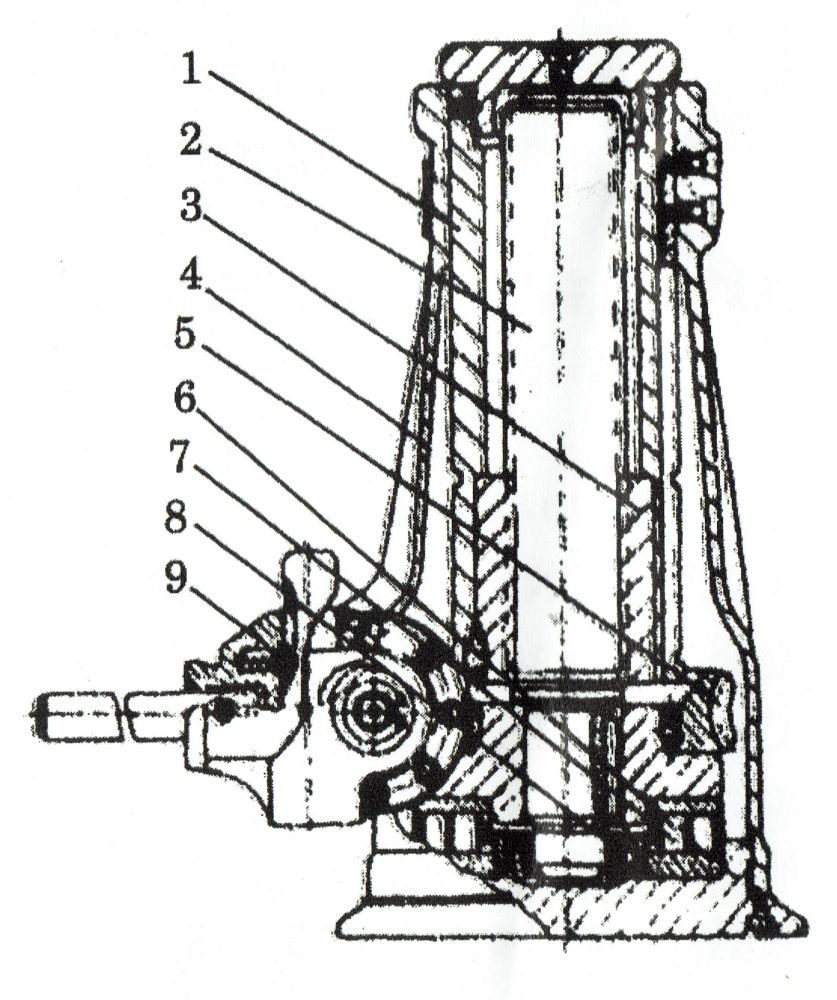 1, lifting sleeve2, Screw Shaft3, Copper Nut4, housing5, Gear Ring6, Base7, Roller8, Bearing9, ratchet Set 1, lifting sleeve2, Screw Shaft3, Copper Nut4, housing5, Gear Ring6, Base7, Roller8, Bearing9, ratchet Set |
QL3.2 | 3.2 | 110 | 220 | 500 | 100 | 6 |
| QL5 | 5 | 130 | 250 | 600 | 160 | 8 | ||
| QL8 | 8 | 140 | 260 | 800 | 200 | 9.5 | ||
| QL10 | 10 | 150 | 280 | 800 | 250 | 11 | ||
| QL16 | 16 | 180 | 320 | 1000 | 500 | 17 | ||
| QL20 | 20 | 180 | 325 | 1000 | 500 | 19 | ||
| QL25 | 25 | 130 | 275 | 1000 | 600 | 19 | ||
| QL30 | 30 | 200 | 400 | 1300 | 600 | 28 | ||
| QL32 | 32 | 200 | 400 | 1300 | 600 | 28 | ||
| QL40 | 40 | 200 | 405 | 1300 | 620 | 30 | ||
| QL50 | 50 | 250 | 452 | 1500 | 800 | 54 | ||
| QL100 | 100 | 200 | 452 | 1500 | 600 | 85 | ||
| QLD3.2 | 3.2 | 50 | 160 | 500 | 100 | 5 | ||
| QLD5 | 5 | 65 | 180 | 600 | 160 | 7 | ||
| QLD10 | 10 | 75 | 200 | 800 | 250 | 10 | ||
| QLD16 | 16 | 90 | 220 | 1000 | 400 | 15 | ||
| QLD32 | 32 | 150 | 320 | 1300 | 600 | 24 | ||
| QLD50 | 50 | 150 | 310 | 1500 | 800 | 40 | ||
| QLG20 | 20 | 300 | 445 | 1000 | 500 | 20 | ||
| QLG100 | 100 | 400 | 652 | 1500 | 600 | 105 | ||
| Net Weight Includespendant | ||||||||
How to Use a Jack
Safety Preparation Before Lifting:
- Estimate the load weight and select a jack with an appropriate tonnage rating so that the jack is never loaded beyond its rated capacity.
- Inspect the jack before use to ensure it is in good working condition, with no damaged or jammed components.
- Position the jack's load-bearing point according to the center of gravity of the object being lifted, so that the load remains stable and does not tip over during raising or lowering.
- Check that the lifting point on the load is structurally sound to prevent failure or cracking under load.
- Assess the ground conditions and use a base plate or cribbing of appropriate size if the surface is soft or uneven, to prevent the jack from sinking during lifting.
Operational Precautions:
- Position the jack on a level surface with the base fully in contact with the ground.
- To prevent the jack from slipping under load, place sturdy wooden blocks above and below the jack (never use oil-soaked wood or boards as padding).
- Engage the pawl correctly and verify that the ratchet mechanism provides proper one-way locking.
- Ensure the handle swing path is clear of any obstructions within its full range of motion.
- Rotate the ratchet by hand first to raise the lifting sleeve until the top plate contacts the load, then insert the handle and pump to begin lifting.
- Using multiple screw jacks in parallel for synchronized lifting is not recommended, as synchronization cannot be guaranteed and may cause the load to tilt.
- Monitor the lifting height of the sleeve — when the red warning line appears, the rated maximum height has been reached. Stop lifting immediately; continuing beyond this point risks damage and personal injury.
- To lower the load, remove the handle, flip the release pawl to the lowering position, reinsert the handle, and pump — the sleeve will descend gradually.
Jack Maintenance
- Ratchet assembly: Keep the ratchet mechanism clean and free of dust and debris. Lubricate regularly to ensure smooth, reliable operation.
- Friction surface lubrication: Wipe and oil the friction surfaces between the lifting sleeve and the housing regularly. Apply lubricating oil to all designated oil ports at scheduled intervals.
- Thrust bearing care: Keep the specially designed thrust bearing well lubricated at all times. Disassemble the base and repack with grease at least once a year. Before disassembly, loosen the set screw on the housing (note the base-to-housing thread direction: 100-ton models use left-hand threads; all other models use right-hand threads).
- Troubleshooting: If the ratchet mechanism feels stiff, open the ratchet cover for inspection. If the lifting sleeve binds or the ratchet spins freely without engaging, disassemble the base to inspect the internal components.
- Assembly requirements after overhaul: Before reassembly after inspection or repair, wash all parts thoroughly with kerosene, apply adequate grease, and make sure no dirt or foreign matter enters the housing.
Jack Manufacturer
Kelude, as a professional jack manufacturer, offers a full range of production and maintenance services for domestic and imported brands, including small, medium, and large split-type jacks, horizontal jacks, claw-type jacks, synchronized jacks, hydraulic jacks, DTS electric hoists, and industry-specific jacks. For more information on jack models and specifications, technical parameters, product features, operation modes, structural types, materials, common faults and troubleshooting methods, as well as pricing for complete units and spare parts, please contact our customer service team.
FAQ
Q: What is the difference between a QL screw jack and a hydraulic jack?
A: QL screw jacks use a mechanical screw drive (lead screw + bronze nut) operated by a ratchet handle for lifting and lowering. Hydraulic jacks use a hydraulic cylinder and oil pump. Screw jacks offer the advantages of no oil leakage, simple maintenance, long service life, and no hydraulic fluid contamination. Their drawbacks are slower lifting speed and lower efficiency. Hydraulic jacks provide faster lifting and higher efficiency, but their seals are prone to aging and require periodic oil changes. The QL series is ideal for long-term unattended support applications.
Q: What does the red warning line on a screw jack indicate?
A: When the red warning line on the lifting sleeve becomes visible, the jack has reached its rated maximum lifting height. Lifting must stop immediately; continuing beyond this point can damage the jack and create a safety hazard. The red line marks the safe limit — beyond it, the thread engagement between the screw and nut becomes insufficient, which may lead to thread stripping and sudden failure.
Q: Can multiple QL jacks be used in parallel?
A: Using multiple QL screw jacks in parallel for synchronized lifting is not recommended. Manual screw jacks cannot guarantee synchronized movement across multiple units, which can cause the load to tilt or even overturn. For multi-point synchronized lifting, a hydraulic synchronized jack system or electric screw jacks are recommended.
Q: What is the recommended maintenance interval for QL series jacks?
A: Recommended maintenance schedule: keep the ratchet assembly clean and lubricated on a regular basis; disassemble the base and repack with grease at least once a year; open the ratchet cover for inspection if the mechanism becomes stiff; disassemble the base immediately for repair if the lifting sleeve binds or the ratchet spins freely. After any disassembly, wash all parts with kerosene, apply adequate grease, and reassemble.
Q: What is the difference between QL, QLD, and QLG series jacks?
A: QL is the standard screw jack with a higher minimum height (220–452 mm) and lifting height of 110–250 mm. QLD is the low-profile screw jack with a lower minimum height (160–320 mm), designed for confined spaces. QLG is the high-lift screw jack with a minimum height of 445–652 mm and lifting height of 300–400 mm, suitable for applications requiring a large hoisting height. All three series share the same structure and operation method.
