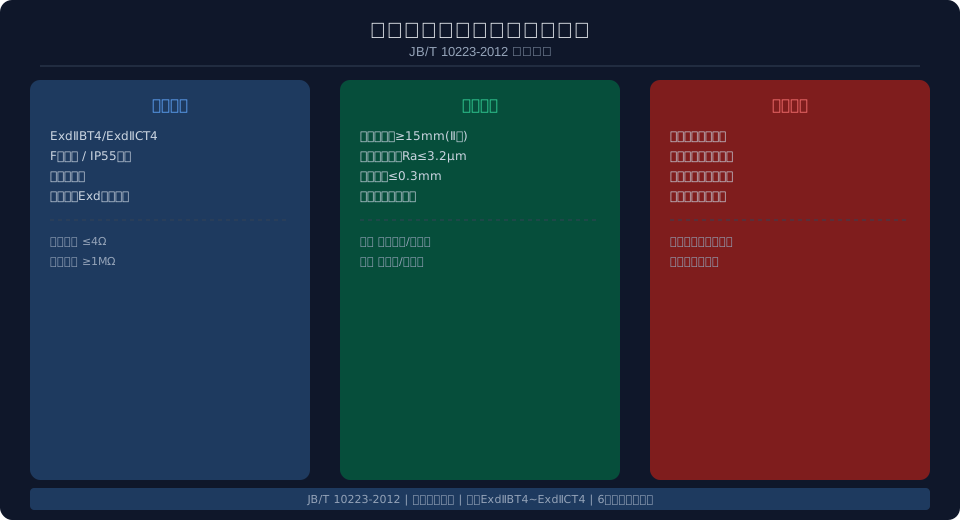

JB/T 10223-2012 Explosion-Proof Electric Hoist Standard Guide

JB/T 10223-2012, the product standard for explosion-proof electric hoists, defines the classification, technical requirements, explosion-proof safety requirements, and test methods for these hoists. It is applicable to electric hoists used in explosive gas or dusty environments.


Explosion-Proof Classifications and Categories

JB/T 10223-2012 categorizes explosion-proof electric hoists into two main types based on their explosion-proof construction: Flameproof (ExdⅡBT4 to ExdⅡCT4) and Increased Safety (ExeⅡT4). Flameproof hoists are suitable for use in Zone 1 and Zone 2 explosive gas atmospheres, while Increased Safety hoists are intended for Zone 2 environments. The selection of the appropriate explosion protection class must consider the gas or dust classification (ⅡA/ⅡB/ⅡC) and the Temperature Class (T1 to T6) of the specific hazardous area. The standard mandates that the hoist's nameplate clearly display the Explosion Proof Marking, the Explosion Proof Certificate number, and the applicable area.

The standard specifies that the electrical system of an explosion-proof electric hoist must use explosion-proof electrical equipment: the motor must be Flameproof (ExdⅡBT4 or ExdⅡCT4), the control box must be Flameproof, and cable entries must use explosion-proof cable glands. The Electromagnetic brake must use non-sparking friction materials, such as copper-based powder metallurgy or graphite composites; direct steel-on-steel friction on braking surfaces is prohibited.


Diagram of flameproof enclosure for explosion-proof electric hoist


The standard also specifies the marking requirements for the hoist's nameplate, which must include the Ex marking, the Explosion Proof Certificate number, the applicable zone (Zone 1 or Zone 2), and the Temperature Class (T4/T5/T6). Hoists with a specific explosion protection class must never be used in areas beyond their certified scope. For instance, an ExdⅡBT4 hoist is not permitted in ⅡC locations where hydrogen or acetylene may be present. Manufacturers must clearly state the hazardous area classification and any operational restrictions corresponding to the hoist's explosion protection class in the product manual.

Core Technical Requirements

The standard's key requirements for explosion-proof construction cover flameproof joint parameters, electrostatic protection, and the earthing system. The width of the flameproof joint must be ≥25mm (Class Ⅰ) or ≥15mm (Class Ⅱ), with a surface Roughness of Ra≤3.2μm. Flameproof joints must be free from corrosion and scratches, and should be coated with anti-rust oil before assembly. Flameproof bolts must be equipped with locking devices, and the flameproof gap must be ≤0.2mm (Class Ⅰ) or ≤0.3mm (Class Ⅱ). Cable entries must use Exd-type explosion-proof cable glands, and cables of different diameters must not share the same entry point.

The earthing system must have a Grounding Resistance of ≤4Ω, and all metallic components must be reliably grounded. The cross-section of the grounding wire must be ≥4mm² (copper core). A dedicated grounding conductor must be provided for Conductor Rail / Busbar systems. Moving parts must be made of copper-based alloys or use explosion-proof crane wheels to minimize spark generation, and the Hook must be made of non-sparking materials such as beryllium bronze or aluminum bronze. The Wire Rope must be a corrosion-resistant galvanized wire rope with a Safety factor of ≥6.

Explosion Protection Class
ExdⅡBT4
ExdⅡCT4
Flameproof Joint Width
Class Ⅰ ≥25mm
Class Ⅱ ≥15mm
Protection Rating (IP)
Motor IP55
Control Box IP54
Grounding Resistance
≤4Ω
Copper Core ≥4mm²
Wire Rope
Corrosion-Resistant Galvanized
Safety Factor ≥6
Temperature Class
T4~T6
Selected per Location
Explosion Protection Class Applicable Area Gas Classification Typical Locations
ExdⅡBT4 1Zone/2Zone ⅡBClass Petrochemical Refining/Pharmaceutical
ExdⅡCT4 1Zone/2Zone ⅡCClass Chemical Industry/Hydrogen
ExeⅡT4 2Zone ⅡA~ⅡC General Explosion-proof Zone
DIP A21 21Zone/22Zone Dust Pulverized Coal/Flour Warehouse

The standard sets out systematic mechanical explosion-proof requirements for explosion-proof electric hoists. Wheel-to-rail contact should use copper-based alloys or explosion-proof wheels to minimize spark generation. Brakes must be fitted with non-sparking friction materials (copper-based powder metallurgy or graphite composites), and braking surfaces must not involve direct steel-on-steel contact—use steel-on-copper-alloy or steel-on-graphite composite instead. Hooks should be made of beryllium bronze or aluminum bronze to prevent impact sparks. Wire ropes must be rust-resistant galvanized wire rope with a safety factor of ≥6 (higher than the ≥5 required for standard hoists), and contact between the rope and pulleys should avoid high-speed friction that could generate sparks.

The earthing system requires a grounding resistance of ≤4Ω, with all metal components (rails, hoist body, electrical cabinet) reliably grounded. The grounding wire must have a cross-section of at least 4mm² (copper core). For conductor rail power supply, a dedicated grounding conductor rail must be installed. Tire cranes with anti-static requirements should be fitted with static discharge chains. The standard also requires that static dissipation devices on explosion-proof electric hoists be complete and functional, and that friction between moving parts be controlled within a range that does not produce hazardous sparks.

Inspection and Testing Requirements

The inspection regime defined by the standard covers both Factory Acceptance Test and type test. Factory Acceptance Test is performed unit by unit and includes: visual inspection (clear explosion-proof marking, complete nameplate, intact cable entry sealing), No-Load Test (full travel operation ≥5 cycles to verify running smoothness), Rated Load Test (3 lift/lower cycles measuring brake slip distance ≤100mm), and Insulation Resistance Test (≥1MΩ). Type testing is conducted every 2 years and covers flameproof joint parameter verification, load testing, and dedicated explosion-proof performance testing.

For operation and maintenance, the flameproof joints of explosion-proof electrical equipment must be inspected every six months—joints must be free from corrosion, scratches, and impact damage, and should be coated with 204-1 anti-rust oil before assembly. Insulation Resistance is measured every six months. Grounding Resistance is also measured every six months and must remain ≤4Ω. Once the validity period of the Explosion Proof Certificate expires, re-certification is required. When replacing explosion-proof components, only original parts with the same Explosion Protection Class must be used—substitutes may compromise explosion-proof performance. Kelude offers explosion-proof electric hoists in a range of specifications.

inspection items technical requirements Period Standard
flameproof jointinspection width≥15mm/Ra≤3.2μm Semi-Annual §5.2
insulation test ≥1MΩ Semi-Annual §5.3
Grounding Resistance ≤4Ω Semi-Annual §5.4
Load test 1.25Times×10min Annual §6.2
brake test Braking Lowering≤100mm Monthly §6.3

The explosion-proof special inspections required by the standard include flameproof joint parameter inspection (every six months), Insulation Resistance Test (every six months, ≥1MΩ), Grounding Resistance Test (every six months, ≤4Ω), and Load test (annually). Once the validity period of the Explosion Proof Certificate expires, re-certification is mandatory. When replacing explosion-proof electrical equipment, only original parts with the same Explosion Protection Class must be used — substitutes can lead to Failure of the explosion-proof performance. This is a critical requirement in Explosion-Proof Crane safety management.

For routine maintenance, the sealing of the explosion-proof cable entry device should be checked every shift — the Seal ring must not show signs of Aging or cracking, and spare entry devices must be sealed with metal blanking plates. The flameproof joint should be inspected every six months — it must be free from Corrosion, scratches, and impact damage, and coated with 204-1 anti-rust oil before Assembly. Flameproof Bolts must not be replaced or removed at will.

Explosion-Proof Hoist FAQ: Key Differences, Ratings & Maintenance

Q: What is the core difference between an Explosion-proof electric hoist and a standard electric hoist?

A: The electrical system is Flameproof (ExdⅡBT4 or ExdⅡCT4), with the Motor, control box, and cable entry all designed for Explosion-proof operation. The Brake uses non-sparking materials, and the Hook is made of copper alloy for explosion-proof service. Grounding Resistance is ≤4Ω. The complete hoist must pass inspection by an accredited explosion-proof Certification body.

Q: How do I select the right Explosion Protection Class?

A: Selection is based on the hazardous atmosphere classification (ⅡA/ⅡB/ⅡC) and Temperature Class (T1–T6). ExdⅡBT4 is commonly used in petrochemical plants, while ExdⅡCT4 is specified for chemical facilities with higher explosion-proof requirements. For Dusty Environment Service, DIP A21 T4 applies. The Explosion Protection Class must match the designated explosion-proof zone.

Q: What special requirements does the standard place on the Brake?

A: The Brake must use non-sparking friction materials (copper-based powder metallurgy or non-metallic compounds), with Braking torque set at 1.5–2 times the rated capacity and a Protection Rating (IP) of at least IP55. Steel-on-steel contact on braking surfaces is prohibited — use steel against copper-based alloy or steel against graphite composite instead.

Q: What maintenance is required for an Explosion-proof electric hoist?

A: Inspect the flameproof joint every six months — no Corrosion or scratches allowed. Replacement of explosion-proof electrical equipment must use original parts of the same Explosion Protection Class. Measure Insulation Resistance every six months (≥1MΩ) and Grounding Resistance (≤4Ω). Renew the Explosion Proof Certificate before it expires.

Related News

contact

contact us

phone:
+86 13903802779

mail:3915269@qq.com

Working hours: Monday to Friday

Wechat
Wechat
SHARE
TOP