ISO 23778:2020 Electric Hoist Coupling Requirements

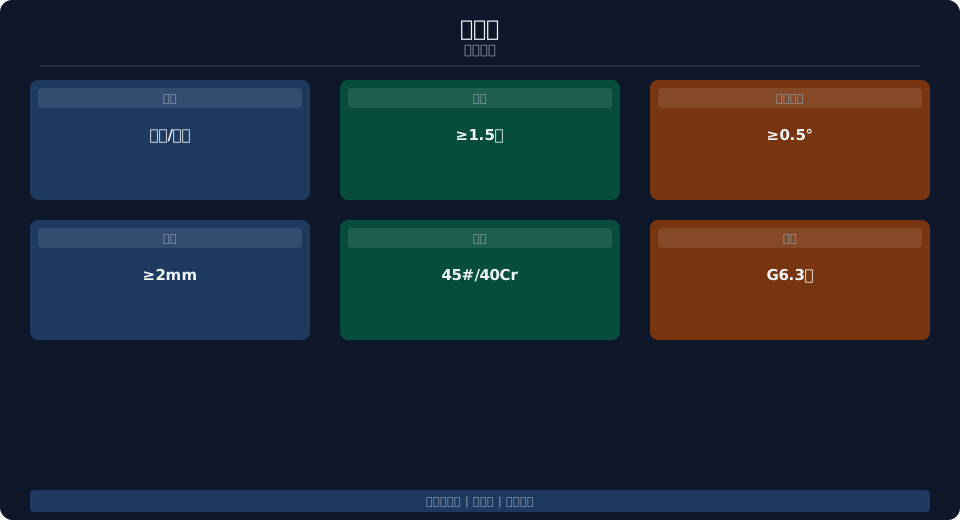
ISO 23778:2020, "Technical Requirements for Electric Hoist Couplings," defines the product standard for couplings used in electric hoists. It classifies couplings installed between the hoisting motor and the gearbox into two types — Flexible Couplings (with elastic elements that absorb vibration and impact) and gear couplings (with internal/external gear meshing for high-torque transmission) — and specifies technical parameters (rated torque ≥ 1.5× motor rated torque, angular compensation ≥ 0.5°, axial compensation ≥ 2 mm), materials (45# steel or 40Cr alloy steel, quenched and tempered to HB240–280), balance quality grade G6.3, and test methods.


Technical Requirements for Hoist Couplings

The coupling is a critical transmission component between the electric hoist motor and the gearbox. Its role is to transmit torque while compensating for installation deviations and absorbing shock and vibration. Flexible Couplings incorporate elastic elements that effectively dampen vibration and impact loads during operation, compensating for misalignment between the motor shaft and gearbox shaft. They are suitable for hoisting mechanisms in small- to medium-tonnage electric hoists. Gear couplings transmit high torque through internal/external gear meshing, offering superior load-bearing capacity for large-tonnage hoists. For both types, the rated torque must not be less than 1.5 times the motor's rated torque, ensuring adequate strength and safety margin to withstand impact torque during starting and braking. Couplings are manufactured from 45# high-quality carbon steel or 40Cr alloy steel, quenched and tempered to a hardness of HB240–280, to ensure sufficient wear resistance on gear teeth and elastic element seats. The balance quality grade meets G6.3, guaranteeing smooth operation at rated rotational speed without abnormal vibration. Kelude supplies electric hoist couplings in full compliance with the standard.


Coupling


Parameters and Inspection

The coupling provides angular compensation of ≥ 0.5°, axial compensation of ≥ 2 mm, and radial compensation of ≥ 0.5 mm to accommodate various combinations of installation deviations between the motor and gearbox. Routine tests are performed unit by unit, including visual and dimensional inspection to verify that overall dimensions and critical mating dimensions conform to drawing requirements. Dynamic balancing is carried out on a balancing machine with G6.3 grade accuracy correction. A torque test applies 1.5 times the rated torque for 3 minutes, during which no component damage or plastic deformation is permitted. Type tests include endurance operation of ≥ 10⁶ cycles without failure, and fatigue tests verify long-term fatigue reliability through repeated loading.

Elasticity
Vibration Damping
Gear Type
High Torque
Torque
≥ 1.5×
Balance
Grade G6.3
Material
45# / 40Cr
Endurance
≥ 10⁶ Cycles
Parameter Requirement
Angular Misalignment Compensation ≥0.5°
Axial Displacement Compensation ≥2mm
Radial Misalignment Compensation ≥0.5mm
dynamic balancing G6.3Stage
Torque Test 1.5Times×3min
Fatigue Life ≥10^6Cycles

Inspection Item Cycle
factory Appearance+Balance+Torque unit by unit
type test Durability+Fatigue New Product/Per2Year

The coupling is a critical link in the electric hoist's power transmission chain. Its failure can result in a complete loss of lifting power, causing the suspended load to drop uncontrollably. For this reason, the standard imposes stringent requirements on the coupling's safety margin and reliability. The 1.5× rated torque factor is based on the operating characteristics of electric hoists—starting and braking of the hoisting motor generate impact loads of 2 to 3 times the rated torque. Within the 1.5× rated torque range, the coupling must maintain elastic deformation without failure. Dynamic balancing tests ensure that at high rotational speeds, the coupling does not introduce additional dynamic loads that could cause vibration and noise. Gear coupling teeth must be carburized and quenched to a hardness of HRC 58–62. The elastic elements of flexible couplings must resist oil, heat, and aging, with an operating temperature range of –20 °C to +80 °C.

Coupling Standards and Selection FAQs

Q: What are the specific requirements of ISO 23778:2020 for coupling rated torque and compensation capacity?

A: The coupling's rated torque must not be less than 1.5 times the motor's rated torque to withstand the impact torque generated during starting and braking. Angular compensation capacity must be ≥ 0.5° to accommodate angular misalignment between the motor shaft and the gearbox input shaft. Axial compensation capacity must be ≥ 2 mm to absorb axial expansion and contraction caused by temperature variations during operation. Radial compensation capacity must be ≥ 0.5 mm to accommodate height deviations between the two shaft axes.

Q: What is the difference in application scenarios between flexible couplings and gear couplings?

A: Flexible couplings incorporate elastic elements (polyurethane or rubber) that effectively absorb vibration and impact loads during operation, cushioning the shock torque at start-up and braking. They are suitable for small- and medium-tonnage electric hoist hoisting mechanisms where alignment requirements are less demanding. Their advantages include excellent vibration damping and simple maintenance. Gear couplings transmit high torque through the meshing of internal and external teeth, offering superior load-bearing capacity. They are suitable for large-tonnage electric hoists and require proper lubrication and maintenance, with higher alignment accuracy requirements. Their advantages are high torque transmission and long service life.

Q: What are the dynamic balancing grade and heat treatment requirements for couplings?

A: The coupling's dynamic balancing grade must meet G6.3 (ISO 1940-1) to ensure smooth rotation at rated speed without abnormal vibration. The material shall be 45# high-quality carbon steel or 40Cr alloy steel, hardened and tempered to HB 240–280, ensuring sufficient wear resistance and fatigue strength for the gear teeth or elastic element seats.

Q: What are the manufacturing and inspection standards for Kelude Heavy Industry electric hoist couplings?

A: Kelude Heavy Industry manufactures electric hoist couplings in accordance with ISO 23778:2020, offering both flexible and gear coupling types. Torque specifications cover the full range of wire rope and chain electric hoist requirements. Each unit undergoes visual inspection, dynamic balancing tests (G6.3 grade), and a 1.5× rated torque test before leaving the factory, and is accompanied by a certificate of conformity.

Related News

contact

contact us

phone:
+86 13903802779

mail:3915269@qq.com

Working hours: Monday to Friday

Wechat
Wechat
SHARE
TOP