
FEM 9.121 Hoisting Mechanism Design: Standard Guide

FEM 9.121 – Hoisting Mechanism Design Specification is a key technical standard in the crane industry, governing the design of hoisting mechanisms.

It provides a unified technical basis for design personnel, inspection bodies, and users. Kelude strictly adheres to its technical requirements throughout product development and manufacturing.


Scope and Purpose of the Standard

FEM 9.121 sets out the technical requirements and safety indicators for the design of crane hoisting mechanisms, covering all lifting appliances with a rated lifting capacity above 0.5 t.


Hoisting mechanism design specification diagram


Core Technical Parameters

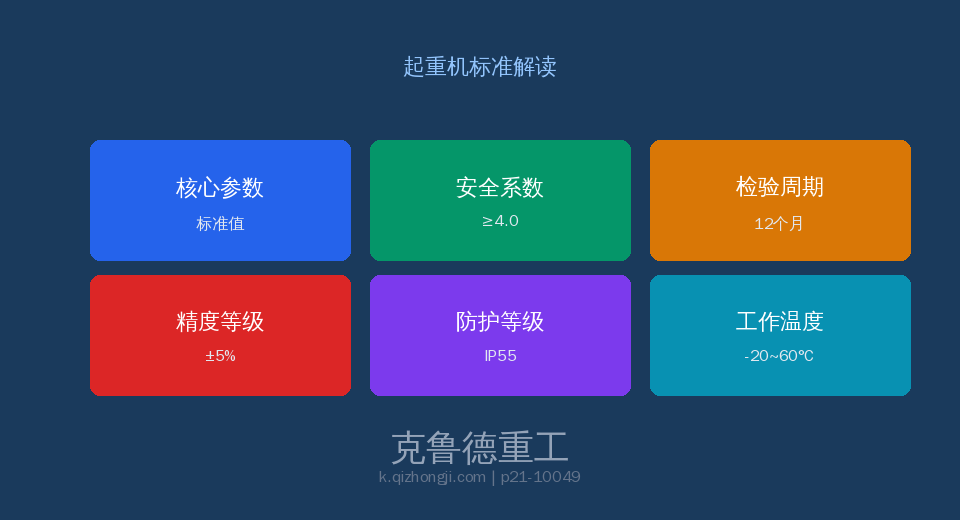
Under FEM 9.121, the design and manufacturing of hoisting mechanisms must satisfy a stringent set of core technical parameters. These values are established through extensive test data and safety engineering principles, covering everything from material selection to structural design. The safety factor ranges specified in the standard account for fatigue life and limit load conditions under demanding operating environments. In engineering practice, design personnel translate these requirements into concrete parameters, ensuring that every component's load capacity meets the mandated safety requirements. The cards below summarize the standard's key technical indicators:

Wire Rope Safety
≥5.0x
Drum D/d
≥20
Dual Brake
≥1.5x per unit
Pulley Dp/d
≥18
Motor Insulation
Class F, Conical Rotor
Protection Rating
IP54/IP55

Comparative Analysis of Key Parameters

Item technical requirements Description
Wire Rope Safety factor ≥5.0(n=5) 6×19/37 1770N/mm²
drum diameter Ratio D/d≥20 rope groove R=0.53~0.56d
sheave diameter Ratio Dp/d≥18 Surface Hardness HRC40~50
Brake Per Unit≥1.5Times, Any Individual Braking1.0Times Normally Closed Type, Power Failure Braking
motor power ≥1.2Multiplied Calculation Power Number of Starts≥300Times/h
Protection Rating (IP) IP54(Indoor)/IP55(Outdoor) insulation FClasstemperature rise≤105K

Inspection Requirements and Intervals

FEM 9.121 sets forth explicit requirements for the Factory Acceptance Test, Type Test, and periodic inspection of hoisting mechanisms under its design specification. The Factory Acceptance Test must be performed on every unit by the quality inspection department at the manufacturer's facility, and each approved unit shall be accompanied by a detailed inspection report and a certificate of conformity. A Type Test is required when a new product enters production, when manufacturing is transferred to another facility, or when significant structural changes are introduced. For cranes already in service, the periodic inspection interval is determined by the work duty and operating environment, generally not exceeding 12 months. For heavy-duty cranes operating continuously at A7 to A8 classification levels, the inspection interval should be shortened to 6 months.

Item technical requirements Description
Wire Rope Diameter+wire break Monthly+Reduction>7%Orwire break>10%Discard
Brake Friction lining+Clearance+Torque Monthly+Remaining<50%Replacement
Drum wall thickness+rope groove Quarterly+Wear> Original20%Discard
Load test 100%+125%static load Factory Tested Per Unit+Per2Annual Type

Safe Operation and Management Requirements

Safe operation and routine management play a critical role in the implementation of FEM 9.121. The standard places strong emphasis on operator qualification and training, requiring that all operators complete specialized training and obtain the necessary certifications before being allowed to operate the equipment. User units must establish a comprehensive equipment file management system that documents the full lifecycle of the equipment, including installation, use, maintenance and inspection. Any safety hazards identified must be addressed through the rectification procedure specified in the standard to ensure the equipment remains in a safe and controllable condition at all times. Additionally, the standard imposes restrictive requirements for equipment use under extreme operating conditions—for instance, lifting operations are prohibited when wind speeds exceed the specified limits.

FEM 9.121 FAQ: Key Requirements Explained

Q: What is the required safety factor for wire ropes under FEM 9.121?

A: The minimum safety factor for wire ropes is ≥5.0, calculated using the formula Fem = SF × m × g. Wire ropes shall be 6×19 or 6×37 with an interlocking lay, and a tensile strength of 1770 N/mm².

Q: What are the specific requirements for dual brake configuration?

A: The hoisting mechanism must be equipped with two independent brakes, each providing a braking torque of at least 1.5 times the rated value. If one brake fails, the other must be capable of independently holding the rated load.

Q: What are the design parameters for drums and pulleys?

A: The drum diameter ratio D/d must be ≥20, and the pulley diameter ratio Dp/d ≥18. The rope groove radius R shall be 0.53–0.56d, with a groove depth of ≥1.5d.

Q: What routine inspections are required for the hoisting mechanism?

A: Monthly inspections cover wire rope diameter and wire breaks, as well as brake friction lining and clearance. Quarterly inspections check drum wall thickness. Each unit must undergo a load test before leaving the factory.


Kelude — Specialized in crane design and manufacturing, with products built in full compliance with the FEM 9.121 standard system.

Related News

contact

contact us

phone:
+86 13903802779

mail:3915269@qq.com

Working hours: Monday to Friday

Wechat
Wechat
SHARE
TOP