

Custom Anti-Corrosion Gantry Crane with C3 C5 Marine Coating
Corrosion-Resistant Crane Customization Is More Than Just Paint — A Breakdown of C3/C5/Marine-Grade Solutions. Corrosion is one of the most common causes of crane failure in industrial environments.
Corrosion is one of the most common causes of failure in industrial cranes. Salt spray in marine environments, acid and alkali fumes in chemical plants, and high-temperature chloride exposure in galvanizing facilities pose continuous threats to structural components, fasteners, and electrical systems of overhead cranes. Standard coating systems (epoxy primer + acrylic topcoat, DFT 120–160 µm) perform adequately in C3 or lower environments, but in C4, C5-I (industrial), and C5-M (marine) conditions, coating blistering, rust creep, and structural strength degradation typically appear within 2–3 years. Based on ISO 12944 Paints and varnishes — Corrosion protection of steel structures by protective paint systems and GB/T 30790, Kelude Heavy Industry has systematically developed three tiers of non-standard corrosion protection solutions for cranes. This article provides a complete technical reference aligned with ISO 12944:2018, ISO 4301 Crane Design Standard, ISO 8501 Preparation of steel substrates before application of paints and related products — Visual assessment of surface cleanliness, ISO 8502 Preparation of steel substrates before application of paints and related products — Tests for the assessment of surface cleanliness, and ISO 4628 Paints and varnishes — Evaluation of degradation of coatings.
Corrosion Environment Classifications and Service Conditions
ISO 12944:2018 defines six atmospheric corrosivity categories (C1 through CX), with C3–C5 being the core range for crane corrosion protection design. C3 (moderate corrosion): urban industrial areas, low-humidity workshops; carbon steel corrosion rate 25–50 µm/year; standard coating system is sufficient. C4 (high corrosion): chemical plants, coastal regions; corrosion rate 50–80 µm/year; requires enhanced coating plus localized stainless steel. C5-I (industrial extreme corrosion): pickling shops, electroplating facilities, electrolytic workshops; corrosion rate 80–200 µm/year; requires full stainless steel or heavy-duty anti-corrosion coating. C5-M (marine corrosion): offshore docks, offshore platforms; corrosion rate 80–200 µm/year; requires marine-grade coating, full stainless steel, and sealed electrical enclosures. Additionally, the CX category introduced in ISO 12944:2018 (extreme corrosivity, corrosion rate >200 µm/year) applies to offshore splash zones, chemical tower internals, and other exceptional locations — but crane main structures typically do not fall into this category.
Beyond atmospheric corrosion, the following special factors must be considered in corrosion-resistant crane design: chemical media attack (direct contact or splash of acid/alkali/salt solutions, pH range 2–12), high-temperature corrosion (molten zinc splash in galvanizing plants at 80–150°C; foundry environments up to 200°C), galvanic corrosion (electrochemical corrosion at dissimilar metal interfaces in electrolytic environments — insulation is required when potential difference exceeds 0.25V), and erosion-corrosion (abrasive dust-laden airflow scouring the coating; wear accelerates significantly at particle sizes of 10–500 µm and flow velocities above 15 m/s). Each service condition demands a tailored combination of corrosion protection measures, and Kelude Heavy Industry evaluates these factors individually during non-standard design.
Surface Preparation — The First Line of Defense Against Corrosion
More than 50% of the service life of a coating system depends on the quality of surface preparation. ISO 8501-1:2007 classifies steel surface preparation grades as Sa1 (light sweep cleaning), Sa2 (thorough rust removal), Sa2½ (very thorough blast cleaning), and Sa3 (blast cleaning to white metal). Surface preparation requirements for corrosion-resistant cranes: C3-grade solutions require a minimum of Sa2.5 (near-white blast cleaning) with surface roughness Rz 50–85 µm; C4-grade solutions also require Sa2.5 with Rz 75–100 µm; C5-M-grade solutions must achieve Sa3 (white blast cleaning) with surface roughness Rz 100–130 µm. ISO 8502-3 assesses surface cleanliness, requiring soluble salt content ≤20 mg/m² (chlorides); otherwise, premature coating blistering will occur. Kelude Heavy Industry strictly tests surface salt levels per ISO 8502-6 before coating and uses high-pressure fresh water rinsing to remove residual salts. The first primer coat must be applied within 4 hours of surface preparation (reduced to 2 hours when relative humidity exceeds 80%) to prevent flash rusting.
C3-Grade Standard Corrosion Protection (Indoor Factory Level)
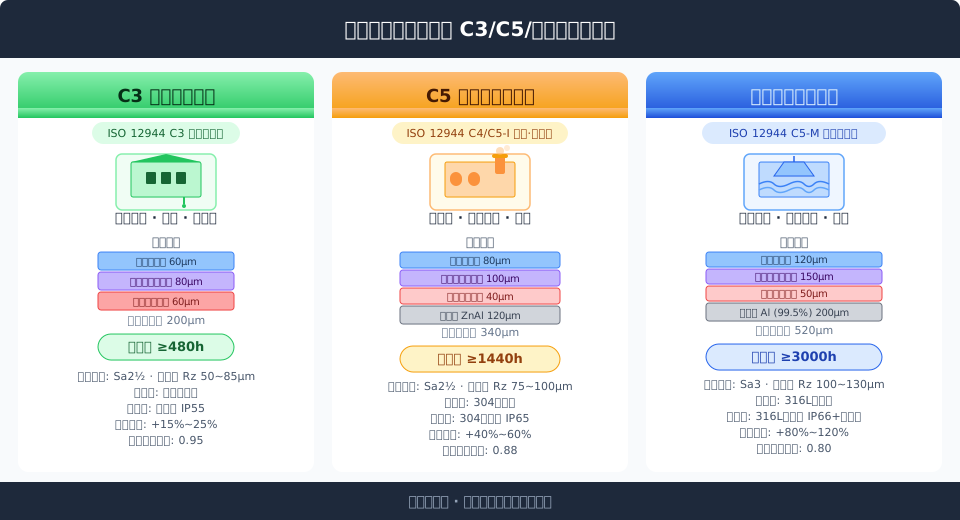
C3-grade protection is suitable for typical indoor industrial environments (assembly workshops, warehouses, maintenance bays) and requires only moderate enhancement over standard coating. Coating system: epoxy zinc-rich primer (zinc content ≥80%, DFT 60 µm) + epoxy MIO intermediate coat (80 µm) + polyurethane topcoat (60 µm), total DFT 200 µm. Standard fasteners are treated with Dacromet coating instead of conventional galvanizing, withstanding neutral salt spray testing for ≥480 hours. Electrical cabinets are rated IP55 protection, with carbon steel enclosures finished with polyurethane topcoat. This solution adds approximately 15–25% to the cost. Per ISO 4301, safety factors should be increased in corrosive environments; the fatigue allowable stress reduction factor for structural members in C3-grade solutions is 0.95.
C4-Grade High-Corrosion Protection (Chemical Plant Level)
C4-grade protection is designed for coastal workshops, chemical warehouses, electroplating shops, and other highly corrosive environments. The coating system uses a dual-system approach: thermal-sprayed zinc-aluminum alloy (85Zn/15Al, coating thickness 120 µm) on main girders and load-bearing structures + epoxy sealing primer (40 µm) + epoxy MIO intermediate coat (100 µm) + polyurethane topcoat (80 µm), total DFT 340 µm. The thermally sprayed zinc-aluminum alloy withstands neutral salt spray testing for ≥3,000 hours with adhesion ≥5 MPa (per ISO 4624). All bolts, nuts, and washers are upgraded to 304 stainless steel (06Cr19Ni10) with tensile strength ≥520 MPa. Contact surfaces — main girder-to-end carriage connections, wheel mounting faces, brake base plates — receive a conductive sealing compound to prevent crevice corrosion. Electrical cabinets are upgraded to 304 stainless steel with IP65 protection. Cables use corrosion-resistant TPU jacketing, offering approximately 3× better acid/alkali resistance than PVC. This solution adds approximately 40–60% to the cost. Per ISO 4301, the fatigue allowable stress reduction factor for C4-grade is 0.88.
C5-M Marine-Grade Heavy-Duty Protection (Offshore Salt Spray Level)
C5-M-grade protection is intended for offshore docks, offshore platforms, ship decks, and seawater desalination plants — extreme marine environments. Coating system: thermal-sprayed aluminum (Al ≥99.5%, coating thickness 200 µm) + epoxy sealing primer (50 µm) + epoxy MIO intermediate coat (150 µm) + polyurethane topcoat (120 µm), total DFT 520 µm. The thermally sprayed aluminum withstands neutral salt spray testing for ≥5,000 hours with adhesion ≥6 MPa. All fasteners, ladders, handrails, electrical cabinets, and motor housings are fabricated from 316L stainless steel (022Cr17Ni12Mo2) with 2–3% molybdenum content and pitting resistance equivalent number (PREN) ≥24. Wheel material uses ZG35CrMo with a stainless steel hardfacing overlay, achieving HRC 45–50 hardness. Electrical cabinets are rated IP66 (protected against powerful water jets), with interior surfaces coated with a three-proof paint (moisture-proof / salt-spray-proof / fungus-proof), tested per GB/T 2423.17 for neutral salt spray resistance ≥96 hours without rusting. Electric motors feature fully enclosed stainless steel housings with potted junction boxes and insulation class H (rated for 180°C). Cables use corrosion-resistant, UV-stabilized TPU jacketing with weather resistance of ≥10 years. This solution adds approximately 80–120% to the cost. Per ISO 4301, the fatigue allowable stress reduction factor for C5-M-grade is 0.80.
Coating Application Process and Quality Control
Environmental conditions during coating application directly affect coating quality. Application temperature must be between 5–40°C, with a dew point differential ≥3°C (i.e., substrate temperature at least 3°C above dew point), and relative humidity below 85%. Overcoat intervals between coating layers must be strictly controlled: the minimum recoat interval between epoxy zinc-rich primer and epoxy MIO intermediate coat is 4 hours (at 25°C), with a maximum of 24 hours; exceeding this requires abrading the surface to a profile depth of 30–50 µm. Wet film thickness is checked after each coat using a wet film comb, with measurements taken at 1-meter intervals; any non-conforming areas are corrected immediately. Dry film thickness is accepted per the 90/10 rule — 90% of measurement points must meet or exceed the specified thickness, and the remaining 10% must not fall below 90% of the specified value; deficient areas are touched up. Application records must be retained until the crane is scrapped, serving as the basis for quality traceability. Kelude Heavy Industry follows the ISO 12944-7 coating application quality control process, generating an individual coating quality report for every crane.
Key Material Selection Comparison
Material selection for corrosion-resistant cranes must balance corrosivity category, operating temperature, chemical media, and cost. The following table compares the key parameters of four core materials:
The coating system must pass NORSOK M-501 (Norwegian offshore standard) cyclic aging tests or equivalent ISO 12944-6 certification testing to ensure the actual service life meets the design requirements.
Salt Spray Testing and Corrosion Resistance Verification
Neutral salt spray testing (NSS, per ISO 9227 Salt spray test standard) is the primary accelerated test method for evaluating coating corrosion resistance. The C3-grade solution requires NSS ≥480 hours with no red rust (i.e., blistering/rust grade ≤Ri2); the C4-grade solution requires NSS ≥1,440 hours; and the C5-M-grade solution requires NSS ≥3,000 hours. Measured NSS data for the thermally sprayed ZnAl (120 µm) plus sealer primer system: only minor white rust (zinc corrosion by-products) appeared after 2,000 hours, with no red rust; trace red rust appeared at scribe marks after 3,000 hours but did not propagate. Measured NSS data for the thermally sprayed aluminum (200 µm) plus sealer primer system: no red rust after 4,000 hours, with only uniform aluminum oxide (white Al(OH)₃ precipitate) at scribe marks, demonstrating significant self-repairing passive film behavior. Cyclic corrosion testing (CCT, per ISO 11997) more closely simulates real marine environments — alternating salt spray, drying, and high humidity — and shows approximately 40% better correlation with actual marine exposure compared to NSS alone. All Kelude anti-corrosion solutions include third-party salt spray test reports, ensuring that the corrosion protection of every shipped unit is verifiable and traceable.
Three-Tier Anti-Corrosion Solutions Compared
Kelude Heavy Industry: Overhead Crane & Hoist Solutions
Kelude Heavy Industry specializes in the design and manufacture of industrial overhead cranes, gantry cranes, and electric hoists. Our equipment is engineered for demanding environments, providing reliable performance for workshops, warehouses, and production lines across the United States and Europe.
Frequently Asked Questions
Q: What is the lead time for a standard overhead crane?
A: For standard models, lead time is typically 30 to 45 days after receipt of deposit and final drawings. Customized solutions may require additional time depending on complexity.
Q: Do you provide installation services?
A: Yes, we offer professional installation supervision. Our technicians can also provide full turnkey installation upon request, including rigging and alignment.
Q: What safety certifications do your cranes have?
A: Our cranes are designed and manufactured in accordance with ISO 4301, ISO 12480, and IEC 60204-32 standards. They also meet CE requirements for the European market.
Q: Can you supply spare parts for older models?
A: Yes, we maintain a comprehensive inventory of spare parts for most models. Please provide your crane's serial number or original specifications to ensure accurate part identification.
Q: What is the warranty period?
A: We offer a standard 12-month warranty covering manufacturing defects. Extended warranty options are available for critical components.
Anti-Corrosion Crane Case Studies: Real-World Performance
Case 1 (C3): Automotive Parts Assembly Workshop, Shandong — Four 5t-22.5m bridge cranes operating indoors in a non-corrosive environment, protected by a C3 anti-corrosion coating system. In service since 2019 and inspected in 2025: coating gloss reduced by approximately 20% (from 60GU to 48GU), with no blistering or rust. Expected service life before major overhaul: 8–10 years. The customer reported a cost increase of only about 18%, offering excellent value for money.
Case 2 (C4): Chemical Warehouse, Nantong, Jiangsu — One 10t-19.5m gantry crane operating in an environment with mild acid mist (pH 4–6), protected by a C4 anti-corrosion system (thermal-sprayed ZnAl + 304 stainless steel fasteners). In service since 2020 and inspected in 2025: coating adhesion remained strong (cross-cut test Class 1), with no corrosion on the main girder. Localized coating thinning was found only at the contact surfaces between the end carriage and trolley rail due to micro-motion wear, and was repaired successfully. This confirms the effectiveness of the C4 system in mildly acidic environments.
Case 3 (C5-M): Dock Facility, Zhanjiang, Guangdong — Two 20t-30m gantry cranes located approximately 50m from the coastline, with a year-round salt spray concentration of 0.05–0.15 mg/m³, protected by a C5-M system (thermal-sprayed Al + 316L stainless steel throughout). In service since 2021 and inspected in 2026: slight chalking on the coating surface (ISO 4628-6 rating 2), no red rust or blistering, and the clear varnish over weld seams remained intact. The conformal coating inside the electrical cabinets showed no discoloration, and three aged seal strips were replaced. No major overhaul expected within 15 years. The customer's initial investment was approximately 95% higher than a standard crane, but only one downtime event (seal replacement) occurred in five years — a significant improvement over the previous standard crane's average of 2–3 breakdown repairs per year.
Inspection and Maintenance Guide for Anti-Corrosion Cranes
The service life of an anti-corrosion crane's coating depends on proper application and regular maintenance. Key inspection items are categorized by frequency:
Annual inspection — Visual assessment of coating blistering and rusting (ISO 4628-2/3), fastener condition check, and seal inspection. Biennial inspection — Coating thickness measurement (eddy-current gauge per ISO 2808) and cross-cut adhesion test (ISO 2409, minimum Class 1). Five-year inspection — Pull-off adhesion test (ISO 4624, minimum 5 MPa). Any coating damage must be repaired within 48 hours using the same coating system, with the edges abraded and feathered over a minimum 50 mm transition zone. Fasteners and electrical cabinet seals are spot-checked during each annual inspection and replaced immediately if corrosion is found. All inspection results are recorded in the crane's maintenance log. Kelude offers scheduled inspection reminders, with the first comprehensive coating assessment recommended after three years of operation.
In daily use, operators should avoid the following practices: (1) cleaning coating surfaces with wire brushes or hard scrapers — use a soft cloth with a neutral cleaner instead; (2) welding grounding wires directly to the crane's steel structure — always use dedicated grounding terminals; (3) adding non-corrosion-rated structural components without authorization — any modification must be evaluated by Kelude for corrosion compatibility. Following these maintenance guidelines can extend the actual service life of an anti-corrosion crane to over 90% of its design life.
Anti-Corrosion Crane FAQ: Grades, Costs, and Selection
Q: What anti-corrosion grades are available for cranes, and how do I determine the right one?
A: Per ISO 12944:2018, atmospheric corrosion environments are classified into six categories from C1 to CX. For anti-corrosion cranes, four grades are most relevant: C3 (moderate corrosion / indoor factory buildings), C4 (high corrosion / chemical plants and coastal areas), C5-I (extreme industrial / acid pickling and electroplating), and C5-M (marine corrosion / docks and platforms). Selection is based on: annual corrosion rate of the environment (C3: 25–50 μm, C4: 50–80 μm, C5: 80–200 μm), chemical media type and pH value (2–12 range), temperature range (80–200°C), salt spray concentration (marine environments: 0.05–0.15 mg/m³), and dust abrasion (particle size 10–500 μm, requiring reinforcement when flow velocity exceeds 15 m/s). Kelude provides free on-site condition surveys and corrosion grade assessments, tailoring the optimal anti-corrosion solution based on ISO 12944 and the customer's actual production processes.
Q: What are the key differences between C3, C5, and marine-grade (C5-M) anti-corrosion systems?
A: The three grades differ significantly in surface preparation, coating system, material selection, and cost. C3 grade: Sa2½ surface preparation + epoxy zinc-rich primer / epoxy MIO intermediate coat / polyurethane topcoat (total DFT 200 μm) + Dacromet-coated fasteners; salt spray resistance ≥ 480 hours; cost increase 15%–25%. C5 grade: Sa2½ + thermal-sprayed ZnAl alloy 120 μm / epoxy sealer / epoxy MIO intermediate coat / polyurethane topcoat (total DFT 340 μm) + 304 stainless steel fasteners; salt spray resistance ≥ 1,440 hours; cost increase 40%–60%. Marine grade (C5-M): Sa3 + thermal-sprayed pure aluminum 200 μm / epoxy sealer / epoxy MIO intermediate coat / polyurethane topcoat (total DFT 520 μm) + 316L stainless steel throughout; salt spray resistance ≥ 3,000 hours; cost increase 80%–120%. The higher the grade, the lower the total lifecycle cost. Kelude matches each customer with the appropriate anti-corrosion system based on corrosion grade assessment, avoiding over-specification.
Q: What are the critical process steps and acceptance standards for anti-corrosion coating application?
A: Key process steps include: (1) Surface preparation — abrasive blasting to Sa2½–Sa3, surface roughness Rz 50–130 μm, soluble salt content ≤ 20 mg/m², with primer applied within 4 hours of preparation; (2) Environmental control — application temperature 5–40°C, minimum 3°C above dew point, relative humidity below 85%; (3) Multi-coat application — primer, intermediate, and topcoat applied in sequence, with recoat intervals controlled (minimum 4 hours, maximum 24 hours); surfaces exceeding the maximum interval must be abraded before recoating; (4) Wet film thickness checks — measured at one point per square meter, with immediate adjustment if out of spec. Acceptance standards: dry film thickness verified per the 90/10 rule, cross-cut adhesion test (ISO 2409, minimum Class 1), visual inspection for sagging, pinholes, or missed areas, and holiday detection with zero defects allowed. Kelude provides an independent coating quality report and third-party salt spray test report for every crane delivered.
Q: What advantages does Kelude offer in the design and manufacturing of anti-corrosion cranes?
A: Kelude brings three core strengths: (1) Full standard compliance — designed and manufactured to ISO 12944, ISO 12944-7, and NORSOK M-501, with a complete coating quality report and third-party salt spray test report generated for every crane, ensuring verifiable and traceable anti-corrosion performance; (2) End-to-end process control — from surface preparation (multi-stage high-pressure fresh water rinsing to remove salts, primer applied within the 4-hour golden window) and coating application (real-time environmental monitoring, 90/10 DFT acceptance) to quality testing (pull-off adhesion ≥ 5 MPa, cyclic corrosion testing); (3) Full lifecycle service — scheduled inspection reminders, first comprehensive coating assessment after three years of operation, 48-hour response for coating damage repair, and all inspection results documented in the maintenance log to ensure the actual service life reaches over 90% of the design life.
