

Crane Selection Guide: From Parameters to Configuration
Step 1: Define Your Operating Conditions
Selecting a crane isn't simply about "getting a hoist." It requires a systematic analysis of material characteristics, duty cycle, space constraints, and environmental conditions. A well-considered selection can reduce procurement costs by 20%–40% and operating costs by 15%–25%.
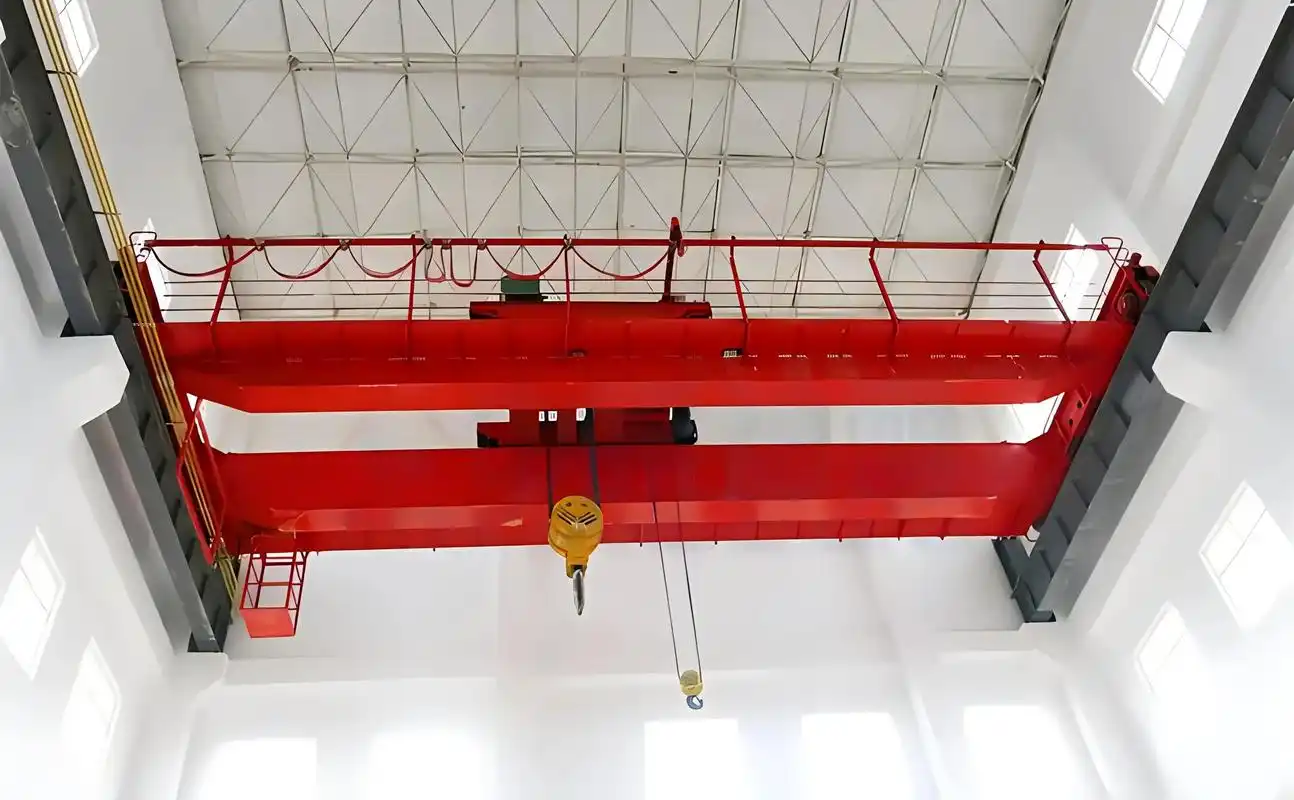
▲ Key parameters for crane selection
Four Core Parameters Explained
1. Lifting Capacity (Rated Load)
Lifting capacity is the primary selection criterion. It's important to distinguish between the Rated Lifting Capacity and the maximum lifting capacity. When selecting, add a 15%–20% safety margin above your actual maximum load. For example, if your heaviest workpiece is 15 tons, a 20/5t model (20t main hook, 5t auxiliary hook) is recommended.
2. Span and Lifting Height
For bridge cranes, the span is the distance between the centerlines of the crane runway rails, determined by your workshop width. Standard spans include 10.5m, 13.5m, 16.5m, 19.5m, 22.5m, 25.5m, 28.5m, and 31.5m. Non-standard spans can be customized.
Lifting height is constrained by workshop height. Standard lifting heights for bridge cranes are 12m, 16m, 20m, 24m, and 30m. Note that the spreader height and hook limit positions must be deducted; the actual usable height may be less than the nominal lifting height.
3. Work Duty / Classification
Work duty is a critical factor determining crane lifespan and price. Per the ISO 4301 standard, cranes are classified into eight duty levels, from A1 to A8:
- A1–A3 (Light): Low-frequency applications like warehouses and maintenance shops
- A4–A5 (Medium): Moderate frequency, e.g., machine shops and assembly workshops
- A6–A7 (Heavy): High-frequency operations in metallurgy, foundries, and ports
- A8 (Very Heavy): Extreme conditions like nuclear power plants and continuous casting
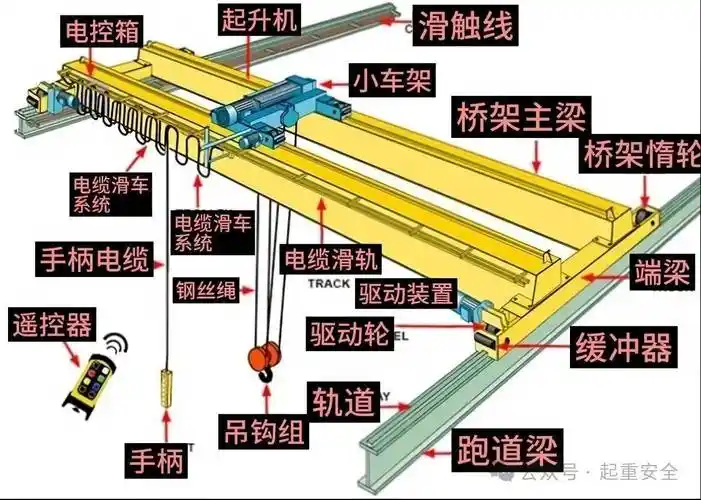
▲ Configuration comparison across work duty classes
Choosing the Right Crane Type
Bridge Crane (Overhead Crane): Best for indoor facilities; the most versatile type, accounting for over 60% of the market.
Gantry Crane: Ideal for outdoor yards and storage areas where no building structure is available.
Jib Crane: Suitable for workstation-level lifting; flexible setup with low initial investment.
Electric Hoist: Used with monorails or I-beams; ideal for light-duty applications up to 10t.
Explosion-Proof Crane: Required for flammable or explosive environments such as chemical plants and flour mills; demands additional explosion-proof certification.
Crane Selection Decision Process
- Calculate the maximum load (including spreader weight) × 1.2 safety factor to determine the rated lifting capacity
- Measure the workshop dimensions (width for span, height for lifting height)
- Analyze the duty cycle (daily operating hours, lifts per hour) to determine the work duty class
- Assess environmental factors (temperature, humidity, dust, corrosion, explosion-proof requirements) to set the protection rating (IP)
- Select the control method (floor remote, operator cab, or remote control) to finalize the electrical configuration
- Confirm special requirements (VFD, anti-sway control, smart monitoring, grab bucket, lifting magnet, etc.)
Key Purchasing Considerations
- Verify credentials: The supplier must hold a special equipment manufacturing license, and the product must have a Type Test Report.
- Installation and acceptance: The installer must have an installation, retrofit, and maintenance license. Final acceptance must be carried out by a special equipment inspection body.
- After-Sales Service: Confirm maintenance response time, spare parts supply lead time, and warranty period (industry standard is 12–18 months).
- Used equipment evaluation: For second-hand cranes, focus on three key indicators: main girder camber, end carriage weld seams, and wheel wear.
Frequently Asked Questions
Q: What core parameters are needed for crane selection?
A: The core parameters are: lifting capacity (Gn), span (S), lifting height (H), work duty, lifting speed, travel speed, control method, and power supply. Secondary considerations include environmental factors (indoor/outdoor, temperature, explosion-proof/anti-corrosion requirements, wind load, etc.).
Q: How do I choose between work duty classes A3 and A8?
A: A3 (Light) is for low-frequency applications such as maintenance and warehousing; A4–A5 (Medium) suits general industrial use; A6 (Heavy) is for three-shift operations in metallurgy and foundries; A7–A8 (Very Heavy) is for continuous-duty metallurgical cranes.
Q: What selection services does Kelude offer?
A: Kelude provides free selection consulting. Based on your operating conditions, we recommend the most cost-effective crane and configuration, including main girder type (box girder or truss), control method, and non-standard customization. Call 13903802779 for consultation.
Kelude Heavy Industry Double Girder Overhead Crane
Kelude Heavy Industry specializes in the design and manufacture of heavy-duty overhead cranes for industrial applications. Our double girder overhead cranes are engineered for high-capacity lifting, providing reliable performance in demanding environments such as steel plants, shipyards, and heavy machinery workshops.
