

Smart Cranes in Port Terminals: Applications & Benefits
Why Port Terminals Are Racing to Go Smart
Rising global trade volumes are putting unprecedented pressure on port terminal productivity. Traditional terminals are squeezed by three core pain points: soaring labor costs, operational throughput bottlenecks, and frequent safety incidents. As the backbone of terminal automation, smart cranes are moving beyond simply replacing manual labor to actually outperforming it.
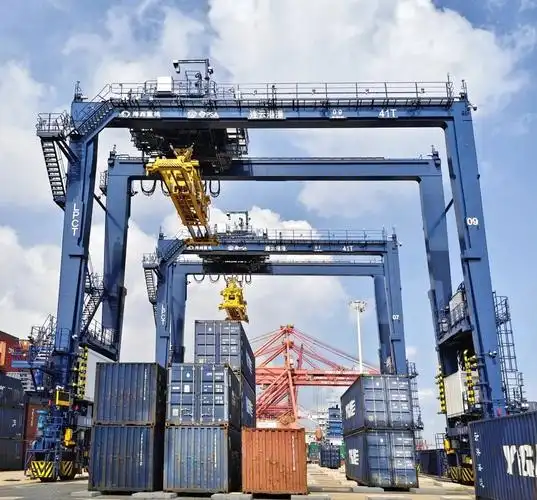
▲ Automated container handling with smart harbor cranes
Core Technologies Behind Smart Port Cranes
1. Automated Yard Management
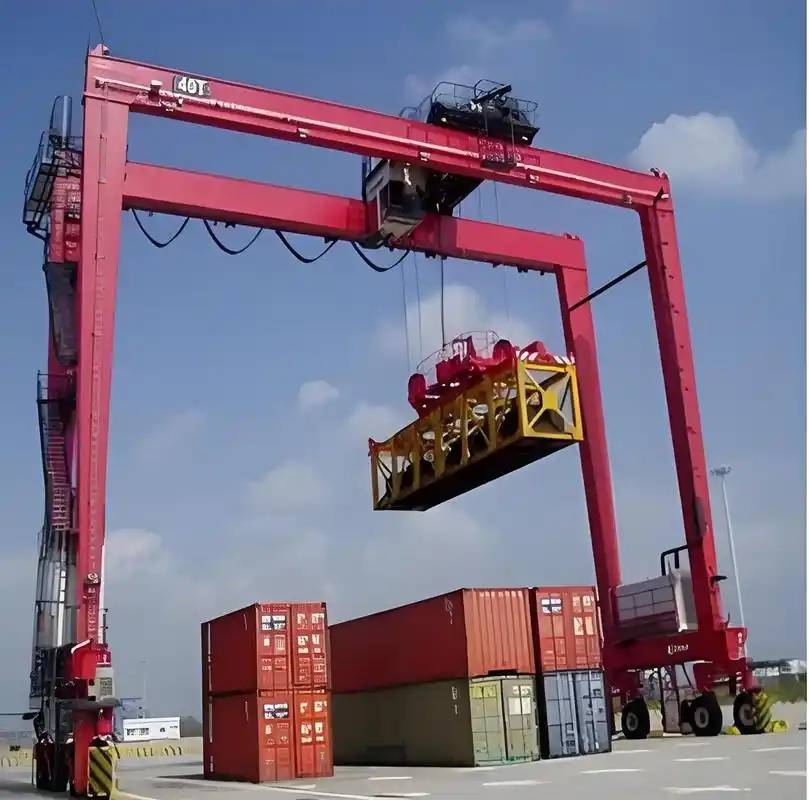
Rubber-tired gantry cranes (RTGs) and rail-mounted gantry cranes (RMGs) can be retrofitted with three key modules—truck positioning systems, automatic container number identification, and anti-sway control—to enable fully automated yard operations. The system executes work orders issued by the terminal operating system (TOS) to automatically handle container loading, stacking, and transfer.
At one coastal port, automating 32 RTGs boosted yard handling efficiency by 35%, while cutting staffing from two operators per crane to just one remote supervisor managing six machines.
2. Intelligent Dispatching and Path Optimization
An intelligent dispatching system built on operations-research algorithms can assign tasks in real time across dozens of quay cranes, over a hundred yard cranes, and hundreds of terminal trucks. The system weighs more than 20 variables—vessel arrival times, berth allocation, equipment location, battery charge levels, and more—and recalculates the optimal dispatch plan every five seconds.
3. 5G Remote Control Systems
The low latency of dedicated 5G networks (end-to-end under 10 ms) has made remote operation a standard feature of terminal automation. Operators working in a control center miles away use six 4K displays and force-feedback joysticks to replicate the experience of being in the cab. The remote control system also integrates AI-assisted operation, which automatically intervenes in complex conditions to maintain safety.
▲ Inside a smart port remote control center
Cost-Benefit Analysis of Port Crane Automation
Using a mid-sized container terminal (800,000 TEU annual throughput) as an example:
- Retrofit investment: Approximately CNY 48 million (approx. $7.1 million) for automating 32 RTGs, plus about CNY 6 million (approx. $890,000) for the remote control center
- Annual cost savings: CNY 12 million (approx. $1.8 million) in labor (60 fewer operators) and CNY 2.8 million (approx. $414,000) in energy
- Revenue gains from higher throughput: Approximately CNY 15 million (approx. $2.2 million) per year
- Payback period: Roughly 2.3 years
▲ Real-time monitoring screen of a port dispatching system
What's Next for Smart Port Cranes
- L4 autonomous operation: Combining LiDAR and machine vision to enable fully unmanned operations across the terminal
- Seamless equipment connectivity: Unified interface standards for end-to-end data sharing between quay cranes, yard cranes, and trucks
- Digital Twin ports: Full-fidelity digital twin models of the terminal for simulation, scenario testing, and remote diagnostics
- Zero-carbon terminals: Electrification plus solar storage and intelligent energy management to create a carbon-neutral operating ecosystem
Frequently Asked Questions
Q: What are the main applications for smart cranes at port terminals?
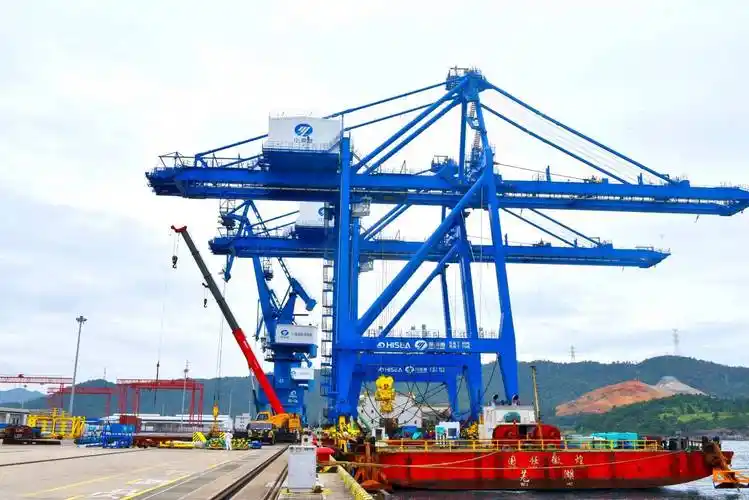
A: Key applications include automated container yards (ARMG/ERTG), bulk cargo handling with grab cranes, general cargo hoisting, ship-to-shore operations with quay cranes, and steel or pipe handling. Automation covers remote operation, automatic container pickup and placement, and intelligent path planning.
Q: What benefits can a port crane automation retrofit deliver?
A: Automation typically reduces labor requirements by 60%–80%, improves handling efficiency by 15%–30%, cuts accident rates by more than 80%, and lowers equipment maintenance costs by 20%–30%. Typical payback periods range from 3 to 5 years.
Q: Which standards apply to port cranes?
A: Port crane design follows GB/T 16562 (Safety Code for Port Cranes), container spreaders comply with GB/T 3220, and automation projects reference the Ministry of Transport's "Design Code for Automated Container Terminals."
Kelude Heavy Industry: Overhead Crane & Hoist Solutions
Kelude Heavy Industry specializes in the design and manufacture of industrial overhead cranes, gantry cranes, and electric hoists. Our equipment is built for demanding environments, offering reliable performance and long service life across a wide range of material handling applications.
Frequently Asked Questions
Q: What is the lead time for a standard overhead crane?
A: Our standard lead time for a single-girder crane up to 10 tons is approximately 4-6 weeks. Double-girder cranes or custom configurations typically require 8-12 weeks, depending on the complexity and current production schedule.
Q: Do you provide installation and commissioning services?
A: Yes, we offer on-site installation and commissioning services through our global network of certified technicians. Alternatively, we can provide detailed installation drawings and remote support for self-installation by your team.
Q: Can your cranes be customized for a specific factory layout?
A: Absolutely. We regularly design cranes with non-standard spans, lifting heights, and control systems to fit existing buildings. Our engineers can work from your drawings or conduct a site survey to recommend the most efficient solution.
Q: What is the warranty period for Kelude products?
A: We provide a standard 12-month warranty from the date of commissioning. This covers defects in materials and workmanship under normal use and maintenance. Extended warranty options are available upon request.
Q: How do you ensure the safety of your cranes?
A: All our cranes are designed with multiple safety features, including overload protection, limit switches, and emergency stop functions. They are manufactured and tested in compliance with ISO 12480 and IEC 60204-32 standards, and each unit comes with a certificate of conformity.
A: For any other questions or to request a quote, please use the contact form below or email us directly. Our sales team typically responds within 24 hours.
