

Smart Crane Applications in Industrial Production
What Value Does a Smart Crane Deliver to Industry?
Driven by Industry 4.0 and the "Made in China 2025" initiative, traditional lifting equipment is rapidly transitioning toward intelligent systems. A smart crane is far more than a standard crane fitted with sensors and a screen—it fundamentally transforms the efficiency and safety of material handling operations.
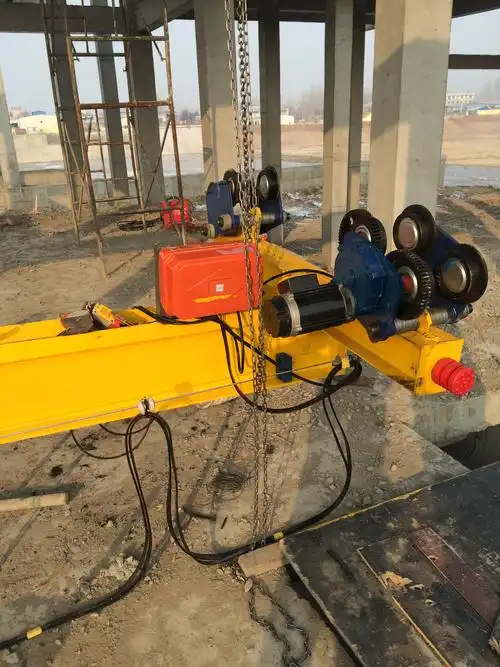
▲ Smart crane in action in a heavy industrial environment
Key Smart Crane Applications by Industry
1. Steel Structure Fabrication
Large steel fabrication plants handle dozens of tons of steel components daily. In conventional operations, each crane requires a dedicated operator and a ground signaler, with coordination between crews relying on two-way radios—a setup that is inefficient and prone to errors.
After implementing the Kelude intelligent crane system, UWB high-precision positioning base stations were deployed on the factory roof structure, with each crane equipped with anti-sway control and an electronic fence system. The control center monitors all equipment in real time via a visual dashboard, while the system automatically generates optimal hoisting paths.
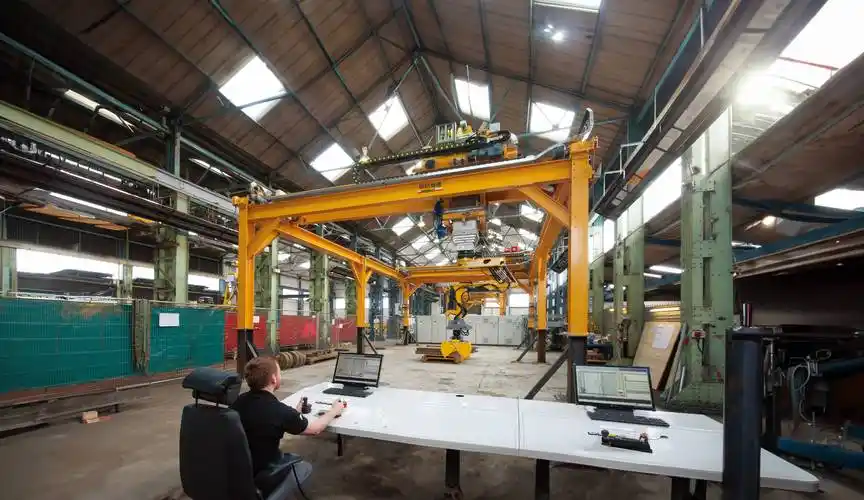
▲ Integrated crane operations in an intelligent networked manufacturing environment
2. Port Logistics
Container terminals are at the forefront of crane intelligence. A coastal port deployed an intelligent control system across 32 Ship-to-Shore (STS) cranes, integrating truck positioning, container number identification, and automatic container landing.
The system supports seamless switching between remote operation and fully automatic mode—during peak vessel operations, remote operators manage cranes from a central station; during off-peak periods, the system runs in full auto mode. This approach boosted overall terminal handling capacity by 30%.
3. Shipbuilding
Shipbuilding involves extensive block lifting and turnover operations, demanding exceptional synchronization control precision and safety redundancy from cranes. A major shipyard adopted an intelligent gantry crane cluster system, using PLC-CAN Bus coordinated control to enable synchronized lifting across multiple cranes.
4. Metallurgy and Foundry
The high temperatures, dust, and strong magnetic fields of metallurgy workshops create extremely challenging conditions for human operators. Smart cranes in this sector focus on remote and unmanned operation.
Return on Investment (ROI) Analysis
A survey of 56 companies that adopted smart crane systems shows an average payback period of 14–22 months:
• Labor cost reduction: 50%–65% (fewer operators and ground personnel required)
• Equipment utilization increase: 30%–55% (reduced idle time and waiting)
• Maintenance cost reduction: 25%–35% (shift from reactive to predictive maintenance)
• Incident loss reduction: 80%–95% (intelligent anti-collision and electronic fencing)
• Energy savings: 15%–25% (intelligent frequency conversion and energy feedback technology)
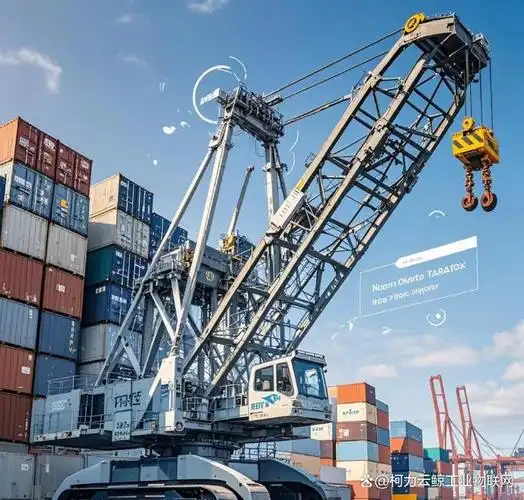
▲ Smart crane remote monitoring and data analytics platform interface
How to Choose the Right Smart Crane
When evaluating smart crane options, consider the following criteria:
- Communication Protocol Compatibility: Verify support for mainstream industrial protocols such as OPC UA, MQTT, and Modbus TCP to enable seamless integration with existing MES/ERP systems
- Sensor Redundancy: Critical parameters (e.g., lifting capacity, height, travel) should feature dual-sensor redundancy to ensure single-point failures do not disrupt crane operation
- Edge Computing Capability: The local controller should support offline data buffering and breakpoint resume to maintain normal operation during network interruptions
- Expansion and Upgrade Potential: The control system should use a modular design that supports smooth upgrades for future AI modules, digital twin functionality, and other enhancements
