

Machine Learning for Crane Fault Prediction & Diagnosis
Why Cranes Need Machine Learning for Predictive Maintenance
Cranes are critical assets with demanding reliability requirements, where unexpected failures can halt an entire production line or, worse, lead to serious safety incidents. The traditional "scheduled maintenance" approach suffers from two fundamental flaws: over-maintenance wastes resources, while under-maintenance leaves equipment vulnerable to sudden breakdowns. Machine learning (ML) shifts the paradigm from reactive, calendar-based servicing to condition-based maintenance by continuously analyzing operational data.
Technical Implementation Roadmap
1. Data Acquisition and Preprocessing
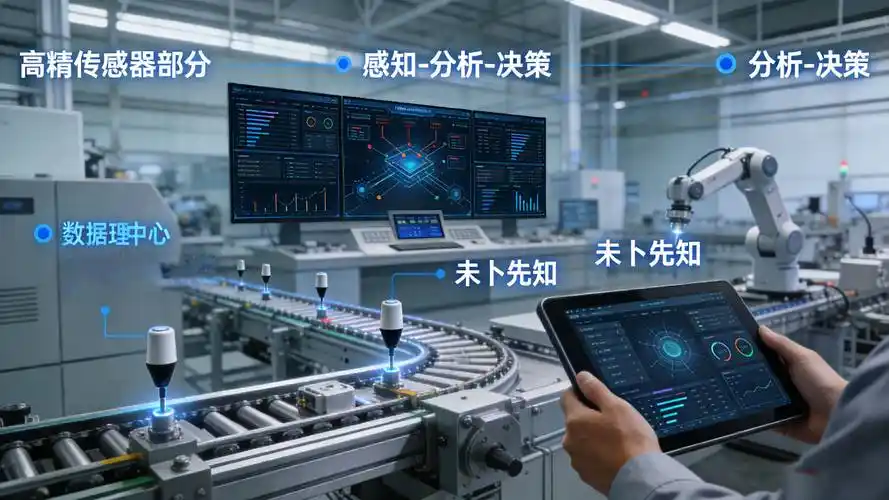
Data is collected from the crane's PLC Controller, VFD (Variable Frequency Drive), and sensor network, covering motor current, voltage, power, vibration acceleration, temperature, lifting capacity, travel distance, and duty cycle. High-frequency signals (motor current sampled at 1 kHz) undergo feature extraction at the edge computing node, while low-frequency data (hourly aggregates) is streamed directly to the cloud.
2. Model Selection and Training
Different algorithms are selected based on the specific prediction objective:
- Binary classification (normal/anomalous): Gradient boosting trees (XGBoost, LightGBM) achieve accuracy above 95%.
- Remaining useful life (RUL) prediction: Temporal neural networks (LSTM, TCN) deliver prediction errors within ±15%.
- Fault type classification: Random forest and support vector machines (SVM) reach multi-class accuracy exceeding 90%.
- Anomaly detection: Autoencoders or isolation forests are well suited for scenarios with limited labeled data.
3. Edge Deployment and Real-Time Inference
Trained models are exported in ONNX format and deployed to on-crane edge computing devices (e.g., NVIDIA Jetson or industrial Raspberry Pi). Inference latency is kept under 50 ms, meeting real-time monitoring requirements. The edge node also handles data buffering and resumable uploads, ensuring no data loss during network interruptions.
Typical Fault Prediction Models for Overhead Cranes
| Fault Type | Predictive Features | Algorithm Recommendation | Prediction Lead Time |
|---|---|---|---|
| Bearing Wear | Vibration acceleration RMS, Crest Factor | LSTM | 10-14days |
| Brake Slippage | Motor Current Harmonics, Braking Travel | XGBoost | 5-7days |
| Wire Rope Wire Breakage | Electromagnetic Detection Signal, Lifting Capacity Curve | CNN | 7-10days |
| Motor Insulation Aging | Insulation Resistance, Partial Discharge Magnitude | Random Forest | 15-30days |
| Gearbox Wear | Ferrography Oil Analysis, Vibrationsideband | Light GBM | 20-45days |
Implementation Roadmap
We recommend rolling out the ML-based fault prediction system in three phases:
- Pilot phase: Deploy sensors and edge gateways on 3–5 high-frequency cranes, and collect six months of training data.
- Validation phase: Train and validate the model on pilot data, then scale up once accuracy reaches 90% or higher.
- Full deployment: Roll out plant-wide and establish a unified equipment health management platform.
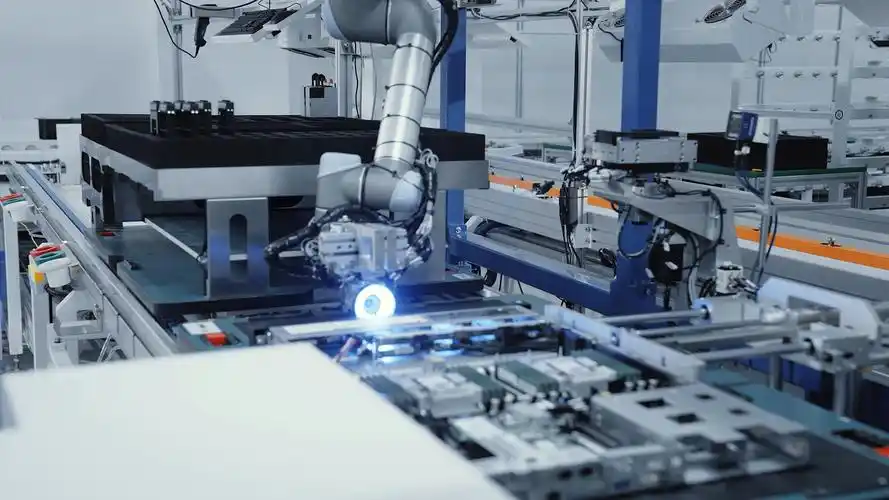
▲ Predictive Maintenance Dashboard on the Intelligent Operations Platform
Frequently Asked Questions
Q: What are the typical applications of machine learning in crane fault prediction?
A: Typical applications include remaining useful life prediction for gearbox bearings (CNN/LSTM), motor fault diagnosis (vibration spectrum + random forest), wire rope broken-wire identification (vision + CNN), and brake degradation trend prediction (time series + GBDT).
Q: How much training data is required for a crane fault prediction model?
A: For classification tasks, roughly 500 to 2,000 samples per fault category are typically needed; for regression-based prediction, three to six months of continuous operational data is recommended. Transfer learning and data augmentation can reduce data requirements by 30%–50%. We suggest fine-tuning a model pre-trained on public datasets.
Q: What AI fault diagnosis capabilities does Kelude Heavy Industry offer?
A: Kelude Heavy Industry collaborates with AI research institutions to deliver gearbox and bearing fault diagnosis solutions based on vibration spectrum analysis and 1D-CNN, as well as wire rope visual inspection using YOLOv8.
