

How AI Is Transforming Crane Manufacturing & Smart Maintenance
AI-Powered Cranes: From Automation to True Intelligence
If automation solved the problem of "machines replacing human hands," then artificial intelligence (AI) tackles the far bigger challenge of "machines surpassing human judgment." AI equips cranes with three core capabilities—environmental perception, autonomous decision-making, and continuous learning—transforming them from mere tools into intelligent partners that can think, adapt, and improve over time.
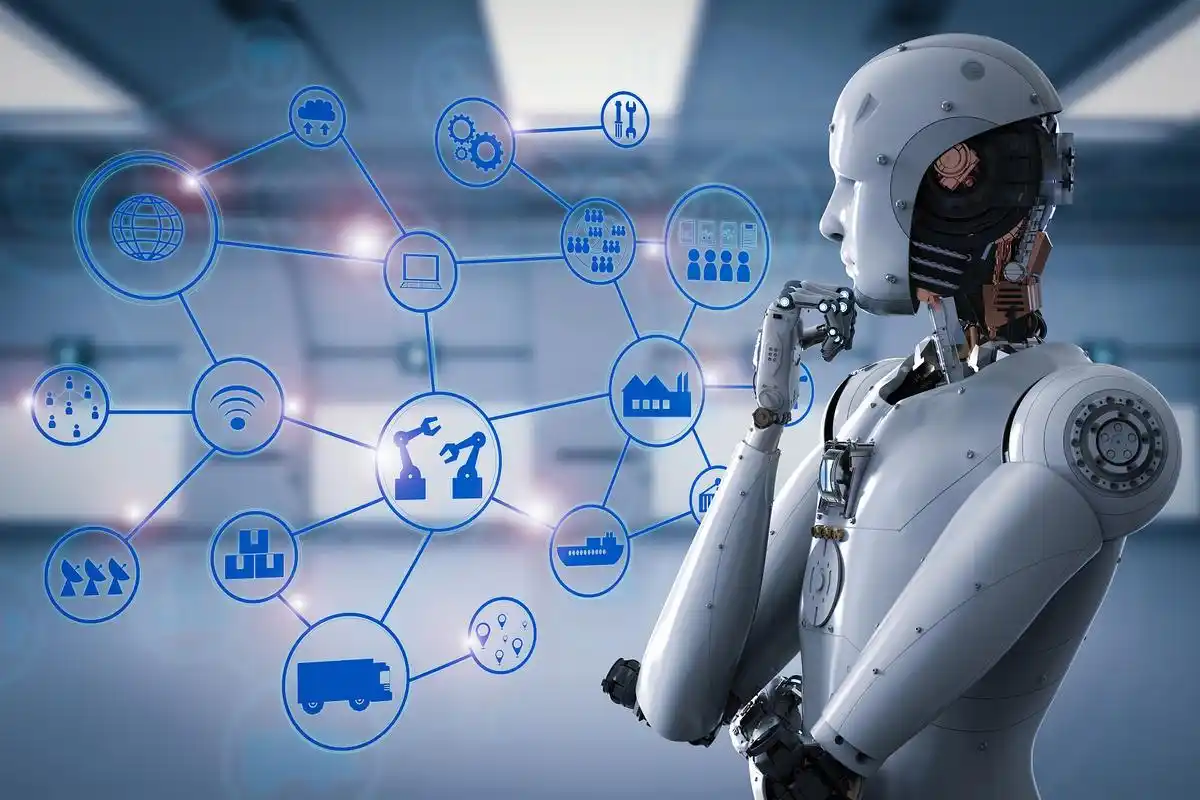
▲ AI applications in crane operation and maintenance
Five Key Areas Where AI Is Transforming the Crane Industry
1. AI Vision Recognition System
Powered by deep learning convolutional neural networks (CNNs), the vision system identifies load type, dimensions, and orientation in just 0.1 seconds, automatically adjusting the lifting spreader opening and grab angle. In scrap steel yards, the AI Vision Recognition System has boosted scrap-type recognition accuracy from 75% (manual visual inspection) to 96%, dramatically improving Lifting magnet efficiency.
2. AI Path Planning and Obstacle Avoidance
Traditional crane operation relies heavily on operator experience to determine the best travel path. AI Path Planning algorithms—built on reinforcement learning or A* search—calculate optimal obstacle-free trajectories in real time, with full 3D path planning capability that simultaneously coordinates crane bridge, trolley, and hoisting movements.
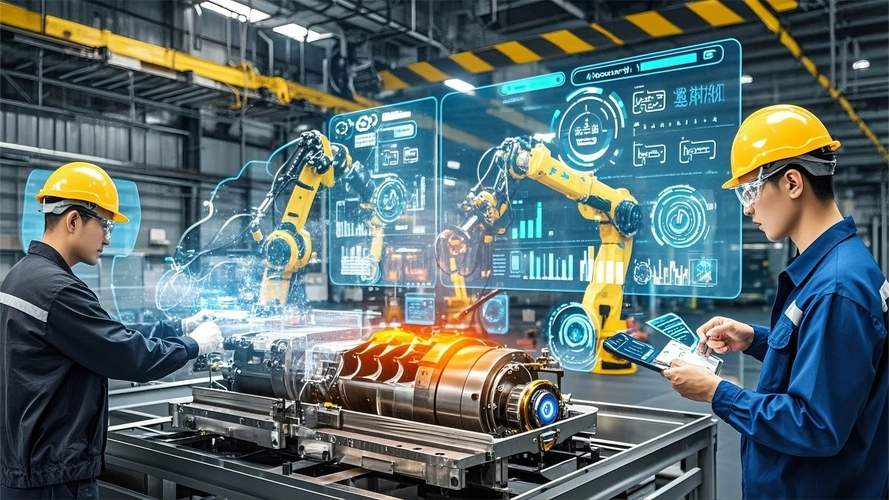
▲ AI-powered intelligent path planning and Obstacle Avoidance System
3. Predictive Maintenance AI Models
Using time-series data analysis and anomaly detection algorithms (such as LSTM and Transformer networks), the system performs deep mining of equipment Sensor data to issue failure warnings 5–14 days in advance. The AI model doesn't just tell you when something will fail—it also diagnoses where the failure will occur and why.
4. Digital Twin and AI Simulation
Digital Twin technology creates a highly accurate virtual replica of the crane, which AI algorithms then use for real-time state mapping and predictive simulation. Engineers can model various operating conditions and fault scenarios in the Digital Twin environment to optimize control parameters—without the risk or cost of high-stakes testing on physical equipment.
5. AI-Powered Safety and Surveillance Systems
Computer vision-based behavior recognition automatically detects operator violations—such as missing safety helmets, entering Hazardous area zones, or signs of fatigue—and issues real-time voice and visual alerts. The system also includes zone intrusion detection: the moment a person enters the danger zone beneath a suspended load, alarms trigger and the crane halts immediately.
AI Crane Deployment Roadmap: A Step-by-Step Guide
- Data Acquisition Layer: Deploy Sensor networks and build the AI training data foundation (3–6 months)
- Model Training Layer: Train AI models on historical data and validate accuracy (2–4 months)
- Edge Inference Layer: Deploy the AI inference engine on local Controllers for real-time intelligence (1–2 months)
- Continuous Optimization: Refine models with live operational data for closed-loop improvement (ongoing)
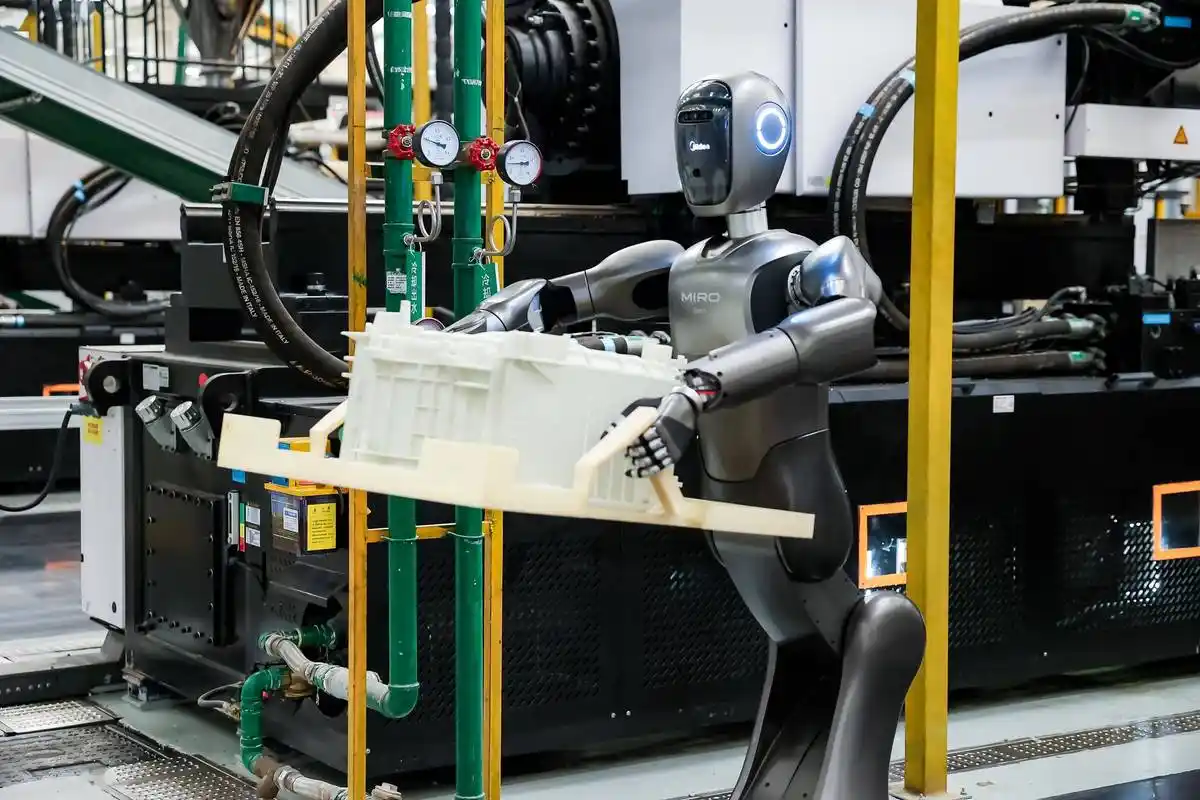
▲ Crane Digital Twin and AI simulation system interface
Frequently Asked Questions
Q: How is AI changing the crane manufacturing industry?
A: AI is driving transformation across five key areas: AI vision inspection replacing manual weld seam and surface checks, Digital Twin accelerating design iteration, intelligent Anti-sway control improving handling efficiency, Predictive Maintenance reducing unplanned downtime, and unmanned overhead crane systems enabling remote operation.
Q: What are the biggest challenges for AI adoption in the crane industry?
A: Key challenges include: poor industrial data quality (high noise, limited labeling), harsh operating environments (dust, vibration, high temperatures), lengthy safety Certification cycles (SIL3/Explosion-proof), and a general lack of trust in AI among traditional industry professionals.
Q: What AI crane applications does Kelude currently offer?
A: Kelude has mature products and proven case studies in AI voiceprint rail-gouging detection, AI Anti-sway control, and Digital Twin monitoring—and continues to invest heavily in R&D for next-generation AI-powered Smart Cranes.
Kelude Heavy Industry: Overhead & Gantry Crane Solutions
Kelude Heavy Industry specializes in the design, manufacture, and service of industrial overhead cranes, gantry cranes, and electric hoists. Our product range covers a lifting capacity from 1t to 300t, delivering reliable performance for workshops, warehouses, and heavy fabrication facilities across the United States and Europe.
Frequently Asked Questions (FAQ)
Q: What is the typical lead time for a standard overhead crane?
A: For standard models up to 20 short tons, lead time is typically 6–8 weeks from order confirmation. Custom engineered cranes may require 12–16 weeks depending on complexity.
Q: Do you provide installation services in the United States?
A: Yes, we have certified installation crews available nationwide. We handle all rigging, alignment, and load testing to ensure your crane is operational and compliant with local regulations.
Q: Can your cranes be operated with a radio remote control?
A: Absolutely. Most of our cranes can be equipped with industrial-grade radio remotes, offering proportional speed control and emergency stop functions for enhanced operator safety.
Q: What safety standards do your cranes comply with?
A: Our cranes are designed and manufactured in accordance with ISO 4301 (crane classification), ISO 12480 (safe use), and IEC 60204-32 (electrical equipment). We also offer options to meet specific local codes such as CMAA or FEM.
Q: What is the warranty period for Kelude cranes?
A: We offer a standard 24-month warranty covering all mechanical and electrical components, excluding normal wear items. Extended warranty and service contracts are available upon request.
