

Automated Material Handling Systems in Manufacturing
Smart Warehousing: The Shift to Automated Material Handling
In manufacturing, material handling costs typically account for 20%–30% of total production costs, while handling time can represent 30%–50% of the entire production cycle. An automated material handling system (AMHS) integrates automated cranes, AGVs/AMRs, smart warehousing, and a Warehouse Management System (WMS) to enable fully unmanned material flow—from inbound receiving to outbound shipping.
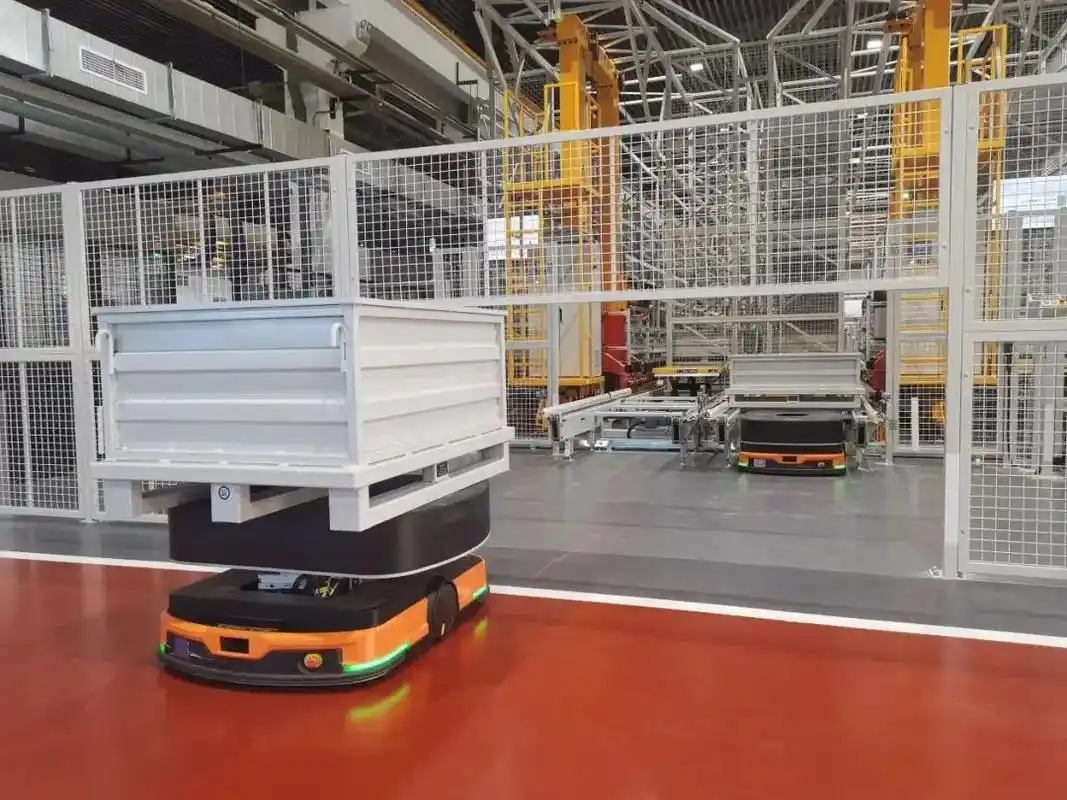
▲ Automated material handling system in a smart factory
Core Components of an Automated Material Handling System
1. Automated Bridge & Gantry Cranes
Automated cranes are the workhorses of heavy material handling. Equipped with automatic positioning, anti-sway control, and safety protection systems, they operate without an operator on board. With positioning accuracy of ±5 mm, these cranes work in tandem with the WMS to automatically lift, move, and stack materials while syncing data in real time. In one automotive welding shop, an automated crane completed over 800 lifts in a single day with zero operational errors.
2. AGV/AMR Integration
Automated Guided Vehicles (AGVs) communicate with automated cranes in real time over a dedicated 5G network, enabling seamless coordination between overhead cranes and floor-level vehicles. Once the crane delivers a load to an AGV handoff station, the system automatically dispatches a transport task to the AGV—no manual intervention required.
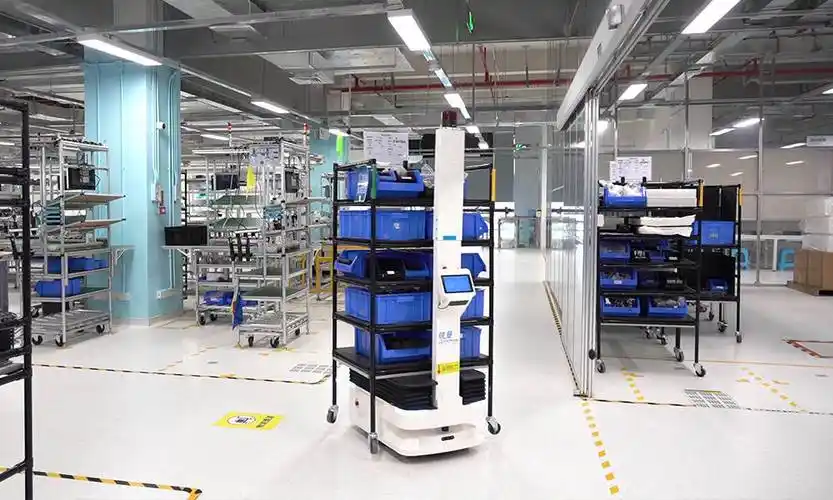
▲ Automated crane and AGV working in sync
3. Warehouse Management System (WMS)
Acting as the "brain" of the material handling operation, the WMS handles inventory management, task scheduling, and path planning. It integrates with MES/ERP systems to automatically trigger material requests based on production schedules. Advanced WMS platforms support AI-driven inventory optimization, dynamic slotting, and First-In, First-Out (FIFO) strategies, boosting inventory turnover by over 40%.
Typical Application Scenarios
1. Automotive Final Assembly Lines
Large components such as body-in-white, engine assemblies, and seats are delivered to the line using automated jib cranes and overhead cranes coordinated with AGVs. Positioning accuracy of ±3 mm is required, with cycle times under 60 seconds per operation.
2. Steel & Metallurgy Raw Material Warehouses
Handling heavy loads like steel coils and plates for inbound, outbound, and re-warehousing operations. Automated gantry cranes equipped with lifting magnets or C-hooks can handle single loads up to 30 t.
3. New Energy Battery Material Workshops
Handling hazardous chemicals like cathode/anode materials and electrolytes requires fully sealed, leak-proof operations. Automated cranes paired with cleanroom-rated lifting spreaders enable zero-contact material transfer throughout the entire process.
System Integration & Return on Investment
Depending on the scale of operations, AMHS investments typically range from RMB 5 million to RMB 50 million, with a typical payback period of 2–4 years. A phased implementation approach is recommended: start with automated cranes, then add AGV systems, and finally integrate the WMS platform—this helps spread out the initial capital outlay.
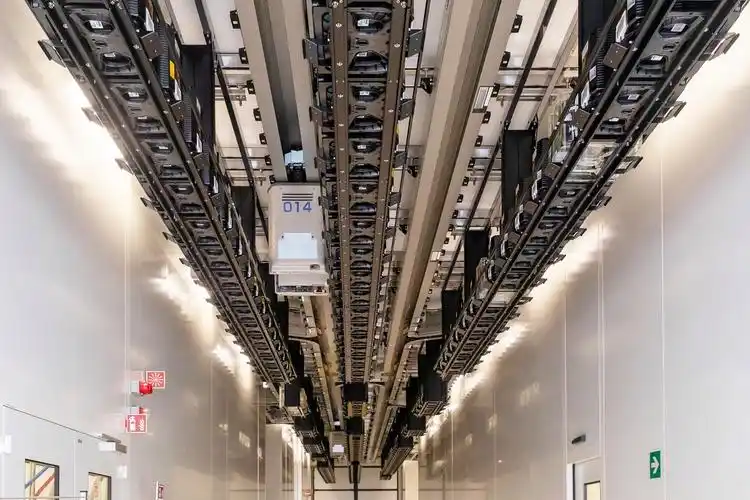
▲ Fully automated material handling system overview in a smart factory
Frequently Asked Questions
Q: What are the core components of an automated material handling system (AMHS)?
A: The core components include: material handling equipment (AGVs, overhead cranes, conveyor lines), storage equipment (AS/RS, shuttle carts), control systems (WMS, WCS, PLC), identification systems (barcode, RFID, vision), and safety protection (laser obstacle detection, safety fencing).
Q: What are the key success factors for implementing an AMHS?
A: Key factors include: synchronized design of material flow and information flow, proper buffer zone planning, standardized equipment interfaces, WMS/WCS integration with MES/ERP, system flexibility to handle production capacity fluctuations, and staff training with change management.
Q: What standards apply to material handling systems?
A: Automated systems follow GB/T 37414 for industrial robot integration, AGVs reference GB/T 20721, and storage systems comply with JB/T 9018 for automated storage and retrieval systems.
