

Crane Automated Control Systems: A Technical Deep Dive
Automated Crane Control System Architecture: A Complete Overview
The automated control system acts as the central nervous system of a smart crane. A typical setup employs a three-tier architecture: the perception layer (sensors & encoders), the control layer (PLC & VFDs), and the execution layer (motors & brakes). These layers communicate in real-time via an industrial Ethernet bus (PROFINET, EtherCAT, or Modbus TCP), with control cycles typically ≤10ms.
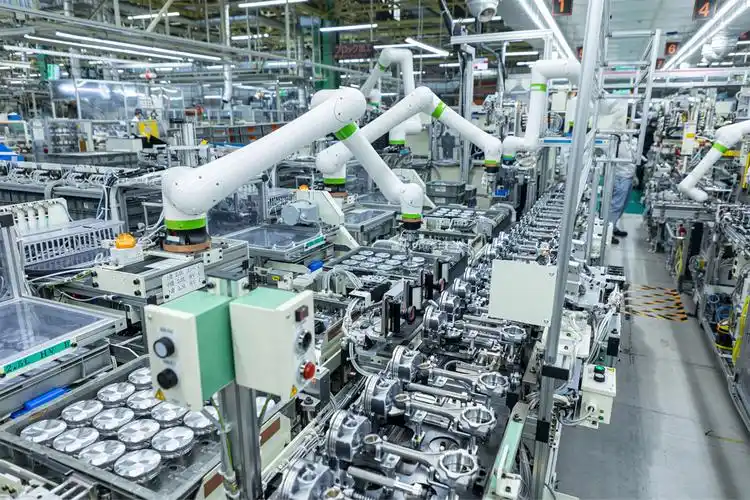
▲ Automated Crane Control System Topology
Core Control Modules: PLC, Drives, and Sensors
1. Main PLC Selection & Configuration
The main PLC for a crane must handle high-speed counting (encoder signals above 10kHz), provide safety redundancy (dual-CPU hot standby), and withstand harsh environments (IP54 Protection rating minimum, operating temperature -20°C to +60°C). Popular choices include the Siemens S7-1500 series, Mitsubishi Q series, or Beckhoff CX series.
2. Inverter Drive System
The Hoisting mechanism requires four-quadrant operation (hoist, lower, accelerate, brake), making a VFD with an active front end (AFE) the recommended choice. For the crane bridge and trolley mechanisms, which have lower dynamic response requirements, a cost-effective Vector VFD is suitable. A multi-drive setup with a common DC bus enables energy sharing—regenerative energy from braking equipment is directly consumed by accelerating drives, improving overall system energy efficiency by 10-15%.
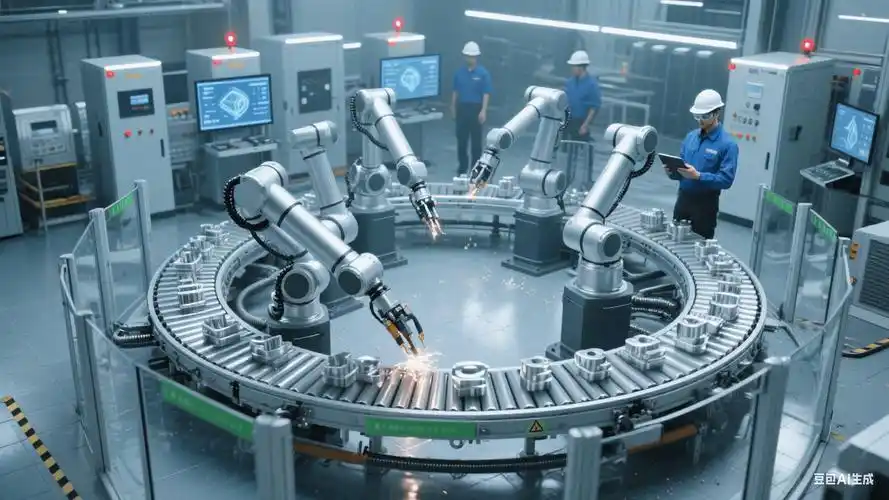
▲ Crane PLC Control System Programming & Commissioning
3. Encoders & Position Detection
Positioning Accuracy directly impacts the precision of automated operations. For Lifting Height and the position of the crane bridge and trolley, Absolute encoders (SSI interface, Resolution ≥13 bits) are used to retain position data even after a power failure. For applications demanding high Positioning Accuracy, a Laser Distance Sensor (accuracy ±2mm) or a Gray-code bus positioning system (accuracy ±5mm) can be added as a redundant positioning method.
4. Safety PLC & Functional Safety
According to ISO 13849, the crane control system's safety level must meet PL d. The safety PLC operates independently from the main PLC, continuously monitoring for over-speed, overload, limit switch over-travel, and brake status. If an unsafe condition is detected, it can cut off the power supply and initiate an emergency stop within 100ms.
Communication Bus Technologies for Crane Control
Modern crane control systems utilize a three-level network architecture:
- Management Level (Ethernet): Communication between the host computer/dispatching system and the PLC, using protocols like OPC UA or Modbus TCP.
- Control Level (Fieldbus): Real-time communication between the PLC, VFDs, and remote I/O, using protocols like PROFINET IRT or EtherCAT.
- Execution Level (Sensor Bus): Signal transmission between encoders, Limit switches, and the PLC.
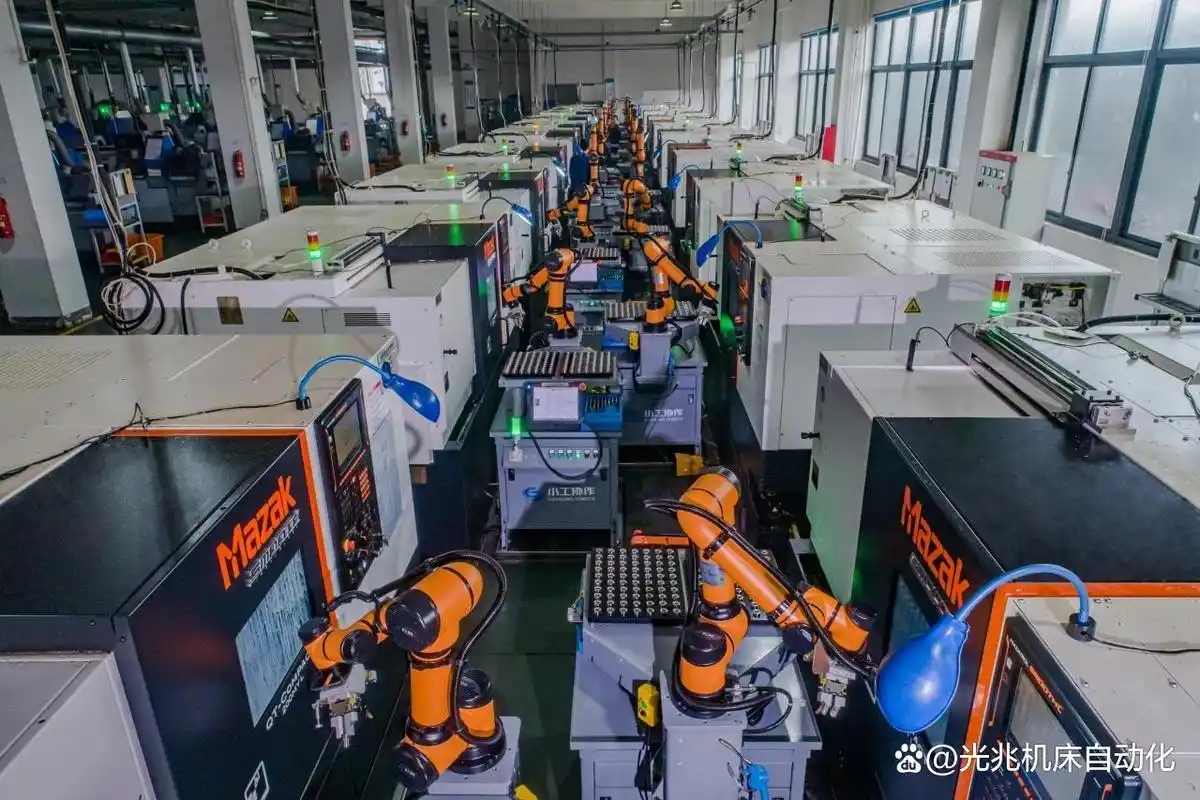
▲ Automated Control System On-site Commissioning & Testing
System Commissioning & Acceptance Testing
- Standalone Testing: Individually test each mechanism's VFD parameters, encoder direction, and Limit switch logic.
- Integrated Testing: Verify communication between the PLC and VFDs, and validate input/output signal mapping.
- Functional Testing: Check speed control across all gears for hoisting, bridge, and trolley, and ensure correct Brake timing.
- Safety Testing: Simulate faults like over-speed, overload, and limit over-travel to verify the safety PLC's response.
- Load Test: Perform a Static load test at 1.25 times the rated load and a Dynamic Load Test at 1.1 times the rated load.
Frequently Asked Questions
Q: What are the different levels in a crane automation control system?
A: It's a four-tier architecture: the device level (VFDs/sensors/actuators), control level (PLC/motion controller), scheduling level (WMS/SCADA), and management level (MES/ERP). The higher the degree of automation, the more critical the integration of the scheduling and management levels becomes.
Q: What is the typical ROI period for a crane automation retrofit?
A: Generally, the payback period for a retrofit investment is 1 to 3 years. Key benefits include a 50%-70% reduction in operators, a 20%-40% increase in operational efficiency, a 30%-50% decrease in fault shutdown time, and enhanced overall safety.
Q: Which standards apply to crane automation retrofits?
A: The control system is designed according to ISO 4301 and IEC 60204-32, safety complies with ISO 12480 and GB/T 28264 Safety Monitoring and Management System, and communication follows OPC UA (IEC 62541).
