

Explosion-Proof Crane Selection by Hazardous Area Class
📋 Key Summary
Selecting an explosion-proof crane is not simply a matter of adding an "explosion-proof" prefix to a model number. The real task is mapping the gas, dust, and temperature conditions of the working environment onto an explosion protection classification system. Explosive gas atmospheres are divided into three zones based on how often hazardous gas is present — continuous, normal, and abnormal. Gases are grouped into three categories by ignition difficulty, and equipment surface temperatures are further divided into six classes based on ignition temperature. Only when all three factors align — which zone the environment falls into, which gas group applies, and which temperature class must not be exceeded — can the explosion protection class be accurately determined and the crane correctly selected.
The technical basis for explosion-proof cranes is a well-structured system of classification standards. JB/T 5899-2015 "Explosion-Proof Crane — Explosion-Proof Technical Requirements" translates key conditions such as explosion protection class, flameproof joint clearance, and surface temperature into specific inspection items. FEM 1.001 "Crane Design Standard" provides the general design baseline at the complete-machine level. The real challenge lies in the fact that the explosion protection class itself is not defined by crane standards — it borrows a universal classification system for electrical equipment in explosive atmospheres. Environment, gas, and temperature intersect across three dimensions to form a selection matrix.
Which Standards Govern Explosion-Proof Crane Selection
An explosion-proof crane is far more than a standard crane fitted with an explosion-proof motor. Its selection must simultaneously satisfy four categories of standards — product, explosion-proof technology, design, and inspection. Miss any one layer, and it will not pass inspection.
At the product level, there are JB/T 5898-2015 "Explosion-Proof Cranes" and JB/T 8908-2013 "Explosion-Proof Bridge Cranes". The former specifies the technical specification and acceptance requirements for complete explosion-proof cranes; the latter details structural requirements for the explosion-proof overhead crane type specifically. Both standards describe outcomes — what the equipment should look like and what indicators it must meet — but neither explains where the explosion protection class originates.
The origin of explosion protection classes lies in the basic standards for electrical equipment in explosive atmospheres. Those standards cross-classify explosive gases by hazard level, ignition difficulty, and ignition temperature into three intersecting dimensions. Every piece of explosion-proof equipment must first be positioned within this coordinate system before any specific design work begins. In conceptual design for European Standard (EN) explosion-proof cranes, Kelude Heavy Industry translates the hierarchical relationships among these standards into a verifiable configuration table, so that every explosion protection class can be traced back to its corresponding classification basis.
How Zone, Gas Group, and Temperature Class Form the Ex Marking
The explosion protection class of a crane is condensed into a string of Ex markings on its nameplate. Decode that string, and more than half of the selection work is done.
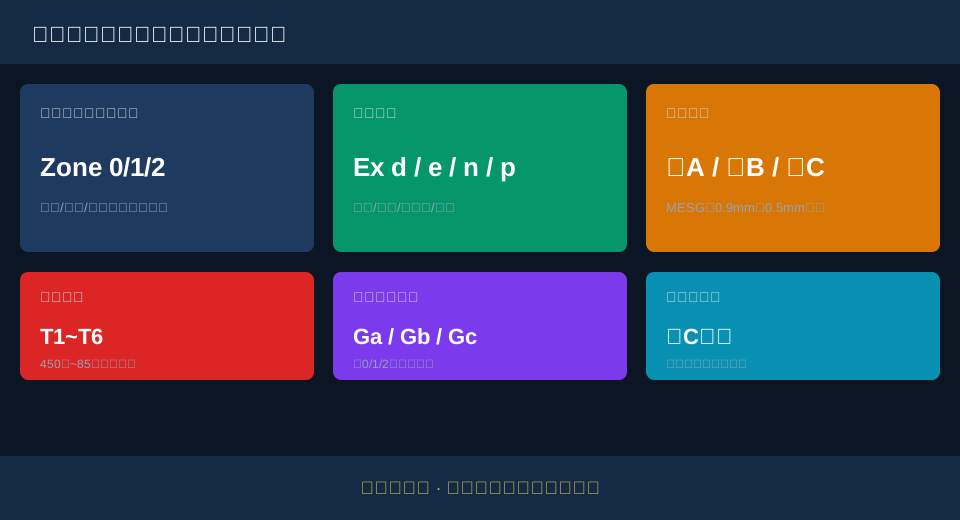
The first dimension is the hazardous area. Explosive gas atmospheres are divided into three zones based on the frequency and duration of gas presence: Zone 0, where gas is present continuously or for long periods; Zone 1, where gas may occur during normal operation; and Zone 2, where gas is unlikely during normal operation and appears only briefly under abnormal conditions. The lower the zone number, the higher the required equipment protection level — corresponding to equipment protection levels Ga, Gb, and Gc respectively.
The second dimension is the gas group. Gases are divided into three major groups based on maximum experimental safe gap (MESG): Group ⅡA, represented by propane, with an MESG greater than 0.9 mm; Group ⅡB, represented by ethylene, with an MESG between 0.5 mm and 0.9 mm; and Group ⅡC, represented by hydrogen and acetylene, with an MESG not exceeding 0.5 mm. Intuition and experience fail on this point — not all flammable gases are equally dangerous. Group ⅡC gases ignite most easily and propagate most violently, demanding the strictest flameproof joint machining requirements for the corresponding equipment.
The third dimension is the temperature class. The maximum surface temperature of electrical equipment must not reach the ignition temperature of the surrounding gas. Accordingly, ignition temperatures are divided from high to low into six classes, T1 through T6: T1 permits 450°C, T2 permits 300°C, T3 permits 200°C, T4 permits 135°C, T5 permits 100°C, and T6 permits 85°C. If the hoisting mechanism is equipped with an explosion-proof electric hoist, its explosion-proof type and temperature rise must also meet the requirements of JB/T 10223-2012 "Explosion-Proof Electric Hoists."
Multiplying these three dimensions yields a complete marking such as "Ex d ⅡB T4 Gb": Flameproof, Group ⅡB gas, T4 temperature class, suitable for Zone 1. When Kelude Heavy Industry's technical team receives an inquiry about an explosion-proof operating condition, the first step is always to ask the customer to specify the chemical name and physical state of the medium — because without those two pieces of information, no explosion protection class can be determined.
| Explosion-proofParameter | gradingGear Position | selection key points |
|---|---|---|
| Hazardous area | 0Zone / 1Zone / 2Zone | Hazard Level Determines Equipment ProtectionLevelGa/Gb/Gc |
| Gas Group | ⅡA / ⅡB / ⅡC | ⅡCMost Easily Ignited,flameproof jointrequirementsMost Stringent |
| Temperature Class | T1~T6 | Equipment SurfacetemperatureMust Be Below Gas Ignitiontemperature |
| explosion-proof typeType | d / e / n / p | By Equipment Type andinspection and repairFrequency Selection |
| Medium Type | Gas / Dust | Gas and Dust Belong to Two Separate Systemsstandard system |
| environmentTemperature and Humidity | Normal Temperature / High Temperature / High Humidity | Effectexplosion-proof typeType Selection andtemperature risesafety margin |
Explosion-Proof Crane Inspection: Flameproof Joint Gaps and Surface Temperature Are the Two Red Lines
The Explosion Protection Class on the nameplate is only half of the selection process — the other half depends on whether the equipment can hold up to its promises during inspection. For explosion-proof crane inspection, flameproof joint gaps and surface temperature are two red lines that cannot be overlooked.
The principle behind flameproof equipment is not to seal the enclosure airtight, but to allow internal explosions while cooling flames through the narrow gaps of flameproof joints to a point where they can no longer ignite external gases. This makes flameproof joint gaps a hard requirement: the higher the Gas Group, the smaller the allowable gap. Equipment rated for Group IIC demands far greater machining precision and maintenance effort on flameproof joints than Group IIA. During inspection, a feeler gauge is used to take multiple measurements along the flameproof joint — any single point out of tolerance results in immediate failure.
Surface temperature, on the other hand, is governed by the Temperature Class: a device marked T4 must not exceed 135°C at its hottest surface point under both normal operating conditions and locked-rotor conditions. Explosion-proof cranes in chemical and petrochemical environments often run in Continuous operation, so heat sources such as Brake friction, Motor windings, and resistors must all be factored into temperature rise calculations.
TSG 51-2023 Crane Safety Technical Supervision Regulation brings explosion-proof requirements for cranes into the mandatory framework of supervision inspection and periodic inspection. Explosion Proof Marking verification, flameproof enclosure integrity, and grounding continuity are all mandatory check items. At Kelude Heavy Industry, every explosion-proof crane undergoes item-by-item measurement of flameproof joint gaps and surface temperatures according to the corresponding Gas Group and Temperature Class before delivery, with full documentation — turning inspection from a one-time verdict into traceable evidence.
| inspection items | DeterminationIndicator | InspectionTiming | Consequences of Non-Conformance |
|---|---|---|---|
| flameproof jointGap | Not Exceeding the Allowable Value for the Corresponding Group | Factory Acceptance Test+periodic inspection | Internal Explosion Leakage Ignitionenvironment |
| Maximum Surfacetemperature | Not ExceedingTemperature ClassNot Exceeding the Allowable Value for the Corresponding Group | Type Test+Factory Acceptance Test | Hot Surface Ignition of Explosive Gas |
| Explosion Proof MarkingVerification | ExMarking Consistent with Certificate | On DeliveryAcceptance | GradeMismatch Creates Hidden Hazards |
| flameproof enclosureIntegrity | NoneCrackNoneDeformation | Each Timeperiodic inspection | Flameproof PerformanceFailure |
| GroundingContinuity | Grounding Resistancemeet the standard | periodic inspection | Static Accumulation Generates Sparks |
| Braketemperature rise | Not Exceeding Allowabletemperature rise | Type Test | Friction Heat Becomes Ignition Source |
| Wire RopeBy Equipment Type andHook | Spark Prevention Measures in Place | Factory Acceptance Test | MachineryImpact Spark Ignition |
| electrical wiringExplosion-proof | Junction boxSealingIntact | periodic inspection | Electrical Spark Leakage |
Explosion-Proof Crane Selection: Three Common Misconceptions
Getting explosion-proof crane selection wrong usually isn't a matter of technical difficulty — it's a few deeply ingrained misconceptions steering you off course. Sort out the three myths below and you'll avoid a lot of costly detours.
Myth 1: Explosion-proof means sealed. The core of a flameproof design is not sealing at all — it's allowing internal explosions to occur and then extinguishing them through the gap of the flameproof joint. Some people, trying to play it safe, weld the enclosure shut and pack it with sealant, which actually destroys the gap design of the flameproof joint. When a real explosion happens, there's nowhere for the pressure to escape and the enclosure ruptures. The number of fasteners on a flameproof enclosure, the tightening torque, and the fit of the flameproof joint are all strictly specified — even one extra dab of sealant can backfire.
Myth 2: Just check the explosion protection class, ignore the medium. The explosion protection class must match the actual medium in the operating environment. The same "ⅡB T4" rated equipment becomes completely useless if moved to a hydrogen-containing atmosphere. Once the ambient medium changes, the explosion protection class must be re-evaluated — it's not as simple as swapping a nameplate.
Myth 3: Explosion protection only applies to electrical equipment. For a crane, explosion protection is whole-machine. Mechanical impact between wire rope and pulley, or between hook and lifting spreader, can generate sparks. Brake friction surfaces generate heat. These mechanical factors must also be handled per explosion-proof requirements. Standards describe ideal conditions, but workshops are never ideal. Skip mechanical explosion protection and even the most rigorous electrical design is wasted. Kelude Heavy Industry's recommendation: treat the explosion protection class as a commitment backed by a chain of evidence, not a suffix tacked onto a model number.
📖 Related reading: How switching the main girder to high-strength steel changes crane dead weight and cost | Eliminating the gearbox: what makes a permanent magnet direct drive motor superior for cranes
FAQ
Q: For an explosion-proof crane, should I choose Gas Group ⅡB or ⅡC, and how much does the flameproof joint gap differ?
A: It depends on the ignition characteristics of the gas in the operating environment. Group ⅡB, represented by ethylene, has a maximum experimental safe gap between 0.5 mm and 0.9 mm. Group ⅡC, represented by hydrogen and acetylene, has a gap no greater than 0.5 mm, with stricter machining and maintenance requirements for the flameproof joint. When the gas group is uncertain, specify one grade higher (ⅡC) — cost increases but coverage scope is wider. Subject to the actual contract.
Q: What do the explosion-proof technical requirements specify for flameproof joints and surface temperature?
A: JB/T 5899-2015 "Explosion-Proof Crane — Explosion-Proof Technical Requirements" specifies that flameproof joint gaps are controlled by gas group, with ⅡC being the strictest. Equipment surface temperature must not exceed the allowable value for the selected temperature class — for example, T4 equipment must not exceed 135°C. These items are covered in both the Type Test and the Factory Acceptance Test; non-conforming units must not be delivered.
Q: How much more does an explosion-proof crane cost compared to a standard crane? What's the price including explosion-proof certification?
A: The cost premium for an explosion-proof crane comes mainly from the explosion-proof motor, flameproof enclosure, spark-proof treatment, and certification testing — a noticeable increase over a standard model of the same capacity. The specific quotation depends on capacity, explosion protection class, and certification scope, so no uniform figure can be given. Subject to the actual contract. Kelude Heavy Industry can first issue an explosion-proof configuration list based on your project environment, then confirm pricing.
Q: How do I verify whether a crane's explosion protection class meets the standard?
A: First, check that the Explosion Proof Marking on the nameplate matches the explosion-proof certificate — the marking should fully state the explosion-proof type, Gas Group, and Temperature Class. Then inspect the flameproof enclosure for cracks and confirm all fasteners are present. Finally, use a feeler gauge to spot-check whether the flameproof joint gap is out of tolerance. All three items must be rechecked during delivery acceptance and periodic inspection — none can be skipped.
