

VFD vs Vector Control for Cranes
In crane automation retrofit projects, upgrading the Electrical Control System is a critical step. Many engineers struggle to distinguish between Variable Frequency Drive (VFD) technology and Vector Control during equipment selection. Improper control strategy selection for a Hoisting mechanism on a Double-Girder Bridge Crane can lead to starting currents exceeding 2.5 times the rated capacity or even cause Load slipping incidents. This article analyzes the Underlying Logic of these two technologies to help engineers make informed decisions, ensuring smooth operation.
When automating crane electrical systems, compliance with international standards is mandatory. According to FEM 1.001, hoisting mechanisms must meet specific dynamic response requirements. Additionally, the TSG 51-2023 Crane Safety Technical Supervision Regulation mandates that safety protection control circuits ensure high reliability, providing the legal basis for selecting variable frequency control.
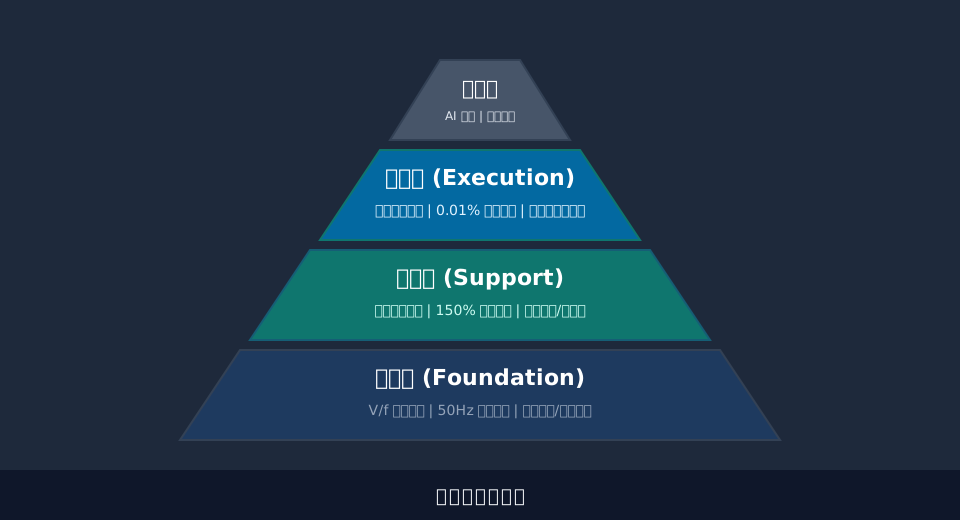
This guide covers basic principles, performance comparison, engineering case studies, selection strategies, and common misconceptions to provide a comprehensive technical reference for VFD and vector control in crane automation.
VFD Fundamentals vs. Core Differences in Vector Control
Before discussing electrical retrofits, it is essential to understand Variable Frequency Speed Control. Traditional V/f control is an Open-Loop Control method that maintains constant magnetic flux by keeping the voltage-to-frequency ratio steady. While stable at 50Hz, this method suffers from reduced output torque at low frequencies due to stator resistance voltage drops.
In contrast, Vector Control uses complex mathematical models and coordinate transformation to decompose AC motor current into excitation current (flux) and torque current components. This decoupling allows AC motors to achieve DC motor-like performance. In automation upgrades, vector control typically delivers 150% rated torque at 0.5Hz, a feat traditional V/f control cannot match.
"Industry data shows that below 30% rated frequency, vector control keeps slip within 3%, whereas V/f control fluctuates above 8%, directly affecting stability under heavy load."
⚠️ Note
Avoid excessive low-frequency voltage compensation in V/f retrofits. Over-compensation causes magnetic saturation, spiking excitation current and triggering Overcurrent Protection.
Dynamic Response & Precision in Hoisting Mechanism Retrofits
The Hoisting mechanism handles potential loads, requiring precise zero-speed holding and low-speed torque. When lowering a suspended load for precise positioning, the system must switch rapidly from motoring to braking.
Vector control excels here, achieving 0.01% speed accuracy via closed-loop feedback, compared to ~1% for open-loop V/f. It enables Micro-motion at 0.1m/min, ideal for precision die matching or large equipment alignment.
"A Steel Mill's 32-ton Ladle Crane retrofit reduced positioning deviation from ±50mm to ±5mm and cut cycle time by 12 seconds using closed-loop vector control."
💡 Tip
Ensure the Frequency Inverter has Brake logic. The motor must generate sufficient holding torque before releasing the mechanical Brake to prevent Load slipping.
Engineering Case Study: Long Travel Parameter Configuration
Long Travel automation focuses on smooth acceleration/deceleration and accurate stopping. High inertia requires careful parameter configuration to avoid mechanical shock or swinging.
Consider a Crane Travel Mechanism with a rated operating speed of 60m/min (1m/s). To maintain anti-collision safety distance, the system must stop smoothly before limit switches. With a target deceleration of 0.5m/s², the braking distance s=v²/(2a) calculates to 1m. Deceleration must begin at least 1m from the rail end.
"Optimizing S-curve parameters reduced peak mechanical shock from 1.2m/s² to 0.4m/s², eliminating wheel slip and extending rail wear cycles by 2x."
⚠️ Note
Avoid resonance frequencies in bridge drive VFD settings. Use spectrum analysis to set jump frequency bands (e.g., 25Hz–35Hz) to prevent Main Girder vibration.
Selection Strategy and Cost Control for Vector Control VFDs in Automation Upgrades
Once technical differences are established, the focus shifts to selection strategy and cost control. Vector control VFDs command a higher hardware cost and software licensing fee than standard VFDs due to their high-performance microprocessors and complex algorithmic models. In an automation upgrade project, precise selection not only meets process requirements but also effectively manages the overall budget.
For hoisting and trolley mechanisms, we recommend VFDs with closed-loop vector control paired with an Incremental encoder (1024 pulses or higher). For the Crane Travel Mechanism, if Positioning Accuracy requirements are low, sensorless Vector Control is a viable option to reduce encoder costs. Additionally, the VFD's rated current should be at least 1.2 times the motor's rated current to withstand current surges during heavy load condition starts. As Kelude Heavy Industry’s technical team emphasizes, electrical selection must align with mechanical integrity; if weld crack detection reveals structural defects, mechanical repairs must precede any electrical upgrade.
"In an automation retrofit of 10 portal cranes (40 tons each) at a Port Terminal, precise selection and the integration of Energy Feedback units reduced total system power consumption by 18%, shortening the return on investment period to approximately 16 months."
💡 Tip
In environments with high dust or humidity, encoder signals are prone to interference. We recommend using a twisted pair cable with a shielding layer, ensuring the shield is single-point grounded at the VFD end to guarantee feedback signal stability.
Common Fault Troubleshooting and Maintenance Guide for Crane Electrical Control Systems
After an automation retrofit, establishing a robust maintenance system is fundamental to ensuring long-term stable operation. As precision electronic equipment, a VFD's service life is closely tied to Ambient Temperature, dust concentration, and grid quality. Routine inspection and periodic maintenance significantly reduce failure rates and extend equipment uptime.
Key maintenance areas include the cooling system and DC bus capacitors. The Cooling Fan typically has a design life of 30,000 hours; under continuous heavy load conditions, preventive replacement every 3 years is advised. Electrolytic capacitors on the DC bus require capacitance and leakage current testing every 5 years. Furthermore, as AI anti-sway algorithms become standard in high-end cranes, systems demand faster response speed from the VFD's current loop, making regular parameter verification and firmware upgrades critical.
"Statistics show that workshops implementing standardized quarterly routine inspections saw a 75% reduction in fault shutdown time caused by overheating or dust, improving overall equipment effectiveness (OEE) by 11 percentage points."
⚠️ Warning
When cleaning dust from inside a VFD, never use high-pressure compressed air directly, as this can damage the IGBT module or force dust into deeper circuit board gaps. Use a dry soft brush combined with a vacuum cleaner instead.
To clearly illustrate the technical differences between these two control technologies, we provide the following detailed comparison tables to help technicians quickly identify requirements in a retrofit project.
The table below provides an objective data comparison of core performance indicators between basic VFD control and Vector Control, serving as a selection basis for electrical engineers.
📊 Parameter Comparison Table: Basic VFD vs. Vector Control Performance
| performance indicators | ConventionalV/fOpen-Loop Control | NoneSensorVector Control | closed-loop vector control |
|---|---|---|---|
| Low-speed torque capability | 50%rated torque (3Hz) | 150%rated torque (0.5Hz) | 200%rated torque (0Hz) |
| speed control accuracy | ±1.0% | ±0.2% | ±0.01% |
| TorqueResponse time | >100ms | <10ms | <5ms |
| EncoderRequirement | Not required | Not required | Must be equipped with |
| Applicablecranemechanism | Crane Bridge、Trolley(Light load) | Crane Bridge、Trolley(Heavy load) | Hoisting mechanism、PrecisionTrolley |
With performance differences clarified, the next step is translating theoretical data into practical engineering applications. The following table provides selection recommendations for control strategies and guidance on key parameter configuration during automation retrofit, tailored to the operating characteristics of various crane mechanisms.
📊 Selection Recommendations for Automation Retrofit Control Strategies by Crane Mechanism
| mechanismName | Recommendedcontrol mode | key parametersSettingrecommendation | RetrofitChallenges and Countermeasures |
|---|---|---|---|
| Main hoist | closed-loop vector control | Adddeceleration time8-12s,Zero speedServoIncrease gain | Load slippingRisk;Countermeasure:OptimizationBrakeEnable logic |
| auxiliary hoist | NoneSensorVector | Torque limit set to120%,anti-slipHook | Low-speed jitter;Countermeasure:PerformMotorParameterAuto-tuning |
| Trolley Travel Mechanism | NoneSensorVector | Scurve acceleration and deceleration,SkipFrequencyAvoid20-30Hz | suspended loadSway;Countermeasure:Introduceanti-sway control algorithm |
| Crane Travel Mechanism | V/fOr sensorless vector | Multi-speedcontrol system,Low-speed sectionVoltageIncrease compensation appropriately | MultipleMotorSynchronization;Countermeasure:Adoptmaster-slave controlOr master controllerSynchronization |
FAQ
Q: Can standard V/f control frequency inverters be used directly for crane hoisting mechanisms?
A: Not recommended. Hoisting mechanisms are potential loads requiring zero-speed holding and high torque at low speeds. Standard V/f control cannot establish sufficient magnetic flux at zero speed, leading to a risk of load slipping. To ensure lifting safety, you must use a frequency inverter with closed-loop vector control or at least sensorless vector control, paired with a mechanical brake.
Q: Do vector control VFDs require encoders? How should power be selected?
A: Closed-loop vector control requires an encoder, typically an Incremental encoder with over 1024 pulses. For power selection, the rated current of the hoisting mechanism's frequency inverter should be greater than 1.2 times the motor's rated current to handle current surges during heavy-load starts. Specific capacity must be calculated based on actual load drawings.
Q: How much does the retrofit cost increase when upgrading traditional control to Vector Control?
A: Regarding hardware cost, Vector VFD units are typically about 30% more expensive than standard VFDs. Adding encoders and feedback cables increases the Electrical Cabinet cost by approximately $299 to $598 per unit. However, considering reduced maintenance cost and fault shutdown time, the return on investment period is usually within 18 months. Specific amounts are subject to the actual contract.
Q: What are the common causes of overcurrent faults after automation retrofit?
A: Overcurrent faults are often caused by improper Parameter settings or mechanical jamming. First, check if the motor parameter self-learning is complete. Second, confirm if the deceleration time or acceleration time is set too short, causing sudden current changes. If there is Crane Rail deformation or Wheel Flange Wear increasing running resistance, you must simultaneously troubleshoot the mechanical structure.
In summary, VFDs and Vector Control each have their own Application Scenarios in crane automation retrofit. Correctly understanding their technical boundaries is the prerequisite for ensuring efficient and safe operation. Kelude Heavy Industry has accumulated rich experience in customizing electrical systems for heavy-load cranes, providing full-process technical support from conceptual design to implementation, helping your production line achieve intelligent upgrades.
