

Crane PLC Brand Selection & I/O Calculation
In an automation retrofit project involving the annual production of 500 lifting appliances, upgrading the control system is critical to overall operational efficiency and safety. A standard bridge crane retrofit typically involves more than 120 control nodes. Accurately calculating I/O points and selecting the appropriate PLC brand are key challenges for engineers. This article explores the technical details and selection strategies involved, providing practical engineering guidance.
The design and retrofit of electrical control systems for cranes must strictly adhere to national technical specifications. According to FEM 1.001 Crane Design Standard, control circuits must possess high reliability and anti-interference capability to ensure stable operation under complex working conditions. Additionally, TSG 51-2023 Crane Safety Technical Supervision Regulation sets clear standards for electrical protection, limit switches, and emergency stop functions. These regulations form the foundation for PLC selection and I/O allocation.
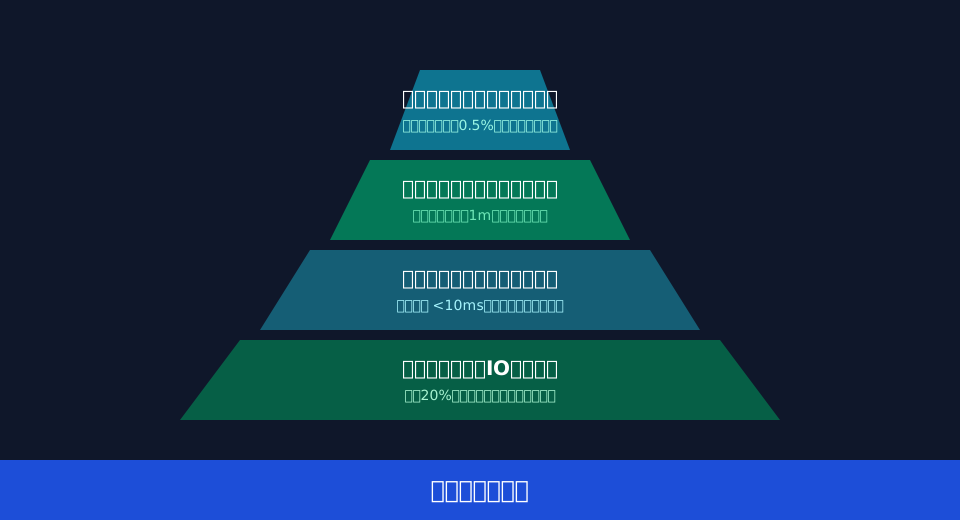
The following section focuses on core considerations for PLC brand selection, detailing precise methods for calculating I/O points, evaluating retrofit costs for different solutions, and sharing diagnostic strategies for common faults and practical tips for heavy-duty environments. This guide helps you master the key technologies of crane automation retrofits.
Core Considerations for PLC Brand Selection in Crane Automation Retrofits
In crane automation retrofits, the PLC serves as the "brain" of the control system. Its brand selection directly impacts equipment stability and long-term maintenance convenience. Leading brands in the market include Siemens, Mitsubishi, and Inovance, each with distinct performance characteristics and application scenarios. For instance, in grab crane applications requiring frequent start-stop cycles, the PLC's scan cycle and response time are critical. Systems typically require a response time of less than 10 ms to ensure smooth operation.
Environmental adaptability is another vital factor in selection. Crane operating environments often involve dust, vibration, and temperature fluctuations; therefore, PLCs and their expansion modules usually require a Protection Rating (IP) of at least IP54. Furthermore, the availability of communication interfaces affects system scalability. PLCs supporting industrial Ethernet protocols such as PROFINET or EtherCAT facilitate seamless data exchange with frequency inverters and sensors, enabling complex interlocking control.
"IndustryActual data shows that under identical conditions, using a PLC with hardware interrupt capabilities can improve lifting spreader positioning accuracy to within ±5 mm, effectively meeting the hoisting requirements of precision assembly workshops."
⚠️ Note
When selecting PLCs for high-temperature environments such as metallurgical cranes, verify that the operating temperature range covers extreme site temperatures. If necessary, install pressurized ventilation electric control cabinets to prevent component failure due to overheating.
For factory buildings involving multi-crane collaborative operation, the control system must integrate anti-collision logic. By processing data from laser distance sensors in real-time, the PLC can effectively calculate and control the anti-collision safety distance, preventing physical interference between equipment. Kelude Heavy Industry has accumulated extensive experience in debugging underlying code for various PLC brands through years of retrofit practice, allowing us to match the most suitable control solutions to specific customer process requirements.
Precise Calculation and Redundancy Configuration of I/O Points for Bridge Cranes
Calculating I/O points is the foundation of PLC hardware selection, directly impacting control cabinet costs and wiring workload. Precise calculation requires not only counting existing control nodes but also fully considering future expansion needs. Typically, I/O points are categorized into Digital Input (DI), Digital Output (DO), Analog Input (AI), and Analog Output (AO), each requiring independent accounting.
Consider a standard 50/10t double-girder bridge crane as an example for detailed I/O point breakdown. The Main hoist mechanism includes limit switches, load cells, and brakes, requiring approximately 15 DI and 10 DO points. The Trolley Travel Mechanism includes travel switches and frequency inverter feedback, requiring approximately 10 DI and 8 DO points. The Crane Travel Mechanism and control station buttons/indicator lights require approximately 25 DI and 15 DO points. Additionally, if analog signals from frequency inverters or weighing sensors need to be integrated, 4 AI and 2 AO points must be configured.
After determining the base point count, kinematic examples are often used to verify the real-time performance of the control system. For example, with a Long Travel Speed of 60 m/min (1 m/s) and a deceleration of 0.5 m/s², the theoretical braking distance is s = v²/(2a) = 1²/(2×0.5) = 1 m. If the PLC scan cycle is 10 ms, the crane moves 0.01 m during this period. This minor positional deviation is well within the system's allowable error margin, proving that the current scan cycle and I/O refresh rate meet control requirements.
"Project statistics from the past three years indicate that 35% of automation retrofit projects required additional expansion modules later due to insufficient initial I/O point reservation. Proper redundant design effectively avoids secondary construction."
💡 Tip
When calculating total I/O points, it is recommended to reserve a uniform 20% redundancy buffer on top of all base statistics. For example, in the case above totaling 79 points, adding 20% results in 94.8 points. Round up to select a module configuration of around 100 points to accommodate future process changes.
Retrofit Cost and Budget Assessment for PLC Control Systems Across Different Capacities
Evaluating automation retrofit costs is a crucial step in project initiation. The cost of a PLC control system includes not only the CPU host but also various I/O modules, communication modules, switching power supplies, and custom control cabinet fabrication. Retrofit costs vary significantly depending on the crane's capacity and complexity. Generally, larger capacities and more mechanisms result in higher I/O point counts and logical complexity, increasing the overall budget.
Taking the PLC retrofit of a single standard-capacity bridge crane as an example, hardware costs typically account for about 60% of the total budget. A basic configuration featuring a medium-sized CPU, 30 I/O modules, and communication components has a hardware procurement cost of approximately $5,200 USD (based on ~¥35,000 CNY). Specific module unit prices are around $160 USD (~¥1,200 CNY) per piece; final amounts are subject to the actual contract. Engineering costs, including software programming, cabinet assembly, on-site commissioning, and After-Sales Service, typically account for the remaining 40% of the budget.
While pursuing cost-effectiveness, control systems should also incorporate advanced algorithms to enhance operational quality. For instance, integrating data from weld crack detection sensors via the PLC enables online monitoring of equipment health status. Combining this with anti-sway algorithm technology significantly reduces lifting spreader sway time, improving hoisting efficiency. Developing these additional features increases software costs but substantially enhances the overall value of the equipment.
"Project parameter comparisons show that PLC control cabinets with modular design reduce later maintenance costs by approximately 40% compared to traditional relay control cabinets. The payback period is typically between 1.5 and 2 years."
⚠️ Note
When establishing a cost budget, avoid blindly pursuing low-cost products. In environments with high electromagnetic interference, inferior PLCs are prone to system crashes or erratic behavior, resulting in downtime costs that far exceed the initial purchase price savings. Kelude Heavy Industry recommends incorporating life cycle cost into your evaluation process.
After clarifying the technical specifications and cost structure of various brands, we must further evaluate the specific technical differences among mainstream PLC brands in crane control systems. The following data is sourced from laboratory testing and field application feedback.
📊 Comparison of Technical Specifications for Mainstream PLC Brands in Crane Control
| Brand Series | Typical Scan Cycle | Expansion ModuleUpper Limit | seismic resistanceDynamic Performance | ApplicablecraneType |
|---|---|---|---|---|
| Siemens S7-1200 | ≤10ms | 8Unit(s) | 5g (10-57Hz) | Small to Medium-sizedoverhead and gantry crane |
| Mitsubishi FX5U | ≤3.2ms | 16Unit(s) | 10g (10-57Hz) | High-frequency OperationGrab Crane / Clamshell Crane |
| Inovance AM600 | ≤5ms | 32Unit(s) | 15g (10-57Hz) | large tonnageMetallurgical Crane |
Common Fault Diagnosis and Routine Maintenance Strategies for Crane PLC Control Systems
While automation retrofits significantly enhance the operating efficiency of cranes, they also impose higher demands on routine maintenance. Faults in a PLC Control System are generally categorized into hardware failures and software logic errors. Hardware issues typically manifest as abnormal Indicator lights on IO modules, communication interruptions, or Power Supply fluctuations. Conversely, software logic faults may stem from program infinite loops, data overflows, or sensor signal interference, leading to equipment malfunctions or unexpected shutdowns.
Establishing a scientific maintenance strategy is an effective means to reduce the failure rate. It is recommended to set the periodic maintenance cycle for the PLC Control Cabinet at six months. This process should include cleaning internal dust, tightening Terminal Blocks, inspecting the operating status of Cooling Fans, and backing up the PLC program. Through regular maintenance, the comprehensive fault rate of the system can be reduced to below 0.5%. Furthermore, by utilizing the diagnostic buffer area built into the PLC, engineers can achieve quick location of Fault codes, significantly shortening troubleshooting time.
A field measurement case from a major Port indicates that after introducing online diagnosis functions for the PLC control system, the Mean Time To Repair (MTTR) for electrical faults decreased from 4 hours to 1.5 hours, increasing equipment availability to 98.5%.
⚠️ Note
When performing online modifications to the PLC program or replacing hardware, you must strictly implement lockout/tagout procedures. Never plug or unplug IO modules while the equipment is in operation to avoid surge currents that could damage the CPU motherboard.
To more intuitively demonstrate the practical benefits brought by automation retrofits, the following table summarizes key operating performance data before and after retrofitting across multiple projects, providing a reference basis for evaluating the effectiveness of subsequent projects.
📊 Comparison of Operating Performance Data Before and After Crane PLC Automation Retrofit
| performance indicators | Traditionalrelay control | PLCautomationcontrol system | Performance EnhancementWorking radius |
|---|---|---|---|
| Lifting spreaderPositioning Accuracy | ±50mm | ±10mm | Lift / Raise80% |
| Single Cycle Time | 120Seconds (s) | 95Seconds (s) | efficiency improvement20.8% |
| Annual Averageelectrical faultTimes / Cycles | 24Time(s) / Cycle(s) | 4Time(s) / Cycle(s) | failure rateLowering83.3% |
| energy consumptionMonitoringcoverageRate | 0% | 100% | Achieve ComprehensiveDigitalization |
PLC Selection Pitfalls and Practical Guide for Heavy-Duty Crane Automation Retrofits
The automation retrofit of heavy-duty cranes (such as Metallurgical Foundry Cranes with capacities exceeding 120 tons) presents significantly greater challenges than those for General bridge cranes. These machines operate under high loads, demanding duty classifications, and harsh environments, imposing strict requirements on the PLC Control System's anti-interference capability, processing speed, and redundant design. During the selection process, engineers often fall into common traps that lead to frequent unplanned downtime or failure to meet process requirements after implementation.
A prevalent pitfall is underestimating the CPU's computational load. In heavy-duty Hanging mechanisms, the PLC must process Analog Input data from Load Cell / Weighing Sensors in real-time and execute complex PID closed loop control algorithms. If the selected CPU lacks sufficient processing power, scan cycles extend, delaying the Response time of the Brake. Field experience indicates that for such applications, CPU load should be kept below 85%, with a temperature rise not exceeding 40K, ensuring long-term stable operation even in High-Temperature Environments.
Another critical oversight is the lack of redundancy. Loss of control in heavy-duty cranes can have catastrophic consequences. Therefore, dual-PLC hot standby redundancy or a dual-control architecture combining Safety Relays with PLCs should be adopted in key safety circuits. When the master PLC fails, the backup system must switch seamlessly within 50ms to ensure safe braking. Additionally, the communication network should utilize a ring topology to prevent single-point cable failures from paralyzing the entire system.
"Authoritative industry reports indicate that in heavy-duty crane retrofit projects, equipment utilizing dual-machine hot standby redundancy architectures experiences approximately 75% less unplanned downtime compared to single-machine architectures, significantly enhancing production line continuity."
💡 Tip
When performing heavy-duty crane retrofits, never simply copy-paste control programs from standard cranes. You must re-optimize the PLC's acceleration/deceleration logic and anti-sway algorithm based on actual load characteristics and process curves. Joint commissioning with the Kelude technical team is recommended when necessary.
Frequently Asked Questions
Q: After the crane PLC retrofit, can the original relay control cabinet still be used?
A: Partially. The main circuit Contactors, Circuit Breakers, and Power Cables usually do not need replacement. You only need to dismantle the old relay control wiring and reconnect it to the PLC's IO modules. However, it is recommended to clean the interior of the aging Control Cabinet and perform Tightening of terminals to ensure overall electrical safety.
Q: How do you determine the ratio between analog and digital modules when calculating IO points?
A: This depends on the level of automation. Standard Bridge Crane / Overhead Cranes rely primarily on digital signals, with analog signals used mainly for weighing and VFD feedback, resulting in a ratio of roughly 10:1. For cranes requiring precise positioning or integrated anti-sway control, the proportion of analog inputs/outputs increases significantly, potentially reaching 5:1 or higher.
Q: Is there a significant difference in retrofit costs between imported and domestic PLC brands?
A: Yes, there are differences. Imported brands typically carry a 30% to 50% higher procurement cost for hardware and longer delivery times for spare parts. However, domestic brands have significantly improved in performance and stability in recent years. For routine crane retrofits outside of extreme operating conditions, using domestic brands helps control the overall project budget. Specific amounts are subject to the actual contract.
Q: How does the PLC control system ensure stable operation in the high-temperature environment of metallurgical cranes?
A: Beyond selecting wide-temperature-range PLC modules, the core measure is optimizing the thermal design of the electric control cabinet. Industrial Air Conditioner units or positive-pressure ventilation systems should be installed to keep internal temperatures below 45°C. Furthermore, PLC cabinets should be installed away from heat sources, and High Temperature Resistant shielded cables should be used to minimize the impact of thermal radiation and electromagnetic interference on the system.
In summary, PLC brand selection and IO point calculation form the foundation of automation retrofits. Proper configuration not only enhances operating efficiency but also ensures operational safety. Kelude Heavy Industry has accumulated extensive practical experience in customizing heavy-duty cranes, providing clients with full-process technical support—from conceptual design to implementation—to ensure every retrofitted unit meets expected performance indicators.
