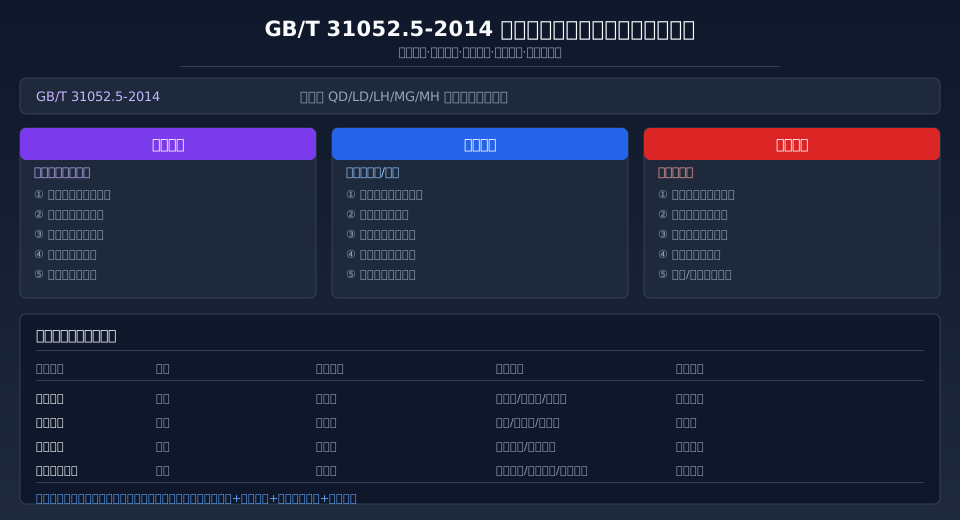

Overhead and Gantry Crane Inspection Cycle per GB/T 31052.5-2014

GB/T 31052.5-2014, "Lifting Appliances — Inspection and Maintenance Procedures — Part 5: Overhead and Gantry Cranes," is the governing standard for routine inspection and maintenance of overhead and gantry cranes. The standard specifies a three-tier inspection system: daily inspection (every shift), periodic inspection (monthly/quarterly), and thorough examination (annual), along with the inspection items, methods, and acceptance criteria for each tier. This article provides a detailed breakdown of the three-tier inspection requirements and operational procedures.

GB/T 31052, "Lifting Appliances — Inspection and Maintenance Procedures," is a multi-part series standard, with each part addressing a specific crane type. Part 5, GB/T 31052.5-2014, focuses exclusively on overhead and gantry cranes and serves as the technical basis for equipment management and maintenance personnel performing routine inspections and upkeep. Kelude Heavy Industry supplies a maintenance manual developed in accordance with this standard upon equipment delivery.

GB/T 31052.5-2014 three-tier inspection system for overhead and gantry cranes


Daily Inspection: Pre-Shift Checklist

Daily inspections are performed by the crane operator before each shift. Results are recorded in the equipment operation log.

Inspection items: ① Brake — check the brake wheel surface for oil contamination and verify uniform clearance between the brake shoe and brake wheel (normal clearance: 0.7–1.0 mm); inspect the brake spring for fatigue or deformation. ② Wire rope — verify proper spooling on the drum and check for wire breaks, crushing, or kinking. ③ Limit switches — confirm reliable operation of the hoisting height limiter and crane travel limit switch. ④ Travel mechanism — listen for abnormal noise or vibration during startup and operation. ⑤ Crane wheels and rail — check for visible signs of rail gnawing (wheel flange rubbing).


Periodic Inspection: Monthly and Quarterly

Periodic inspections are carried out by maintenance personnel, with the frequency determined by the crane's work duty classification. Cranes in work duty levels A3 to A5 are inspected quarterly; levels A6 to A8 are inspected monthly.

Monthly items: Visual inspection of the wheel tread surface and wheel flange for cracks, spalling, or indentation; check the condition of wheel bearing grease; verify smooth rotation of the hook block and the integrity of the hook latch.

Quarterly items: Oil sampling and analysis of the gearbox/reducer lubricating oil (moisture content, viscosity, ferrography); shaft alignment check for couplings (realign if deviation exceeds 0.5 mm); vibration monitoring of motor bearings (schedule replacement if velocity RMS exceeds 7.1 mm/s); insulation resistance testing of electrical equipment (main circuit ≥ 1 MΩ, control circuit ≥ 0.5 MΩ).


Thorough Examination: Annual Inspection

Thorough examinations are conducted at least once a year by an equipment engineer or a qualified third-party inspection agency. An inspection report must be compiled and filed in the equipment technical documentation.

Inspection items: ① Main girder camber measurement — no-load camber must fall within the range of 0.7S/1000 to 1.4S/1000; deviations beyond this range require a structural safety assessment. ② Weld inspection of the metal structure — ultrasonic spot checks must cover no less than 20% of primary load-bearing welds. ③ Wheel alignment re-measurement — horizontal skew and vertical skew must comply with GB/T 10183-2018 requirements. ④ Rail straightness measurement — straightness deviation must not exceed 2 mm per 2 m. ⑤ Load test — a 1.25× static load test and a 1.1× dynamic load test are required every two years.


FAQ: Common Inspection Questions

Q: Can daily and periodic inspections be combined?

A: No. Daily inspections are performed by the operator and focus on whether the crane is safe to operate. Periodic inspections are performed by maintenance personnel and require specialized tools and expertise. The two differ in nature and personnel qualifications and cannot replace each other. However, for low-frequency workstations, maintenance personnel may perform both inspections simultaneously.

Q: What should we do if an abnormality is found but no spare parts are available?

A: Perform a risk assessment first: ① Safety-critical abnormalities (brake failure, wire rope breakage exceeding limits, limit switch malfunction) — shut down immediately and tag the crane with a "Do Not Operate" sign. ② Performance-affecting but non-urgent issues (wheel wear approaching the threshold, gearbox oil seepage) — the crane may continue in service with derating, and repairs must be completed within 15 days. ③ Minor abnormalities with a tendency to worsen — schedule for repair in the next month's maintenance plan and increase monitoring frequency.

Q: How long must inspection and maintenance records be retained?

A: Per TSG 51-2023 Crane Safety Technical Supervision Regulation, daily inspection records must be retained for at least 1 year, periodic inspection records for at least 3 years, and thorough examination reports must be kept in the equipment technical file until the crane is scrapped. Kelude Heavy Industry recommends that customers implement a digitalized inspection record system, with retention periods not less than the equipment's service life (30 years).

Q: Can crane inspection and maintenance be outsourced to a third party?

A: Yes. Daily inspections can be performed by the equipment operator, while periodic inspections and thorough examinations may be delegated to a qualified third-party maintenance provider. When selecting a third-party contractor, verify that they hold the required special equipment maintenance license and that their service technicians possess the corresponding special equipment operator certificates. Kelude offers annual maintenance contracts that include quarterly maintenance and a comprehensive yearly examination.

Three-Tier Inspection System Comparison Table

inspection Level Period executor Main Items Recordsrequirements retention period
Daily InspectionPer ShiftOperatorBrake/Wire Rope/Limit Switchoperation log1Year
MonthlyinspectionPer MonthMaintenance WorkerCrane wheel/Bearing/Hook/Lubricationinspection Table/Form3Year
QuarterlyinspectionPer QuarterMaintenance WorkerGearbox / Reducer Oil/Coupling/insulation/vibrationinspection report3Year
thorough examinationPer YearEngineerCamber/Flaw detection/Crane Rail/Load testComprehensive ReportEquipmentscrapping
Daily Inspection
Before each shift: brake, wire rope, limit switch
Monthly Inspection
Wheel tread, hook, bearing lubrication
Quarterly Inspection
Gearbox oil, vibration, insulation resistance test
Annual Thorough Examination
Camber, flaw detection, crane rail, load test
Defect Grading
Safety-critical: shut down immediately
Record Retention
Daily: 1 year / Periodic: 3 years / Thorough: until scrapping

Related News

contact

contact us

phone:
+86 13903802779

mail:3915269@qq.com

Working hours: Monday to Friday

Wechat
Wechat
SHARE
TOP