

Explosion-Proof Nuclear Crane Design: Sealing & Safety Interlocks
Special Design Considerations for Nuclear & Explosion-Proof Cranes: Explosion-proof cranes are designed to GB/T 3836-2021, with Ex d e IIB T4 overhead cranes costing 50–300% more than standard units. They require explosion-proof motors, flameproof cabinets, and spark-resistant wheel materials. Nuclear-grade cranes must additionally meet seismic resistance (0.3g), radiation shielding, and Class 1E safety level requirements, with a 30-year design life in compliance with RCC-M and ASME codes.
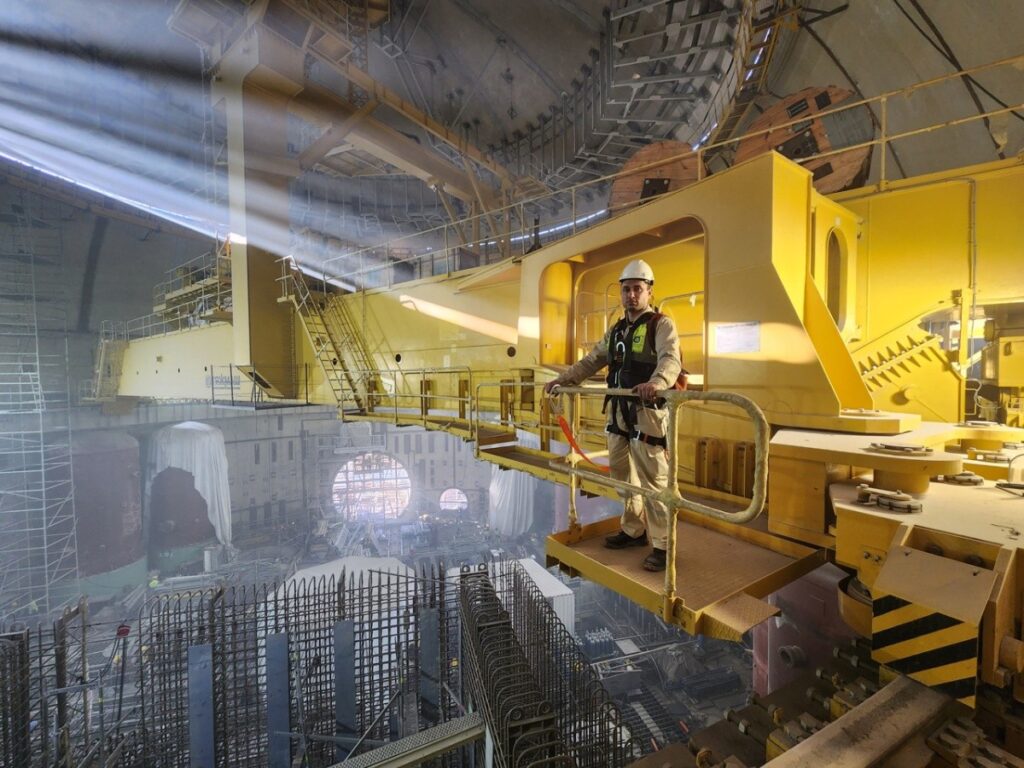
An explosion-proof crane is a specialized lifting equipment designed for hazardous environments where flammable gases, vapors, or combustible dust may be present. Its core design principle is to prevent ignition of the surrounding explosive atmosphere—even when the equipment operates normally or generates arcs, sparks, or high temperatures from potential ignition sources. Nuclear-grade overhead cranes build on this foundation by adding seismic and radiation resistance requirements. This article provides a systematic breakdown of explosion protection classes, explosion-proof configuration options, and the unique design features of nuclear-grade cranes, based on GB/T 3836-2021 and nuclear safety standards.
Explosion Protection Classes & Hazardous Area Classifications
GB/T 3836-2021 classifies explosive atmospheres into gas and dust zones based on the hazardous medium. Gas zones are divided into Zone 0 (continuous presence), Zone 1 (likely to occur during normal operation), and Zone 2 (unlikely to occur during normal operation). Overhead cranes are suitable for Zones 1 and 2. Dust zones are divided into Zones 20, 21, and 22, with cranes applicable to Zones 21 and 22.
The explosion-proof marking Ex d e IIB T4 Gb breaks down as follows: d denotes Flameproof (enclosure withstands an internal explosion without igniting the external atmosphere), e denotes Increased Safety (enhanced safety measures prevent arcs and sparks), IIB indicates the Gas Group (ethylene class, maximum surface temperature ≤135°C), and Gb signifies the equipment protection level (high protection level).
| Explosion Proof Marking Example | Protection Type | Applicable Gas | Temperature Class | Protection Level |
|---|---|---|---|---|
| Ex d IIC T6 Gb | Flameproof | Hydrogen/Acetylene(IIC) | ≤85°C(T6) | High |
| Ex e IIB T4 Gb | Increased Safety | Ethylene(IIB) | ≤135°C(T4) | High |
| Ex d e IIB T4 Gb | Flameproof+Increased Safety Composite | Ethylene(IIB) | ≤135°C(T4) | High |
| Ex tb IIIC T85°C Db | Dust Ignition Proof | Conductive Dust | ≤85°C | High |
| Configuration Item | Explosion-Proof Crane (Ex d e IIB T4) | Standard Crane |
| Electrical components | Explosion-proof enclosures (flameproof/ increased safety), certified per IEC 60079 | Standard industrial enclosures (IP54 or similar) |
| Motors | Explosion-proof motors, T4 temperature class | Standard motors, no temperature class rating |
| Control system | Explosion-proof control stations, pushbuttons, and limit switches | Standard control panels and pendant stations |
| Wiring & cabling | Explosion-proof cable glands, sealed conduits, and certified wiring methods | Standard cable trays and conduit |
| Mechanical components | Non-sparking materials for hoist hooks and trolley wheels; anti-static paint | Standard carbon steel components |
| Braking system | Explosion-proof brakes with spark containment | Standard electromagnetic or hydraulic brakes |
| Certification | ATEX / IECEx certified for Zone 1 / Zone 2 (IIB, T4) | No hazardous-area certification |
Explosion-Proof Overhead Crane Configuration Requirements
The key differences between an explosion-proof overhead crane and a standard overhead crane lie in the explosion-proof retrofit of electrical and mechanical components. The table below compares the core configuration differences between an Ex d e IIB T4 explosion-proof crane and a standard crane:
| Component | Standardoverhead crane | Ex d e IIB T4Explosion-proofoverhead crane | Price Difference |
|---|---|---|---|
| Motor | YZPSeriesvariable frequency motor | YB3/YBZSeriesexplosion-proof motor | +50~100% |
| Electrical Cabinet | Standard Protective Enclosure | Explosion-proof Pressurized Enclosure/flameproof cabinet | +100~200% |
| Control Button | Standard Push-Button Pendant | Explosion-proof Push-Button Pendant(Ex d) | +100~200% |
| Limit switch | Standard Limit Switch | Explosion-proof Limit Switch(Ex d) | +200~300% |
| Lighting | Standard LEDLamp | Explosion-Proof Light(Ex d) | +100~200% |
| Cable | Standard Flame Retardant | Flame Retardant+Armored | +30~50% |
| Wheel/Crane Rail | Standard Steel | Non-Sparking Material(Copper Alloy/Stainless Steel) | +50~100% |
Beyond hardware replacement, the electrical system of an explosion-proof overhead crane must meet the following requirements: all electrical equipment must carry an Explosion Proof Certificate, cable entries must use flameproof gland fittings, connections must be lock-tightened and spark-resistant, grounding must adopt a dual-grounding approach combining service grounding with protective grounding, and leakage protection must be set to trip at 30mA. On the mechanical side, brakes must use copper-based or non-sparking friction materials, wire ropes must be coated with zinc-aluminum alloy for corrosion and spark resistance, and hooks must be made of copper-based alloy to prevent impact sparks.
For operational limits, the lifting speed must not exceed 8m/min, and the crane bridge and trolley speeds must not exceed 20m/min. The Overload Limiter is set to alarm below 100% of rated capacity, and an explosion-proof performance inspection is required every six months. Kelude Heavy Industry's crane Safety Monitoring and Management System supports interlocking integration with explosion-proof cranes (see the SIL3 safety monitoring solution for details).
Special Design Requirements for Nuclear-Grade Cranes
Nuclear-grade cranes operate in the reactor building or conventional island of a nuclear power plant and must satisfy three critical requirements: seismic resistance (maintaining functionality under Safe Shutdown Earthquake, SSE), radiation protection (operating in gamma and neutron radiation environments), and safety level (nuclear safety Class 1E).
The materials used in nuclear-grade cranes must be halogen-free and low-cobalt to minimize radiation activation. Motors must be Class 1E nuclear-grade (seismic-resistant and radiation-tolerant). The control system employs redundant PLCs with dual hot-standby configuration. The braking system uses a Double Brake arrangement, where either brake can independently complete a safe stop. Cables must be low-smoke, halogen-free, flame-retardant HFFR type, and paint must be decontaminable with a smooth, easy-to-clean surface. Design basis requirements include: maintaining functionality under 0.3g seismic acceleration, no single-point failure affecting safety, a 30-year design life, and periodic seismic verification.
Remote Monitoring and data recording requirements for nuclear-grade cranes are extremely stringent. All operating parameters, fault events, and maintenance records must be retained for no less than 10 years with tamper-proof data integrity. Kelude Heavy Industry's digital remote monitoring platform supports data acquisition and long-term storage for nuclear-grade cranes (see the crane digitalization and remote monitoring solution for details).
Safety Interlock Design for Explosion-Proof and Nuclear-Grade Cranes
Safety interlocks for explosion-proof and nuclear-grade cranes are far more stringent than those on general-purpose cranes. Explosion-proof cranes must be equipped with: Temperature Sensors monitoring motor and Electrical Cabinet surface temperatures (automatic power cutoff when exceeding the Temperature Class limit), gas concentration detectors interlocked with crane start/stop (prohibiting startup or forcing shutdown when concentration exceeds limits), and continuous grounding monitoring (alarm and shutdown when Grounding Resistance exceeds 4Ω). Nuclear-grade cranes must be equipped with seismic-triggered interlocks (automatic stop and braking when seismic acceleration exceeds the threshold), radiation dose monitoring (alarm when operator area limits are exceeded), and redundant Power Supply switching (automatic switchover to Emergency Power Supply upon primary power Failure).
Kelude Explosion-Proof and Nuclear-Grade Crane Solutions
Kelude Heavy Industry holds Design & Manufacturing qualifications for both explosion-proof and nuclear-grade cranes. Explosion-proof products cover the full range from Ex d e IIB T4 to Ex d IIC T6, and nuclear-grade products are certified under nuclear power equipment Design & Manufacturing licenses. Standard configurations include explosion-proof/nuclear-grade electrical systems, dual-redundancy brakes, and safety interlock solutions, along with annual explosion-proof performance inspections and nuclear-grade seismic re-verification services. Kelude Heavy Industry offers complimentary Explosion Protection Class assessment and solution design.
Frequently Asked Questions
Q: What Explosion Protection Classes are available for explosion-proof cranes?
A: Per the GB/T 3836 standard series, common Explosion Proof Markings for cranes include Ex db eb ib mb nA IIB/IIC T4/T6 Gb, each corresponding to a different explosion-proof type. The Explosion Protection Class selection depends on the Hazardous area classification (Zone 1/2/21/22) and the category of explosive gas or dust present.
Q: What special design requirements apply to cranes for nuclear environments?
A: Cranes for nuclear environments require: radiation-proof sealing, specially selected radiation-resistant Lubrication, redundant safety braking systems, seismic-resistant design per nuclear safety requirements, Remote control operation, and radiation monitoring with safety interlocks.
Q: Which standards apply to explosion-proof cranes?
A: Explosion-proof design follows the GB/T 3836 standard series, crane-specific requirements follow JB/T 10219 for explosion-proof cranes, and nuclear environments reference RCC-M and ASME codes.
