

VFD Hoist Retrofit Worth It? 5-Step Evaluation & Selection Guide
Upgrading traditional electric hoists with Variable Frequency Drive (VFD) technology represents a core technical evolution from simple voltage regulation to precise speed control. Kelude Heavy Industry has analyzed over 100 retrofit cases for H02/H03 grade electric hoists. After implementing VVVF drives, lifting speeds can be adjusted steplessly from 0 to 12 m/min, while positioning accuracy improves from ±150 mm to within ±5 mm. Additionally, the soft-start and soft-stop features reduce mechanical shock by approximately 70%. The renovation cost for a single 3-ton electric hoist typically ranges from $2,200 to $4,500 (specific amounts are subject to the actual contract). Based on annual operating hours, the payback period is generally one to two years. This article systematically evaluates the value of these upgrades across five dimensions and provides a comprehensive selection guide.
In industrial material handling, traditional electric hoists often struggle with high impact forces and difficult positioning during lifting and travel operations. Statistics show that after variable frequency retrofitting, lifting equipment achieves a stepless speed regulation range of 1:10, reduces overall energy consumption by approximately 15%, and significantly lowers the failure rate of mechanical components. As automated production lines become increasingly complex, evaluating the comprehensive value of VFD retrofits and selecting the right equipment has become an essential task for facility managers. This article provides an in-depth analysis of the technical details and economic benefits of this transformation process.
When designing automation retrofits, strict adherence to relevant national standards is mandatory. For instance, the design of the electrical control system must comply with the requirements for motor verification and thermal calculations outlined in FEM 1.001 Crane Design Standard. Furthermore, the safety performance of the entire machine post-retrofit must meet the latest requirements for brakes and limit devices specified in the TSG 51-2023 Crane Safety Technical Supervision Regulation.
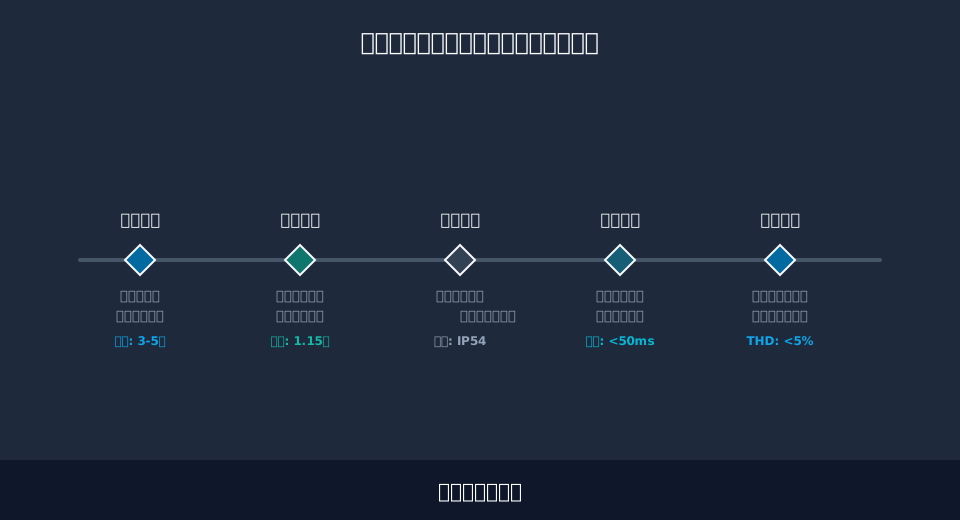
The following sections break down the core logic and practical guidelines for electric hoist VFD retrofits across five key dimensions: improved braking safety, automated integration processes, return on investment assessment, fault maintenance strategies, and customized solutions for heavy loads.
Assessing Improvements in Braking Safety and Mechanical Shock via VFD Retrofits
Traditional electric hoists experience significant mechanical shock and electrical surges when starting and stopping due to direct connection to the power grid. Introducing a VFD allows for smooth speed curves by setting appropriate acceleration and deceleration times. This not only extends the service life of wire ropes and gearboxes but also enhances the reliability of the braking process. When evaluating safety performance, it is crucial to verify the precision of VFD braking in conjunction with calculations for anti-collision safety distances.
Consider a trolley with a travel speed of 20 m/min, which converts to a linear velocity of approximately 0.33 m/s. Under VFD control, if the deceleration is set to 0.2 m/s², the braking distance is calculated as follows: s = v²/(2a) = 0.33²/(2 × 0.2) = 0.1089/0.4 ≈ 0.27 m. Compared to traditional mechanical braking, this controlled deceleration keeps deviations in braking distance minimal, ensuring accurate load placement.
"Industry measured data indicates that using VFD soft-start reduces the dynamic load coefficient of the hoisting mechanism from a traditional 1.5 to approximately 1.1, significantly mitigating fatigue damage to mechanical structures."
⚠️ Note
When setting the VFD deceleration time, avoid aiming for excessively short braking times. If deceleration is too aggressive, the motor enters a strong regenerative braking state, which can easily trigger overvoltage protection trips in the inverter.
Key Points for Integrating Automated Control Systems and On-Site VFD Installation & Commissioning
A VFD retrofit is not merely replacing an electrical component; it involves integrating the entire control system into an automated network. In modern smart workshops, electric hoists must exchange data with MES systems or AGVs. This requires the VFD to have communication interfaces and work with absolute encoders to achieve closed-loop control. During installation, electromagnetic interference and protection ratings are critical factors determining system stability. The introduction of anti-sway algorithms imposes stricter demands on the response latency of the control system.
Regarding encoder installation, rigid couplings must be used to directly connect the motor tail shaft to avoid step loss caused by belt drives. Communication cables should use twisted-shielded pairs, with the shield grounded at one end only; grounding resistance must be less than 4 Ω. The overall control response time of the system must be kept within 50 ms to meet the requirements for high-precision automated interfacing.
"According to automation integration standards, VFD drive systems using PROFINET communication should maintain a control cycle stable within 10 ms to ensure coordination during multi-axis synchronization."
💡 Tip
The VFD should be installed inside the control cabinet, which must have a protection rating of no less than IP54. If the site has significant metal dust, additional positive-pressure ventilation units should be installed to prevent dust accumulation and potential short circuits.
Comprehensive ROI of VFD Retrofit Projects and Selection Reference for Core Components
Economic considerations are paramount when enterprises plan VFD retrofits. Although initial procurement costs for inverters and braking units increase expenses by approximately 20%, the overall return on investment is substantial due to reduced mechanical maintenance frequency, lower energy consumption, and improved production efficiency. During the selection phase, matching the VFD capacity, braking resistor power, and motor parameters determines the success of the retrofit. The technical team at Kelude Heavy Industry recommends fully considering the duty cycle of the working conditions during selection.
The capacity of the main VFD unit is typically selected at 1.15 times the rated current of the motor to handle overload demands during sudden lifting starts. Additionally, the energy-saving effect becomes particularly evident over long-term operation, with a comprehensive energy saving rate of approximately 15%.
The table below provides a detailed comparison of core performance indicators between traditional control modes and variable frequency control modes, helping managers visually assess the value of the upgrade.
📊 Performance Comparison: Variable Frequency Control vs. Traditional Two-Speed Systems
| Evaluation Criteria | ConventionalTwo-speed control | Variable Frequency Drive (VFD)stepless speed regulation |
|---|---|---|
| starting impactCurrent | rated current的4-7times / multiple of | not exceedingrated current的1.2times / multiple of |
| Speed controlSmoothness | Stepped switching,Presence of impact / Shock exists | Smooth throughout the entire strokestepless speed regulation |
| Micro-motionPositioning Accuracy | Poor,Relies on operator experience | High,Achievablemillimeter-levelInching / Jog Mode |
| Energy consumption | Relatively high,High reactive power loss | Reduced by approximately15%,power factorHigh |
Once the performance differences are clear, selecting the right Frequency Inverter for your specific operating condition is critical. The following table provides essential selection parameters to guide your procurement and design processes.
📊 Key Selection Parameters for Variable Frequency Drive Retrofit Components
| ComponentsName | selectionkey parameters | recommended configurationPrinciple |
|---|---|---|
| Frequency Inverter / VFDMain unit / Host machine | rated current、overload capacity | Capacity selected based onMotorrated current的1.15selected as a multiple of |
| braking unitand / withResistance | braking torque、Continuous duty cycle | Heavy loadHoisting / LiftingMust / Required toconfigurationFully satisfy continuousDuty Classification的Resistance |
| InputReactor | Voltage drop percentage、Inductance | Power gridharmonicWhen large / When significant,optional3%or5%Voltage drop |
"Financial modeling indicates that for frequent-duty applications exceeding A5, the additional cost of a variable frequency drive (VFD) retrofit is typically recovered within 12 to 18 months through energy savings and reduced maintenance expenses."
⚠️ Note
For specific equipment lists and final quotations of any retrofit project, please refer strictly to the actual contract. Do not rely solely on experience-based estimates to avoid budget overruns.
Common Fault Diagnosis and Routine Maintenance Strategies for Electrical Systems Under VFD Operation
Introducing variable frequency control significantly increases the complexity of the electrical system. Frequency inverters generate high-order harmonics during rectification and inversion, which may interfere with nearby sensors and PLCs. Additionally, reduced heat dissipation capabilities of motors at low frequencies pose hidden risks for failures. Establishing a targeted maintenance strategy is fundamental to ensuring long-term stable operation after the upgrade. By integrating mechanical inspection methods such as main beam weld crack detection, a comprehensive electromechanical maintenance plan can be formed. Kelude Heavy Industry’s Maintenance Manual provides detailed periodic regulations for this purpose.
For harmonic mitigation on the input side, in addition to installing AC reactors, DC reactors can be connected in series on the DC bus side. Practical tests show that this combined solution can reduce current total harmonic distortion from an initial 12% to approximately 4%, meeting power quality standards. During routine maintenance, it is recommended to fully tighten all electrical connections every six months and measure motor insulation resistance.
"The electrical maintenance manual states that the voltage harmonic distortion rate on the grid side of the VFD power supply system should be controlled within 5%. If it exceeds this limit, DC reactors or filters must be installed for treatment."
💡 Tip
For operating conditions involving long-duration low-frequency runs, it is recommended to install independent forced cooling fans for the Hoisting Motor. This ensures the motor temperature rise does not exceed the thermal threshold allowed by the insulation material. Regularly measure insulation resistance, which should remain greater than 2MΩ.
Automation Upgrade and Customized Solutions for Variable Frequency Electric Hoists Under Heavy Load Conditions
When the Lifting Capacity reaches large tonnage levels, the difficulty and importance of variable frequency drive retrofits increase exponentially. Heavy load conditions involve significant inertia and severe braking heat generation, placing extremely high demands on the coordination between the frequency inverter's vector control algorithm and the mechanical brake. Kelude Heavy Industry has accumulated rich engineering experience in heavy-duty lifting equipment, capable of providing complete customized solutions ranging from electrical control to mechanical structure for special working conditions, ensuring safety and efficiency in automation upgrades.
In a retrofit case for a 32t heavy-load hoist at a large steel structure plant, the equipment Work Duty reached A6. By adopting closed-loop vector control and customized braking logic, automatic anti-sway control for the suspended load was achieved, stabilizing the Positioning Accuracy within ±5mm. This customized solution not only resolved issues of load slipping under heavy loads but also significantly improved material flow efficiency in the workshop.
"In a retrofit case for a 32t heavy-load hoist at a large steel structure plant, the adoption of closed-loop vector control and customized braking logic achieved automatic anti-sway control for the suspended load, stabilizing the final positioning accuracy within ±5mm."
⚠️ Note
Avoid directly applying standard part schemes for heavy-load variable frequency retrofits. It is essential to re-verify motor heating and brake capacity based on actual load charts and work duty. If necessary, upgrade the Brake Disc material.
FAQ
Q: What should be done if the motor overheats severely during low-speed operation after a VFD retrofit?
A: Standard asynchronous motors have reduced self-cooling fan effectiveness at low frequencies. It is recommended to install independent forced cooling fans, or select variable frequency-specific motors during the selection phase, as their Insulation Class and electromagnetic design are better suited for wide-range speed control requirements.
Q: For Hoisting mechanism variable frequency retrofit, how should the power of the Braking Resistor be calculated?
A: The power of the Braking Resistor needs to be calculated based on the motor's rated power and braking utilization rate. Typically, under heavy load hoisting conditions, the continuous power of the braking resistor should be no less than 30% of the motor's rated power, with a certain safety margin retained.
Q: Approximately what is the budget cost for retrofitting an old hoist with a VFD?
A: Retrofit costs are heavily influenced by tonnage and control complexity. Generally, the renovation cost for the electrical portion accounts for approximately 20% to 30% of the total price of a new VFD Hoist. Specific project amounts are subject to the actual contract; obtaining a detailed quotation is recommended.
Q: After installing a frequency inverter, do the original mechanical brakes still need adjustment?
A: Yes, it is required. While variable frequency control allows the motor to maintain holding torque at zero speed, the mechanical brake must still engage after the motor has come to a complete stop. It is essential to reconfigure the frequency inverter’s zero-speed logic and adjust the delay times for brake release and engagement.
In summary, retrofitting an Electric Hoist with Variable Frequency Drive (VFD) technology is a systematic engineering project integrating machinery, electrical systems, and automation. Through a scientific five-dimensional assessment, enterprises can not only achieve smoother operation and significant energy-saving effects but also lay a solid foundation for future smart upgrades. With deep customization capability for heavy load applications and extensive implementation experience, Kelude Heavy Industry provides comprehensive lifecycle service—from solution planning to final delivery—helping Material Handling equipment reach a new stage of higher efficiency and safety in automation.
