

Crane Maintenance Platform Load Standards & Safety
Maintenance platforms are critical infrastructure for ensuring the daily upkeep and fault diagnosis of lifting appliances. In large industrial factory buildings, these platforms must typically support a load capacity exceeding 250 kg/m² to accommodate multiple personnel carrying heavy inspection instruments simultaneously. Data indicates that properly configured maintenance platforms can reduce equipment downtime by approximately 30%, significantly boosting production line efficiency. This article explores the load standards and safety requirements for maintenance platforms, helping engineering professionals build more reliable access systems.
When designing the platform structure, it is mandatory to strictly follow the load calculation regulations for auxiliary facilities outlined in FEM 1.001 Crane Design Standard. Furthermore, routine safety inspections and acceptance procedures must comply with the relevant clauses of the TSG 51-2023 Crane Safety Technical Supervision Regulation, ensuring every weld seam and connection meets supervision requirements.
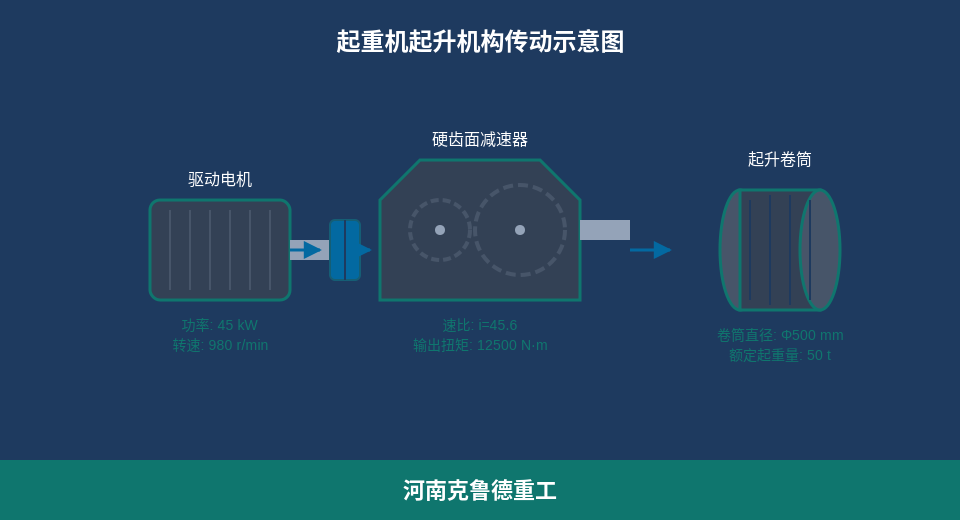
The design and construction of crane maintenance platforms directly impact the efficiency of future maintenance operations and personnel safety. The following sections break down the technical standards and practical specifications from five dimensions: load calculation, structural selection, safeguarding, routine maintenance, and common misconceptions.
Calculating Uniform and Concentrated Loads on Maintenance Platforms
Load calculation is the core of structural design, determining the cross-section size and material usage of the platform frame. Loads are primarily categorized into uniform loads and concentrated loads, which must be reasonably valued based on actual operational scenarios.
Uniform loads mainly account for the self-weight of maintenance personnel, handheld tools, and small components. For standard single-person inspection areas, the characteristic value for uniform load is typically set at 2.0 kN/m². However, for zones requiring coordinated operation or placement of heavier testing equipment, this value should increase to above 2.5 kN/m². Concentrated loads simulate stress states when heavy instruments or repair parts are placed locally, with a standard characteristic value generally set at 3.0 kN.
"According to FEM 1.001, the design of maintenance platforms must consider the most unfavorable load combinations. When calculating internal forces for platform decks and secondary beams, uniform and concentrated loads should be calculated separately, using the larger value as the design basis."
To illustrate the calculation process intuitively, we introduce an engineering case study. Assume a maintenance platform deck has a span L=2m, subjected to a uniform load q=2.5 kN/m², while also potentially bearing a concentrated load P=3.0 kN at mid-span. We need to calculate the maximum bending moment at the mid-span cross-section.
The mid-span bending moment generated by the uniform load is M1 = qL²/8 = 2.5×2²/8 = 1.25 kN·m. The mid-span bending moment from the concentrated load is M2 = PL/4 = 3.0×2/4 = 1.5 kN·m. The total mid-span bending moment after superposition is M = M1 + M2 = 1.25 + 1.5 = 2.75 kN·m. Design personnel must select appropriate platform deck thickness and stiffener spacing based on this bending moment value.
⚠️ Note
When calculating main girders and columns, dynamic load coefficients must be considered. Shock effects occur when personnel walk on the platform or transport heavy objects; typically, static loads must be multiplied by a dynamic amplification factor of 1.1 to 1.2 to ensure structural safety under dynamic stress.
Beyond the platform's ownLoad, loads on edge protection zones cannot be ignored. To ensure safety when personnel approach edges, the platform edge must reserve sufficient buffer space combined with the setting of anti-collision safety distance, and strengthen the local stiffness of edge beams.
Material Selection and Anti-Corrosion Coating Requirements for Steel Structures
Material and anti-corrosion processes are key factors determining the service life of maintenance platforms. In conventional industrial environments, platform frames typically use Q235B or Q355B carbon structural steel. Q235B offers good weldability and machinability, suitable for areas with smaller spans and lighter loads. Q355B, with its higher Yield Strength, effectively reduces the self-weight of the structure, making it ideal for large-span or heavy-load maintenance channels.
Anti-corrosion coating is a necessary means to extend the lifespan of steel structures. A standard coating system usually consists of three layers: primer, intermediate coat, and topcoat, each with specific thicknesses and functions.
First is primer selection. Epoxy Zinc-Rich Primer is used with a Dry Film Thickness (DFT) of no less than 60μm. It provides cathodic protection through the sacrificial anode action of zinc powder to prevent substrate rusting.
Second is the intermediate coat application. Epoxy MIO Intermediate Coat is applied at a thickness of about 40μm. Its flake structure effectively extends the penetration path of corrosive media, enhancing the shielding effect of the coating.
Third is topcoat coverage. Polyurethane Topcoat or chlorinated rubber topcoat is selected with a thickness of over 20μm to ensure excellent weather resistance, color retention, and UV resistance. The total DFT must reach above 120μm.
"Industry measured data shows that steel structure platforms using the 'Epoxy Zinc-Rich + Epoxy MIO + Polyurethane' matching system can achieve a stable design service life of over 15 years in moderate corrosive environments (C3 grade), significantly reducing lifecycle maintenance costs."
Before applying the intermediate coat, non-destructive testing must be performed on key load-bearing parts. Specifically, referring to the processes for main beam weld crack detection, ensure there are no defects inside the welds before sealing them with coating to prevent defect propagation under the paint layer.
💡 Tip
Anti-corrosion at weld joints is a weak link in overall coating. Weld seams and their heat-affected zones require thorough rust removal after welding, reaching Sa2.5 standard before re-applying primer. If rust removal is incomplete, the coating is prone to peeling off from the weld area.
To facilitate a clear comparison of material characteristics for selection purposes, the following section outlines the mechanical and anti-corrosion parameters of commonly used steel grades.
The table below presents the mechanical properties indicators and recommended anti-corrosion systems for steels typically used in maintenance platforms, serving as a selection reference for design and selection processes.
📊 Comparison of Mechanical Properties and Anti-Corrosion Parameters for Common Steels in Maintenance Platforms
| steel grade | Yield Strength(MPa) | Tensile Strength(MPa) | Recommendedcoating system | design service life(Year) |
|---|---|---|---|---|
| Q235B (≈S235JR) | ≥235 | 370~500 | Epoxy Zinc-Rich+polyurethane (PU) | 10~15 |
| Q355B (≈S355JR) | ≥355 | 470~630 | Epoxy Zinc-Rich+Epoxy Mica Iron Oxide+polyurethane (PU) | 15~20 |
| Q355NH(Weathering steel) | ≥355 | 490~630 | Bare or Light DutyCoating / painting | 20~30 |
Safeguarding Standards for Guardrail Height and Toe Boards on Maintenance Platforms
Safeguarding during work at height is the top priority in maintenance platform design. As the first line of defense against personnel falls and falling objects, guardrails and toe boards must strictly meet dimensional and load-bearing requirements.
According to safety regulations, the height of guardrails on a maintenance platform must be no less than 1050mm (41.3 in). For special high-altitude platforms exceeding 20m (65.6 ft), it is recommended to increase the guardrail height to 1200mm (47.2 in). The spacing between columns is typically controlled between 1.5m and 2.0m (4.9–6.6 ft) to ensure that the Deflection of the horizontal bars meets requirements. Toe boards must be at least 100mm (3.9 in) high, with a Bottom Clearance of no more than 10mm (0.4 in) between the toe board and the walkway plate.
TSG 51-2023 Crane Safety Technical Supervision Regulation explicitly states that inspection channels for lifting appliances must be equipped with sturdy guardrails. These guardrails must withstand a horizontal thrust of 1.0kN/m from any direction without permanent deformation, and the Weld Seam connections at the base of the columns must meet shear strength requirements.
We can verify the Strength of guardrail columns through a specific load calculation example. Assume the top of the guardrail is subjected to a horizontal thrust F = 1.0kN/m, the column spacing is 1.5m (4.9 ft), and the guardrail height h = 1.05m (3.4 ft).
The horizontal concentrated force P borne by a single column is P = F × Spacing = 1.0 × 1.5 = 1.5kN. This force acts on the top of the column, generating a maximum Bending moment M at the base of M = P × h = 1.5 × 1.05 = 1.575 kN·m. If a Square Tube with dimensions 50×50×4 mm is selected as the column, its section modulus W = 11.16 cm³. The maximum bending stress σ at the base of the column is calculated as σ = M/W = 1.575×10⁶ N·mm / 11160 mm³ ≈ 141 MPa. This stress is well below the allowable stress of 215 MPa for Q235 steel, meeting safety requirements.
⚠️ Note
Toe boards must not be treated as a mere formality. During inspection and repair, small parts such as wrenches and Bolts are prone to slipping. If the toe board height is insufficient or the bottom clearance is too large, these items may fall from the edge of the platform, causing serious injury to personnel or damage to equipment below.
After understanding the load requirements for guardrails, we need to compare common structural configurations of protective railings to make reasonable choices under different operating conditions.
The following table compares the structural configuration and Application Scenarios of common protective railings on maintenance platforms, helping engineers quickly match design solutions.
📊 Comparison of Common Structural Configurations and Application Scenarios for Maintenance Platform Guardrails
| GuardrailType | ColumnSpacing(m) | Horizontalload capacityForce(kN/m) | Applicableplatformwidth(m) | maintenance cycle(Month) |
|---|---|---|---|---|
| StandardSteel Tubewelded type | 1.5 ~ 2.0 | ≥1.0 | 0.6 ~ 1.2 | 12 |
| AssemblyClamp TypeGuardrail | 1.0 ~ 1.5 | ≥0.8 | 0.5 ~ 1.0 | 6 |
| With Safety Gateaccess systemType | 1.2 ~ 1.8 | ≥1.2 | 0.8 ~ 1.5 | 6 |
Walkway Plate Selection Guide: Anti-Slip Steel Plates vs. Grating for Maintenance Platforms
The selection of walkway plates directly impacts the safety of maintenance personnel and the ventilation/lighting performance of the platform. Currently, maintenance platforms primarily use two types of walkway plates: anti-slip steel plates and steel grating, each with distinct application scenarios and technical requirements.
Anti-slip steel plates typically feature diamond or flat-dog-ear patterns. The plate thickness must be ≥4mm to ensure minimal deflection under concentrated loads. In dry conditions, their friction coefficient exceeds 0.6, effectively preventing slips. These plates are ideal for inspection areas requiring high anti-dropping standards or where complete enclosure of equipment below is necessary.
Steel grating is favored for its superior light transmission, ventilation, and self-cleaning capabilities. Flat steel thickness usually ranges from 3mm to 5mm, with spacing typically at 30mm or 40mm. To prevent small tools or parts from falling, aperture sizes must be strictly controlled, generally not exceeding 38mm.
"According to building steel structure anti-slip standards, walkway plates on maintenance platforms must meet specific friction coefficient requirements. In damp or slightly oily environments, grating outperforms standard anti-slip plates because its grid structure rapidly drains liquids, keeping the surface relatively dry."
⚠️ Note
In workshop environments with significant oil stains or chemical solvents, the anti-slip performance of both patterned plates and grating drops substantially. In such cases, it is recommended to lay dedicated anti-slip mats on the walkway surface or use specially treated steel plates with sandblasted anti-slip coatings to ensure operational safety.
Regardless of the walkway plate chosen, the fixing method must be secure. Patterned plates are typically fixed via full-perimeter welding or plug welding, with weld seam length and spacing complying with specifications. For grating, specialized installation clips are recommended; each panel requires at least four clips spaced no more than 1.0m apart to prevent displacement or detachment due to vibration.
Routine Inspection Cycles and Anti-Loosening Maintenance Strategies for Maintenance Platforms
During long-term exposure to dynamic loads and environmental erosion, connection points on maintenance platforms are prone to loosening or corrosion. Establishing a scientific routine inspection cycle and anti-loosening maintenance strategy is fundamental to ensuring safe operation over the platform's lifespan.
The comprehensive inspection cycle for standard maintenance platforms should be set to once per month. Key inspection items include: checking for obvious deformation or cracks in walkway plates; inspecting guardrail columns for corrosion or loosening at the base; and looking for signs of crack propagation on weld seams. For bolted connection assembly platforms, special attention must be paid to the preload status of bolts, ensuring torque error remains within 5% of the characteristic value.
"Equipment management statistics indicate that platforms strictly implementing monthly inspections and anti-loosening measures see a failure rate caused by fastener failure reduced by approximately 75% compared to those without periodic maintenance, significantly lowering the risk of unexpected downtime repairs."
To address bolt loosening beyond regular re-tightening, the following technical measures can be adopted:
First, use anti-loosening nuts. Nylon-insert lock nuts or all-metal lock nuts utilize internal deformation or friction resistance to prevent thread back-off.
Second, employ spring washers or toothed flange nuts. In high-vibration areas, spring washers provide continuous axial elastic force, while toothed flange nuts increase radial Friction Force through tooth engagement.
Third, apply thread-locking adhesive. Applying medium- or high-strength anaerobic adhesive to the thread surface before insertion effectively fills thread gaps after curing, preventing loosening caused by micro-motion wear.
💡 Tip
When performing high-altitude tightening operations, a full-body Safety Belt must be worn, with the hook attached to a secure structural component. Kelude Heavy Industry’s technical team recommends using socket tools with magnetic adsorption functions for high-altitude re-tightening to prevent tools from falling and causing injury.
FAQ
Q: How is the uniform load standard for maintenance platforms generally determined?
A: Uniform loads are typically determined based on the number of operators and tool weights. Standard single-person inspection platforms take 2.0kN/m², while areas for coordinated operation require an increase to above 2.5kN/m². Concentrated loads are considered at 3.0kN to accommodate heavy detector placement. Specific values must be calculated by design personnel based on actual operating conditions.
Q: What are the specific requirements for aperture size when using grating on maintenance platforms?
A: To prevent tools or small components from falling and injuring personnel, grating aperture sizes have strict limits. Typically, apertures must not exceed 38mm, ensuring a 38mm diameter sphere cannot pass through. For precision assembly workshops with risks of smaller parts falling, it is recommended to select dense-grating with smaller apertures or lay anti-slip steel plates.
Q: How is the cost budget estimated for a custom non-standard sized maintenance platform?
A: The cost of non-standard maintenance platforms is influenced by steel prices, anti-corrosion processes, and transport and installation conditions. Standard Carbon Steel platforms cost approximately $119-$179 per square meter (originally 800-1200 CNY). Costs will rise if Stainless Steel material or special heavy-duty anti-corrosion coating is used. Final Quotation depends on specific drawings; the actual contract shall prevail.
Q: How should anti-corrosion strategies be adjusted for maintenance platforms in highly corrosive chemical workshops?
A: In severe corrosive environments, the service life of standard carbon steel platforms is significantly reduced. We recommend Hot-Dip Galvanizing with a zinc layer thickness exceeding 80μm. For extremely aggressive media, Stainless Steel (grades 304 or 316L) is recommended; post-weld pickling and passivation are essential to ensure long-term structural stability.
In summary, load calculation, material selection, safeguarding, and routine maintenance for crane maintenance platforms constitute a systematic engineering process. Strict adherence to related standards and meticulous attention to detail are vital for ensuring reliable long-term equipment operation. Kelude Heavy Industry brings extensive customization experience in heavy-load crane applications, providing end-to-end maintenance platform solutions—from design to installation—tailored to complex operating conditions to help enterprises enhance their operation and maintenance capabilities.
