

Crane Lifting Attachments Rotary Seal Selection & Replacement
Crane lifting attachments often require continuous 360-degree rotation in complex operating conditions, where the performance of core sealing components directly determines equipment stability. Statistics show that hydraulic oil leaks caused by seal failure account for over 30% of total faults in crane hydraulic systems. Conversely, a qualified rotary seal can operate stably for more than 5,000 hours with proper maintenance. This article explores the selection logic and standardized replacement procedures for rotary seals to help maintenance personnel pinpoint fault roots and improve overall reliability.
When selecting and replacing seals, strict adherence to national and industry standards is mandatory. For instance, FEM 1.001 Crane Design Specification specifies requirements for matching seal grades with working pressure; meanwhile, TSG 51-2023 Crane Safety Technical Supervision Regulation mandates periodic inspections for critical load-bearing and sealing components to ensure safety under full-load and eccentric-load conditions.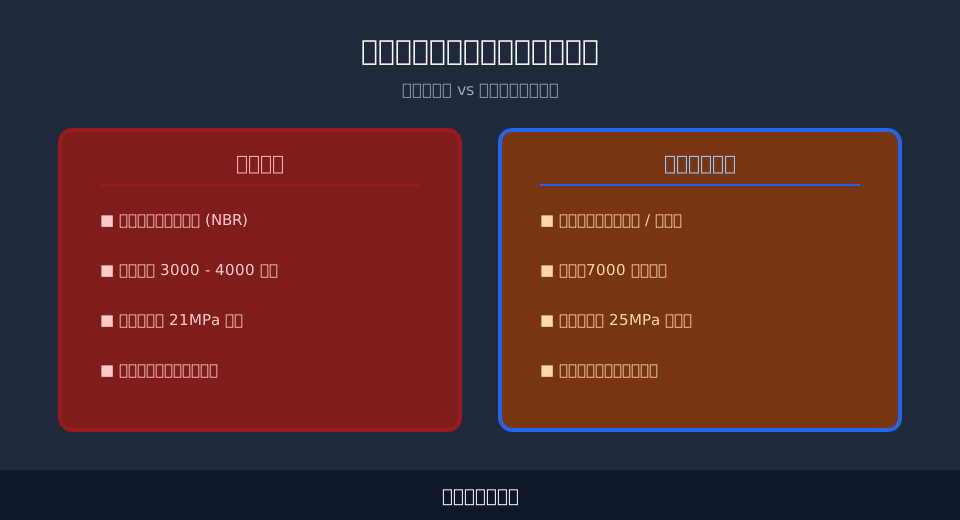
This article analyzes five key dimensions—failure mode analysis, material selection, standardized replacement, routine maintenance, and customized upgrades—to provide a systematic guide for maintenance and selection.
Common Failure Modes and Operating Data Analysis for Rotary Seals
Rotary joints in lifting attachments endure high loads and variable postures, meaning seal failures are rarely caused by a single factor. Under standard parameters of 25MPa rated working pressure and 15r/min rotational speed, surface temperatures typically reach around 85°C. This alternating stress environment accelerates rubber aging and physical degradation.
When analyzing unilateral wear caused by eccentric loads, refer to anti-collision safety distance guidelines to avoid extra radial shear forces on the joint from extreme loading. Common failure modes include:
Abrasive Wear: Metal shavings or dust in Hydraulic Oil create cutting action at the seal lip, forming annular grooves. As cleanliness drops, this wear rate increases exponentially.
Extrusion Failure: Sudden pressure spikes or excessive fitting clearance cause seal material toSqueeze into gaps, leading to edge tearing. This is often linked to poor machining accuracy or system pressure fluctuations.
Thermal Aging & Hardening: Prolonged exposure to temperatures above 85°C causes seals to lose elasticity, failing to compensate for minor shaft bouncing, ultimately resulting in leaks.
"According to operational statistics, early seal failure due to abrasive wear reaches 42% in cranes with overdue filter element replacements, far exceeding the 8% rate under normal maintenance."
⚠️ Note
Never use sharp metal tools to pry seal lips during disassembly. Micro-scratches can expand into through-leaks under 25MPa pressure. Use dedicated plastic or copper tools for assistance.
Material Selection and Dimensional Matching for Rotary Joints
Material choice dictates service life and adaptability. Mainstream materials include Nitrile Rubber (NBR), Fluororubber (FKM), and Polyurethane (PU). NBR offers low cost and good oil resistance for standard temperatures; FKM withstands up to 200°C with strong chemical resistance but lower elasticity; PU (typically 95A hardness) provides excellent wear resistance for heavy-load conditions.
O-Ring compression ratio design is critical. For dynamic rotary seals, a compression rate of around 20% is ideal. Groove machining accuracy is equally vital; similar to weld crack detection standards, groove roughness must stay within Ra1.6, and flatness error must not exceed 0.02mm.
Engineering calculations help assess stress. For example, calculating total hydraulic thrust on a 100mm diameter seal face at 25MPa working pressure:
Given Working Pressure P = 25MPa = 25 × 10^6 Pa. Outer Diameter D = 100mm (Radius R = 0.05m), Inner Diameter d = 50mm (Radius r = 0.025m).
Effective Area S = π × R² - π × r² = 3.14 × (0.05m)² - 3.14 × (0.025m)² = 0.00785m² - 0.0019625m² = 0.0058875m².
Total Thrust F = P × S = 25 × 10^6 Pa × 0.0058875m² = 147187.5 N, approx. 147.2kN. This data guides anti-extrusion ring selection; if thrust is too high, add PTFE backup rings to prevent extrusion.
"Selection manuals indicate that when peak pressure exceeds 21MPa and line speed is >0.5m/s, rubber-only seals risk extrusion. A composite structure 'Rubber O-Ring + PTFE Backup Ring' is required."
The table below compares core physical and chemical properties of three mainstream materials to support engineering selection.
📊 Performance Parameters of Common Rotary Seal Materials for Cranes
| Material Type | ShoreHardness | Temperature ResistanceRange | Wear ResistanceCapability | applicable working conditionsrecommendation |
|---|---|---|---|---|
| nitrile rubber (NBR) (NBR) | 70A - 90A | -30℃ To +100℃ | General | Medium and Low Pressure、Ambient Temperature / Standard ConditionsRotationOperation |
| fluororubber (FKM) (FKM) | 75A - 90A | -20℃ To +200℃ | Good | High-Temperature Environment、Chemical ResistanceCorrosionrequirementsHighoperating condition |
| polyurethane (PU) (PU) | 85A - 95A | -30℃ To +80℃ | Excellent | High PressureHeavy load、AgainstWear ResistancerequirementsExtremely HighContinuous operation |
💡 Tip
When procuring polyurethane (PU) seals, pay close attention to their hydrolytic stability. If the crane operates in humid or wet environments for extended periods, it is recommended to switch to hydrolysis-resistant PU or fluororubber (FKM) to prevent the material from losing mechanical strength due to hydrolysis.
Rotary Seal Replacement SOP and Hydraulic System Commissioning
Seal replacement is not merely a matter of disassembly and reassembly; it is a systematic engineering process involving cleanliness control, precision assembly, and system commissioning. Within Kelude Heavy Industry’s standardized maintenance workshop, every rotary joint disassembly strictly adheres to dust-free operational standards to ensure that contaminants do not penetrate the core hydraulic areas.
The standard operating procedure can be broken down into the following key steps:
Step 1: System Depressurization and Line Plugging. Lower the lifting spreader to the ground and shut off the hydraulic pump station. Repeatedly operate the rotary handle to release residual pressure from the accumulator. After disconnecting the hydraulic hoses, immediately plug the ports with specialized dust caps to prevent environmental dust from entering.
Step 2: Precision Cleaning and Damage Assessment. Clean the rotary joint housing and internal grooves using anhydrous ethanol or a specialized cleaning agent. Inspect the bottom of the grooves for scratches or corrosion under magnification. If the depth exceeds 0.05mm, the joint housing must be polished and repaired or replaced.
Step 3: Seal Lubrication and Installation. Apply clean hydraulic oil or specialized assembly paste evenly to the seal lips and grooves. Dry friction installation is strictly prohibited. Use guide sleeves to assist in pushing the seals into place, ensuring they do not flip or twist.
Step 4: Tightening and Pressure Testing. Tighten flange bolts using a torque wrench in a diagonal sequence across three passes, setting the final torque to 45 N·m. After reconnecting the lines, start the pump station and conduct a 30-minute pressure holding test at the rated pressure of 21 MPa to check for leaks at all joint surfaces.
"Hydraulic system commissioning specifications explicitly state that after replacing seals, the system must perform at least three full-stroke no-load reciprocating motions to purge residual air from the circuit, preventing cavitation-induced impact damage to the new sealing surfaces."
⚠️ Caution
During the pressure holding test, personnel are strictly prohibited from standing directly beneath the rotary joint or within the ejection trajectory of high-pressure hoses. If micro-droplet leakage is detected, stop the machine and depressurize immediately to re-inspect the installation status. Never tighten bolts under pressure.
Routine Maintenance Intervals for Seals and Leak Troubleshooting Guide
"One-third repair, two-thirds maintenance." Scientific routine maintenance is the fundamental way to extend the service life of rotary seals. Maintenance personnel should establish strict periodic management logs, transforming reactive repairs into proactive prevention. The core of daily maintenance lies in controlling hydraulic oil cleanliness and temperature.
Regarding maintenance intervals, it is recommended to replace the hydraulic oil at least once every 2,000 hours or annually, simultaneously replacing the return line filter. The filtration accuracy of the filter should be maintained at 10 μm to ensure the oil cleanliness meets ISO 4406 Hydraulic fluid cleanliness standard 18/15/12. Additionally, grease nipples on the rotary joints should be lubricated every 500 hours to maintain the flexibility of the external dust wipers.
When leak failures occur, follow a troubleshooting logic from outside to inside. Observe the leak location: if leakage occurs at the flange joint surface, it is often due to O-ring aging or loose bolts; if leakage occurs at the rotating shaft extension end, it may be caused by wear of the rotary Glyd ring or failure of the dust wiper. Utilizing AI anti-sway algorithm to reduce violent swinging of the lifting spreader can effectively reduce instantaneous impact loads on seals, slowing down fatigue aging at the source.
To optimize the maintenance strategy, the table below compares the differences between traditional scheduled replacement and condition monitoring-based replacement strategies in terms of economics and reliability.
The following table quantifies the specific performance of two different maintenance strategies regarding spare parts consumption, downtime, and total cost, providing a reference for developing maintenance plans.
📊 Comparison of Traditional Scheduled vs. Condition Monitoring-Based Rotary Seal Replacement Strategies
| Evaluation Dimension | Traditional ScheduledreplacementStrategy | Condition MonitoringreplacementStrategy | Strategy Variance Analysis |
|---|---|---|---|
| replacementtrigger condition | FixingCycle(e.g., Every5000Hour(s)) | Oil Particle Count Exceeding Limit orinfrared temperature measurementAnomaly | Condition MonitoringAvoids Over-maintenanceCaused bySpare partsWaste |
| unplanned downtimeRate | Relatively High(Approximately12%) | Very Low(Less Than3%) | Condition MonitoringCan Earlyearly warning,Eliminate Faults at the Incipient Stage |
| Singlemaintenance cost | Lower(OnlyreplacementSeal) | Slightly Higher(Requires Increase inSensorCompared to Oil Analysis Cost) | Condition MonitoringHigh Initial Investment,But Long-term MarginalcostDiminishing |
| lifecycleBenefit | General | Significantly Optimized | Condition MonitoringImproved Overall Equipment Availability,Higher Overall Benefit |
A lifecycle management report indicates that implementing online fluid monitoring and vibration analysis reduced sudden hydraulic system leak failures in cranes by 65%. The mean time between failures (MTBF) for seals increased from 4,500 hours to 7,200 hours.
⚠️ Note
Never mix Hydraulic Oil from different brands or with different viscosity grades to save costs. Mixing oils can cause chemical reactions that produce gums, which quickly clog the micropores on seal surfaces. This leads to dry friction on the sealing lips and eventual burning.
Customized Upgrades & Cost-Benefit Analysis for Heavy-Duty Crane Rotary Seals
As cranes become larger and handle heavier loads, standard seals often struggle to meet requirements under extreme operating conditions. Customizing rotary joints with high-performance material combinations and structural optimization has proven effective in enhancing equipment reliability. Kelude Heavy Industry has extensive experience in heavy-duty customization, providing non-standard sealing solutions tailored to specific operating conditions.
Customized upgrades typically involve three aspects: material upgrade (e.g., using fluorocarbon composite materials), structural optimization (adding multi-stage dustproofing and pressure-relief groove designs), and Surface Treatment (supersonic spraying of tungsten carbide onto the rotating shaft). Although initial procurement costs may increase by approximately 15%, the resulting benefits are significant.
From a cost-benefit perspective, the service life of custom seals is typically extended by over 40%, significantly reducing replacement frequency. Additionally, comprehensive maintenance costs can be reduced by 25% due to less downtime spent on cleaning up leaks. For a 50-ton heavy-duty crane, the production Capacity lost from unplanned downtime saved annually far exceeds the price difference of the seals themselves.
A port logistics company performed customized upgrades on the rotary joints of 30 heavy-duty rail-mounted cranes in its fleet. Tracking data after two years of operation showed a 78% reduction in hydraulic system leak failures and a decrease of 120 liters in annual Hydraulic Oil consumption per unit.
💡 Tip
Before proceeding with customized upgrades, verify the stiffness of the rotary joint housing. If the housing deforms slightly under high pressure, even the most advanced seals cannot prevent gap leakage. In such cases, it may be necessary to simultaneously upgrade the housing material or add reinforcing ribs.
FAQ
Q: Is immediate shutdown and replacement required if a lifting spreader rotary seal shows minor oil seepage?
A: If the seepage is merely surface moisture without droplet accumulation, you can intensify observation and shorten Routine inspection cycles, scheduling handling during the next planned downtime. However, if continuous dripping occurs, immediate shutdown and replacement are mandatory to prevent significant Hydraulic Oil loss, which could cause system cavitation or fire risks.
Q: What are the specific differences in temperature resistance and pressure capacity among rotary seals made of different materials?
A: Nitrile rubber (NBR) resists temperatures up to ~100°C with moderate pressure resistance, suitable for medium-low pressure at normal temperatures. Fluororubber (FKM) withstands up to 200°C and offers strong chemical resistance, ideal for High-temperature service. Polyurethane (PU) has high hardness (e.g., 95A) and excellent wear/pressure resistance, designed for high-pressure heavy load applications, but its temperature resistance usually does not exceed 80°C.
Q: How much does the life cycle cost differ between imported high-end seals and domestic Standard parts?
A: Imported seals typically have an initial procurement unit price 30% to 50% higher than standard parts. However, their service life is often 1.5 to 2 times longer, significantly reducing downtime cost from unplanned failures. Comprehensive calculations show a 15% to 20% reduction in life cycle cost; specific amounts are subject to the actual contract.
Q: How long should the hydraulic system undergo run-in and pressure-holding testing after replacing a rotary seal?
A: After replacement, perform at least three full-stroke no-load reciprocating motions to purge air. Then, conduct a pressure-holding test at rated pressure (e.g., 21 MPa) for 30 minutes. Once no leakage is detected, gradually load to Full load operation. The entire run-in and Testing process takes approximately 1 to 2 hours.
In summary, selecting and replacing rotary seals for crane lifting attachments is a rigorous technical task involving deep intersections of materials science, precision Machinery, and hydraulic systems. From precise diagnosis of failure modes to strict matching of materials and dimensions, and standardized installation, Commissioning, and Preventive Maintenance, every step impacts operational safety and economic benefits. With profound technical expertise and customization capability, Kelude provides high-performance sealing solutions compliant with European Standard (EN) standards. We are committed to providing full life cycle management for equipment reliability, ensuring efficient and safe Lifting operations.
