

Closed-Loop vs Open-Loop VFD Control for Cranes
During the automation retrofit of lifting equipment, the control mode of the frequency inverter directly determines operational precision and smoothness. When upgrading traditional wound-rotor motors to variable frequency drive systems, projects often face a choice between open-loop and closed-loop technical routes. For instance, in a 50-ton bridge crane retrofit at a steel plant, closed-loop control reduced positioning deviation from 120 mm to under 15 mm, significantly boosting lifting efficiency. This article analyzes the underlying logic and engineering differences of these two methods to provide clear decision-making support for your automation upgrade.
In electrical design and safety assessment for automation retrofits, control system response characteristics and braking logic must strictly adhere to relevant standards. When selecting inverters and setting parameters, refer to FEM 1.001 Crane Design Standard regarding mechanism classification group and electrical control clauses to ensure motor thermal stability during frequent starts and stops. Additionally, to meet reliability requirements for encoder feedback signals, on-site construction and acceptance must comply with TSG 51-2023 Safety Technical Supervision Regulation, ensuring operational safety under complex working conditions.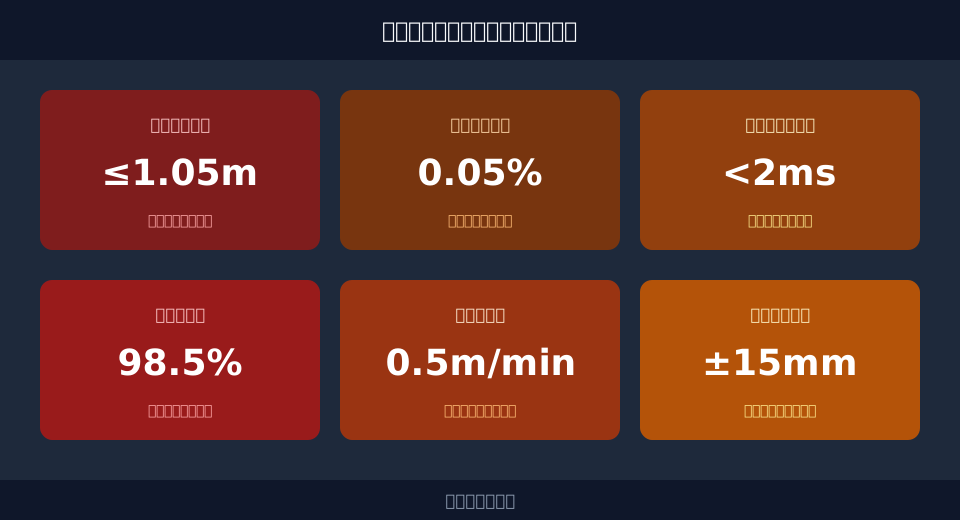
The following content explores VFD control principles, covering underlying logic differences, installation points, cost selection strategies, maintenance fault diagnosis, and common technical questions to help you master the core details of automation retrofits.
Underlying Logic and Safety Mechanisms: Open-Loop vs. Closed-Loop Control
Open-loop control primarily uses V/F (Voltage/Frequency) mode, where the frequency inverter outputs voltage based on set frequency without relying on actual motor speed feedback. While simple, this method is prone to speed fluctuations during sudden load changes. Closed-loop control introduces an absolute encoder as a speed or position feedback element, using vector control algorithms to adjust motor current and flux in real-time, achieving high-precision torque and speed control. Regarding safety mechanisms, open-loop systems lack real-time speed feedback, risking load slipping or extended braking distance during emergency braking. Closed-loop systems monitor motor speed via encoder feedback; if anomalies are detected, they immediately trigger fast braking logic. Comparing braking distances through an engineering case study: assuming a Long Travel Speed of 60 m/min (1 m/s), open-loop control may see actual speed drop by ~0.04 m/s due to slip during full-load start. With deceleration $a=0.5$ m/s², theoretical braking distance $s=v^2/(2a)$ is 1 m, but actual distance may exceed 1.3 m due to slip and load fluctuations. Closed-loop control compensates for slip, stabilizing braking distance within 1.05 m. This precision is critical for maintaining the anti-collision safety distance."Industry measured data shows that in cranes of A6 Work Duty, open-loop slip rate is typically 3%~5%, while closed-loop vector control achieves speed control accuracy of 0.05%. The dynamic response time difference is approximately 150 milliseconds."
⚠️ Note
During closed-loop commissioning, encoder feedback direction must strictly match motor rotation direction. Reversed wiring creates positive feedback, causing instant overspeed or mechanical damage. Always perform inching/jog mode verification before debugging.
Closed-Loop Encoder Installation and Anti-Interference Processing
The core of closed-loop systems is feedback signal accuracy, determined by encoder installation process. Mechanical vibration and electromagnetic interference are the main factors affecting encoder lifespan and precision. During installation, concentricity deviation between encoder shaft and motor shaft must be strictly controlled within 0.05 mm to prevent bearing wear or shaft fracture over time. Additionally, grounding resistance of the encoder shielded cable should be less than 4 Ω to filter high-frequency harmonic interference generated by the inverter. In large cranes, elastic deformation of the main girder and mechanical vibration transmit through the drive shaft to the encoder. Loose mechanical connections not only affect feedback accuracy but may exacerbate structural fatigue issues mentioned in main beam weld crack detection. Using a Flexible Coupling to connect the encoder and motor shaft effectively absorbs axial and radial misalignment."According to electrical installation specifications, encoder feedback cables must be laid in separate channels from power cables. Parallel spacing should remain above 200 mm, and crossings must be at 90-degree angles to minimize electromagnetic coupling interference."
💡 Tip
In workshops with high dust or humidity, select encoders with IP Protection Rating (IP67). Apply sealant at the junction box to prevent moisture intrusion that could cause signal short circuits or loss.
Cost Accounting and Selection Strategy for Open-Loop vs. Closed-Loop Drives
Budget planning for automation retrofits focuses on cost differences between open-loop and closed-loop schemes. Open-loop systems require only standard inverters and motors, offering simple hardware configuration. Closed-loop systems need additional incremental or absolute encoders, inverter feedback cards, and dedicated shielded cables. Initial hardware costs for closed-loop retrofits are typically 35%~45% higher than open-loop. However, lifecycle cost analysis shows that closed-loop systems reduce maintenance costs by approximately 20% over three years due to decreased mechanical shock and brake pad wear. Selection strategy depends on application needs. Simple speed regulation scenarios with low positioning accuracy requirements can use open-loop control. However, precise positioning, anti-sway control, or integration with automated warehousing requires closed-loop control as a physical foundation. This is a prerequisite for AI anti-sway algorithm effectiveness, which relies on high-frequency, precise speed and position data. Kelude Heavy Industry provides selection recommendations based on actual mechanism classification group and lifting efficiency, conducting detailed return on investment (ROI) calculations to avoid over-specification."In a painting workshop crane retrofit for an automotive parts plant, closed-loop control reduced lifting spreader positioning time from 45 seconds to 18 seconds per cycle, improving overall logistics pace by 25%. The equipment investment was recovered within 14 months."
⚠️ Note
Do not compare inverter unit prices alone. Feedback cards, specialized cables, and on-site commissioning labor account for a significant portion of total costs. Quotation subject to the actual contract to ensure comprehensive budget coverage.
After clarifying the initial hardware investment differences, we must evaluate the overall performance and energy consumption of both control system modes under actual operating conditions from a long-term operational perspective.
| Comparison Parameter | Open-Loop ControlSystem (V/Fcontrol system) | Closed-Loop ControlSystem (Vector Control) |
|---|---|---|
| Frequency Inverter / VFDhardware configuration | StandardVariable Frequency Drive (VFD)Module,No expansion card required | Requires addition ofspeed/Position feedback expansion card |
| ExternalSensorRequirement | Not requiredEncoder,Relying solely onMotorModel estimation | MustinstallationIncremental orAbsolute encoder |
| control cablecost | StandardPower Cable,costLower | Requires high-flexibility twisted-shielded feedback cableCable |
| Initial purchase premium | Base price (100%) | Higher than open-loop by 35% ~ 45% |
📊 Comparison of Operational Performance and Long-Term Maintenance Indicators Between Open-Loop and Closed-Loop Control Systems
| performance indicators | Open-Loop ControlSystem performance | Closed-Loop ControlSystem performance |
|---|---|---|
| Steady-statespeedAccuracy | ±3% ~ ±5% (Affected byloadSignificant impact) | ±0.05% (HighAccuracyVector control) |
| Low-speed torque output | 0.5HzNoticeable torque ripple at | 0.1HzCapable of outputting150%rated torque |
| mechanical shockCompared withWear | Large start/stop shock,brake liningservice lifeApproximately1Year(s) | Smooth accelerationDeceleration,brake liningservice lifeExtended to2.5Year(s) |
| 3Annual cyclemaintenance cost | Benchmarkmaintenance cost (100%) | Reduced by approximately compared to open-loop 20% |
Troubleshooting and Maintenance Guide for Closed-Loop VFD Systems
While closed-loop systems deliver superior performance, their complex feedback loops can complicate fault diagnosis. In routine maintenance, encoders and associated wiring are critical focus areas. Maintenance personnel should implement a strict schedule: replace the internal backup battery of absolute encoders every two years to prevent data loss upon power failure. Inspect the insulation resistance of feedback cables quarterly; values must exceed 50 MΩ to ensure signal transmission is not compromised by humidity. When an "Encoder Fault" alarm occurs, it is typically caused by poor signal line contact, bearing damage leading to pulse loss, or hardware failure in the VFD's feedback card. To troubleshoot, use an oscilloscope to monitor A/B/Z phase pulse waveforms. Distorted waves or low amplitude indicate the fault source. Kelude Heavy Industry's After-Sales Service team prioritizes checking the concentricity of mechanical connections, as minor misalignments are often the hidden cause of premature encoder failure."Statistics show that 65% of electrical faults in closed-loop systems stem from encoder cable wear or loose connectors, 20% from encoder bearing wear, and only 15% from VFD hardware failures."
⚠️ Warning
Plugging or unplugging encoder connections while liveExtremely prone to generates electrostatic breakdown, damaging the VFD's optocoupler isolation chips. Always wear anti-static wrist straps and ensure the equipment is fully powered down with capacitors discharged.
Enhancing Positioning Accuracy and Operational Smoothness Under Heavy Load Conditions
Under rated or overload conditions, motor slip increases significantly, challenging the positioning accuracy of open-loop control. Closed-loop vector control calculates magnetic flux and torque current in real-time, providing smooth acceleration during heavy-load starts and preventing VFD overcurrent tripping due to current surges. This advantage is even more pronounced during low-speed micro-motion. At 100% rated load, closed-loop control stabilizes crawling speed at 0.5 m/min (approx. 1.6 ft/min), significantly improving micro-motion performance and meeting the precision requirements for delicate die hoisting or large equipment alignment. A shipyard adopting a custom Double-girder gantry crane from Kelude Heavy Industry for block assembly required millimeter-level positioning accuracy for the Lifting spreader. By configuring high-precision Absolute encoders with closed-loop vector control algorithms, the crane achieved smooth millimeter-level Jog Mode under full load, reducing the difficulty and risk of assembly operations."On-site measurement data indicates that under 100% rated load, the closed-loop system controls speed fluctuation within 0.8%, whereas the open-loop system under identical conditions exhibits a fluctuation rate of 6.5%, highlighting significant differences in operational smoothness at low speeds."
💡 Tip
During closed-loop commissioning for heavy loads, pay special attention to motor parameter self-learning. Perform static and dynamic self-learning under both cold and hot states to ensure the VFD's internal motor mathematical model aligns closely with actual operating conditions.
In summary, open-loop and closed-loop controls each have specific Application Scenarios. Enterprises undergoing automation retrofit should consider operating condition requirements and budget constraints. Kelude Heavy Industry has extensive experience in the electrical automation upgrade of heavy-lifting equipment, providing full-process customization service from conceptual design to implementation. We ensure every crane meets expected control accuracy and safety standards.
FAQ
Q: Can open-loop and closed-loop controls be switched at any time?
A: Switching is possible if the hardware configuration allows. If the VFD is equipped with a closed-loop feedback card and connected to an encoder, you can switch between V/F open-loop and vector closed-loop modes via parameters. Without an encoder, the system runs only in open-loop mode and cannot be switched to closed-loop via parameters alone.
Q: What are the specific Resolution requirements for encoders in closed-loop control?
A: Resolution depends on the mechanical transmission ratio and accuracy requirements. Typically, an Incremental Encoder with 1024 pulses/rev suffices for the Crane Travel Mechanism. For Hoisting mechanisms requiring millimeter-level positioning, an Absolute encoder with 2500 pulses/rev or higher is recommended to ensure fine feedback resolution at low speeds.
Q: What is the estimated renovation cost to upgrade an existing open-loop system to closed-loop?
A: The budget covers hardware and labor. Hardware includes encoders, feedback cards, and Shielded Cable, typically accounting for about 30% of the original VFD price. Labor involves mechanical installation and electrical commissioning. Specific costs depend on the crane capacity, Number Of Axles, and site conditions. Please refer to the Quotation subject to the actual contract for details.
Q: What common faults occur in closed-loop systems in low-temperature environments?
A: Low temperatures increase Lubricating Oil viscosity, raising friction torque during startup, which may cause pulse loss or waveform distortion. Additionally, cable jackets harden in the cold; if mechanical flexibility is poor, Terminal Blocks may loosen. It is recommended to use wide-temperature-range encoders and insulate cables in extremely cold regions.
